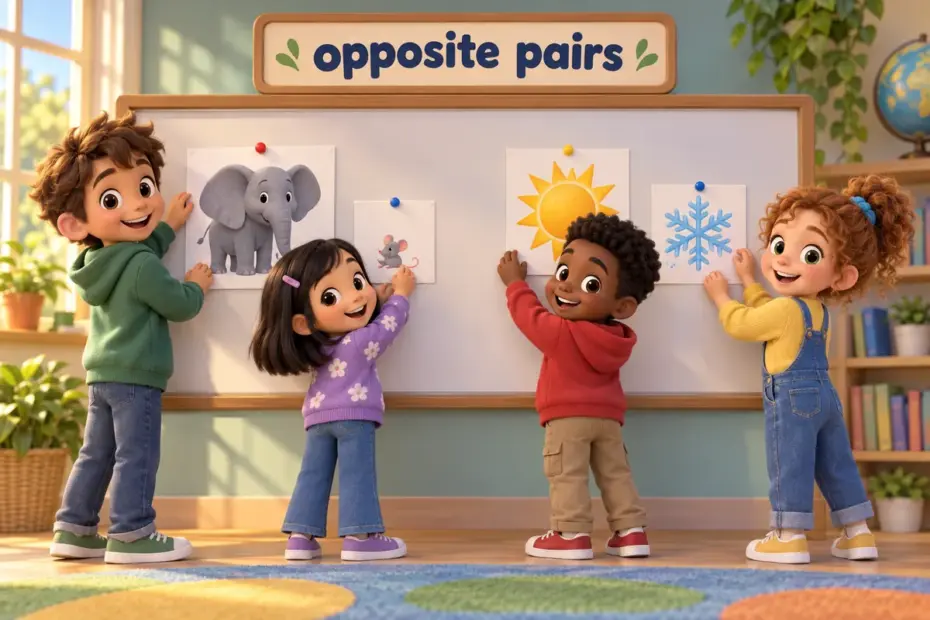
100 antonyms for adjectives pair each describing word with its opposite, so a single list can double your usable vocabulary. Big turns to small, hot turns to cold, and careful turns to careless. The pairs below show the meaning, the prefix and a full example for each.
100 antonyms for adjectives at a glance
- An antonym is a word that carries the opposite meaning of another word.
- Most adjective antonyms pair a quality with its lack, such as tidy and messy.
- Many opposites form with prefixes: un-, in-, im-, dis- and non-.
- A few adjectives have a wholly different opposite, such as good and bad.
- The pair must match in part of speech, so an adjective pairs only with an adjective.
What is an antonym for an adjective?
An antonym is a word with the opposite meaning of another word, so an adjective antonym is another adjective that reverses the first one. Hot and cold are antonyms, and so are generous and stingy, because each describes the same quality at opposite ends of a scale.
Opposites come in two kinds. Gradable pairs, such as warm and cool, sit on a scale and allow words like very. Ungradable pairs, such as dead and alive, name two states with no middle, so a phrase like very dead sounds wrong.
| Adjective | Antonym | Example sentence |
|---|---|---|
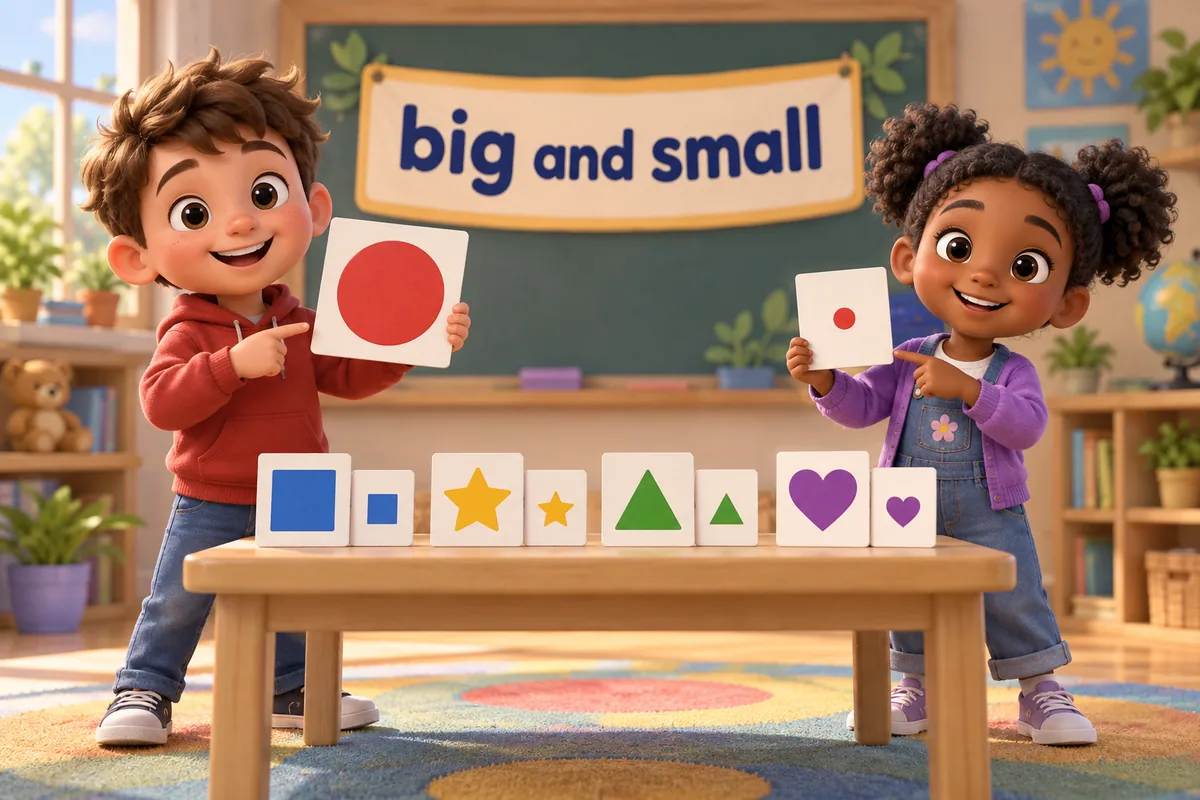
| big | small | The big drum made a deep sound, and the small bell made a high one. |
| hot | cold | The tea was hot, so she added cold milk. |
| happy | sad | He was happy to win but sad to leave his team. |
| fast | slow | A fast train overtook the slow bus. |
| tall | short | The tall player passed to the short guard. |
| light | heavy | A light bag is easier to carry than a heavy case. |
| strong | weak | A strong rope held the weak branch. |
| clean | dirty | Keep the clean cups away from the dirty plates. |
| full | empty | The full jug tipped near the empty glass. |
| loud | quiet | The loud bell woke the quiet room. |
| hard | soft | The hard bench felt worse than the soft cushion. |
| early | late | An early start beats a late rush. |
| open | closed | The open gate faced a closed door. |
| wet | dry | Wet boots dry beside a dry mat. |
| new | old | A new coat can replace an old jacket. |
| young | old | A young pup copied an old dog. |
| rich | poor | A rich harvest fed a poor village. |
| cheap | expensive | A cheap pen can outlast an expensive one. |
| near | far | The near hill looked smaller than the far peak. |
| high | low | A high shelf needs a low stool. |
| wide | narrow | A wide road narrowed to a narrow lane. |
| deep | shallow | The deep pool felt calmer than the shallow edge. |
| sharp | blunt | A sharp knife cut where the blunt one slipped. |
| sweet | sour | The sweet jam needed a sour lemon. |
| tidy | messy | A tidy desk helps a messy drawer. |
| brave | frightened | The brave guide calmed the frightened child. |
| polite | rude | A polite reply is better than a rude one. |
| careful | careless | A careful reader spots a careless error. |
| simple | complicated | A simple plan beats a complicated one. |
| common | rare | A common word can hide a rare meaning. |
The thirty pairs above give sixty words, and the same pattern extends to the full set of one hundred. Learn the pair as a unit rather than one word at a time, because the memory holds the contrast better than the single item.
Some adjectives cannot be compared at all, and absolute adjectives that resist comparison explains why very perfect is a slip. Watch for the trap in the confused pair bored and boring, where the two forms are not true opposites.
How do you use antonyms for adjectives in a sentence?
Opposites earn their place when a sentence sets two qualities against each other, and the grammar stays simple as long as both words keep the adjective slot.
| Pattern | Example | What it signals |
|---|---|---|
| antonym + but + antonym | The room was small but bright. | A contrast between two qualities of one thing. |
| antonym + and + antonym | The trail was long and steep. | Two qualities that combine. |
| more + antonym + than | The test was harder than the practice. | A comparison across two items. |
| not + antonym | The answer was not correct. | A polite way to deny a quality. |
| antonym pairs as nouns | The difference between hot and cold matters. | The pair becomes a named contrast. |
Adjective antonyms in a sentence: examples across contexts
The same opposite pair behaves differently depending on where it appears, and the context decides which word a writer reaches for first.
| Context | Example sentence | Why this works |
|---|---|---|
| Classroom | A tidy desk helps you find a messy idea. | Two qualities of study habits sit side by side. |
| Homework | The first draft was rough, so the second was smooth. | A before-and-after contrast drives the sentence. |
| Story time | The brave mouse outwitted the frightened cat. | Opposite characters make the plot clear to young readers. |
| Playground | Run on the dry path, not the wet grass. | A warning pairs the safe and unsafe options. |
| Sports coach | A slow start beats a careless finish. | Two faults are weighed against each other. |
| Library notice | Keep the shelves tidy, never messy. | A rule states the wanted and unwanted state. |
| Family dinner | The soup was hot, but the bread was cold. | Two dishes are described with one contrast. |
| Science lesson | A deep pool is calmer than a shallow one. | A comparison uses the pair as a measurement. |
| Quiz question | Which is the antonym of generous? | The pair becomes the subject of the question itself. |
How do you choose the right antonym?
Several words can oppose the same adjective, so the choice depends on the exact shade you want and the register of the sentence.
| You want to say | Choose | Reason |
|---|---|---|
| A simple lack of a quality | short, cold, dull | The plain opposite fits everyday speech. |
| A strong or formal contrast | inadequate, frigid, tedious | A longer word raises the register. |
| A moral judgement | stingy, cruel | The opposite carries the tone you intend. |
| A scientific contrast | shallow, low, dry | A precise term matches the measurement. |
| A playful contrast | teensy, chilly, sleepy | An informal word suits a light tone. |
The small words in articles that sit before an adjective decide whether you write a tidy desk or an untidy one.
Word forms and grammar of adjective antonyms
Prefixes do most of the work in English opposites, and a few adjectives swap the whole word instead.
| Form | How it is built | Example |
|---|---|---|
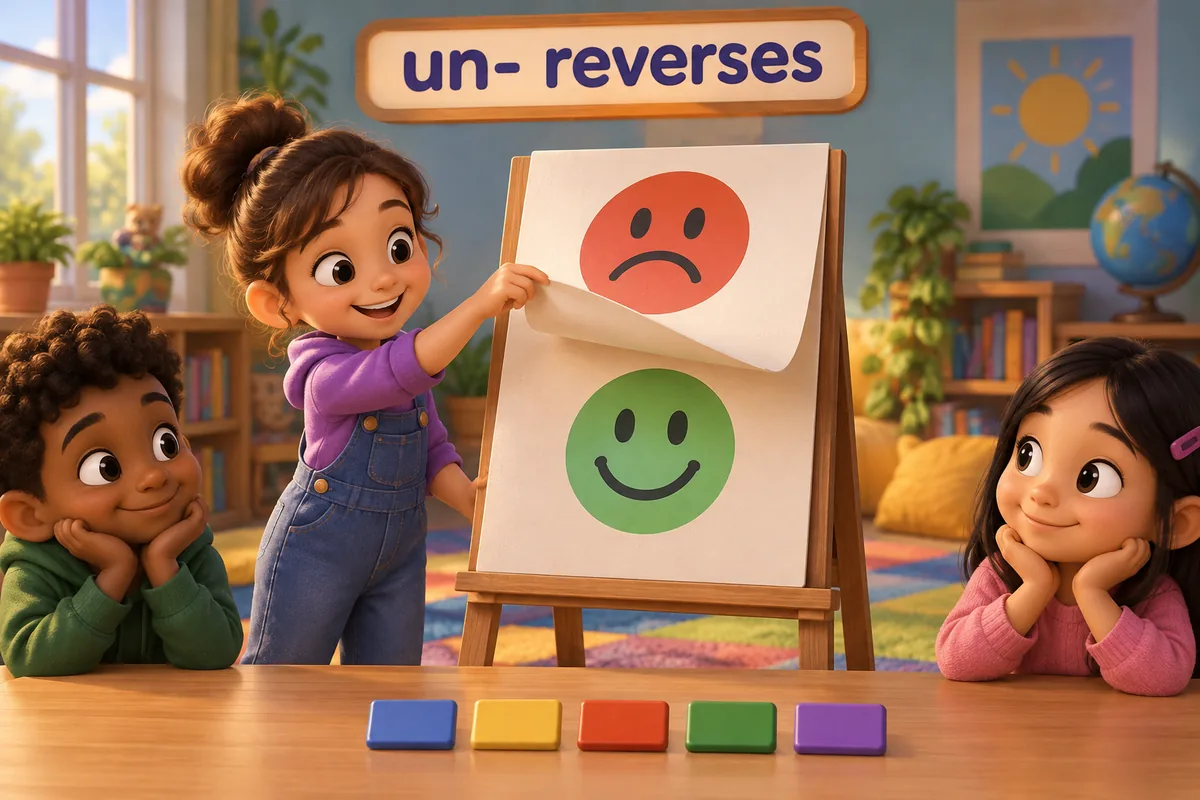
| un- | prefix added to an adjective | kind becomes unkind |
| in- | prefix before many Latin roots | visible becomes invisible |
| im- | prefix before p, b or m | possible becomes impossible |
| dis- | prefix for ideas and loyalty | honest becomes dishonest |
| non- | prefix that means not belonging to a class | fiction becomes nonfiction |
| whole-word swap | an unrelated word is the opposite | good becomes bad |
Common mistakes with adjective antonyms
Most errors come from matching the wrong word class or forcing a prefix that English does not allow.
Incorrect: The room was very dead. Correct: The room was silent. Rule: Dead and alive are ungradable opposites, so very dead is odd; use a gradable word instead.
Incorrect: She was very unpossible to reach. Correct: She was impossible to reach. Rule: English uses im- before p, not un-.
Incorrect: He felt happily and sad. Correct: He felt happy and sad. Rule: An antonym must keep the same part of speech, so the adjective happy pairs with sad.
Incorrect: The answer was disvisible. Correct: The answer was invisible. Rule: The correct prefix for visible is in-, not dis-.
Incorrect: This soup is more hot than that one. Correct: This soup is hotter than that one. Rule: Short gradable adjectives take -er rather than more.
Practice using antonyms for adjectives
Try each item, then read the reason underneath before you move on.
- Fill in the blank: The elephant is big, but the mouse is ________.
- Fill in the blank: The ice felt cold after the ________ soup.
- Choose the better word: The night was very ________ . (filled / dark)
- Correct the error: His answer was very unpossible to read.
- Build a sentence: describe a tidy desk and a messy drawer in one contrast.
- Spot the register: which fits a science report, The pool was deep, or The pool was super deep?
Answers
- small. Big and small are a standard gradable pair for size.
- hot. The pair hot and cold marks the temperature contrast.
- dark. Filled describes a container, so dark is the right opposite of the night.
- His answer was impossible to read. English uses im- before the letter p, not un-.
- Sample: The tidy desk showed a plan, while the messy drawer hid every tool. The two adjectives keep the same slot and contrast cleanly.
- The pool was deep. A science report needs a plain measurable adjective rather than an intensifier.
The bottom line
100 antonyms for adjectives is really a way to double your describing words, since every adjective you learn can bring its opposite. Match the pair to the same part of speech, choose a prefix the language actually allows, and let the contrast carry the sentence. Then keep one plain opposite and one formal opposite ready for each idea.
Frequently asked questions about antonyms for adjectives
Are antonyms always single words?
No. An opposite can be a phrase, so a sentence such as the room was not warm rests on not warm rather than a single antonym. Single-word opposites are easier to memorise, but a negated phrase is often more precise when no exact opposite exists.
Can one adjective have more than one antonym?
Yes, because a word can carry several senses. Bright opposes dark for light and dull for intelligence, so the correct antonym depends on the meaning in play. Check the sentence, then pick the opposite that matches the sense you intend.
Do all adjectives take the prefix un-?
No. English spreads the work across un-, in-, im-, dis- and non-, and a few adjectives take no prefix at all. Possible becomes impossible with im-, while kind becomes unkind. When you are unsure, check a dictionary rather than guess the prefix.
Why do good and bad count as antonyms?
Their meanings sit at opposite ends of a scale of quality, so they function as antonyms even though they share no letters. English calls this a whole-word or suppletive opposite, and it appears in pairs such as good and bad, or many and few.