Complex and compound complex sentences examples show how clauses combine into longer, clearer structures. A compound sentence joins two independent clauses; a complex sentence adds a dependent clause; a compound-complex sentence does both at once. “When the rain stopped, we left, and the field dried” contains all three moves.
complex and compound complex sentences examples at a glance
- A compound sentence joins two independent clauses with a coordinating conjunction such as and, but or so.
- A complex sentence pairs one independent clause with at least one dependent clause.
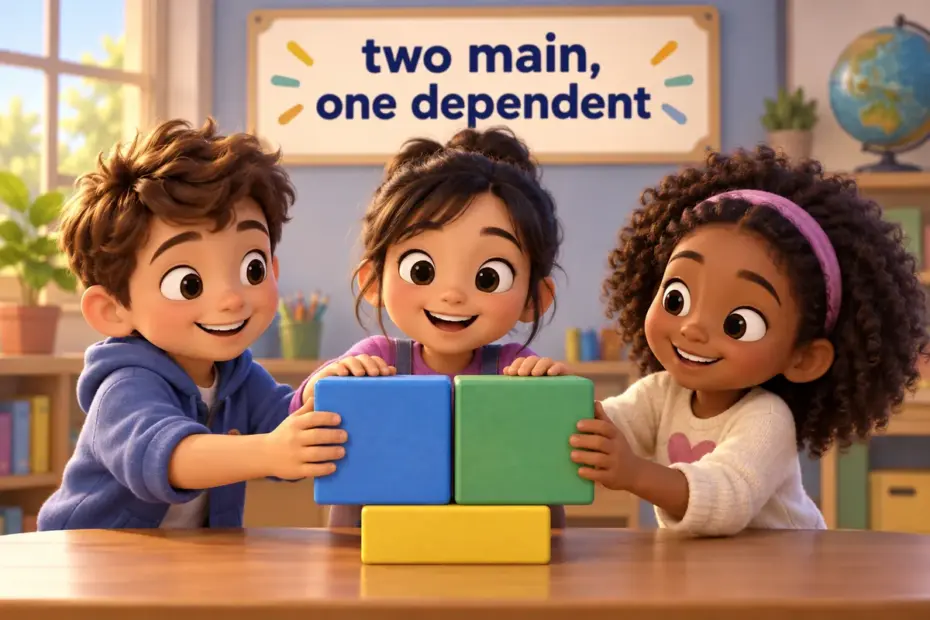
- A compound-complex sentence contains two or more independent clauses and at least one dependent clause.
- Coordinating conjunctions (for, and, nor, but, or, yet, so) join two equal clauses.
- The commonest error is a missing comma when a dependent clause opens the sentence.
What is a complex sentence and what is a compound sentence?
A compound sentence holds two independent clauses joined by a coordinating conjunction, while a complex sentence holds one independent clause and at least one dependent clause. The deciding test is the number of main clauses: two for compound, one for complex. A slower walk-through of the basic type sits in how a complex sentence is built.
| Type | Structure | Example |
|---|---|---|
| Simple sentence | One independent clause | The bell rang. |
| Compound sentence | Two independent clauses joined by a coordinating conjunction | The bell rang, and the pupils left. |
| Complex sentence | One independent clause plus at least one dependent clause | When the bell rang, the pupils left. |
| Compound-complex sentence | Two or more independent clauses plus at least one dependent clause | When the bell rang, the pupils left, and the teacher locked the door. |
Read the structure column first; the number of independent clauses settles which type a sentence belongs to before you look at punctuation.
What is a compound-complex sentence?
A compound-complex sentence combines both patterns: two or more independent clauses plus at least one dependent clause. It is the longest of the four types, which is why teachers use it to test clause control. The plain two-clause form is covered in examples of a compound sentence.
| Feature | Compound | Complex | Compound-complex |
|---|---|---|---|
| Independent clauses | two or more | one | two or more |
| Dependent clauses | none | one or more | one or more |
| Typical connector | and, but, or, so | because, when, although, if | both together |
| Punctuation | comma before the conjunction | comma after an opening clause | both rules apply |
| Example | She sang, and he danced. | She sang because she was happy. | Because she was happy, she sang, and he danced. |
| Common error | comma splice with no conjunction | missing comma after the opener | leaving out one clause type |
Choose the compound-complex form only when a sentence genuinely needs two main actions and a condition or reason at the same time; otherwise the shorter types read better.
complex and compound complex sentences examples across contexts
The three patterns appear in every register; the setting changes the vocabulary, not the clause structure. A tidy two-part example such as a binary compound sentence shows how two joined statements can still feel balanced.
| Context | Example sentence | Why this works |
|---|---|---|
| Classroom | When the experiment finished, the pupils wrote, and the teacher collected the trays. | a dependent clause opens, then two main clauses |
| News report | Because the bridge was closed, traffic slowed, and buses took a longer route. | a reason plus two results |
| Academic writing | Although the sample was small, the results held, and the pattern matched earlier work. | a concession with two findings |
| Workplace email | If the client agrees, we will start on Monday, and we will confirm the schedule. | a condition plus two future steps |
| Narrative | The rain had stopped, so we left, although the ground was still wet. | two main clauses with a trailing concession |
| Science writing | When the temperature rises, the metal expands, and the joint loosens. | a cause with two effects |
| Legal writing | Where the lease is silent, the tenant pays, and the landlord must repair. | a condition plus two obligations |
| Conversation | After the film ended, we grabbed a coffee, and we walked home. | a time clause with two actions |
| Travel writing | The path was steep, but the view was clear, and we rested often. | a contrast plus a second main clause |
| Online review | Since the shop opened late, I waited, and I still bought the coat. | a cause with two outcomes |
Which sentence type should you use?
Match the type to the number of main ideas the sentence carries; a sentence with one main idea and a detail almost never needs two independent clauses.
| Situation | Use | Example |
|---|---|---|
| Two equal facts | compound | The sky darkened, and the wind rose. |
| One idea depends on another | complex | We stayed inside because the wind rose. |
| Two facts plus a condition | compound-complex | Because the wind rose, we stayed inside, and the lights flickered. |
| A short pair of items | simple | The wind and rain arrived. |
| A formal cause and result | complex | The road closed after the river flooded. |
| A balanced contrast | compound | The plan was sound, but the budget was small. |
Register matters too: news reports and academic writing favour the complex and compound-complex forms, while conversation leans on compound sentences because they mirror the way speakers chain actions.
Clause patterns and connector grammar
Connectors carry the grammar, and an adjective clause is one kind of dependent clause; its internal structure is set out in adjective clauses in complex sentences.
| Element | Function | Example |
|---|---|---|
| Coordinating conjunction (for, and, nor, but, or, yet, so) | joins two independent clauses | She sang, and he played. |
| Subordinating conjunction (because, although, when, if) | opens a dependent clause | When she sang, he played. |
| Relative pronoun (who, which, that) | begins an adjective clause | The song that she chose was slow. |
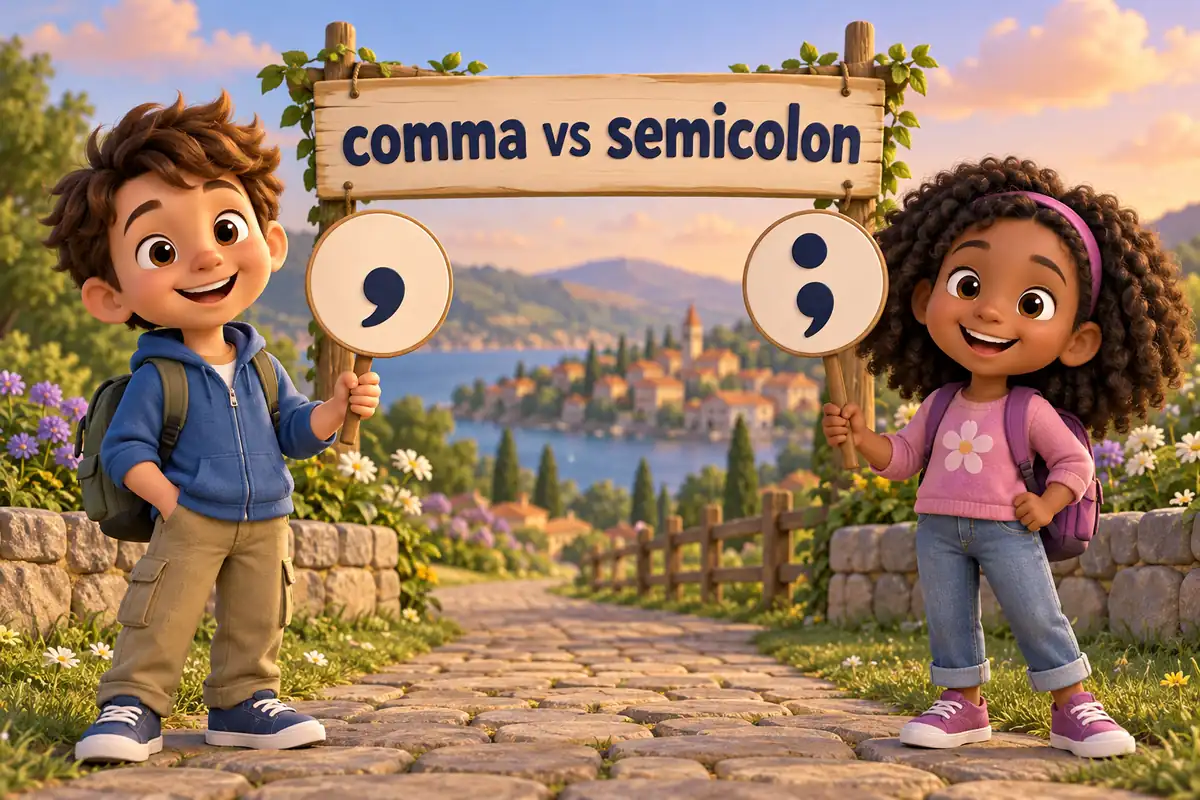
| Semicolon | joins two close clauses with no conjunction | She sang; he played. |
| Comma after an opening dependent clause | separates that clause from the main clause | Although it rained, the match went on. |
| Conjunctive adverb (however, therefore) | links clauses with a semicolon and comma | It rained; however, the match went on. |
Learn to name the connector and the clause type together; the label predicts the punctuation, so the two decisions collapse into one.
Common mistakes with complex and compound complex sentences
Mistake 1: comma splice. Incorrect: The bell rang, the pupils left. Correct: The bell rang, and the pupils left. Rule: two independent clauses need a conjunction or a semicolon, not a comma alone.
Mistake 2: missing comma after an opener. Incorrect: When the bell rang the pupils left. Correct: When the bell rang, the pupils left. Rule: an opening dependent clause takes a comma before the main clause.
Mistake 3: comma before an essential clause. Incorrect: The book, that she wrote, sold well. Correct: The book that she wrote sold well. Rule: an essential dependent clause takes no commas.
Mistake 4: dependent-clause fragment. Incorrect: Because the traffic was heavy. Correct: Because the traffic was heavy, we were late. Rule: a dependent clause must attach to an independent clause.
Mistake 5: double connection. Incorrect: Although she was tired, but she finished. Correct: Although she was tired, she finished. Rule: use either the subordinating conjunction or the coordinating conjunction, never both.
Practice using complex and compound complex sentences examples
- Fill in the blank: The lights went out, ___ the band kept playing.
- Choose the better word: I stayed home (because / but) it was raining hard.
- Correct the error: When the bus arrived the students boarded.
- Build a sentence: combine two main clauses and one reason using although.
- Spot the register: which line suits a news report, (a) Rain came, we ran, or (b) Because rain came, we ran, and the game ended?
- Fill in the blank: She packed the bags ___ everyone was asleep.
Answers
- and, because a comma before a coordinating conjunction joins the two independent clauses.
- because, because it introduces the reason as a dependent clause.
- When the bus arrived, the students boarded; the opening dependent clause needs a comma.
- Although the team was late, they warmed up, and the match began on time; the pattern is dependent clause plus two main clauses.
- Example (b), because it uses complete clauses and correct punctuation for a report.
- while, because while opens a dependent clause of time.
The bottom line
Complex and compound complex sentences examples differ by clause count: compound joins two main clauses, complex adds a dependent clause, and compound-complex does both. Check the number of independent clauses first, then apply the two punctuation rules, and the four sentence types stay distinct. Practise the comma after an opening dependent clause, because it is the error readers notice most.
Frequently asked questions about these sentence types
Is a compound-complex sentence the same as a complex sentence?
No. A complex sentence contains one independent clause and at least one dependent clause, while a compound-complex sentence contains two or more independent clauses as well as at least one dependent clause. The compound-complex type simply adds a second main clause to the complex pattern.
Do compound sentences always need a comma?
A comma is needed before the coordinating conjunction when it joins two independent clauses, as in the pupils finished, and the bell rang. No comma is needed when the conjunction joins only words or short phrases such as bread and butter. Test whether each side could stand alone.
What punctuation does a compound-complex sentence use?
It follows both rules at once. Place a comma before the coordinating conjunction that joins the main clauses, and place a comma after an opening dependent clause. When the dependent clause comes last and is essential, no comma separates it, which keeps the meaning accurate.
What is the most common mistake with these sentences?
The commonest mistake is joining two independent clauses with only a comma, which creates a comma splice. Add a coordinating conjunction or replace the comma with a period or a semicolon. The second frequent error is leaving out the comma after a dependent clause that opens the sentence.