Ellipsis marks in English are the three dots that signal an omission or a trailing thought, and the rules for spacing and punctuation around them are strict. A single mark covers words left out of a quotation, a pause in dialogue, or a list that continues beyond the page.
Ellipsis marks in English at a glance
- An ellipsis is a set of three dots that marks an omission or a trailing thought.
- In quotations, the dots replace words deliberately left out of the source.
- In dialogue and informal writing, they show a pause or an unfinished sentence.
- A complete sentence that ends with an ellipsis keeps its full stop, making four dots.
- The commonest mistake is using an ellipsis where a comma or a full stop belongs.
What is an ellipsis?
An ellipsis is a punctuation mark made of three dots that signals something missing or unfinished. The same mark does two quite different jobs, one exact and one expressive, and the table sets them apart.
| Use | What it signals | Example |
|---|---|---|
| Omission in a quotation | Words have been cut from the source | The report … was inconclusive. |
| Trailing thought | A sentence fades rather than ends | I thought you might … |
| Pause in dialogue | A hesitation before speech | Well … I suppose so. |
| Unfinished list | More items follow | pens, rulers, erasers … |
The same dots appear throughout the range of punctuation, and these ellipsis in writing notes show how the mark behaves when a quotation is trimmed.
How do you use ellipsis marks in English?
The mechanics are simple once the number of dots and the spacing are fixed, and the table gives the rules writers rely on.
| Rule | What to do | Example |
|---|---|---|
| Number of dots | Three for an omission, four at a full stop | She hesitated … then left. |
| Spacing | Keep the three dots together as one mark | The case … remains open. |
| Around a quotation | Keep the words around it grammatical | He wrote that “the case … remains open”. |
| End of a sentence | Add the sentence full stop before the dots | He paused. … Then he spoke. |
| Never a substitute | Do not replace a needed comma or full stop | Wrong: I came … so I stayed. |
A careful writer treats the dots as a single unit, because separating them into spaced full stops turns a deliberate omission into an accidental punctuation fault. Style guides disagree on the space around the mark, so a writer should pick one convention and hold to it rather than mixing the spaced and unspaced forms in a single document. The safest habit is to read the sentence aloud; if the dots do not mark a real gap or a real pause, they do not belong.
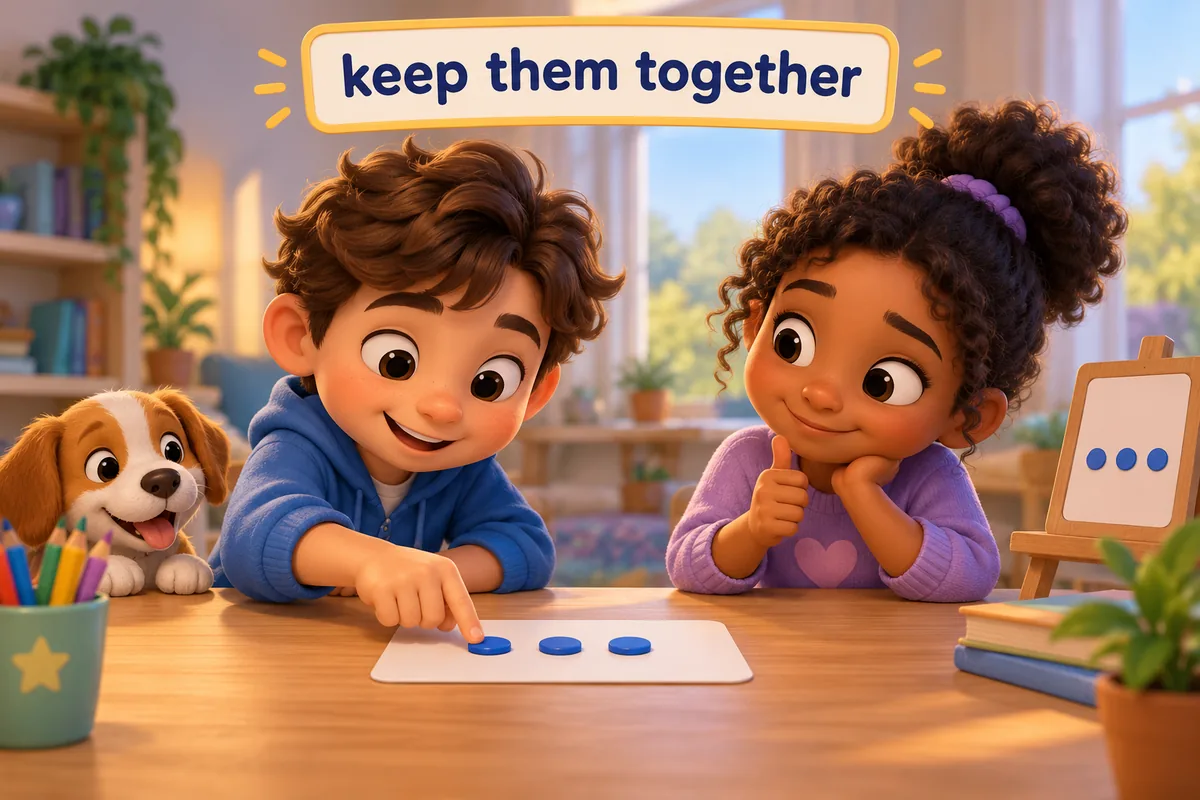
Ellipsis examples across contexts
Because the mark is quiet, its effect changes with the setting, from formal quotation to casual text.
| Context | Sentence | Why this works |
|---|---|---|
| Academic quotation | The data suggest … a gradual decline. | The cut words are signalled cleanly. |
| Novel dialogue | “I only wanted …” she whispered. | The voice trails off. |
| News report | The minister said the plan was … under review. | A partial quote stays honest. |
| Text message | On my way … nearly there. | A loose pause fits the medium. |
| Recipe note | Add nuts, raisins, seeds … anything you like. | The list is shown to keep going. |
| Business email | I will check … and reply by Friday. | The pause reads as a thinking beat. |
| Poetry | And the road … went on. | Spacing slows the line. |
| Advertisement | Everything you need … and more. | The dots hint at extras. |
| Speech transcript | We will … continue the work. | A stumble is marked without rewriting. |
| Social post | Three hours of packing … done. | A comic pause sets up the punchline. |
Spoken pauses written with dots belong beside quotation conventions, and these quotation marks rules show where the opening and closing marks sit around a trimmed quote.
Three dots vs four dots
The number of dots carries meaning, so the difference between three and four is not a matter of style.
| Feature | Three dots | Four dots |
|---|---|---|
| Signals | An omission or a trailing thought | An omission where a full stop was removed |
| Position | Mid-sentence or at the end of an unfinished line | At the end of a complete quoted sentence |
| Full stop | None | A full stop ahead of the three dots |
| Example | I thought you might … | He left. … She stayed. |
| Common fault | Spacing the dots apart | Omitting the leading full stop |
A final reminder sits in these ellipsis sentence examples, where a trimmed quote still reads as a complete thought and the four-dot ending stays grammatical.
Word forms and grammar of ellipsis
The word has a regular plural and a rare adjective relative, and the technical name for the dots themselves is useful to know.
| Form | Part of speech | Example |
|---|---|---|
| ellipsis | noun | Use an ellipsis to mark the cut. |
| ellipses | plural noun | Three ellipses appear in the quotation. |
| elliptical | adjective | The answer was elliptical and brief. |
| ellipsis points | noun phrase | The ellipsis points replace two lines. |
| dot dot dot | informal phrase | He ended the note with a dot dot dot. |
The adjective elliptical carries a second, figurative sense: a person who gives an elliptical answer is being deliberately indirect. Both senses share the idea of something left unsaid, which is why one word covers a punctuation mark and a manner of speech at once.
Common mistakes with ellipsis marks
Five slips appear again and again, and each has a clear repair.
I came . . . so I stayed. Correct: I came, so I stayed. Rule: an ellipsis never replaces a needed comma.
He wrote that the case . . . Correct: He wrote that the case … remains open. Rule: the words around an omission must stay grammatical.
She paused… … then spoke. Correct: She paused … then spoke. Rule: one ellipsis marks one omission; do not stack them.
I thought you might…. Correct: I thought you might … Rule: a trailing thought takes three dots, not four, unless a full sentence is being trimmed.
The results were, … in short, mixed. Correct: The results were, in short, mixed. Rule: cut dots that add no omission or pause.
Practice using ellipsis marks
Try all six items, then check the reasoning in the answers.
- Trim the quotation, cutting two words: The plan was delayed again.
- How many dots end a complete quoted sentence that has been shortened?
- Correct the error: We waited . . . and then left.
- Build a line of dialogue that trails off.
- Choose: does a pause in a message use an ellipsis or a full stop?
- Spot the register: which suits formal writing, a trailing ellipsis or a full stop?
Answers
- The plan … was delayed. The dots mark the words left out.
- Four: a full stop first, then three dots, because a whole sentence was trimmed.
- We waited and then left. No omission or pause is needed, so no dots belong.
- “I thought I could manage …” she said. The dots leave the line unfinished.
- an ellipsis. It softens the pause, while a full stop reads as final.
- a full stop. Formal writing reserves the ellipsis for real omissions.
The bottom line
Ellipsis marks in English are a single mark with three signal jobs: omitting words from a quotation, trailing a thought off, or showing a pause in dialogue. Three dots mark the omission, four appear when a complete quoted sentence is trimmed, and the dots always stay together. Used sparingly, the mark guides a reader; used as loose punctuation, it only looks unfinished.
Frequently asked questions about ellipsis marks
How many dots are in an ellipsis?
An ellipsis normally has three dots, which mark an omission or a trailing thought. When a complete sentence is trimmed at the end, a full stop is added before the three dots, giving four in total. The mark is a single unit, so the three dots should not be spaced apart with gaps between them.
Is there a space before an ellipsis?
Many style guides place a space before and after an ellipsis, so a trimmed quotation reads as the case … remains open. Others leave no space, giving the case…remains open. Both are accepted, and the important rule is to follow one convention consistently, while never spacing the three dots away from each other.
Can you use an ellipsis at the end of a sentence?
An ellipsis can end a sentence when a thought trails off or a quotation is trimmed there. If the sentence being quoted was complete, a full stop precedes the three dots, making four. In formal writing, a full stop is usually clearer, so the trailing ellipsis is best kept for dialogue and informal messages.
What is the difference between an ellipsis and a dash?
An ellipsis suggests a sentence fading away or words being left out, while a dash marks a sharper break or an interruption. A trailing thought takes dots, and a cut-off speech takes a dash. Choosing between them depends on whether the silence is gentle or sudden, not on length alone.