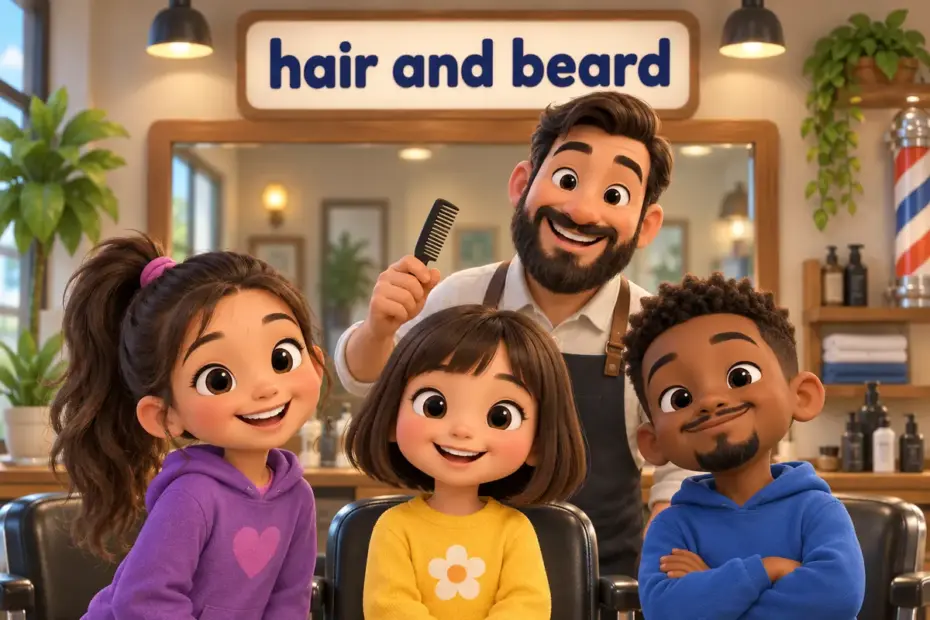
Hair and beard styles name the cuts and shapes people wear, from the sharp bob and the short buzz cut to the neat goatee and the full beard. Each style has a fixed name, so a barber or a friend knows at once which shape is meant. A ponytail gathers the hair at the back.
Hair and beard styles at a glance
- A hair style names the shape of the cut, and a beard style names the shape of the facial hair.
- Short cuts such as the buzz cut and the crew cut keep the head close and tidy.
- Long or gathered styles such as the ponytail, the bun and the braid hold the hair back.
- Facial hair runs from light stubble to a full beard or a shaped goatee.
- The commonest error is treating hair as a countable noun, as in many hairs on the head.
What are hair and beard styles?
Hair and beard styles are the named shapes people give to the hair on the head and the face. A hair style describes a cut, such as the bob or the fade, while a beard style describes the length and outline of the facial hair, such as the goatee or the chinstrap. A set of describing words sits in adjectives for hair.
| Hair style | Shape | Example |
|---|---|---|
| Bob | short cut level with the jaw | She wears a neat bob. |
| Pixie cut | very short, close to the head | A pixie cut frames the face. |
| Buzz cut | closely clipped all over | He asked for a buzz cut. |
| Crew cut | short on top, shorter at the sides | A crew cut looks tidy. |
| Ponytail | hair gathered at the back | She tied a high ponytail. |
| Bun | hair wound into a round shape | A loose bun held her hair. |
| Braid | strands woven into one length | She wove a long braid. |
| Fade | graded short at the sides | A skin fade looks sharp. |
| Undercut | long on top, shaved below | An undercut suits thick hair. |
| Quiff | front lifted above the forehead | He styled a tall quiff. |
Beard styles follow the same logic, naming the outline rather than the material. Light growth is stubble, a small chin patch is a goatee, a strip along the jaw is a chinstrap, and hair that follows the whole jaw is a full beard. A moustache sits above the lip and counts as its own style, so a man can wear a moustache with or without a beard.
How do you use hair and beard style names in a sentence?
Style names are countable nouns, and they usually follow a verb of wearing, cutting or growing.
| Pattern | Example | What it signals |
|---|---|---|
| wear + a + style | She wears a short bob. | the current style |
| get + a + style | He got a short buzz cut. | an action taken |
| grow + a + beard style | He grew a full beard over winter. | a change over time |
| a + style + frames / suits + noun | A pixie cut frames a round face. | an effect of the style |
| ask for + the + style | Ask the barber for a skin fade. | an instruction |
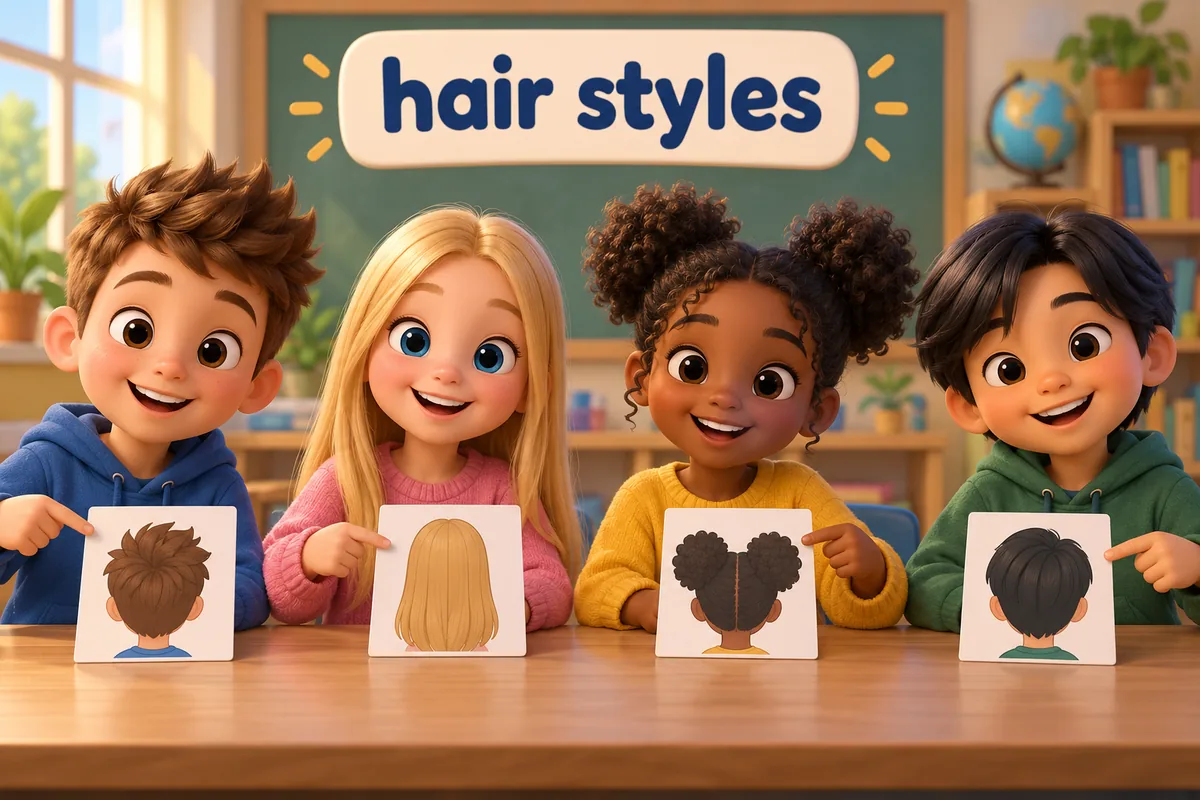
Hair and beard styles: examples across contexts
The names move from a barber chair to a fashion page, and each setting uses a different style word. The plain word appears in hair in a sentence, and a facial-hair detail appears in beard in a sentence.
| Context | Example sentence | Why this works |
|---|---|---|
| Barber shop | Ask the barber for a skin fade. | a clear instruction |
| Fashion page | A chin-length bob returned this season. | a trend note |
| Conversation | Do you think a quiff would suit me? | an everyday question |
| Story | He grew a full beard during the long winter. | narration |
| Workplace | Keep the beard neatly trimmed for an office. | a grooming standard |
| Classroom | Draw a chinstrap beard on the outline. | a drawing task |
| Family | Her grandmother wore her hair in a bun. | a description |
| Sports | The goalkeeper sports a short crew cut. | a specific detail |
| Film | The actor grew a moustache for the role. | a reason given |
| Travel | She wove a single plait before the hike. | a practical detail |
Which hair or beard style should you mention?
Name the style that matches the shape, because a bob and a pixie cut are not the same length.
| Situation | Pick | Example |
|---|---|---|
| A low-maintenance cut | buzz cut | He asked for a buzz cut. |
| Keeping hair off the face | ponytail or bun | She tied a high ponytail. |
| A formal, tidy look | crew cut and neat beard | A crew cut looks tidy. |
| A light, unshaven look | stubble | A day of stubble looked relaxed. |
| A shaped chin | goatee | He trimmed a neat goatee. |
The style name should match the shape a reader would see, so a bob stops at the jaw while a pixie cut stays close to the head. For beards, stubble describes light growth, a goatee covers the chin alone, and a full beard follows the jaw. Naming the style rather than saying a nice haircut keeps a description exact.
Word forms and grammar of hair and beard styles
The words for hair and beards change shape in predictable ways, and countability trips most learners.
| Form | Part of speech | Example |
|---|---|---|
| hair | noun (uncountable) | Her hair is long and dark. |
| a hair | noun (countable, one strand) | A single hair fell on the page. |
| hairs | plural noun (strands) | A few grey hairs appeared. |
| beard | noun | He grew a beard. |
| beards | plural noun | The shop trims beards and moustaches. |
| bearded | adjective | A bearded man waved. |
| styled | verb (past) | She styled her hair before the party. |
| trimmed | verb (past) | He trimmed the beard short. |
Common mistakes with hair and beard styles
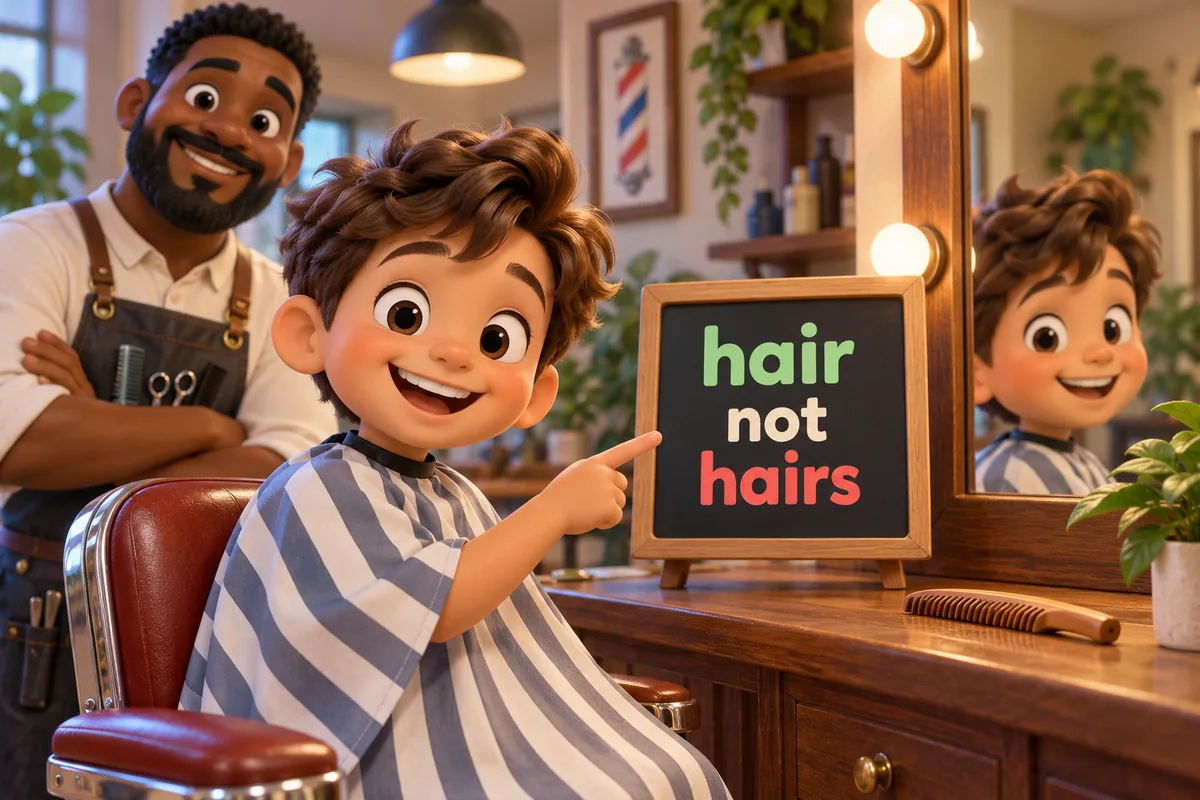
Mistake 1: counting hair as separate pieces. Incorrect: She cut her hairs short. Correct: She cut her hair short. Rule: hair on the head is uncountable, so it takes no plural.
Mistake 2: a plural beard with the article a. Incorrect: He grew a beards. Correct: He grew a beard. Rule: a comes before a singular countable noun.
Mistake 3: treating plait and braid as different styles. Incorrect: A plait is not a braid. Correct: A plait and a braid are the same style. Rule: braid is common in American writing and plait in British writing, but both name one way of weaving hair.
Mistake 4: the wrong verb for a beard. Incorrect: He made a beard. Correct: He grew a beard. Rule: hair grows, so grow is the verb, not make.
Mistake 5: a singular noun after a number. Incorrect: He asked for two buzz cut. Correct: He asked for two buzz cuts. Rule: a number greater than one takes the plural noun.
Practice using hair and beard styles
- Fill in the blank: A very short cut close to the head is called a ___ cut.
- Choose the better word: She keeps her long hair in a (bun / beard).
- Correct the error: He grew a beards last winter.
- Build a sentence: use “a + style + suits + noun” with pixie cut about a face.
- Spot the register: which suits a barber note, (a) Chop a bit off, or (b) A number-two fade with a trimmed chinstrap?
- Fill in the blank: He asked the barber for a skin ___.
Answers
- buzz, because a buzz cut is clipped very close to the head.
- bun, because a bun gathers long hair at the back.
- He grew a beard last winter; the article a takes a singular noun.
- A pixie cut suits a round face.
- (b), because a barber note gives precise, specific lengths.
- fade, because a skin fade is graded short at the sides.
The bottom line
Hair and beard styles are fixed names for the shapes people wear, from the bob and the buzz cut to the goatee and the full beard. Use the exact style name when a reader needs the shape, and remember that hair on the head is uncountable while a single strand is one hair. More describing words sit in adjectives for beard, and a figurative phrase appears in hair raising in a sentence.
Frequently asked questions about hair and beard styles
What are the main hair styles?
Common hair styles include the bob, the pixie cut, the buzz cut, the crew cut, the ponytail, the bun, the braid, the fade, the undercut and the quiff. Each name describes the cut or the way the hair is held, so a barber can picture the shape at once.
What are the main beard styles?
Common beard styles include light stubble, a short trimmed beard, a full beard, a goatee, a chinstrap, mutton chops, a van dyke and a moustache. The name usually describes the outline of the facial hair rather than its colour or thickness.
Is hair countable or uncountable?
Hair on the head is uncountable, so you say her hair is long rather than her hairs are long. When you mean a single strand, hair becomes countable, as in a hair fell on the page, and a few grey hairs is also correct.
What is the difference between a braid and a plait?
A braid and a plait name the same style, in which three or more strands are woven together. Braid is the usual word in American writing and plait in British writing, so the two words describe one hairstyle rather than two different ones.