Healthy food for kids is the everyday mix of fruit, vegetables, grains, protein and dairy that helps a child grow, think and play. Children learn the names of these foods long before they learn the reasons behind them. “I would like an apple, please,” names a healthy choice in one short sentence.
Healthy food for kids at a glance
- Healthy food for kids comes from five simple groups: vegetables, fruit, grains, protein and dairy.
- The usual sentence pattern is a food name plus a describing word, as in a crunchy apple.
- Children recognise the words fresh, ripe and crunchy earlier than the word nutritious.
- Water belongs in the same conversation, because drinks matter as much as meals.
- The commonest mistake is calling one food healthy on its own, with no thought for the whole day.
What is healthy food for kids?
Healthy food for kids is the set of foods that supply energy, fibre, vitamins and protein without too much added sugar or salt. The word healthy describes a pattern of eating across a day rather than a single item, so an apple and a biscuit can both belong to a balanced week. Each group below does a different job in the body.
| Group | Examples | Example sentence |
|---|---|---|
| Vegetables | carrot, peas, spinach, tomato | We added peas to the rice. |
| Fruit | apple, banana, grapes, orange | She packed a banana for break time. |
| Grains | bread, rice, pasta, oats | Oats make a warm breakfast. |
| Protein | egg, beans, fish, chicken | He ate beans on toast. |
| Dairy | milk, yoghurt, cheese | A small pot of yoghurt is a quick snack. |
| Water | plain water | Water is the best drink for play time. |
An honest point is worth stating clearly: no single food is healthy by itself, and a label such as low fat does not make a sweet snack a good everyday choice. A child who eats vegetables, fruit and grains most days can enjoy a treat without harming the pattern. The balance across a week matters more than any one meal.
How do you talk about healthy food for kids?
Food talk follows a few easy patterns that let a child name a food, describe it and give a reason. The patterns are short enough to use at the table or in a shopping aisle.
| Pattern | Example | What it signals |
|---|---|---|
| I eat + food | I eat fruit every day. | a simple habit |
| Food + is good for + noun | Milk is good for strong bones. | names a benefit |
| A healthy snack is + noun | A healthy snack is an apple. | defines a choice |
| I prefer + food + to + food | I prefer grapes to sweets. | a comparison of foods |
| Food + keeps me + adjective | Oats keep me full all morning. | links food to a feeling |
Healthy food for kids across contexts
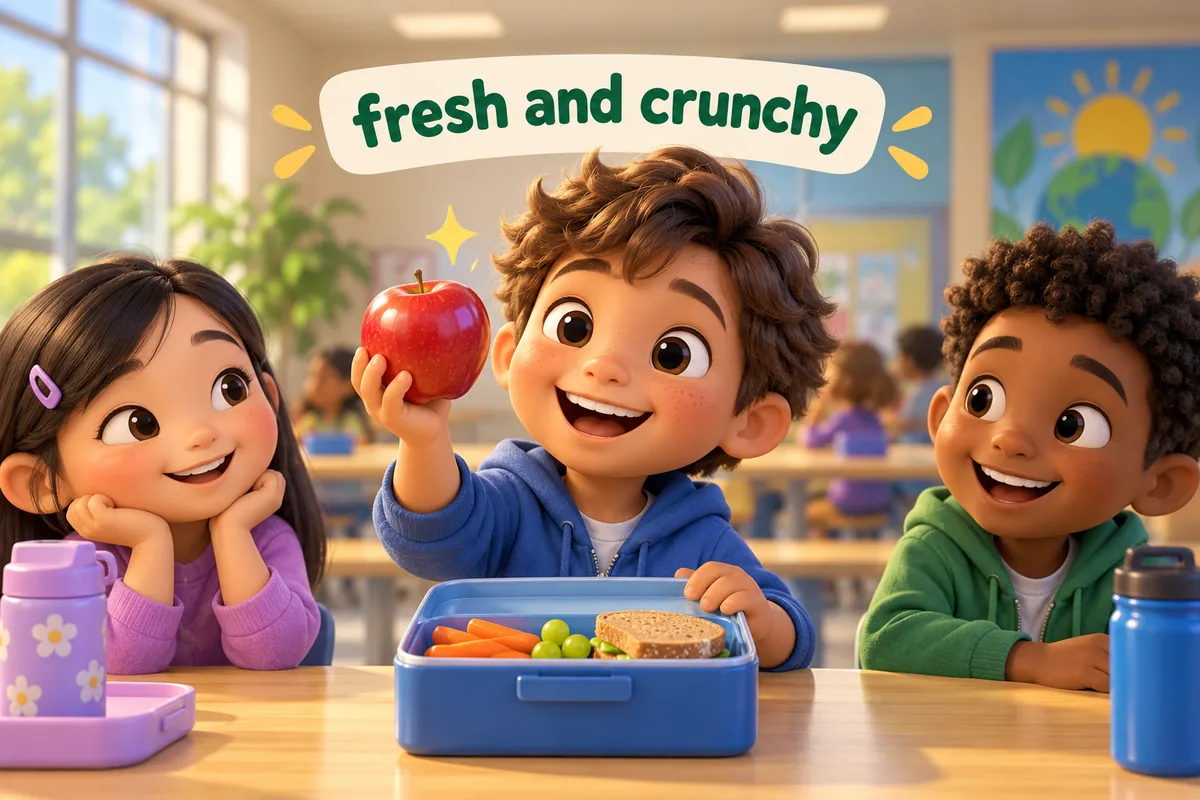
Food words appear from the breakfast table to the supermarket, and each setting calls for a slightly different sentence. Children build vocabulary fast when they use words for real meals, and pages such as adjectives for food and canned food sentence show how those describing words and food names fit together.
| Context | Example sentence | Why this works |
|---|---|---|
| Breakfast | Oats with banana keep me full. | links a food to a benefit |
| Lunchbox | I packed carrot sticks and cheese. | names two food groups |
| School canteen | May I have the rice and peas, please? | a polite food request |
| Snack time | A handful of grapes is my snack. | defines a healthy snack |
| Family dinner | We had fish with green beans. | describes a balanced plate |
| Birthday party | I had one small cake and lots of fruit. | shows balance, not denial |
| Picnic | We brought bread, tomatoes and water. | lists a simple outdoor meal |
| Supermarket | Let us choose a ripe avocado. | uses a describing word for food |
| Doctor visit | The nurse asked what I eat for breakfast. | reports a daily habit |
| Home garden | We picked spinach for dinner. | connects food to growing |
| Cooking together | Please wash the carrots under the tap. | a clear kitchen instruction |
Which healthy food should a child choose?
The better choice depends on the moment: whether the child is hungry or thirsty, and how close the next meal is. A short comparison table makes the decision simple.
| Moment | Better choice | Weaker choice | Reason |
|---|---|---|---|
| After sport | water and fruit | a fizzy drink | water replaces fluid without added sugar |
| Before a meal | a small vegetable snack | a packet of sweets | a light snack keeps room for dinner |
| Long school day | a wholegrain sandwich | a plain biscuit | grains release energy slowly |
| Breakfast | oats with milk | a sugary cereal | oats fill a child for longer |
| Evening treat | one small portion | a whole bar | portion size decides the balance |
A fussy child often accepts a new food after seeing it several times without pressure. Offering one small taste beside a familiar food works better than a rule, because a rule turns dinner into a contest. It also helps to let the child help with the washing or stirring, since food a child helped prepare tastes more appealing.
Words and phrases linked to food
Healthy food sits inside a family of related words, and grouping them helps a child describe a meal clearly. Young readers can pair lunchbox and mealtime with compound words for kids, then add mood with adjectives for kids such as fresh, sweet and crunchy.
| Word | Type | Example |
|---|---|---|
| healthy | adjective | A healthy lunch includes vegetables. |
| healthily | adverb | She eats healthily most days. |
| fresh | adjective | Fresh fruit tastes best. |
| nutritious | adjective | Beans are a nutritious food. |
| snack | noun | An apple is a good snack. |
Common mistakes with food words
Mistake 1: using healthy to describe a person’s diet loosely. Incorrect: Be healthy and eat. Correct: Eat healthily. Rule: healthy describes a thing; healthily describes how someone eats.
Mistake 2: calling one food healthy on its own. Incorrect: Cake is healthy because it has eggs. Correct: Cake can fit in a healthy week. Rule: healthy describes a whole pattern of eating.
Mistake 3: pluralising uncountable nouns. Incorrect: I ate two rices. Correct: I ate two bowls of rice. Rule: rice and bread are uncountable without a measure word.
Mistake 4: confusing fruit and fruits. Incorrect: I like fruits such as apple. Correct: I like fruit such as apples. Rule: fruit is usually uncountable as a category.
Mistake 5: writing vegetables with a double t. Incorrect: vegetabbles. Correct: vegetables. Rule: the word keeps one b after the two t sounds.
Mistake 6: saying good for to mean tasty. Incorrect: This cake is good for health because it is sweet. Correct: This cake is tasty but sugary. Rule: good for health means nutritious, not pleasant.
Practice using healthy food words
- Fill in the blank: A ___ snack might be a banana or some grapes.
- Choose the better word: (fresh / sugary) for a fruit just picked from a tree.
- Correct the error: She eat vegetables every day.
- Build a sentence: name a breakfast food and say what it does for you.
- Spot the register: which sentence suits a note to a teacher, (a) I bring fruit for snack, or (b) Give me fruit now?
- Fill in the blank: Milk is good ___ strong bones.
Answers
- healthy, because the sentence describes a good food choice.
- fresh, because it means recently picked and full of flavour.
- She eats vegetables every day; the subject is singular, so the verb takes s.
- Oats keep me full all morning, because the pattern links food to a benefit.
- (a), because a note to a teacher uses a calm, polite sentence.
- for, because the pattern is food plus is good for plus a noun.
The bottom line
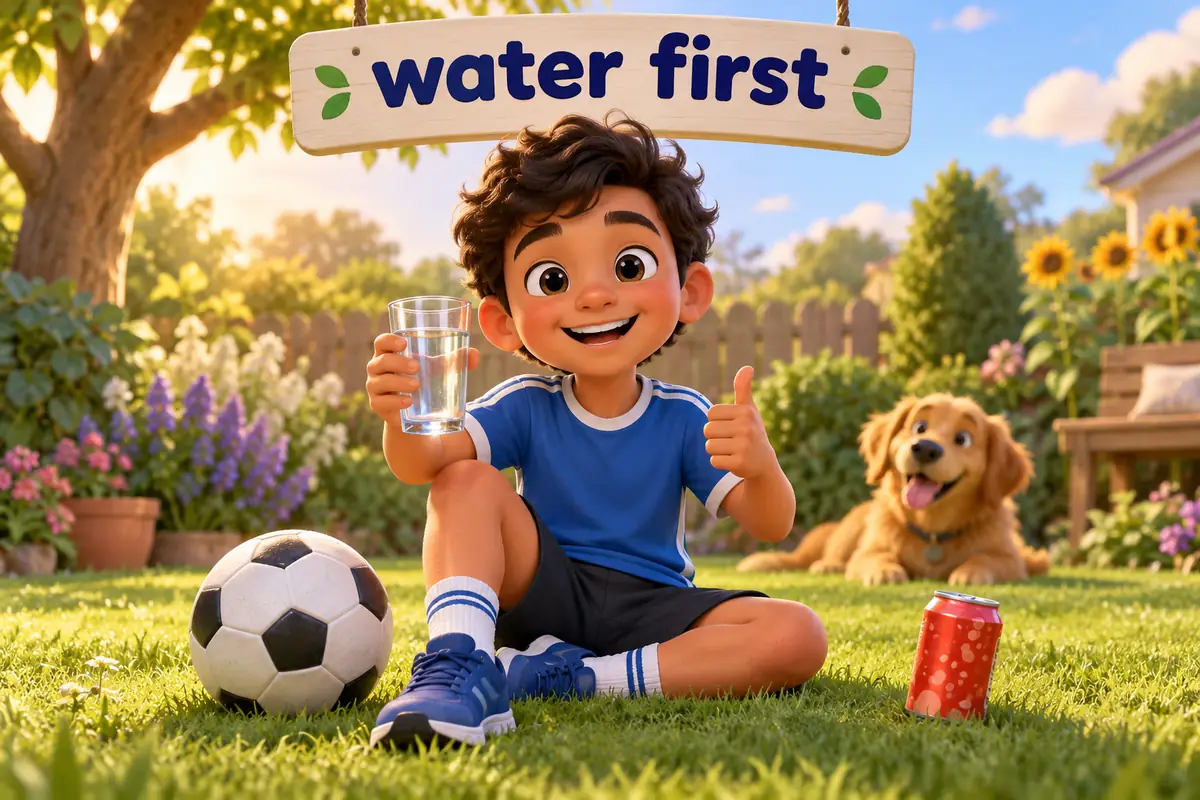
Healthy food for kids is a pattern rather than a single item, built from vegetables, fruit, grains, protein, dairy and water across a week. The useful words are simple ones such as fresh, ripe and crunchy, and the useful pattern links a food to a benefit. Teach the balance, not a ban, and a child will choose well without a fight.
Frequently asked questions about healthy food for kids
What counts as healthy food for a child?
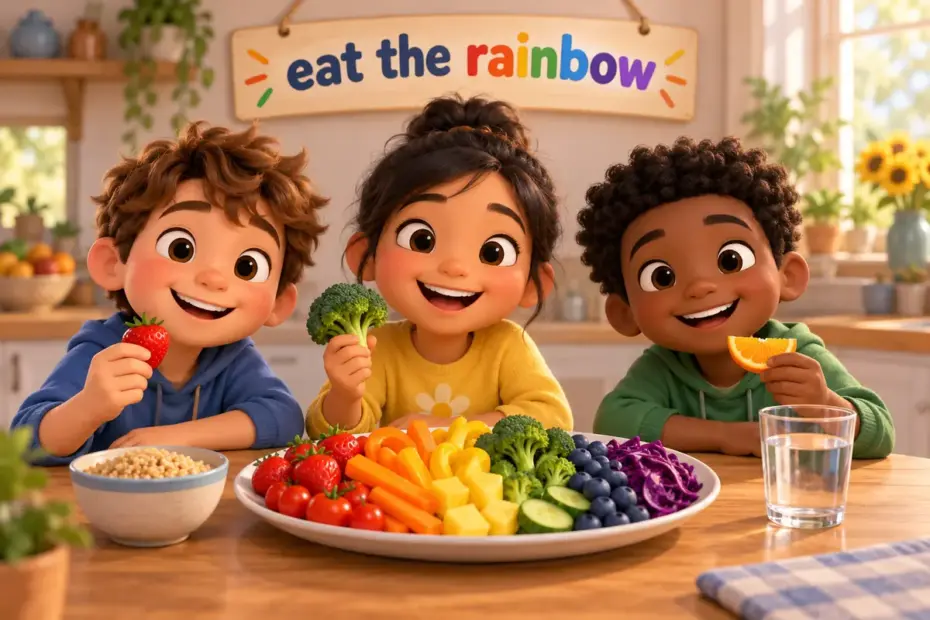
Everyday choices come from vegetables, fruit, wholegrains, protein foods and dairy, with water as the main drink. No single food has to be perfect, because a healthy diet is the sum of many meals across a week. A mix of colours on the plate is a simple guide for parents.
How many fruits and vegetables should a child eat?
Guidance commonly suggests several portions of fruit and vegetables each day, spread across meals and snacks rather than eaten at once. A portion for a young child is small, roughly a handful. Aiming for a variety of colours matters more than counting every item exactly.
Is canned food healthy for kids?
Canned food can be healthy because the canning process keeps much of the nutrition, and it is quick and affordable. The point to watch is added salt and sugar, so choosing cans in water or juice rather than syrup helps. Rinsing canned beans or vegetables lowers the salt further.
How do I get a fussy child to try healthy food?
Offer one small taste beside a familiar food and keep the mood relaxed, because pressure usually creates resistance. Let the child help wash, stir or choose the food, since involvement raises interest. A new food may need many calm introductions before it is accepted, so patience works better than persuasion.