Hospital English conversation phrases help a patient move through a visit with confidence, from reception to the pharmacy. A few set lines cover most needs, such as I have an appointment at ten and I have a sharp pain in my chest. This guide groups the phrases by situation and shows how to describe symptoms clearly and politely.
Hospital English conversation phrases at a glance
- Each stage of a visit has its own set phrases.
- Describing pain needs a location, a type and a time.
- Polite requests open with could, may or would.
- Asking for repetition is normal and helps accuracy.
- The commonest error is saying I am pain instead of I am in pain.
What are hospital English conversation phrases?
Hospital English conversation phrases are the fixed lines a patient uses to explain a problem, answer a question and make a request during care. They are short, direct and polite, and each one fits a stage of the visit. The table groups the most useful phrases by the situation that calls for them, and further example frames sit in hospital in a sentence.
| Situation | Useful phrases | Purpose |
|---|---|---|
| Reception | I have an appointment at ten. | announce your arrival |
| Reception | I am here to see Doctor Ali. | name the person you expect |
| Describing pain | I have a sharp pain in my lower back. | locate and describe a symptom |
| Explaining history | The pain started two days ago. | give a timeline |
| Asking for clarity | Could you say that again, please? | confirm what you heard |
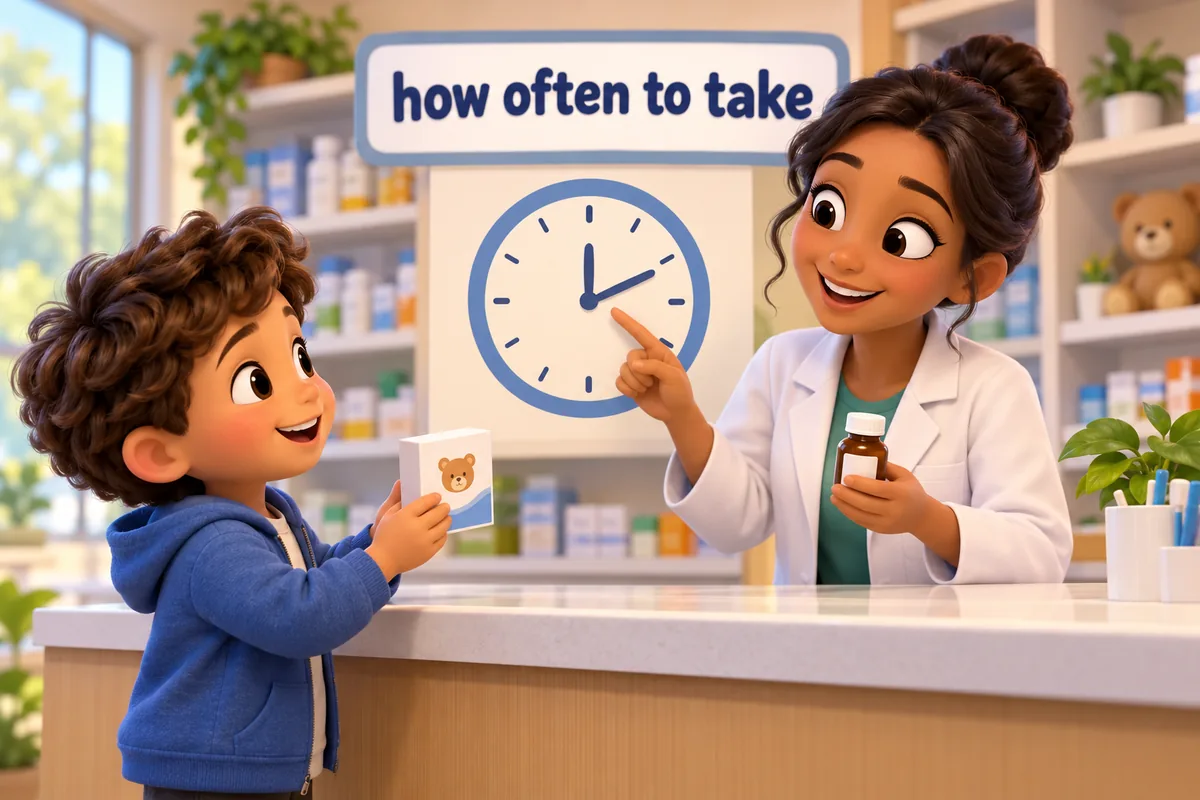
| Pharmacy | How often should I take these tablets? | check the dose |
| Emergency | I need help urgently. | call for immediate care |
| Visiting | What are the visiting hours? | ask about ward times |
How do you describe a symptom in English?
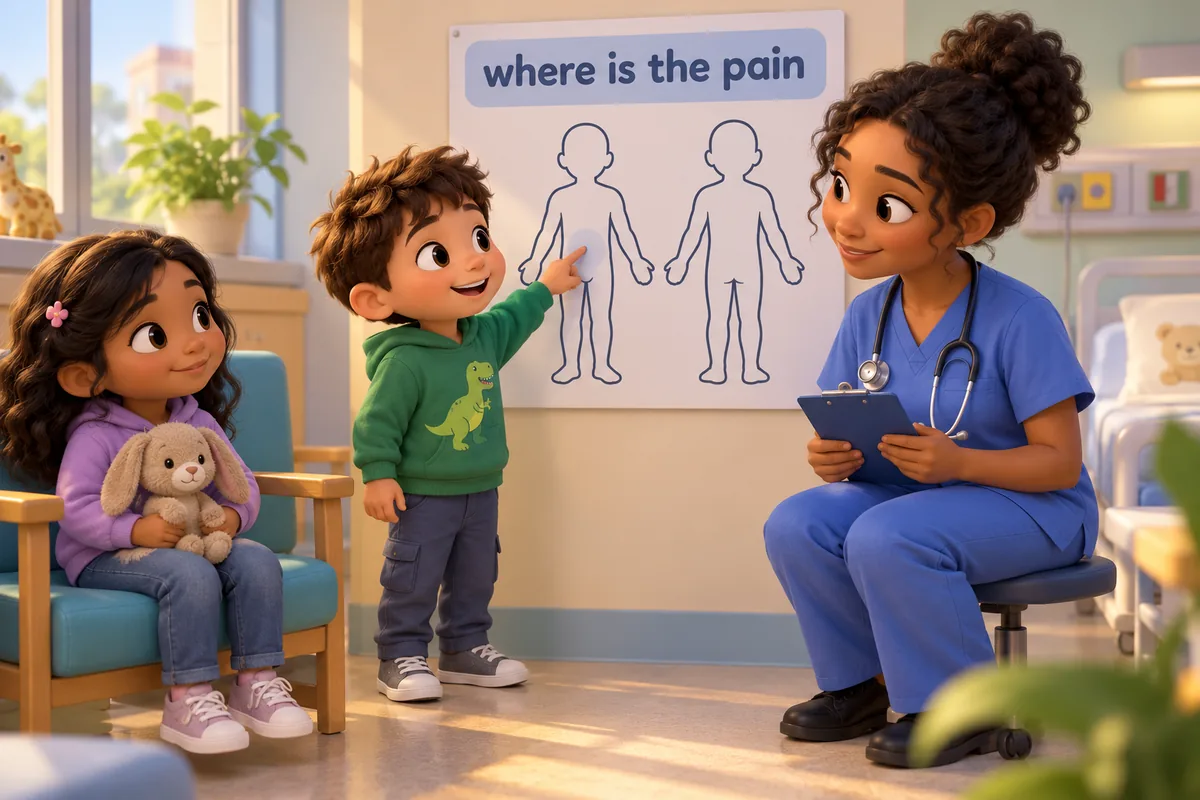
A clear symptom description answers three questions: where it is, what it feels like, and when it began. A doctor can act on I have had a dull ache in my stomach since Monday far faster than on a vague I feel bad. A reply that only says it hurts forces the staff to ask again, which slows the whole visit, while a precise line saves time for everyone. The table shows the pattern with the phrase to use for each type of pain.
| Phrase | When to use it |
|---|---|
| I have a dull ache in my stomach. | a steady, low-level pain |
| I have a sharp pain in my chest. | a sudden, intense pain |
| It hurts when I move my arm. | pain linked to movement |
| I have felt dizzy since morning. | balance problems |
| I have had a fever for three days. | a lasting high temperature |
| I am short of breath. | difficulty breathing |
Hospital English conversation phrases in context
The same lines appear at the desk, in the consulting room and at the pharmacy counter, and each setting shapes the polite form. Reading the phrases in a real exchange fixes them faster than a list, and more example frames sit in conversation in a sentence.
| Context | Sentence | Stage |
|---|---|---|
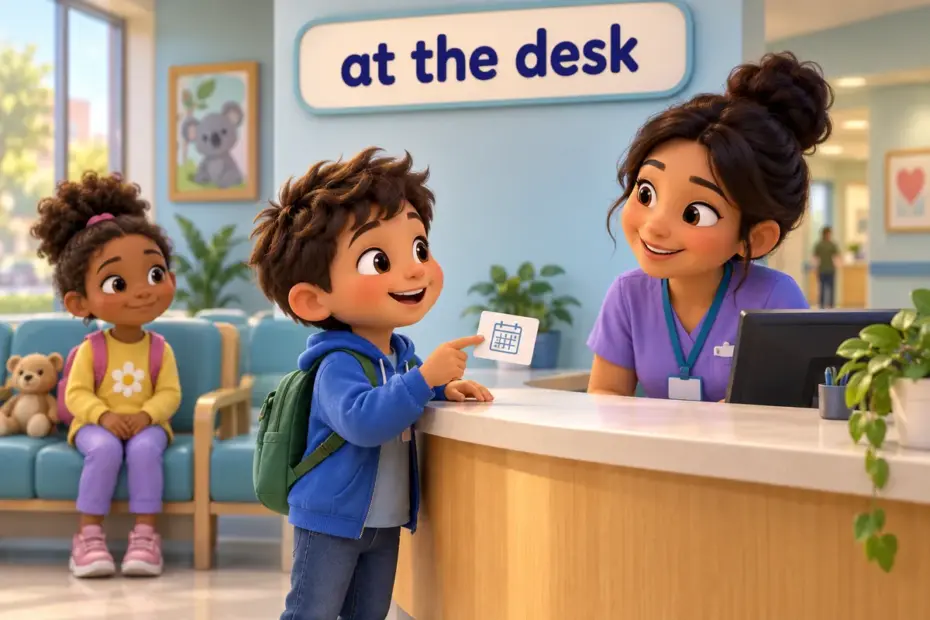
| Reception desk | I have an appointment with Doctor Ray at ten. | arrival |
| Waiting room | Could you tell me where the X-ray department is? | finding your way |
| Triage | The pain is worst when I stand up. | assessment |
| Consulting room | It started three days ago and has not eased. | history |
| Consulting room | Could you explain what the test involves? | asking for clarity |
| Ward | When will the doctor visit today? | ward routine |
| Pharmacy | How many times a day should I take this? | dose check |
| Pharmacy | Are there any side effects I should watch for? | safety check |
| Visiting | What are the visiting hours on this ward? | family visit |
| Emergency | My father has collapsed and needs help urgently. | emergency |
What do you say at each stage of a visit?
Each stage has a phrase that keeps the conversation moving, and choosing the right one shows the staff what you need. The table maps a stage to a line, and the ward shows how much detail each one needs; the wider hospital setting appears in hospital ward in a sentence.
| Stage | What to say | Detail needed |
|---|---|---|
| Arrival | I have an appointment at ten. | name and time |
| Triage | The pain is worst when I stand. | what makes it worse |
| Consultation | Could you explain the treatment? | a clear question |
| Pharmacy | How many times a day should I take this? | the dose |
| Follow-up | When should I come back? | the next appointment |
Word forms and polite requests
Direct speech can sound rude in a hospital, so the phrases usually open with could, may or would. The polite form keeps the request clear while adding distance, and the descriptive words used with it are worth a look in adjectives for hospital. The table turns a blunt line into a standard one.
| Blunt form | Polite form | Use it when |
|---|---|---|
| Repeat that. | Could you say that again, please? | you missed a word |
| What is it? | Could you explain what that means? | a term is unclear |
| I want a doctor. | Could I see a doctor, please? | you ask for a service |
| Help me. | Could you help me, please? | you need assistance |
| Where is the toilet? | Could you tell me where the toilet is? | you ask directions |
Common mistakes with hospital phrases
Mistake 1: I am pain. Incorrect: I am pain in my back. Correct: I am in pain, or I have a pain in my back. Rule: pain is a thing you have or are in, never something you are.
Mistake 2: a symptom with no location. Incorrect: It hurts. Correct: It hurts when I bend my knee. Rule: add where and when so the doctor can act.
Mistake 3: I am fever. Incorrect: I am fever since last night. Correct: I have a fever, or I have had a fever since last night. Rule: a fever is something you have, not something you are.
Mistake 4: a blunt request. Incorrect: Give me the medicine. Correct: Could you give me the medicine, please? Rule: open a hospital request with could for a polite tone.
Mistake 5: a wrong dose question. Incorrect: What time I take this? Correct: How many times a day should I take this? Rule: use a full question form with should for a clear answer.
Practice using hospital phrases
- Fill in the blank: I have a sharp pain ______ my chest.
- Make it polite: Give me a glass of water.
- Correct the error: I am fever since yesterday.
- Build a sentence: describe a dull ache with a location and a start time.
- Choose the better phrase at reception: I have an appointment at ten, or I come at ten.
- Spot the stage: which line suits the pharmacy, How often should I take this, or Where is the X-ray department?
Answers
- in; the preposition marks where the pain is.
- Could you give me a glass of water, please? It opens with could.
- I have had a fever since yesterday; a fever is something you have.
- Sample: I have had a dull ache in my stomach since Monday; it gives place and time.
- I have an appointment at ten; it is the standard reception line.
- How often should I take this; it asks about the dose at the pharmacy.
The bottom line
Hospital English conversation phrases are short, polite and tied to a stage of the visit, so a patient who learns a few lines can speak with confidence. Describe a symptom with a location, a type and a time, and open every request with could or may. Ask for repetition whenever a term is unclear, because accuracy matters more than speed in a hospital.
Frequently asked questions about hospital phrases
How do I describe pain to a doctor in English?
Give three details: where the pain is, what it feels like, and when it began. A clear line is I have had a sharp pain in my chest since last night. Adding what makes it worse, such as bending or breathing, helps the doctor assess you quickly.
What do I say at hospital reception?
State your appointment and the person you expect, as in I have an appointment with Doctor Ray at ten. If you are unsure where to go, add Could you tell me where the department is? Keep the line short and give your name when asked.
What phrases help when I do not understand the doctor?
It is normal to ask for repetition, so use Could you say that again, please? or Could you explain what that means? You can also ask Could you write that down? Asking for clarity is polite and prevents a mistake with medicine or instructions.
What should I say in an emergency?
State the problem and the need for urgent help in a short line, as in My father has collapsed and needs help urgently. Give the location and any known condition next. Keep the words simple, because speed and clarity matter more than polite detail in an emergency.