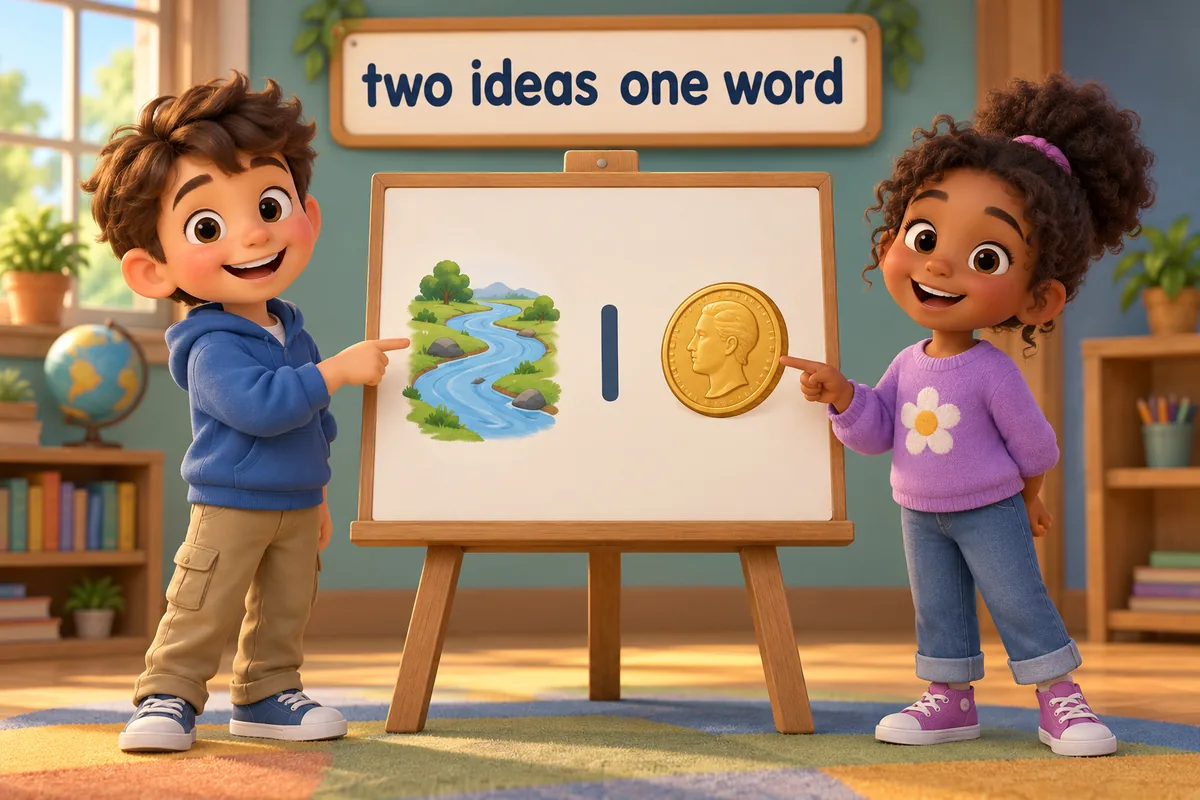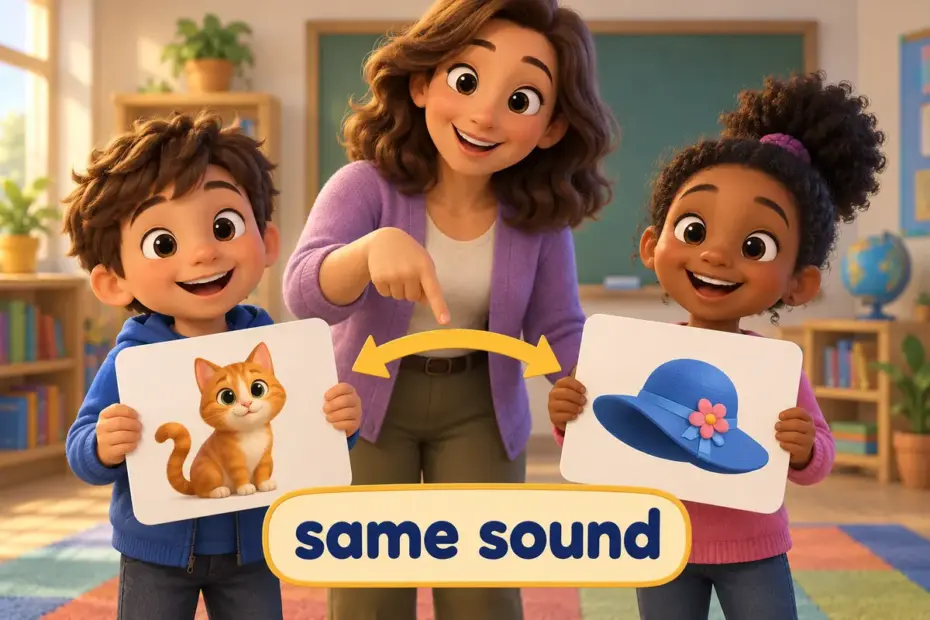
Homophones and meaning are the pair behind many spelling errors, because homophones sound the same but are written differently and mean different things. Sea and see, right and write, and flour and flower all share a sound and nothing else. This guide lists the common sets and gives a reliable way to choose the right one.
Homophones and meaning at a glance
- A homophone sounds like another word but is spelled differently.
- Homophones differ in meaning, so context decides the choice.
- They cause errors in writing far more often than in speech.
- Common sets are to, too, two and there, their, they are.
- The commonest error is using a possessive where a contraction belongs.
What is a homophone?
A homophone is a word that is pronounced the same as another word but has a different spelling and a different meaning. The Greek roots mean same sound, which is exactly what the word describes. Two homophones can be spelled quite differently, as with sea and see, yet a listener cannot tell them apart; the table gathers the sets that appear most in writing, and further examples sit in vocabulary in a sentence.
| Sound | Words | Meaning of each |
|---|---|---|
| tu | to, too, two | direction, also, the number |
| thair | there, their, they are | place, belonging, contraction |
| yor | your, you are | belonging, contraction |
| see | sea, see | ocean, to look |
| flaur | flour, flower | baking powder, bloom |
| mail, male | letters, the male sex | |
| pair | pair, pear | a set of two, the fruit |
| rait | right, write, rite | correct, to mark letters, a ceremony |
| hear | hear, here | to listen, this place |
| sell | cell, sell | a small unit, to exchange for money |
Not every same-sound pair is a homophone in the strict sense. A contraction and its full form, such as they are and their, are often grouped here because they share a sound, even though one is a phrase rather than a single word. Learners still treat them together, because the errors they cause are identical on the page.
Homophones vs homographs vs homonyms
The three labels describe how words overlap, and each one names a different kind of overlap. Homophones share a sound, homographs share a spelling, and homonyms is the umbrella term that covers both. A pair such as bear and bear is both a homograph and a homonym but not a homophone, while sea and see is a homophone and a homonym, which the table makes clear.
| Term | What it shares | Example |
|---|---|---|
| Homophone | sound | sea and see |
| Homograph | spelling | lead (metal) and lead (guide) |
| Homonym | sound or spelling | right and write |
| Heteronym | spelling, but a different sound | wind (air) and wind (turn) |
The structure of these shared forms is worth reading alongside word structure in a sentence, because spelling and sound pull apart in each case.

Homophones and meaning across contexts
The choice is always made by meaning, and the sentence supplies the clue. Each line below uses the correct homophone in a real setting, and more example frames sit in pronounce in a sentence.
| Context | Sentence | Correct word |
|---|---|---|
| Beach trip | We swam in the warm sea. | sea, the ocean |
| Optician visit | Now I can see the board. | see, to look |
| Argument | You were right all along. | right, correct |
| Homework | Please write your name first. | write, to mark letters |
| Baking | Sift the flour into the bowl. | flour, baking powder |
| Garden | A yellow flower opened today. | flower, the bloom |
| Post office | The mail arrived before noon. | mail, letters |
| Party plan | I bought a new pair of shoes. | pair, a set of two |
| Packing list | Do not forget your coat. | your, belonging |
| Weather report | I do not know whether it will rain. | whether, if |
Which homophones confuse writers most?
A handful of sets cause most of the errors, and each one has a simple test. Ask what the word does in the sentence: name a place, show belonging, or join two ideas. Writers who slow down on these six sets remove most of the errors readers notice. The table pairs each set with its test and a memory hook.
| Set | Test | Memory hook |
|---|---|---|
| there, their, they are | place, possession, or two words | their has the word heir inside for owning |
| your, you are | possessive or a verb | the longer form covers you are |
| its, it is | belonging or the short verb | the apostrophe marks a missing letter |
| to, too, two | direction, also, number | too has an extra o, as in extra |
| principal, principle | the head, or a rule | the principal is your pal |
| stationary, stationery | still, or writing paper | stationery has er, as in paper |
The fastest test is to substitute a near-synonym in your head. If the word can be replaced with in that place, the choice is there; if it can be replaced with belonging to them, the choice is their. This mental swap catches the error before it reaches the page, and it works on any homophone set once the meaning of each word is clear.
Word forms: possession and contraction
Many homophone errors come from one pair of forms: the possessive and the contraction. The possessive shows ownership without an apostrophe in it, its and your, while the contraction joins two words and drops a letter. Reading the sentence with the full form in place, it is for its, is the quickest check; if the meaning survives, the apostrophe belongs. The table sets them apart.
| Possessive | Contraction | Meaning of contraction |
|---|---|---|
| its | it is | it is raining |
| your | you are | you are late |
| their | they are | they are here |
| whose | who is | who is calling |
| lets | let us | let us begin |
Common mistakes with homophones
Mistake 1: sea for see. Incorrect: I can sea the boat. Correct: I can see the boat. Rule: see is the verb for looking, and sea names the ocean.
Mistake 2: write for right. Incorrect: You are write again. Correct: You are right again. Rule: right means correct, and write means to mark letters.
Mistake 3: flour for flower. Incorrect: A flour grew by the wall. Correct: A flower grew by the wall. Rule: flower is the bloom, while flour is the powder used in baking.
Mistake 4: whether for weather. Incorrect: The whether is cold today. Correct: The weather is cold today. Rule: weather names the conditions, and whether means if.
Mistake 5: accepted for excepted. Incorrect: Everyone was accepted from the fee. Correct: Everyone was excepted from the fee. Rule: excepted means left out, and accepted means taken in.
Practice using homophones
- Choose the word: I can (sea / see) the mountains.
- Pick the right form: (Your / You are) welcome to stay.
- Correct the error: Please right your name on the line.
- Build a sentence: use flower and flour in one line.
- Name the pair: hear and here share a sound, so they are ______.
- Spot the meaning: does principal mean the head of a school or a rule?
Answers
- see, the verb for looking with the eyes.
- You are welcome; the contraction fits the sentence.
- Please write your name on the line; write means to mark letters.
- Sample: She put the flower in water after sifting the flour; the two sound the same.
- homophones, because the sound is shared while the spelling differs.
- The head of a school; a rule is a principle.
The bottom line
Homophones and meaning are linked by contrast: the words sound alike but differ in spelling and sense, so the meaning is the only guide. Learn the common sets with a test for each, and check whether a word shows a place, a possession or a contraction. Read the sentence aloud and let the meaning choose the spelling.
Frequently asked questions about homophones
What is a homophone?
A homophone is a word that sounds the same as another word but is spelled differently and means something different. Sea and see share a sound but not a spelling or a meaning. Homophones cause spelling errors because the ear cannot tell the words apart.
What is the difference between a homophone and a homonym?
A homophone shares a sound, while a homonym is the broader term that also covers words sharing a spelling. Every homophone is a homonym, but a shared-spelling pair such as lead and lead is a homonym without being a homophone. The labels describe how words overlap.
What is the most confusing homophone pair?
Many writers find the group there, their and they are the hardest, because one sound covers a place, a possession and a contraction. The pair its and it is is a close second, since the possessive carries no apostrophe while the contraction does. Both need careful checking.
How can I remember which homophone to use?
Ask what job the word does before you spell it. A place takes there, a possession takes their, and two joined words take the contraction. For its and it is, check whether you could replace the word with it is, and add the apostrophe only when you can.