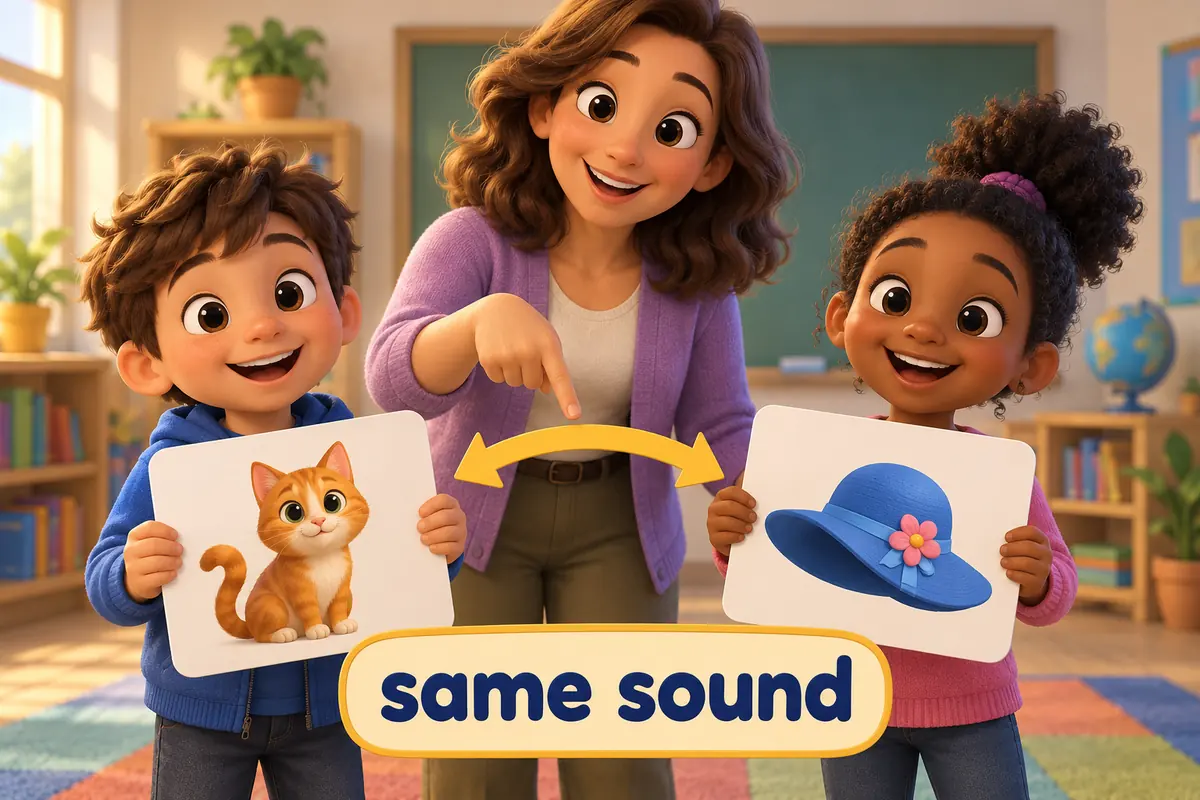
How to introduce yourself well starts with a short pattern rather than a long speech: greet the person, give your name, add your role or reason for being there, then hand the conversation back. Four small parts cover almost every situation, from a new job to a class or an online call.
How to introduce yourself at a glance
- A greeting opens the exchange politely.
- Your name comes next, spoken clearly once.
- A role or reason tells the listener why you are there.
- A short closer invites the other person to reply.
- The setting decides whether the tone is formal or casual.
What is a good way to introduce yourself?
A good introduction is a short formula that greets, names and places you in a few seconds. Each part has one job, and none of them needs more than a sentence. The page on introduce in a sentence shows how the verb behaves when you build the phrase yourself. A short formula also frees your attention for the person in front of you, which is where it belongs.
| Part | Purpose | Example |
|---|---|---|
| Greeting | opens politely | Good morning, everyone. |
| Name | gives your name once | My name is Priya. |
| Role | states what you do | I am a maths teacher. |
| Link | connects to the group | I work in the office next door. |
| Closer | invites a reply | It is good to meet you. |
How do you introduce yourself step by step?
The steps stay the same, but the wording shifts with the room. A new colleague needs your role, a classmate needs a shared interest, and a networking event needs a question back. Notice how every example stays inside two short sentences, because length is the enemy of a first impression.
| Situation | Opening line | Why it fits |
|---|---|---|
| New job | Hello, I am Sam, the new analyst. | name and role settle the room quickly |
| Class | Hi, I am Leo and I enjoy chess. | a shared interest invites a friend |
| Networking | I am Ada from marketing, and you? | a return question keeps it moving |
| Online call | I am Ravi, joining from Delhi. | location replaces a handshake |
| Interview | I am Mia, with five years in design. | a short background sets your value |
| Party | I am Tom, a friend of Ana. | a link explains why you are there |

How to introduce yourself across contexts
The same four steps appear in a lift, an interview and a video call, and each room trims the pattern to fit. Eight examples show the range, and the page on yourself in a sentence adds more frames for the reflexive verb.
| Context | Example sentence | Why this works |
|---|---|---|
| Job interview | Good morning, I am Nadia and I have led two small teams. | a greeting plus a quick credential |
| New team | Hello, I am Ben, joining the support desk this week. | the role explains the arrival |
| University class | Hi everyone, I am Jo and I studied history before this course. | a short past detail builds a link |
| Video call | I am Chen, calling from Singapore, and I will take notes today. | location and a task orient the group |
| Networking event | I am Sara from the design studio, and you are? | a return question opens a chat |
| Volunteer briefing | I am Omar and this is my first shift here. | honesty sets a friendly tone |
| Parent evening | I am Lena, one of the new parents in year three. | a shared role builds common ground |
| Casual party | I am Dee, a friend of the host. | a short link suits an informal setting |
Which tone should you use?
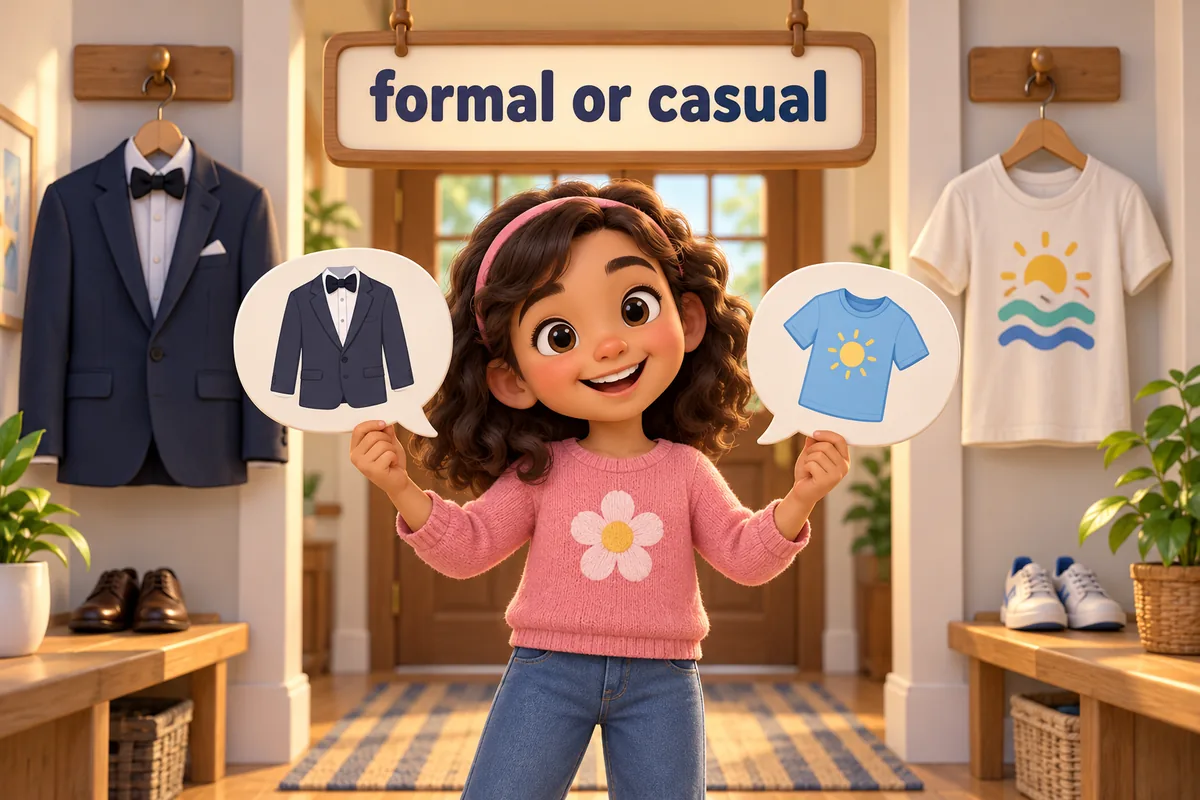
Formal and casual openings share the same four steps, but they choose different words. The setting, not your personality, decides which one belongs. A single mismatched word, such as a breezy hey in an interview, is enough to shift the whole tone of an introduction.
| Attribute | Formal opening | Casual opening |
|---|---|---|
| Greeting | Good morning | Hi or Hey |
| Name form | My name is Sara Khan | I’m Sara |
| Role detail | I am the new data analyst | I do data work |
| Contraction | Avoided | Used freely |
| Example | Good morning, my name is Sara Khan from the data team. | Hi, I’m Sara from data. |
Verdict: keep the greeting and the full name in a work or formal setting, and shorten both when the room is relaxed.
Word forms and grammar of introducing yourself
The phrase builds on the verb introduce and the reflexive pronoun yourself, and a few related forms appear in everyday speech. A list of positive words to describe yourself helps when the one-line detail has to sound warm and true. Learning the reflexive form and the related noun together keeps each sentence correct in a single pass.
| Form | Part of speech | Example |
|---|---|---|
| introduce | verb | Let me introduce a colleague. |
| introduce yourself | verb + reflexive | Please introduce yourself to the group. |
| introduction | noun | He wrote a short self-introduction. |
| self-introduction | compound noun | A self-introduction opened the meeting. |
| yourself | reflexive pronoun | You can describe yourself in one line. |
| introducing | gerund | Introducing myself takes ten seconds. |
Common mistakes when introducing yourself
Most slips come from saying too much or reaching for the wrong pronoun. The five pairs below show the fault beside its repair. Each repair keeps the introduction short and the grammar simple.
Incorrect: Myself Priya. Correct: My name is Priya. A name follows my name is, and myself is not a subject pronoun.
Incorrect: I am introduce myself, Sam. Correct: I am Sam, or let me introduce myself. Two subjects cannot share one verb, so the sentence gives a name directly.
Incorrect: My name Priya. Correct: My name is Priya. The linking verb is must sit between the name and the person.
Incorrect: Myself and Ana work together. Correct: Ana and I work together. A subject takes I, not myself, and good manners put the other person first.
Incorrect: I am a engineer. Correct: I am an engineer. A role starting with a vowel sound takes an, not a.
Practice introducing yourself
Six tasks mix fill-in-the-blank, error correction and sentence building. Keep the four steps in mind, then check the reasoning.
- Fill the gap: Good morning, my ______ is Rosa.
- Fill the gap: I am ______ engineer at a small firm.
- Correct the error: Myself and Leo are new here.
- Correct the error: I am introduce myself, Kim.
- Build a formal introduction for a job interview.
- Build an informal introduction for a friend’s party.
Answers
- name. The formula my name is introduces a name directly.
- an. The role begins with a vowel sound, so the article is an.
- Leo and I are new here. A subject uses I, and the other person comes first.
- I am Kim. The verb introduce is not used with the pronoun I in this way, so the name stands alone.
- Good morning, my name is Wei, and I have led two design teams. The greeting, name and role fill the first step of the pattern.
- Hi, I am Mia, a friend of the host. A short name and a social link suit a relaxed setting.
The bottom line
How to introduce yourself rarely needs more than four short steps: a greeting, your name, a role or link, and a closer that hands the conversation back. The setting decides whether the words stay formal or turn casual, so match the greeting to the room. Say your name once, keep the detail brief and invite the other person to speak. A short, clear introduction is always more memorable than a long one.
Frequently asked questions about how to introduce yourself
How long should a self-introduction be?
Two or three sentences cover most situations. Give a greeting, your name and one useful detail such as your role or reason for being there, then stop and invite the other person to reply. A short introduction is easier to remember and leaves room for a real conversation to begin.
Can I say myself before my name?
Not in standard English. The word myself cannot act as a subject, so myself Priya is not a sentence. Say my name is Priya, or I am Priya. Myself appears correctly when it repeats the subject, as in I taught myself to swim.
What should I include in a work introduction?
In a work setting give your name, your role and one detail that helps the team place you, such as the department or a recent project. Keep the tone formal, use your full name once and avoid a long career history. One clear role line is enough to start.
How do I introduce myself on a video call?
On a video call, give your name and where you are joining from, then state your task if the meeting has one, as in I am Chen, joining from Singapore, and I will take notes. A clear opening helps a group match a voice to a name on the screen.