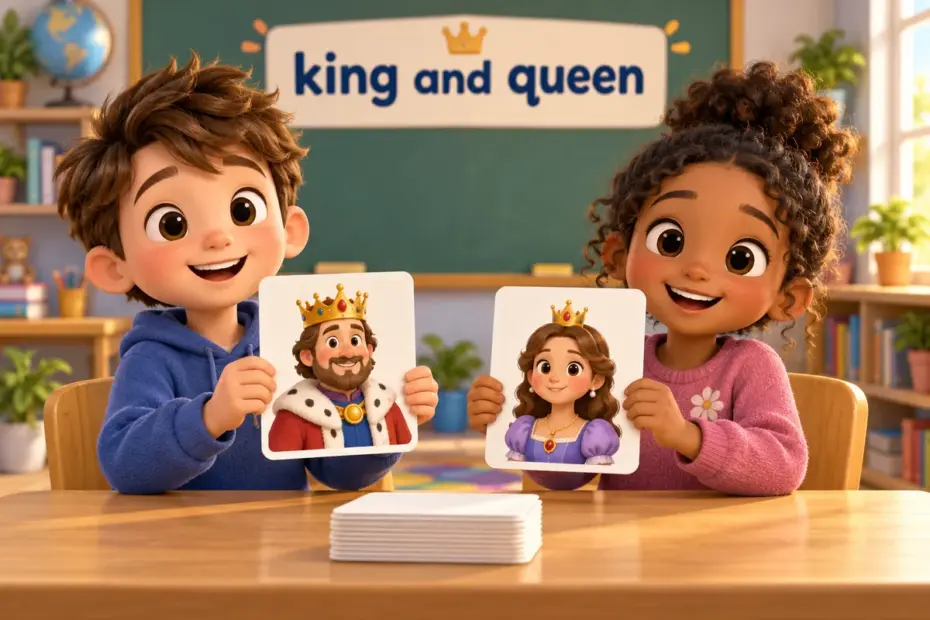
Masculine and feminine genders meaning and examples come down to one idea: many English nouns name a male and a female as a pair, such as father and mother or king and queen. English marks gender on a limited set of words, usually with a second noun rather than a suffix.
Masculine and feminine genders at a glance
- English uses natural gender, so a noun carries it only when it names a living male or female.
- A masculine noun names a male and a feminine noun names a female.
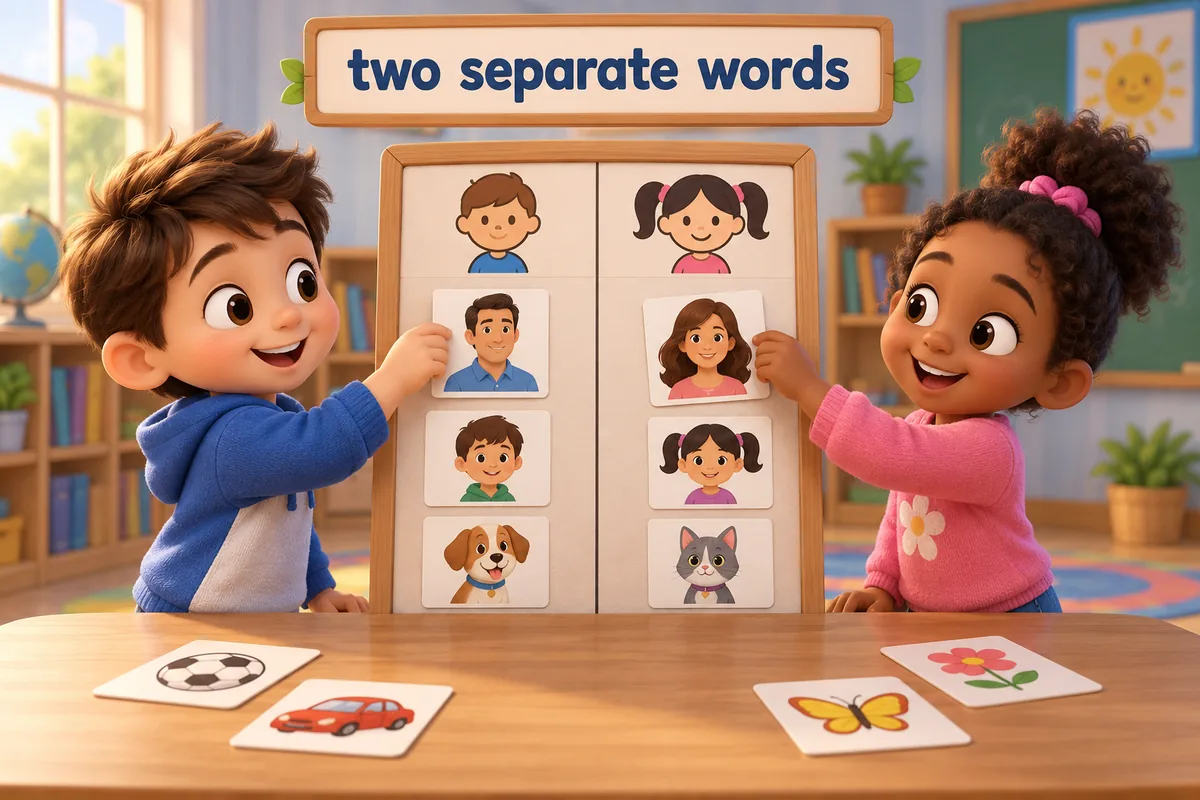
- Most pairs are two separate words, such as father and mother or king and queen.
- A small set adds an ending, such as actor and actress or host and hostess.
- Some nouns are common gender and name either sex, such as cousin, friend or teacher.
What are masculine and feminine genders?
Masculine and feminine genders are the two categories that describe a noun naming a male or a female. The two adjectives themselves appear in masculine in a sentence and feminine in a sentence, and both describe the same split. The pair father and mother shows the commonest type, because each word is a separate noun with no shared ending, while host and hostess show the smaller type that adds -ess.
| Masculine | Feminine | How the pair is formed |
|---|---|---|
| father | mother | two separate words |
| brother | sister | two separate words |
| king | queen | two separate words |
| uncle | aunt | two separate words |
| nephew | niece | two separate words |
| husband | wife | two separate words |
| actor | actress | -or changes to -ress |
| host | hostess | -ess is added |
| prince | princess | -ess is added |
| waiter | waitress | -er changes to -ress |
| emperor | empress | -or changes to -ress |
| lion | lioness | -ess is added |
A noun that names either sex without changing form is common gender, and it often replaces a forced choice. The wider idea of how the language labels people appears in gender in a sentence, while the social side of that labelling appears in gender roles in a sentence.
How do you use masculine and feminine in a sentence?
Masculine and feminine work either as adjectives before a noun or as part of a fixed phrase that names both categories together. The pattern you choose decides whether the sentence labels one form or contrasts the two.
| Pattern | Example | What it signals |
|---|---|---|
| adjective before a noun | The feminine form is queen. | names one form of the word |
| noun phrase | The teacher listed the masculine and feminine of each noun. | names both categories together |
| matched pair | King and queen sit in one row of the table. | shows a male and a female noun side by side |
| noun with -ess | The hostess welcomed every guest at the door. | uses the added feminine ending |
| common noun | The friend arrived before the others. | covers either sex with one word |
Masculine and feminine genders in a sentence: examples across contexts
The pairs appear in classrooms, stories, job adverts and grammar notes, and the context decides how much the writer explains.
| Context | Example sentence | Why this works |
|---|---|---|
| Classroom | The pair king and queen shows two separate masculine and feminine words. | names the category directly |
| Grammar chart | Actor is masculine and actress is feminine. | labels both forms of one word |
| Story | The prince rode ahead while the princess waited in the hall. | uses the pair inside a scene |
| Job advert | The office asked for a waiter and a waitress for the busy season. | shows both forms in a real notice |
| Dictionary note | Host is the masculine noun and hostess is the feminine. | explains the -ess ending |
| Family talk | My nephew lives abroad and my niece studies nearby. | pairs two familiar nouns |
| Conversation | My brother called, and later my sister joined us. | uses two plain everyday nouns |
| Academic writing | English keeps only a few gendered pairs, such as emperor and empress. | states a fact about the system |
| Style guide | Many editors now prefer actor for any performer. | records a modern shift |
| Exam question | Give the feminine form of nephew. | asks for one correct noun |
Which form should you use?
The choice depends on the reader and on how dated an -ess word now sounds. A neutral noun is usually safer in modern writing, while the older pair still fits history and literature.
| Situation | Better choice | Why |
|---|---|---|
| Everyday description of people | the plain pair, such as brother and sister | the words are familiar and clear |
| Formal job titles | a neutral noun, such as flight attendant | most -ess titles now read as dated |
| Names for animals | the specific pair, such as lion and lioness | only the female takes the -ess ending |
| A noun that covers both | a common noun, such as friend | one word avoids a forced choice |
| The sex is unknown | a neutral noun | the writer does not have to guess |
Word forms and grammar of masculine and feminine
Both words work as adjectives, and the related noun gender names the whole system. The -ess ending attaches to a noun, not to an adjective, which is why actresses exists but a feminine ending on an adjective does not.
| Form | Part of speech | Example |
|---|---|---|
| masculine | adjective | The masculine form of the noun is king. |
| feminine | adjective | The feminine form of the noun is queen. |
| masculine and feminine | noun phrase | Teachers list the masculine and feminine of each word. |
| -ess | suffix | hostess, actress, waitress |
| common gender | noun phrase | Cousin is a common-gender noun. |
| neuter | adjective | A table is a neuter noun. |
Common mistakes with masculine and feminine nouns
Mistake 1: adding -ess to a word that already has a pair. Incorrect: She is my sisteress. Correct: She is my sister. Rule: sister is already the feminine of brother, so no ending is added.
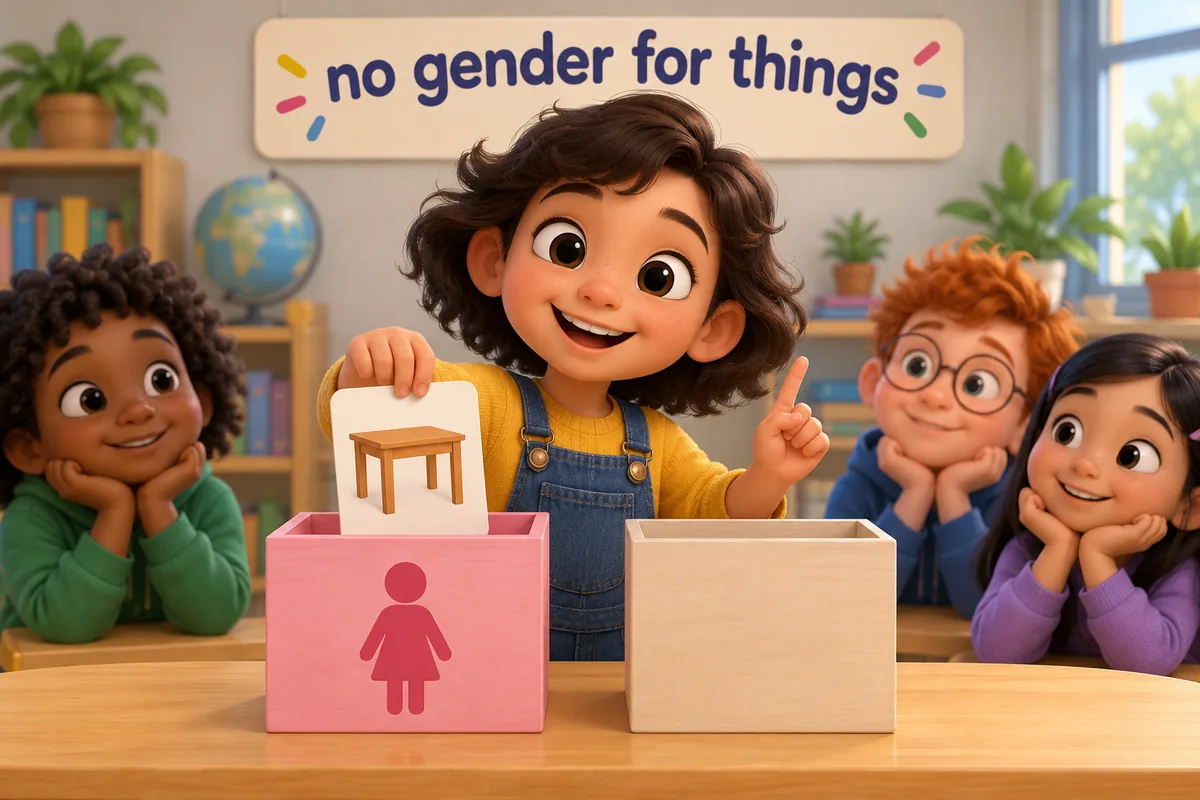
Mistake 2: giving an object a gender. Incorrect: The table is feminine because it ends in -e. Correct: The table is neuter, because English does not give gender to objects. Rule: English uses natural gender, so only living things carry it.
Mistake 3: keeping a dated -ess job title. Incorrect: The airline hired a stewardess for the flight. Correct: The airline hired a flight attendant. Rule: many -ess titles now sound dated, and a neutral noun is preferred.
Mistake 4: reversing a pair. Incorrect: The lioness is the male and the lion is the female. Correct: The lion is the male and the lioness is the female. Rule: the -ess form is always the feminine one.
Mistake 5: calling a female noun masculine. Incorrect: My aunt is my masculine relative. Correct: My aunt is my feminine relative. Rule: feminine names a female and masculine names a male.
Practice using masculine and feminine
- Fill in the blank: The feminine of host is ___.
- Choose the better word: The (prince / princess) is the son of the king.
- Correct the error: My sisteress lives in Rome.
- Build a sentence: use emperor and empress about a royal couple.
- Spot the register: which suits a modern job advert, (a) We need a waitress, or (b) We need a server?
- Fill in the blank: A noun that names either sex is called ___ gender.
Answers
- hostess, because -ess is added to host to make the feminine form.
- prince, because prince names the male while princess names the female.
- My sister lives in Rome; sister is already feminine, so no ending is added.
- The emperor and the empress greeted the crowd from the balcony.
- (b), because a neutral noun such as server suits a modern advert.
- common, because a common-gender noun such as teacher names either sex.
The bottom line
Masculine and feminine genders meaning and examples rest on natural gender, so most pairs are two separate words such as father and mother, and only a few add an ending such as host and hostess. Objects stay neuter, which means a table is never feminine or masculine. Use the -ess forms sparingly, because neutral nouns such as server and flight attendant read as more modern.
Frequently asked questions about masculine and feminine genders
What does masculine and feminine mean in grammar?
In grammar, masculine describes a noun that names a male, and feminine describes a noun that names a female. English shows the split with separate words such as king and queen, or with an ending such as hostess, while most other nouns stay neuter.
Do all English nouns have a gender?
No. English uses natural gender, so only nouns that name a living male or female carry it. Objects, places and ideas are neuter and take the pronoun it. That is why the noun table has no gender, while brother and sister do.
Is actress still correct?
Actress is still correct and widely understood, but many style guides now prefer actor for any performer. The older word survives in awards and history writing, while a neutral term suits modern news reports and job adverts. Both forms appear in the pair actor and actress.
What is a common-gender noun?
A common-gender noun can name either a male or a female without changing form. Words such as friend, cousin, teacher and doctor belong to this group, so the same noun works for everyone. A speaker adds male or female only when the sex truly matters.