
Noun verb agreement in English matches the verb to its subject in number, so a singular subject takes a singular verb and a plural subject takes a plural one. The rule sounds simple, yet phrases between the subject and the verb hide the true number. The box of apples is heavy, for example, keeps a singular verb.
Noun verb agreement in English at a glance
- Noun verb agreement in English matches the verb to the subject in number.
- A singular subject takes an s on the present-tense verb; a plural subject does not.
- Words between the subject and the verb do not change the number.
- Indefinite pronouns such as everyone and each take a singular verb.
- The commonest error is matching the verb to the nearest noun instead of the subject.
What is noun verb agreement in English?
Noun verb agreement in English is the match in number between a subject and its verb, so a singular subject takes a singular verb and a plural subject takes a plural one. The match is clearest in the present tense, where the verb adds an s for a singular subject, and it disappears in most past-tense forms. A simple noun used in a sentence shows the pattern with almost no effort.
| Subject type | Example | What it shows |
|---|---|---|
| Singular subject | The dog barks. | The verb adds -s in the present. |
| Plural subject | The dogs bark. | The verb keeps its base form. |
| Compound subject with and | The dog and the cat sleep. | Two subjects make a plural. |
| Compound subject with or | The dog or the cat is outside. | The nearer subject decides. |
| Collective noun | The team wins often. | One unit takes a singular verb. |
The idea behind the match is the same one that shapes agreement inside a whole sentence, where every part has to line up for the sentence to sound right. Long subjects do not break the rule; they only hide it.
How do you keep the subject and verb in agreement?
The safest method is to find the head of the subject first, then choose the verb, ignoring the words in between. The table pairs each tricky structure with the subject that actually controls the verb, so the choice becomes mechanical rather than instinctive.
| Structure | Example | Why the verb fits |
|---|---|---|
| words between subject and verb | The box of nails is heavy. | Only the subject counts. |
| there is and there are | There are two reasons. | The verb follows the real subject. |
| indefinite pronouns | Everyone likes music. | each, every and everyone are singular. |
| money and distance | Ten dollars is enough. | A sum treated as one unit is singular. |
| plural in form, singular in meaning | The news is good. | Some words look plural but act singular. |
A compound subject joined by and usually takes a plural verb, yet a compound joined by or or nor takes a verb that agrees with the nearer subject. A single sentence such as the manager or the workers decide the schedule can therefore be revised to match whichever noun sits closest, and that proximity rule is the one most learners forget.
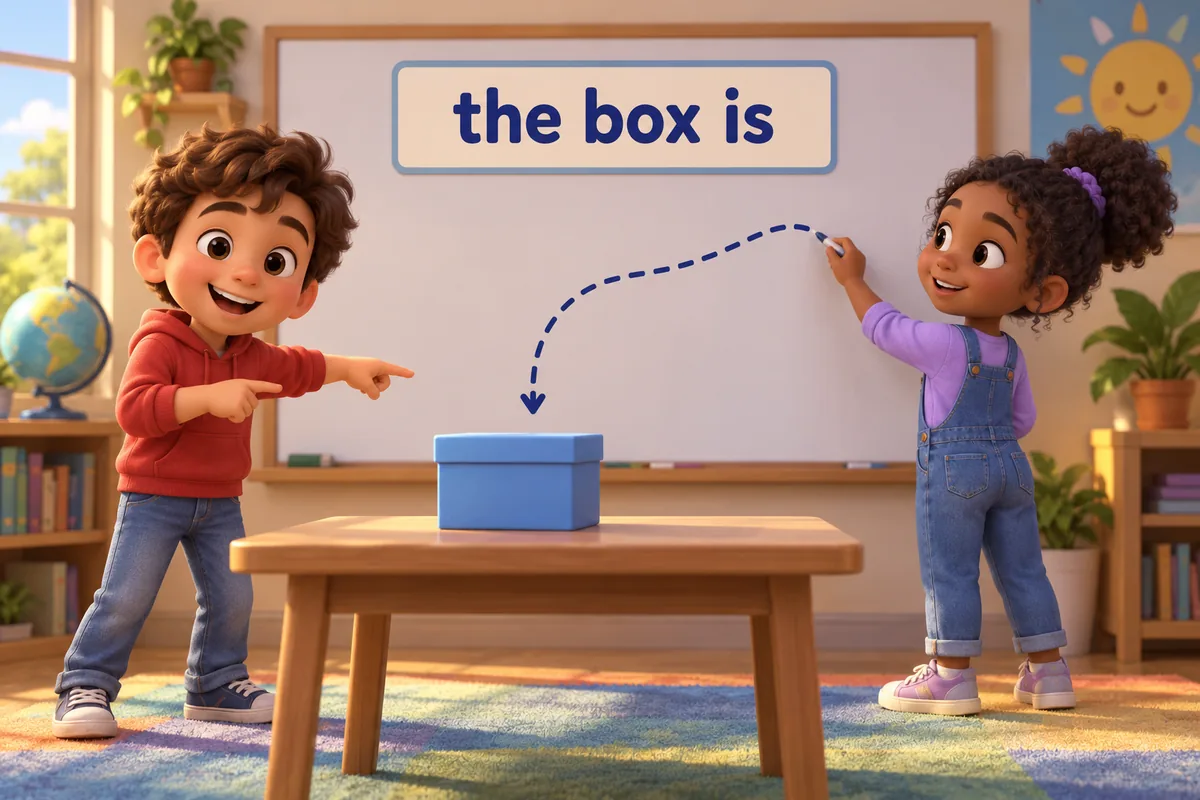
Noun verb agreement across contexts
Each register tests the rule in its own way, and the table gives one sentence from every setting. Every row names the head subject and explains why the verb agrees with it.
| Context | Sentence | Why this works |
|---|---|---|
| Classroom | Each pupil receives a workbook. | each makes the subject singular. |
| Work email | The list of tasks is attached. | The head noun list is singular. |
| News report | The crowd near the gates has grown. | The head noun crowd is singular. |
| Academic writing | The results of the study suggest a link. | The head noun results is plural. |
| Conversation | There are two tickets left. | The verb follows the real subject. |
| Story | Neither of the boats was ready. | neither takes a singular verb. |
| Business | The staff members work in shifts. | A plural noun takes a plural verb. |
| Health note | Two hours of rest helps a great deal. | A measured block of time is singular. |
| Sport | The team plays at home today. | A collective unit takes a singular verb. |
| Science lesson | Mathematics is my favourite subject. | A plural-form name takes a singular verb. |
A common thread is that the real subject is often far from the verb. A phrase such as with a bell, of tasks or near the gates sits in between, and the verb must ignore it. The same care that a page of intransitive verbs used in sentences demands, where the verb needs no object, appears here as the need to find the true subject.
American and British usage part company on collective nouns. An American writer says the team is ready, treating the group as one unit, while a British writer often says the team are ready, treating its members as several people. Both are standard in their own variety, and a writer should match the audience rather than switch mid-document.
Which verb should you choose?
The frequent confusion is between the grammatical subject and the nearest noun, and the table sets the two apart. Once the subject is identified, the verb follows, and the proximity trap disappears.
| Structure | Example | What governs the verb |
|---|---|---|
| Simple subject | The cat sleeps. | The subject and verb agree directly. |
| Subject with a phrase | The cat with the bell sleeps. | The phrase does not change the number. |
| Indefinite pronoun | Everyone sleeps. | The pronoun is singular. |
| Compound with and | The cat and the dog sleep. | The compound subject is plural. |
| Compound with or | The cat or the dogs sleep. | The nearer noun decides the verb. |
The same habit helps with a fixed phrase such as coming to an agreement, where the subject of the sentence, not the words in the phrase, decides the verb form. A phrase of this kind is easy to use once the head subject is clear.
Word forms and grammar of agreement
The form of the verb changes with the person and number of the subject, and the table shows the common pairings. The pattern is regular in the present tense and nearly invisible in the past.
| Subject | Verb form | Example |
|---|---|---|
| I | run | I run every morning. |
| she | runs | She runs a small shop. |
| we | run | We run the club together. |
| everyone | runs | Everyone runs in the race. |
| two of them | run | Two of them run fast. |
| the news | is | The news is surprising. |
Some words are plural in form but singular in meaning, so news, mathematics and physics take a singular verb. Others are singular in form but plural in meaning, such as police, which takes a plural verb. The matching of descriptors to their subjects shows a parallel idea, because the describing word there must also fit the word it points to.
Common mistakes with noun verb agreement
- Incorrect:
The list of items are long.Correct: The list of items is long. Rule: the head noun list is singular, so the phrase in between does not count. - Incorrect:
Everyone have a ticket.Correct: Everyone has a ticket. Rule: everyone is singular and takes a singular verb. - Incorrect:
There is many reasons to wait.Correct: There are many reasons to wait. Rule: the verb agrees with the real subject, reasons. - Incorrect:
The news are surprising.Correct: The news is surprising. Rule: news is plural in form but singular in meaning. - Incorrect:
Ten dollars are enough for lunch.Correct: Ten dollars is enough for lunch. Rule: a sum of money treated as one unit takes a singular verb.
Practice using noun verb agreement
- Fill the gap: The box of tools ______ on the bench. (is / are)
- Choose the better verb: Everyone ______ the plan. (like / likes)
- Correct the error: The results of the test was surprising.
- Fill the gap: There ______ two chairs in the room. (is / are)
- Build a sentence with a compound subject joined by or.
- Spot the register: which fits a formal report, (a) The data suggest a trend, or (b) The data suggests a trend in speech only?
Answers
- is, because the head noun box is singular and the phrase of tools does not change it.
- likes, because everyone is a singular pronoun.
- The results of the test were surprising, because the head noun results is plural.
- are, because the real subject chairs is plural.
- The teacher or the pupils decide the schedule, because the nearer subject pupils is plural.
- (a) The data suggest a trend, because in formal writing data is usually treated as plural.

The bottom line
Noun verb agreement in English matches the verb to the true subject in number, and the true subject is often hidden behind a phrase or a long list. Find the head noun, apply the or-proximity rule for compound subjects, and treat indefinite pronouns and sums of money as singular. Those three habits prevent most agreement errors.
Frequently asked questions about noun verb agreement
What is noun verb agreement?
Noun verb agreement is the match between a subject and its verb in number and person. A singular subject takes a singular verb, as in the dog barks, and a plural subject takes a plural verb, as in the dogs bark. The match is clearest in the present tense.
Is a collective noun singular or plural?
It depends on the variety of English. American writers usually treat a collective noun such as team or family as singular, as in the team is ready. British writers often treat it as plural, as in the team are ready. Both are accepted in their own region.
Do we say there is or there are?
The choice follows the real subject that comes after the verb. Use there is with a singular noun, as in there is one seat, and there are with a plural noun, as in there are two seats. The word there itself is never the subject.
What about words like each and every?
Each and every are always singular, so they take a singular verb even when a plural noun follows, as in each student has a card and every worker knows the rule. The same applies to pronouns such as everyone and somebody, which also take a singular verb.