Other ways to say good luck include best of luck, fingers crossed and break a leg, and the setting decides which one fits. Good luck is safe and warm, while the alternatives range from the formal to the theatrical. A performer hears break a leg, but a candidate in a formal interview hears best of luck.
Other ways to say good luck at a glance
- Best of luck is the polite, formal alternative.
- Fingers crossed suits an exam or a result you await.
- Break a leg is for performers, not for general use.
- You have got this is modern and encouraging.
- The commonest error is using break a leg outside the theatre.
What are other ways to say good luck?
Other ways to say good luck are good wishes for a coming event, and they differ in formality and in the world they belong to. The base phrase appears in good luck in a sentence, and a related idea appears in good luck charm in a sentence. The table lists twelve alternatives with the setting each one suits.
| Phrase | Register | Example |
|---|---|---|
| good luck | safe and warm | Good luck in the final. |
| best of luck | polite and formal | Best of luck with the interview. |
| all the best | warm, British | All the best for tomorrow. |
| fingers crossed | hopeful and informal | Fingers crossed for the results. |
| break a leg | theatrical | Break a leg on opening night. |
| knock them dead | confident and informal | Knock them dead out there. |
| you have got this | modern and encouraging | You have got this, trust yourself. |
| more power to you | respectful and informal | More power to you for trying. |
| wishing you the best | formal and kind | Wishing you the best of luck. |
| godspeed | formal and old-fashioned | Godspeed on the long journey. |
| I am rooting for you | personal and supportive | I am rooting for you today. |
| best wishes | neutral and written | Best wishes for the new role. |
The alternatives range from a polite note to a theatrical cheer, so the audience decides the register. A written wish prefers best of luck, while a nervous friend hears you have got this.
How do you use a good luck phrase in a sentence?
The phrases follow a few simple patterns, from a bare wish to a phrase that names the occasion, and a comparison shows how firm a wish can sound, as in as good as in a sentence.
| Pattern | Example | What it signals |
|---|---|---|
| short phrase | Good luck. | a quick, warm wish |
| phrase + with + event | Best of luck with the test. | names the occasion |
| phrase + in + place | Good luck in Tokyo. | names the setting |
| fingers crossed + for | Fingers crossed for you. | hope for a result |
| imperative phrase | Break a leg tonight. | theatrical encouragement |
Naming the occasion, as in best of luck with the test, makes the wish feel personal, while a bare good luck works as a quick, general cheer before almost any event.
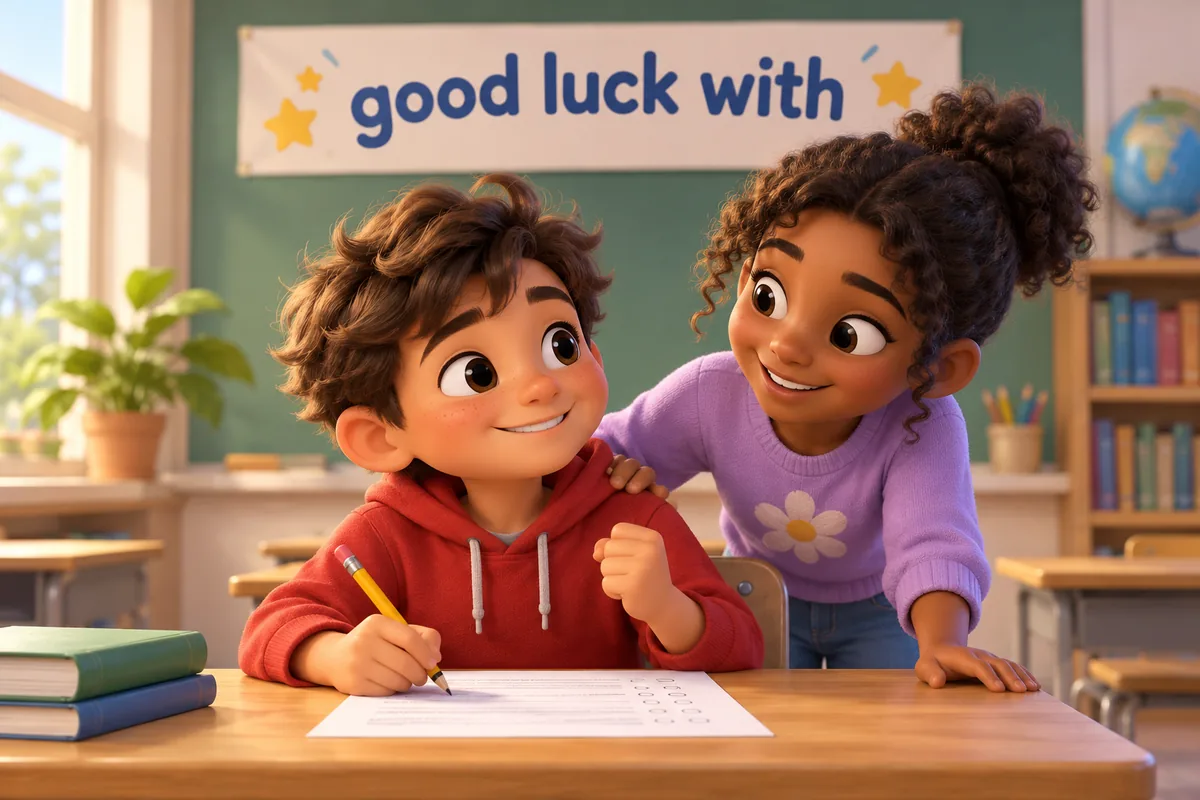
Other ways to say good luck across contexts
The wishes move from an exam hall to a stage to a family chat, and the setting selects both the register and the length.
| Context | Example sentence | Why this works |
|---|---|---|
| Exam hall | Fingers crossed for the maths paper. | hopeful and informal |
| Job interview | Best of luck with the interview. | polite and formal |
| Theatre | Break a leg on opening night. | the classic theatrical wish |
| Sports talk | Knock them dead in the second half. | confident and energetic |
| Workplace email | Wishing you the best of luck with the launch. | formal and kind |
| Family chat | You have got this, we believe in you. | warm and modern |
| New job | All the best in your new role. | warm and British |
| Long journey | Godspeed, and write when you arrive. | formal and old-fashioned |
| Exam nerves | More power to you for trying again. | respectful and calm |
| A friend’s match | I am rooting for you all afternoon. | personal and supportive |
The same luck can be wished in a single word or a full sentence, and the occasion tells a writer how formal and how personal to make the message.
Which good luck phrase should you use?
The right phrase depends on the occasion and the audience, and a set phrase can carry the wish, as in a good turn in a sentence.
| Situation | Better choice | Why |
|---|---|---|
| A job interview | best of luck | the phrase is polite and formal |
| An exam | fingers crossed | the phrase is hopeful and informal |
| A stage performance | break a leg | the phrase is the theatrical classic |
| A nervous friend | you have got this | the phrase is modern and encouraging |
| A written note | best wishes | the phrase is neutral and warm |
| A long journey | godspeed | the phrase suits a formal farewell |
A performer expects break a leg and would find it strange to hear it in an office, so the audience matters as much as the occasion. When in doubt, good luck is understood everywhere.
Word forms and grammar of the good luck phrases
The family mixes a noun phrase, an idiom and a fixed wish, and most of the alternatives are complete phrases that stand on their own.
| Form | Part of speech | Example |
|---|---|---|
| good luck | noun phrase | Good luck to everyone. |
| luck | noun | She had a little luck. |
| lucky | adjective | That was a lucky escape. |
| luckily | adverb | Luckily, it did not rain. |
| best of luck | fixed phrase | Best of luck tomorrow. |
| break a leg | idiom | Break a leg, everyone. |
The idiom break a leg cannot be varied, so it never becomes break a hand or break the leg, while good luck appears in many shapes, from a bare wish to the full phrase good luck with your exam.
How warm is each good luck phrase?
The wishes line up from a safe and general cheer to a bold theatrical line, and the setting picks the rung.
| Register | Phrase | Good for |
|---|---|---|
| safe | good luck | almost anyone |
| polite | best of luck | an interview or a test |
| hopeful | fingers crossed | a result you await |
| theatrical | break a leg | a performer |
| modern | you have got this | a friend or a student |
| formal | best wishes | a written note |
A theatrical wish in a formal setting sounds odd, so the register is the first test, and the occasion is the second.
Common mistakes with the wishes
Mistake 1: break a leg outside the theatre. Incorrect: Break a leg at your office meeting. Correct: Best of luck at your office meeting. Rule: break a leg belongs to performers.
Mistake 2: inventing an adjective. Incorrect: Good lucky with your exam. Correct: Good luck with your exam. Rule: good luck is a noun phrase, so lucky cannot replace luck.
Mistake 3: congratulating before the event. Incorrect: Congratulations on the exam. Correct: Good luck in the exam. Rule: congratulations follows a success, not a future event.
Mistake 4: the wrong preposition. Incorrect: Good luck for the test. Correct: Good luck on the test. Rule: the standard pattern is good luck with or on the event.
Mistake 5: doubling the wish. Incorrect: Good luck and best of luck. Correct: Best of luck. Rule: one wish is enough for any one occasion.
Practice using the wishes
- Fill in the blank: ___ of luck with the interview.
- Choose the better phrase: To an actor before the show, say (break a leg / best wishes).
- Correct the error: Good lucky in the final.
- Build a sentence: use fingers crossed about a result you await.
- Spot the register: which suits a formal written note, (a) knock them dead, or (b) best wishes?
- Fill in the blank: To encourage a nervous friend, say you have got ___.
Answers
- Best, because best of luck is the polite, formal wish.
- break a leg, because the phrase is the theatrical classic.
- Good luck in the final; the noun is luck, not lucky.
- Fingers crossed for the results on Thursday.
- (b), because best wishes is the neutral, written phrase.
- this, because you have got this is modern encouragement.
The bottom line
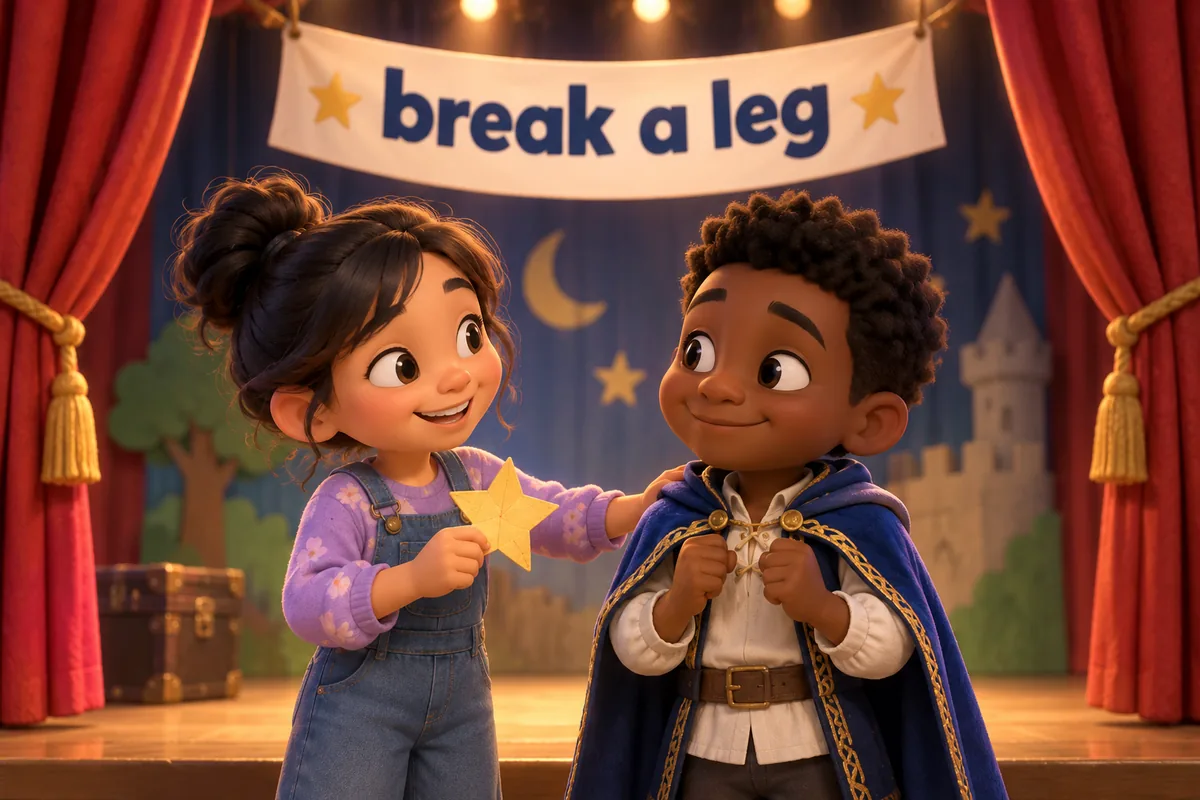
Other ways to say good luck range from the safe good luck to the theatrical break a leg, and the setting decides which fits. Best of luck suits a formal note, while fingers crossed suits a result you are waiting for. Match the register to the audience, and the wish will sound warm rather than strange.
Frequently asked questions about good luck wishes
Is break a leg polite?
Break a leg is warm and friendly, but it belongs to the theatre, where it is a traditional way to wish a performer well. In an office or a formal setting it can sound odd or confusing. Outside the stage, best of luck is the safer choice.
What is a formal way to say good luck?
Best of luck, best wishes and wishing you the best are the formal choices, and all three suit a written note or an email. They keep a polite tone without the informality of fingers crossed. Best wishes works in almost any formal setting.
Why do people say break a leg instead of good luck?
The phrase is a theatrical tradition, and performers treat it as a way to wish a colleague well before a show. The exact origin is uncertain, so it is safest to describe the custom rather than claim a single source. Outside the theatre, say best of luck.
Is good luck with or good luck for correct?
Good luck with is the common pattern before an event, as in good luck with the interview, and good luck on also works, as in good luck on the test. Good luck for is heard but less standard. When in doubt, choose with.