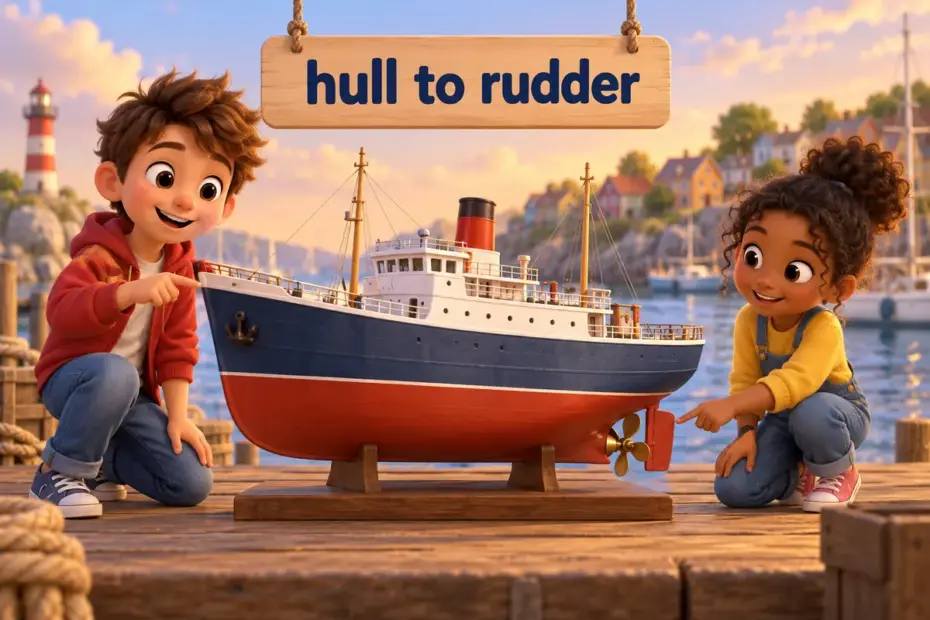
A clear guide to the parts of a ship with functions and diagram must name the hull, bow, stern, deck and rudder that keep a vessel afloat and on course. Each part does one job, and together they carry a crew and its cargo safely across the water.
Parts of a Ship With Functions and Diagram at a Glance
- The hull is the watertight body that floats and carries the cargo.
- The bow is the front and the stern is the back of the ship.
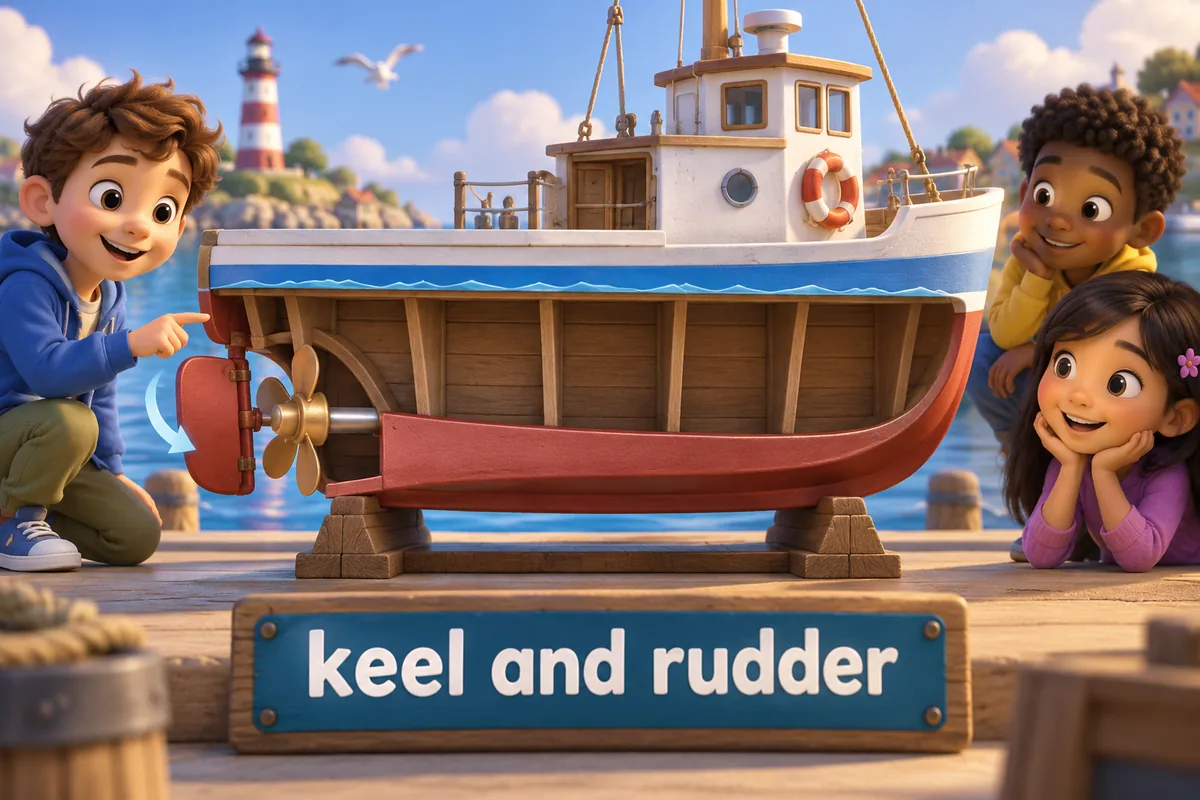
- The keel is the spine along the bottom that keeps the ship steady.
- The rudder steers and the propeller drives the ship forward.
- The deck is the working surface on top of the hull.
- The bridge is where the crew steer and navigate.
What Are the Parts of a Ship?
The parts of a ship are the hull, the bow, the stern, the deck, the keel and the rudder that steers it. Each part sits in a fixed place, so a learner can point to it on a labelled side view and name it without hesitating. The table below gives every part its position and its plain-language job.
| Part | Also called | Its main job | Where it sits |
|---|---|---|---|
| hull | body | floats and carries the crew and cargo | the whole watertight body |
| bow | front | cuts through the water ahead | the forward end |
| stern | rear | carries the rudder and propeller | the back end |
| deck | working floor | gives a surface to stand and work on | on top of the hull |
| keel | backbone | keeps the ship steady and stops it drifting sideways | along the bottom |
| rudder | steering blade | turns the ship by deflecting water | behind the propeller |
| propeller | screw | pushes the ship forward | at the stern, below the water |
| bridge | wheelhouse | is where the crew steer and navigate | top of the superstructure |
What Does Each Part of a Ship Do?
Every part of a ship performs one task, and the list is easier to remember when each task is tied to something you can see on a real vessel. This table pairs a part with its function and with the quick test that identifies it from the dock.
| Part | Function | How to spot it |
|---|---|---|
| anchor | holds the ship to the seabed | a heavy metal hook at the bow |
| funnel | releases engine exhaust | a tall stack on the superstructure |
| mast | carries antennas and lights | a tall pole above the deck |
| cargo hold | stores the goods being carried | a large space inside the hull |
| superstructure | houses the crew and cabins | the block above the main deck |
| bilge | collects water that gets inside | the lowest inner space |
| waterline | marks where the hull meets the water | the painted line along the side |
| beam | measures the width of the ship | the widest point across the hull |
How the Parts of a Ship Work Together
A ship completes a voyage because its parts pass power, direction and weight along one chain. Follow a vessel from the dock to the anchor and the diagram stops looking like a list of labels and starts looking like a journey. The same habit of naming every mechanism appears in car parts from A to Z.
| Step | Parts involved | What happens |
|---|---|---|
| loading | cargo hold, deck | goods are stowed and secured below |
| casting off | anchor, propeller | the anchor lifts and the screw pushes water back |
| steering | rudder, bridge | the crew turn the rudder to set the course |
| underway | hull, keel | the hull cuts the water and the keel keeps it steady |
| power | engine, funnel | the funnel vents exhaust from the engine |
| anchoring | anchor, bow | the anchor drops to hold the ship in place |
Parts of a Ship in Sentences Across Contexts
A term is learned once a writer can drop it into a real sentence. The eight frames below show the same vocabulary working in a lesson, a harbour notice and a news report. Writers who need a describing word can borrow the list under adjectives for ship.
| Context | Example sentence | Why it works |
|---|---|---|
| classroom | Label the bow at the front and the stern at the back. | gives a clear task |
| harbour notice | Keep clear of the stern while the propeller turns. | states a safety rule |
| exam answer | The keel stops the hull from sliding sideways. | states a function in one line |
| news article | A damaged rudder left the ship unable to steer. | links a fault to a part |
| crew briefing | The cargo hold is full, so watch the waterline. | connects a part to loading |
| dock talk | The funnel was repainted during the refit. | uses the part name naturally |
| museum label | The bridge sat high so the crew could see ahead. | connects a part to a purpose |
| travel writing | A cruise ship in a sentence often describes the whole vessel. | shows a related term |
Port and Starboard: Which Side Is Which?
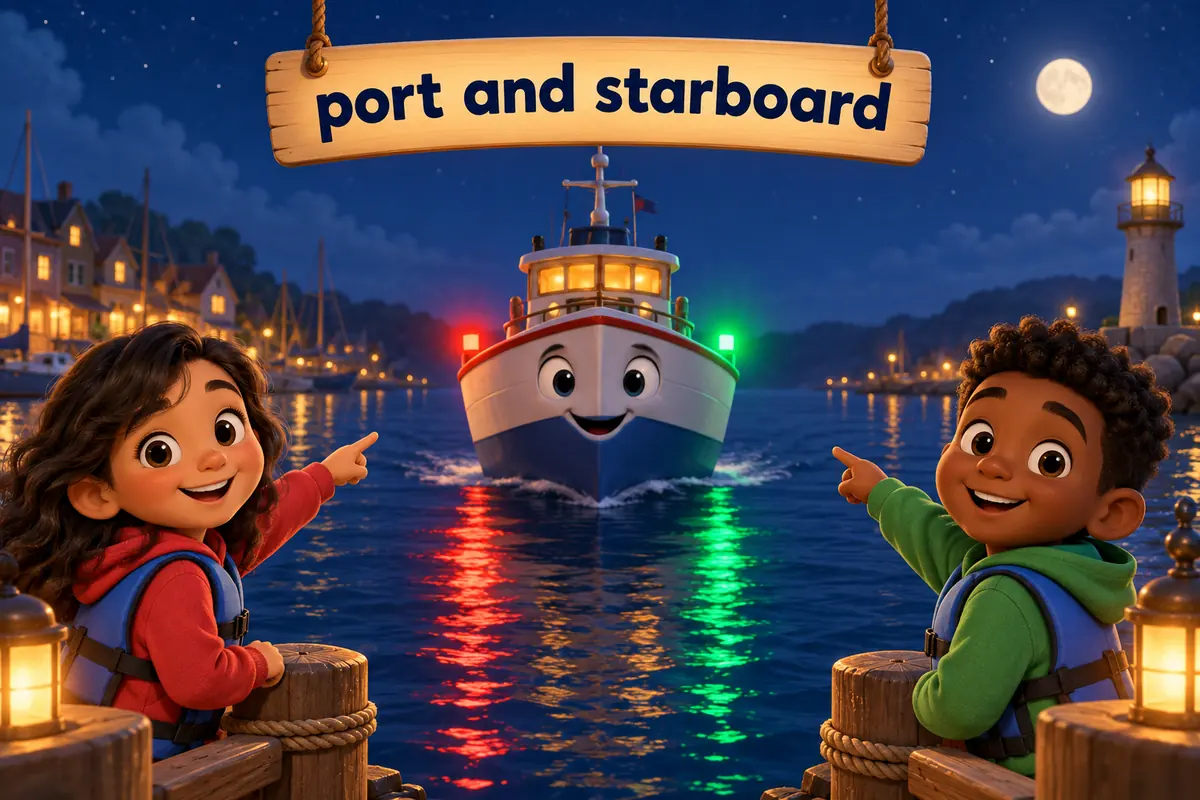
Port is the left side of a ship when you face the bow, and starboard is the right side. The two names survive because sailors once steered with a board on the right and loaded cargo through the left, so each side needed a name that never changed with the sailor’s direction.
| Attribute | Port | Starboard |
|---|---|---|
| which side | the left side facing forward | the right side facing forward |
| navigation light | a red light | a green light |
| memory hook | port wine is red, and port has four letters like left | green is for the right-hand light |
| docking habit | often the side laid against the dock | often the side toward open water |
| colour pair | red | green |
The verdict is that port is always the left side facing forward and starboard the right, whatever the crew is doing, and the red and green lights confirm it at night. One honest limit is worth stating, because ship design varies. A sailing ship and a motor ship share the bow, stern and keel, but a sailing vessel adds masts and sails that a motor ship does not carry, so a diagram should match the type of ship in front of the learner.
Key Terms and Word Forms for Ship Parts
Most ship vocabulary is noun-based, though a few verbs and adjectives appear in sailing and shipping. A very different vessel appears in cruise ship in a sentence.
| Term | Part of speech | Example sentence |
|---|---|---|
| ship | noun | The ship left at dawn. |
| ships | plural noun | Two ships waited outside the harbour. |
| ship | verb | They ship the goods by sea. |
| bow | noun | The bow rose over each wave. |
| keel | noun | A deep keel kept the yacht steady. |
| rudder | noun | The rudder turned the ship to port. |
| moored | adjective | The moored boat rocked gently. |
Compare the naming of vessel parts with human body parts that start with a.
Common Mistakes When Naming Ship Parts
The bow is the back of the ship. The bow is the front, and the stern is the back. Rule: the bow cuts the water first, so it leads.
The rudder pushes the ship forward. The propeller pushes the ship, and the rudder steers it. Rule: the screw drives, the rudder turns.
The deck is the bottom of the ship. The deck is the working floor on top, and the keel runs along the bottom. Rule: a deck is walked on, a keel is underwater.
Port is the right side of the ship. Port is the left side facing forward. Rule: port and left both have four letters, which fixes the side.
The funnel is a chimney for the cabins. The funnel vents engine exhaust, not cabin smoke. Rule: the funnel serves the engines.
Practice Using the Parts of a Ship
- The ____ is the watertight body that floats and carries cargo.
- The ____ runs along the bottom and keeps the ship from sliding sideways.
- Choose the better part: the (rudder / propeller) steers the ship.
- Correct the error: The bow is the back of the ship.
- Build one sentence that names the keel and the rudder and explains what each does.
- Spot the register: which sentence belongs in a harbour notice, A or B? A: Keep clear of the stern while the propeller turns. B: Do not go near the back end when the spinny thing is going.
Answers
- hull – it is the watertight body that floats and carries the load.
- keel – it runs along the bottom and stops sideways drift.
- rudder – the rudder steers, while the propeller pushes the ship forward.
- The bow is the front of the ship – the stern is the back.
- A model answer is: The keel keeps the hull steady while the rudder turns the ship by deflecting water. – it names both parts and gives each a job.
- A – it uses the correct terms, stern and propeller, and gives a clear warning.
The Bottom Line
The parts of a ship with functions and diagram set covers the hull, bow, stern, deck, keel and rudder, and each part keeps the vessel afloat and on course. The hull floats and carries, the keel steadies, and the rudder and propeller drive and steer. Learn that port is the left side facing forward and starboard the right, and both the diagram and the harbour talk make sense.
Frequently asked questions about ship parts
Which side is port and which is starboard?
Port is the left side of a ship when you face the bow, and starboard is the right side. These names never change with the direction a person faces, which is why sailors use them instead of left and right. A red light marks port and a green light marks starboard.
What does the keel do?
The keel is the strong spine that runs along the bottom of the hull from bow to stern. It adds strength and, on sailing boats, it also resists sideways drift, so the vessel tracks straight through the water instead of sliding. It is often the first part built.
Why is the funnel important?
The funnel carries away the hot exhaust gases produced by the engines, releasing them high above the deck where they will not harm the crew. Its height also helps the gases disperse in the wind, and its position tells other vessels which way the ship is pointing.
What is the difference between the hull and the deck?
The hull is the watertight body that floats and holds the cargo, and it extends below the waterline as well as above it. The deck is the flat surface on top of the hull where the crew walk and work. The hull contains, the deck covers.