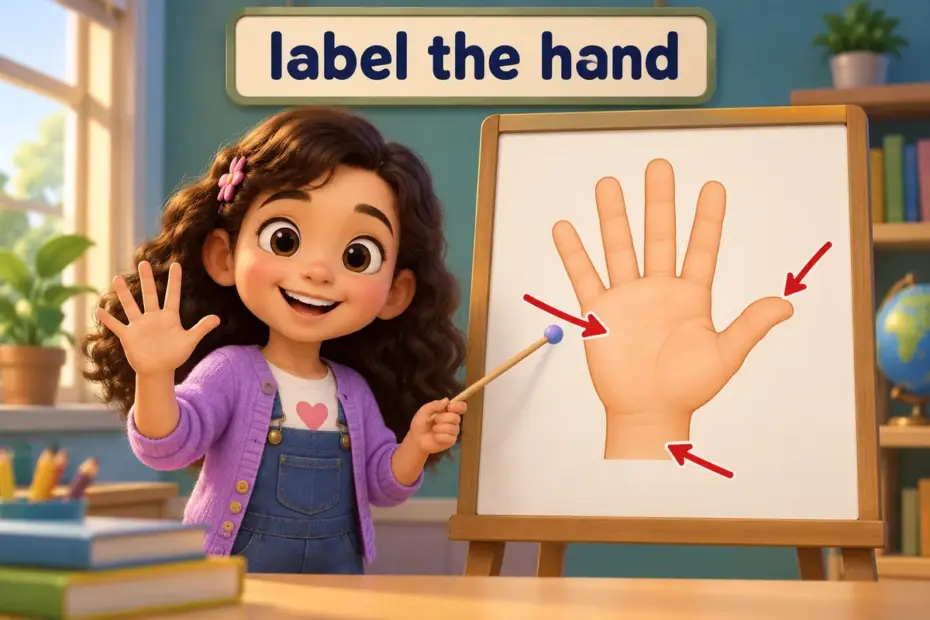
Parts of the hand with labeled diagram is a topic that matters whenever you describe the body accurately. The hand holds a palm, a back, five digits, knuckles, nails and creases. A sentence such as “the wrist joins the palm to the forearm” already names two of them.
Parts of the hand at a glance
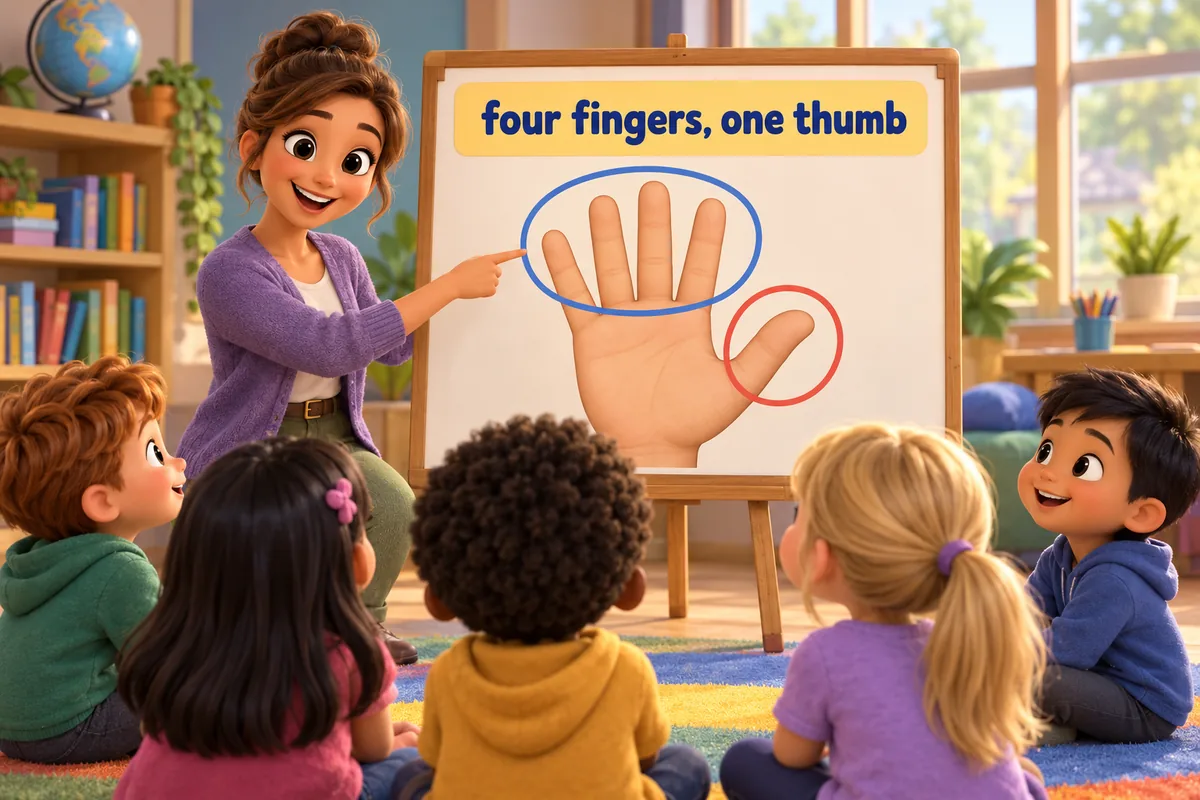
- The hand has five digits: four fingers and one thumb.
- Each finger carries three bones called phalanges; the thumb carries two.
- The palm faces forward and the back of the hand faces away from you.
- The wrist is the joint that links the hand to the forearm.
- Nails, knuckles and creases are visible surface parts, not separate bones.
What are the parts of the hand?
The hand is the body part at the end of the forearm that grips, feels and gestures. Its named parts divide into the surface you can see and the bones underneath. A labeled diagram usually shows the same set, from the wrist outward to the tips of the digits.
| Part of the hand | Where it is | What it does |
|---|---|---|
| Palm | the inner surface between wrist and fingers | grips and cups objects |
| Back of the hand | the outer surface | shows tendons and veins |
| Wrist | where the hand meets the arm | bends and turns the whole hand |
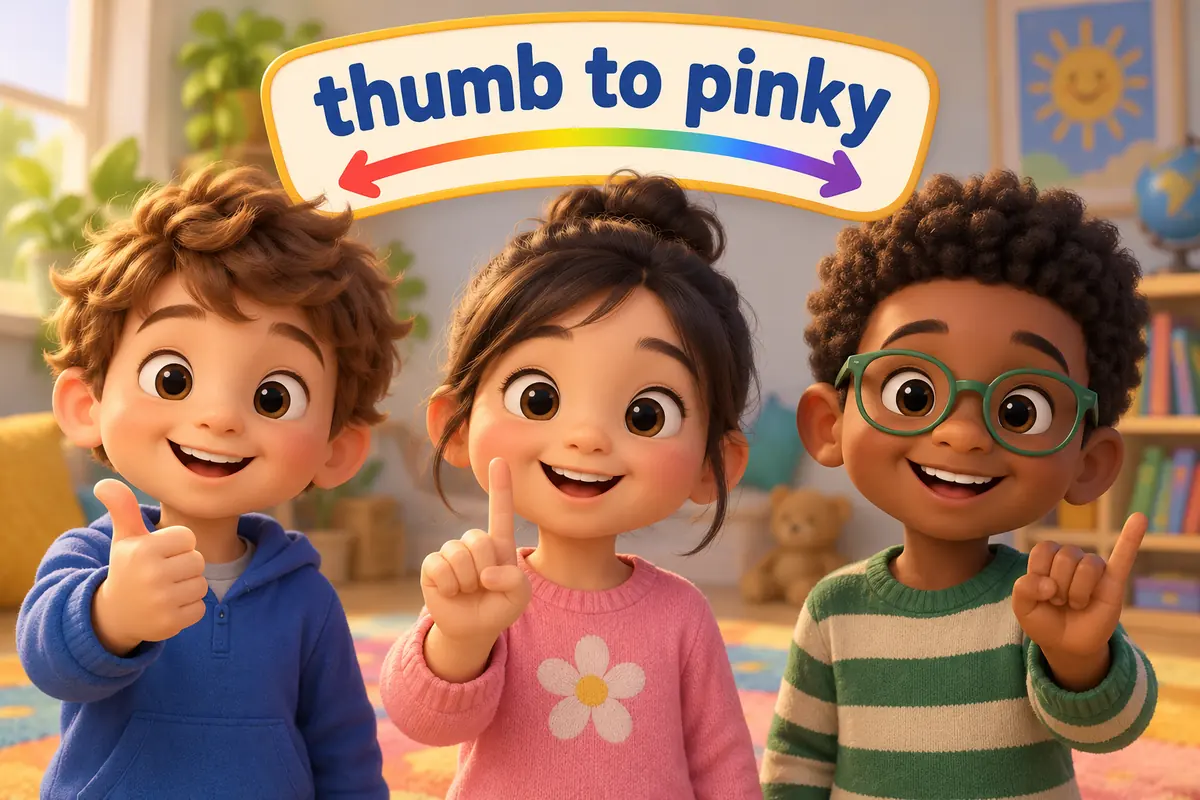
| Thumb | the short digit set to one side | presses against the fingers for a firm grip |
| Index finger | the digit beside the thumb | points, presses and picks things up |
| Middle finger | the longest digit | takes the most force in a grip |
| Ring finger | the fourth digit | commonly carries a ring |
| Little finger | the smallest digit | steadies and balances a grip |
| Knuckles | joints at the base of each finger | let each finger bend |
| Fingertips | the ends of the digits | feel texture and fine detail |
| Fingernails | plates over the fingertips | protect the tip and help lift small items |
| Palmar creases | the lines across the palm | let the skin fold when you close the hand |
A first-aid kit kept close at hand protects a cut finger, and a student who studies anatomy at first hand remembers the names of the parts faster.
How do you use the parts of the hand in a sentence?
Hand-part words slot into a few reliable patterns. Each pattern below shows the frame, a natural example, and the job the frame does in the sentence.
| Pattern | Example | What it signals |
|---|---|---|
| the + part + of the hand | The wrist of the hand turns easily. | names one part precisely |
| part + verb | The thumb presses against each finger. | describes what the part does |
| verb + with + the + part | She waved with the whole hand. | describes an action |
| a + adjective + part | He held the cup in his left palm. | adds the side or the owner |
| on/at + the + part | A ring sat at the base of the ring finger. | names a location |
Parts of the hand in sentences: examples across contexts
The same handful of names works in very different registers. The table pairs each context with a sentence and the reason the wording fits.
| Context | Sentence | Why this works |
|---|---|---|
| Anatomy classroom | The teacher labelled the palm and the back of the hand first. | names the two flat surfaces |
| Doctor’s appointment | The wrist felt tender when I bent the hand back. | names the joint politely |
| Sports coaching | Keep the thumb against the index finger to steady the bat. | uses two digit names for a grip |
| Friendly text | I caught my little finger in the car door. | names a digit in casual speech |
| Technical writing | The knuckles act as hinges for each finger. | describes a mechanical job |
| News report | A fracture in the middle finger kept the player out for a month. | names the exact bone area |
| Poetry | Her fingertips brushed the cold window. | uses a part for a delicate action |
| Teacher instruction | Trace your left hand and label every finger. | gives a task with named parts |
| Everyday planning | He kept a spare key in the palm of his hand. | locates an object |
| Office teamwork | The wrist and the fingers work hand and glove during a grip. | uses a fixed phrase |
Which word should you use: hand, palm, or arm?
Writers often reach for the wrong one of these three. Hand is the whole part below the wrist; palm is only the inner surface; arm is the limb above the wrist. The table compares them on the points that decide the choice.
| Attribute | hand | palm | arm |
|---|---|---|---|
| Meaning | the whole part below the wrist | the inner flat surface only | the limb between shoulder and wrist |
| What it includes | palm, back, five digits, knuckles | the skin from wrist to finger bases | upper arm, elbow and forearm |
| Size | about as long as a face | roughly square | the longest of the three |
| Typical use | grip, gesture, waving | holding and cupping | lifting and reaching |
| Common error | used for the arm | used for the whole hand | used for the hand |
Choose hand for the whole part, palm for the inner surface, and arm for everything above the wrist.
Word forms and grammar of hand-part words
Half the difficulty is not the meaning but the form. This table collects the everyday shapes, including the odd ones learners build by mistake.
| Form | Part of speech | Example |
|---|---|---|
| hand | noun | He raised his hand. |
| hand | verb | Please hand me the pen. |
| palm | noun | The palm of the hand is flat. |
| wrist | noun | She wore a watch on her wrist. |
| finger | noun | The index finger points the way. |
| finger | verb | She fingered the rough fabric. |
| handy | adjective | A handy little hook. |
| handful | noun | A handful of sand. |
| knuckle | noun | He grazed his knuckle. |
| fingernail | noun | She trimmed each fingernail. |
| handshake | noun | A firm handshake. |
| hands (plural) | noun | Wash your hands before eating. |
Common mistakes with hand-part words
Four errors appear again and again in learner writing. Each one below gives the wrong sentence, the corrected sentence, and the rule that explains the fix.
Each hand has five fingers.Each hand has four fingers and one thumb. The fifth digit is a thumb, so it is counted separately.She broke her hand.She broke her wrist. The wrist is a joint, not the hand itself, so name the exact part.He stubbed the fingers of his foot.He stubbed his toes. Feet carry toes, hands carry fingers.He waved his arm to say goodbye.He waved his hand to say goodbye. A greeting wave uses the hand, not the whole arm.
Practice using hand-part words
Work through the six exercises, then check your answers and the reason beside each one.
- The ___ joins the hand to the forearm.
- Choose the better word: press the doorbell with your (thumb / finger), the short digit beside the index finger.
- Correct the error: Each hand has five fingers.
- Build a sentence using “palm of the hand” about holding water.
- Which sentence fits a doctor’s note: “My wrist hurts” or “My hand hurts everywhere”?
- The ___ of the hand faces forward when you raise it.
Answers
- Wrist. The wrist is the joint that links the hand to the forearm.
- Thumb. The short digit set to one side is the thumb, not a finger.
- Each hand has four fingers and one thumb. The fifth digit is a thumb, so it is named separately.
- A cupped hand can hold water in the palm of the hand for a moment. The phrase names the inner surface that cups the liquid.
- My wrist hurts. A doctor needs the exact joint rather than a vague whole hand.
- Palm. The palm is the inner surface that turns forward when you raise the hand.
The bottom line
A parts of the hand with labeled diagram set is small and learnable: palm, back, wrist, five digits, knuckles, nails and creases. The single trick that fixes most errors is counting four fingers and one thumb rather than five fingers. Name the exact part, and every sentence about the hand becomes clear.
Frequently asked questions about the parts of the hand
How many parts does the hand have?
A labeled diagram usually names about a dozen: palm, back of the hand, wrist, four fingers, one thumb, knuckles, fingertips, fingernails and palmar creases. The bones underneath add phalanges and metacarpals. Learners rarely need every internal name, but the visible surface parts cover almost every sentence.
Is the thumb a finger?
The thumb is a digit but not one of the fingers. It has two bones rather than three and stands at an angle so it can press against each finger. That is why careful writing says four fingers and one thumb, and why a labeled hand marks the thumb separately from the rest.
What is the back of the hand called?
It is simply the back of the hand, or the dorsum in medical writing. The name matters because the back shows tendons and veins, while the palm shows creases. A label that marks only the palm leaves half of the hand unnamed.
Why do labeled diagrams mark the knuckles?
Knuckles are the joints where the fingers meet the palm, and they explain how a hand bends. Naming them lets a writer describe a grip precisely, as in a sentence about a clenched fist, rather than falling back on the vague phrase the whole hand.