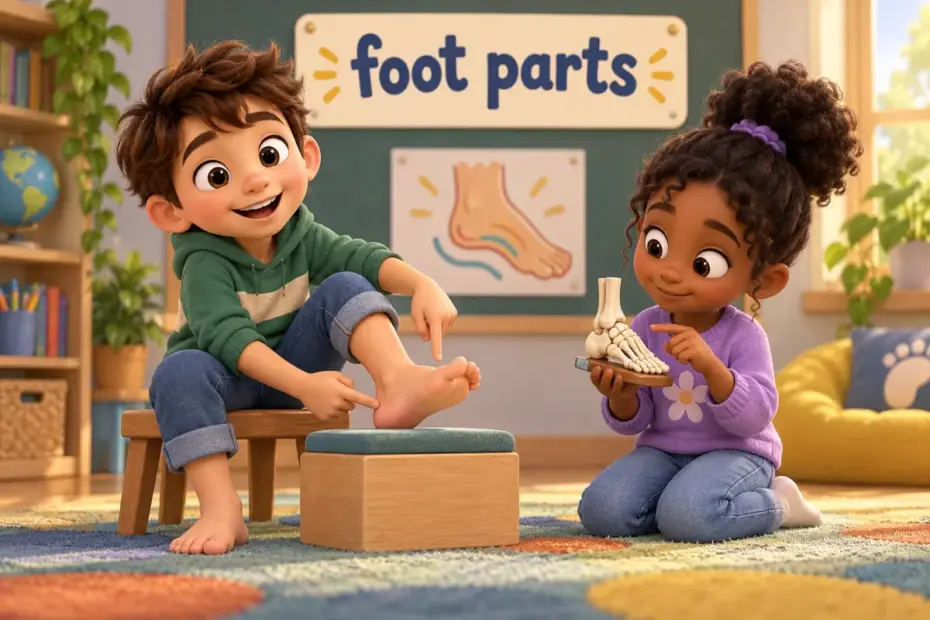
Parts of foot functions and diagram begin with the bones, the arch and the soft tissues that carry you. The toes and metatarsals push you forward, the tarsals and plantar fascia hold the arch, and the heel bone absorbs each landing. Naming each part makes injuries and shoe advice far easier to follow.
Parts of Foot at a Glance
- The foot has three groups of bones: toe bones, metatarsals and tarsals.
- The toes, or phalanges, help with balance and the push-off step.
- The metatarsals are the long bones that form the ball of the foot.
- The tarsals are the bones of the ankle and the arch.
- The calcaneus, or heel bone, is the largest bone in the foot.
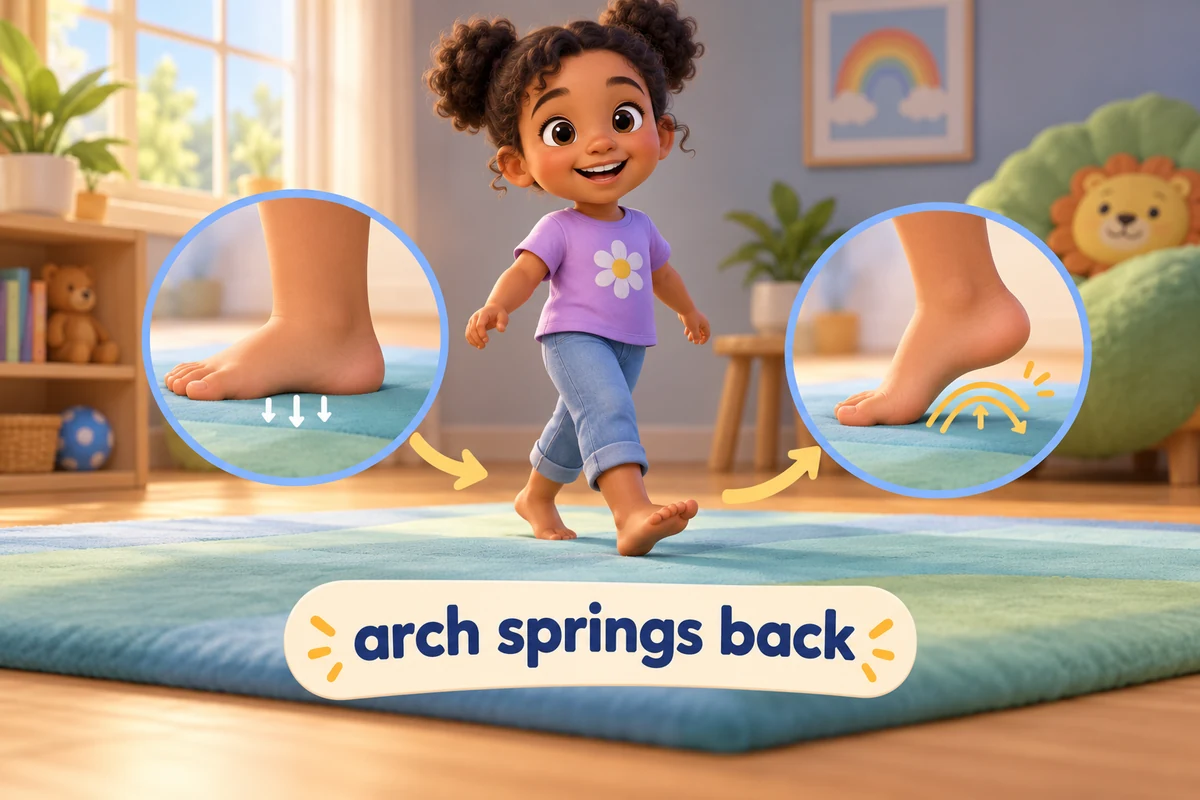
- The arch spreads weight and springs back with every step.
What are the parts of the foot?
The foot separates into bones, soft tissues and surface regions. Bones form the frame, tendons and the plantar fascia hold the arch, and everyday names such as sole, heel, instep and ball describe the parts you can see and feel.
| Part | Where it sits | What it does |
|---|---|---|
| Toes (phalanges) | Front of the foot | Help balance and push off when you walk |
| Metatarsals | Middle of the foot | Long bones that form the ball of the foot |
| Tarsals | Ankle and midfoot | Seven bones that shape the ankle and arch |
| Calcaneus (heel bone) | Back of the foot | Absorbs the force of each landing |
| Talus | Top of the ankle | Joins the foot to the leg bones |
| Arch | Along the inner sole | Spreads body weight and springs back |
| Ball of the foot | Beneath the base of the toes | Carries weight as you roll forward |
| Instep | Top of the foot | The upper surface between toes and ankle |
| Sole | Underside of the foot | The surface that meets the ground |
| Heel | Back of the sole | The padded area under the heel bone |
What does each part of the foot do?
Each part answers a physical need: support, shock absorption, balance or movement. Grouping the parts by function shows why the foot is built as an arch rather than as a flat block.
| Job | Part responsible | Why it matters |
|---|---|---|
| Support weight | Tarsals and metatarsals | Carry the body’s load from heel to toes |
| Absorb shock | Arch and plantar fascia | Soften the force of each step |
| Push off | Toes and calf muscles | Drive the body forward when walking |
| Keep balance | Toes and ankle joint | Sense the ground and steady the body |
| Connect to the leg | Talus and Achilles tendon | Link the foot to the muscles of the calf |
| Cushion landings | Heel and fatty pad | Protect the heel bone when the foot lands |
How do you use foot-part words in a sentence?
Foot vocabulary behaves like most body-part nouns. Each part takes the when you name it, and prepositions such as on, under and at say where the part sits.
| Pattern | Example | What it signals |
|---|---|---|
| the + part + of the foot | The arch of the foot runs along the inner sole. | Names one part of the whole |
| part + action verb | The heel bone absorbs the landing. | Describes the part’s job |
| verb + the + part | Roll onto the ball of the foot. | Uses the part as an object |
| adjective + part | A high arch needs supportive shoes. | Adds a quality to the part |
| there is / are + part | There are seven tarsal bones in each foot. | States how many parts are present |
Parts of the Foot in Everyday Contexts
The same terms appear in clinics, shoe shops and sports coaching. Each sentence below uses an exact name so the reader knows which part is meant.
| Context | Example sentence | Why this works |
|---|---|---|
| Clinic | The arch drops when the foot takes full weight. | Names the part being examined |
| Shoe shop | Look for support under the instep. | Points to the top of the foot |
| Running coach | Land softly near the ball of the foot. | Connects a part to technique |
| Anatomy class | The calcaneus is the largest tarsal bone. | Uses the precise name |
| Word study | We practised the noun foot in a sentence before the parts. | Starts with the whole object |
| Everyday talk | My heel hurts after a long day standing. | Uses the common surface name |
| Animal science | A cloven foot is split into two toes. | Shows a variant foot shape |
| Idiom practice | The company will foot the bill for the repairs. | Uses foot as a verb in a fixed phrase |
The word foot also lives in idioms that name no part at all. To foot the bill means to pay, and someone who is said to have one foot in the grave is very old or unwell. Animal writing uses a cloven foot for a split hoof, while the simplest examples sit in sentences with the noun foot.
Foot Parts That Are Easy to Confuse
Four pairs cause most of the muddle. Two involve parts that lie close together, and two involve words that look alike but name different things.
| Pair | How they differ | Quick test |
|---|---|---|
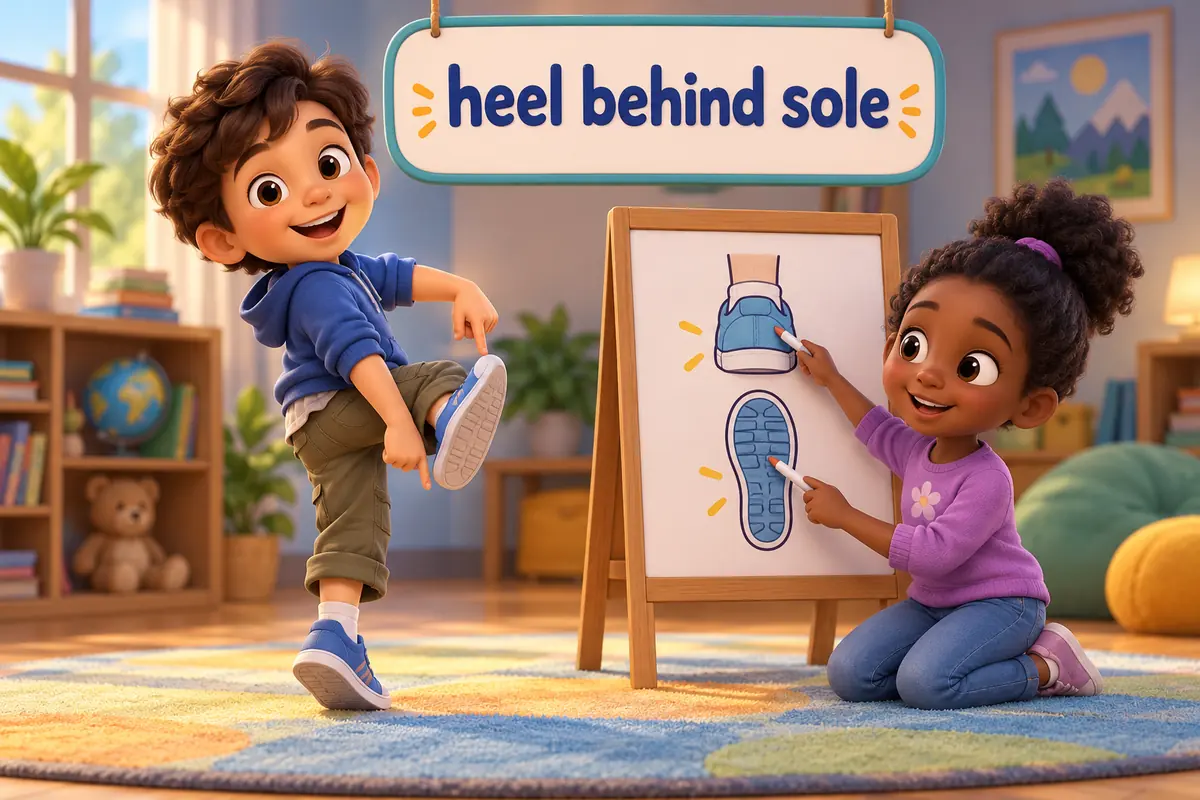
| heel / sole | The heel is the back of the foot; the sole is the whole underside. | If it is at the back, it is the heel. |
| arch / instep | The arch runs along the inner sole; the instep is the top surface. | Under is the arch, over is the instep. |
| metatarsals / metacarpals | Metatarsals are in the foot; metacarpals are in the hand. | Foot bones start with the same letters as foot region. |
| toes / phalanges | Toes are the visible parts; phalanges are the bones inside them. | You see toes and x-ray phalanges. |
Naming parts works the same way for every object. Lists such as the body parts that start with A build the habit of pairing a name with a location and a job.
Word Forms and Plurals for Foot Parts
Some foot words change form in ways that surprise learners. The table below shows the correct form and the one people often write by mistake.
| Form | Part of speech | Example |
|---|---|---|
| foot / feet | noun with an irregular plural | Both feet were sore. |
| toe / toes | countable noun | She curled her toes. |
| phalanx / phalanges | countable noun with a Latin plural | The phalanges form the toes. |
| calf / calves | noun with an irregular plural | Her calves tightened on the climb. |
| foot / footed | verb and past form | They footed the bill together. |
| tarsal | adjective | The tarsal bones shape the arch. |
Common Mistakes When Naming Foot Parts
These errors appear in student writing and clinic notes. Each one shows the wrong version, the corrected version and the rule behind the fix.
Incorrect: Both foot are sore after the walk. Correct: Both feet are sore after the walk. The plural of foot is feet, not foot.
Incorrect: The sole is at the back of the foot. Correct: The heel is at the back of the foot, and the sole is the whole underside. The heel is a specific area, while the sole runs the full length.
Incorrect: The arch is the top of the foot. Correct: The instep is the top of the foot, and the arch runs along the inner sole. Position tells the two apart.
Incorrect: He is six foot tall. Correct: He is six feet tall. In careful writing the plural feet expresses height, though foot survives in casual speech.
Incorrect: The metacarpals form the ball of the foot. Correct: The metatarsals form the ball of the foot. Metacarpals are the hand bones.
Practice Using Foot Part Vocabulary
Six tasks cover the terms you have met. Write your own answers before you read the reasoned list below.
- Fill in the blank: The largest bone in the foot is the _____.
- Fill in the blank: The curve along the inner sole is the _____.
- Choose the better word: The long bones that form the ball of the foot are the (metatarsals / metacarpals).
- Correct the error: My two foot hurt after the long hike.
- Build a sentence: use ball of the foot to explain how a runner lands.
- Spot the register: which sentence belongs in a clinic note, and which in a friendly message?
Answers
- calcaneus; it is the heel bone and the largest bone in the foot.
- arch; it spreads weight and springs back with each step.
- metatarsals; metacarpals are in the hand, not the foot.
- My two feet hurt after the long hike; the plural of foot is feet.
- One model answer: A careful runner lands near the ball of the foot, then rolls back to the heel.
- The note about the dropped arch under full weight suits a clinic note; the sentence about sore heels after shopping suits a friendly message.
The Bottom Line
Naming the parts of foot anatomy comes down to bones, soft tissues and surface names. The toes and metatarsals carry you forward, the tarsals and plantar fascia hold the arch, and the heel bone absorbs each landing. Keep heel apart from sole and arch apart from instep, since each pair names a different place. With these terms secure, you can describe a shoe problem or a sports injury precisely.
Frequently asked questions about parts of foot functions and diagram
What are the main parts of the foot?
The main parts are the toes, the metatarsals, the tarsals, the calcaneus or heel bone, and the talus at the ankle, together with the arch and the plantar fascia. Everyday names add the heel, the sole, the instep and the ball of the foot. Bones form the frame while soft tissues hold the arch.
What is the function of the arch of the foot?
The arch spreads the weight of the body across the foot and springs back with each step, working like a shallow spring. It also stores and returns energy during walking and running. Tendons and the plantar fascia hold the arch in shape, and supportive shoes help it keep that curve.
Why is the heel bone important?
The calcaneus is the largest bone in the foot and takes the first impact of every step. It anchors the Achilles tendon from the calf and forms the lever that pushes the body forward. Its fatty pad cushions landings, which is why a painful heel changes the whole gait.
What is the difference between the instep and the sole?
The instep is the top surface of the foot between the toes and the ankle, while the sole is the underside that meets the ground. The instep is what you see when you look down at your foot, and the sole is what you cannot see while standing. They name opposite surfaces of the same foot.