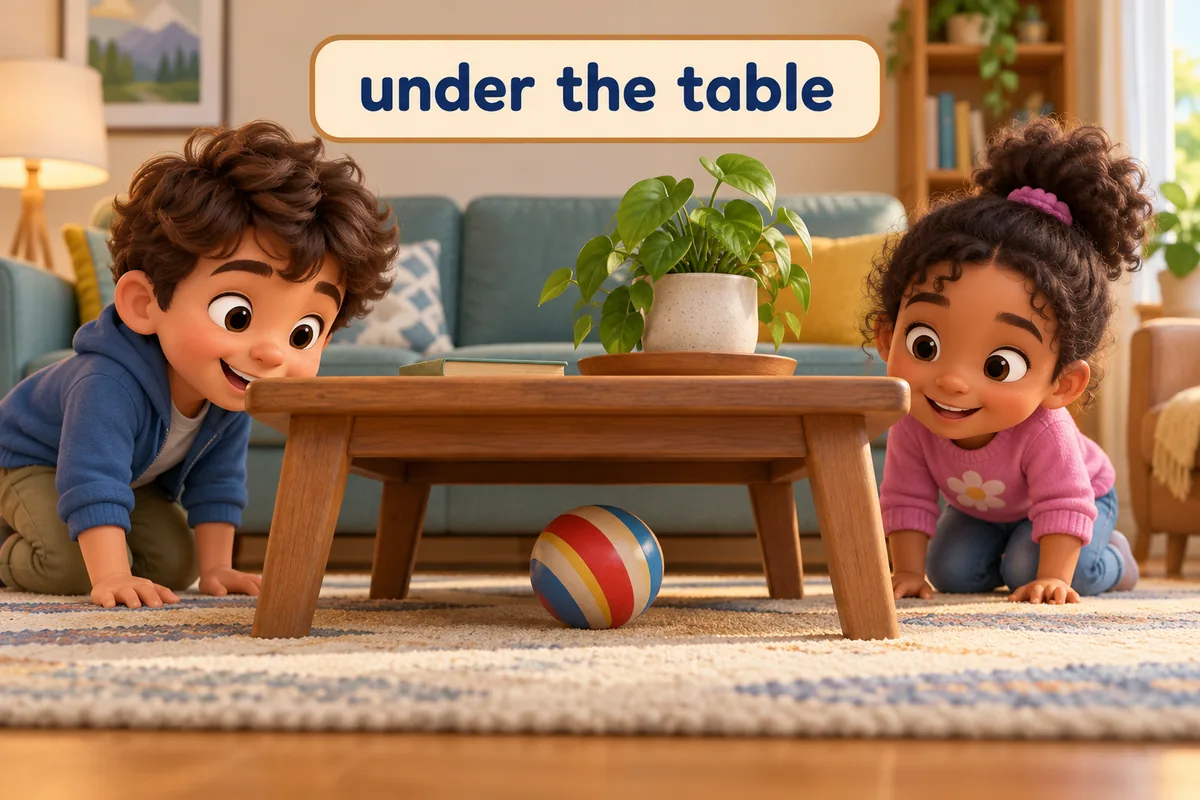
Prepositions types and examples are easiest to learn by meaning rather than by list, because each preposition marks a relationship such as place, time or movement. Place prepositions answer where, as in on the desk. Time prepositions answer when, as in at noon, and movement prepositions answer which way, as in through the gate.
Prepositions types and examples at a glance
- Place prepositions such as in, on and under answer where.
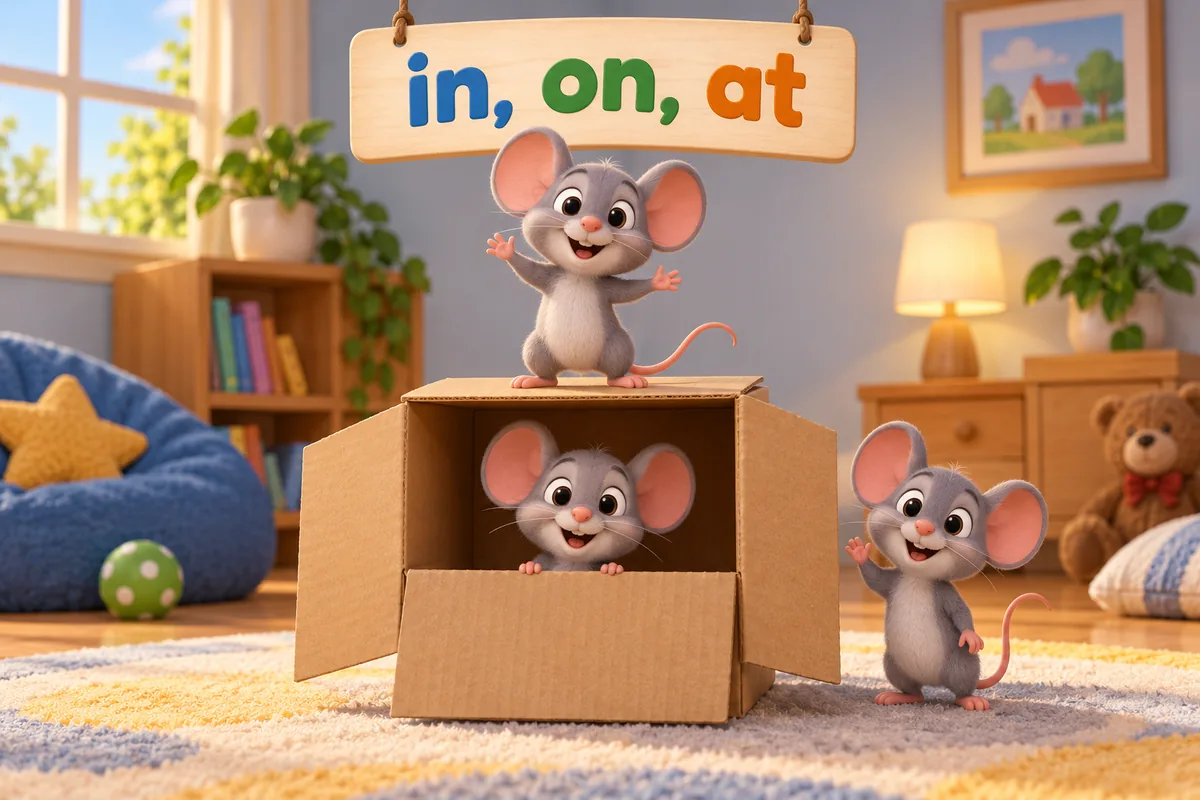
- Time prepositions such as at, on and in answer when.
- Movement prepositions such as through, across and into answer which way.
- Manner and agent prepositions such as with and by answer how and by whom.
- The commonest error is mixing up in, on and at for time.
What are the types of prepositions?
A preposition is a word that links its object to another part of the sentence, and its type depends on the relationship it marks. The same short word can belong to more than one type, so on is a place preposition in on the table and a time preposition in on Monday. Grouping by meaning makes the list memorable and shows why the choice matters.
| Type | Example prepositions | Example phrase |
|---|---|---|
| Place | in, on, under, beside | under the bench |
| Time | at, on, in, since | since morning |
| Movement | through, across, into | across the field |
| Manner | with, without | with a smile |
| Agent | by, with | made by hand |
| Purpose | for, to | for the team |
One honest limit sits here. Many verb and adjective pairs are fixed by convention rather than by meaning, so a learner cannot always predict the preposition from the type. Interested in and good at follow no rule that a translation will reveal, which is why those pairs are learned by heart.
How do you use prepositions in a sentence?
A preposition appears before its object and holds its shape, so the pattern is stable even when the word choice is not. The object is a noun, a pronoun or a longer noun phrase.
| Pattern | Example | What it signals |
|---|---|---|
| Preposition + noun | at home | A general place or state. |
| Preposition + pronoun | near us | The object is a pronoun. |
| Preposition + noun phrase | on the wooden bench | A precise position. |
| Two-word preposition | in front of the gate | A compound relation in one unit. |
| Verb + fixed preposition | wait for the bus | A pairing stored as one item. |
Prepositions types and examples across contexts
The same small set of words appears in every register, so the list below shows the types at work in sentences a reader will meet.
| Context | Sentence | Why this works |
|---|---|---|
| Classroom | Your bag is beneath the chair. | A place preposition gives position. |
| Workplace email | We will talk after lunch. | A time preposition orders the day. |
| News report | The runner sprinted across the line. | A movement preposition shows direction. |
| Technical writing | Tighten the nut with a wrench. | An instrument preposition names the tool. |
| Story opening | Beside the stream sat a heron. | A fronted place phrase frames the scene. |
| Academic essay | The sample was drawn by students. | An agent preposition credits the doer. |
| Conversation | I am waiting for the train. | A fixed pair keeps the meaning clear. |
| Instructions | Cut along the dotted line. | A place phrase guides the action. |
| Letter | Thanks for the invitation. | A purpose phrase follows the verb. |
Learning by list works best with a themed set. A reference page of prepositions from a to z keeps every word in one place. A guide to movement prepositions isolates the direction words, and a list of prepositions after adjectives turns the fixed pairs into a quick review.
Simple prepositions vs compound prepositions
The two families look different on the page, and the compound ones carry more than one word, which is the main point to notice.
| Feature | Simple preposition | Compound preposition |
|---|---|---|
| Length | One word | Two words or more |
| Example | behind | in front of |
| Stress | One beat | Spoken as a single unit |
| Formality | Neutral | Often more precise |
| Typical slip | Wrong word chosen | Party left out |
A companion guide to adjectives with prepositions shows how the two families combine with describing words.
Word forms and grammar of prepositions
Prepositions keep one form, but the words around them follow rules worth naming.
| Form | Part of speech | Example |
|---|---|---|
| Preposition | preposition | under |
| Prepositional phrase | phrase | under the stairs |
| Object of a preposition | noun or pronoun | the stairs |
| Compound preposition | multi-word preposition | in front of |
| Phrasal verb | verb plus particle | look after |
Common mistakes with prepositions
| Wrong | Right | Rule |
|---|---|---|
| We met on Monday. | Days take on, not in. | |
| I am interested in music. | Interested pairs with in. | |
| She arrived at the office. | Arrive takes at for a point. | |
| He ran across the street to the other side. | A phrase ends with its object, not an adverb. | |
| Between you and me, it rained. | A pronoun after a preposition takes object form. |
Practice using prepositions
These exercises move through the types. Fill each gap or repair each sentence, then check the reason beside the answer.
- Fill the gap: The cat is hiding ____ the sofa.
- Fill the gap: We will arrive ____ Friday.
- Fill the gap: She swam ____ the river to the far bank.
- Correct the error: He is good in drawing.
- Build a sentence about a bus using the movement phrase through the city.
- Name the type: In for the class, is the phrase purpose, place or time?
Answers
- under the sofa. A place preposition names the position.
- on Friday. A named day takes on.
- across the river. A movement preposition shows the route.
- He is good at drawing. Good pairs with at for skills.
- The bus rolled through the city. A movement phrase traces the route.
- Purpose. For here names the reason or the beneficiary.

The bottom line
Prepositions types and examples become simple once you sort them by the question they answer: where, when, which way or how. Learn the core place, time and movement words first, then add the fixed pairs that verbs and adjectives demand. Naming the type is the fastest way to pick the right preposition under time pressure.
Frequently asked questions about prepositions
What are the three main types of prepositions?
The three a learner needs first are place, time and movement, since they appear in nearly every sentence. Place answers where, time answers when, and movement answers which way. Once those are secure, manner, agent and purpose complete the picture with the remaining common words.
Is of a preposition?
Yes. Of is one of the commonest prepositions in English and usually shows possession, belonging or a part of a whole. In the roof of the house it links the roof to the house. It also appears in fixed phrases such as a cup of tea and most of them.
Can two prepositions appear together?
Yes, in fixed combinations such as out of and from behind. In out of the room, out of acts as one unit before the object. These pairs are learned as single items rather than as two separate prepositions, because the meaning comes from the combination.
Why do we say in the morning but at night?
The choice follows convention more than a rule. Parts of the day use in the morning and in the afternoon, but the set phrase at night is an exception that must be memorised. Named days and dates, by contrast, always take on, as in on Tuesday.