Prepositions and prepositional phrases show how one part of a sentence relates to another, usually by joining a noun or pronoun to a verb or another noun. A single preposition such as in, on or at carries the link, and its object completes the phrase. In the letter is on the desk, on links the letter to the desk.
Prepositions and prepositional phrases at a glance
- A preposition is a short word that shows a relationship, such as in, on, at, by or with.
- A prepositional phrase is that preposition plus its object.
- The object is always a noun, a pronoun or a noun phrase.
- Prepositions can mark place, time, movement, manner or reason.
- The commonest error is choosing the wrong preposition for a fixed pairing.
What are prepositions and prepositional phrases?
A preposition is a word that links its object to another part of the sentence, and a prepositional phrase is the preposition together with that object and any modifiers. The phrase adds information, but it cannot stand alone as a sentence. The type of preposition is easier to remember by the job it does than by a list, so the table below groups them by meaning.
| Type | Example prepositions | Example phrase |
|---|---|---|
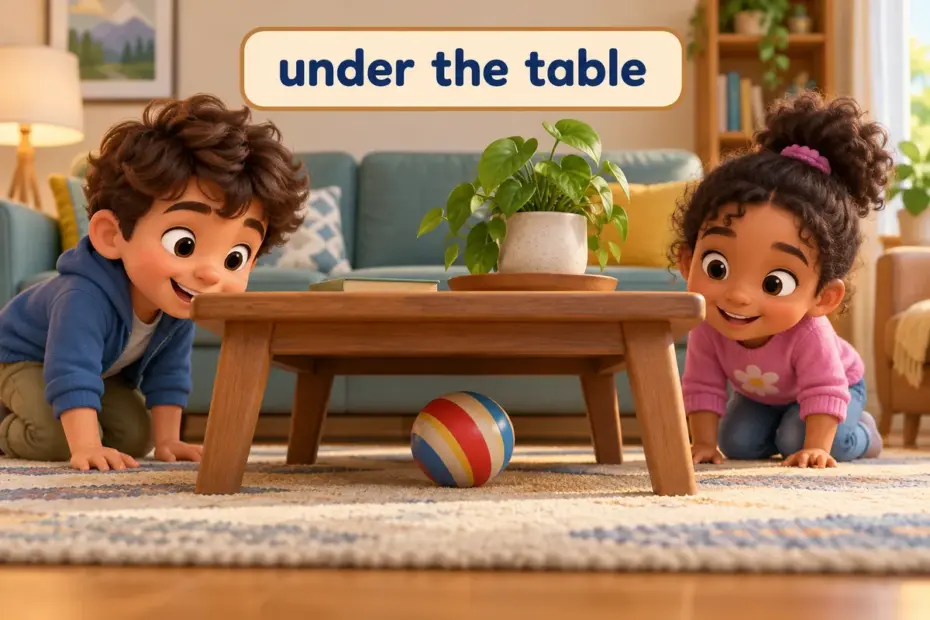
| Place | in, on, at, under | under the table |
| Time | at, on, in, before | before dawn |
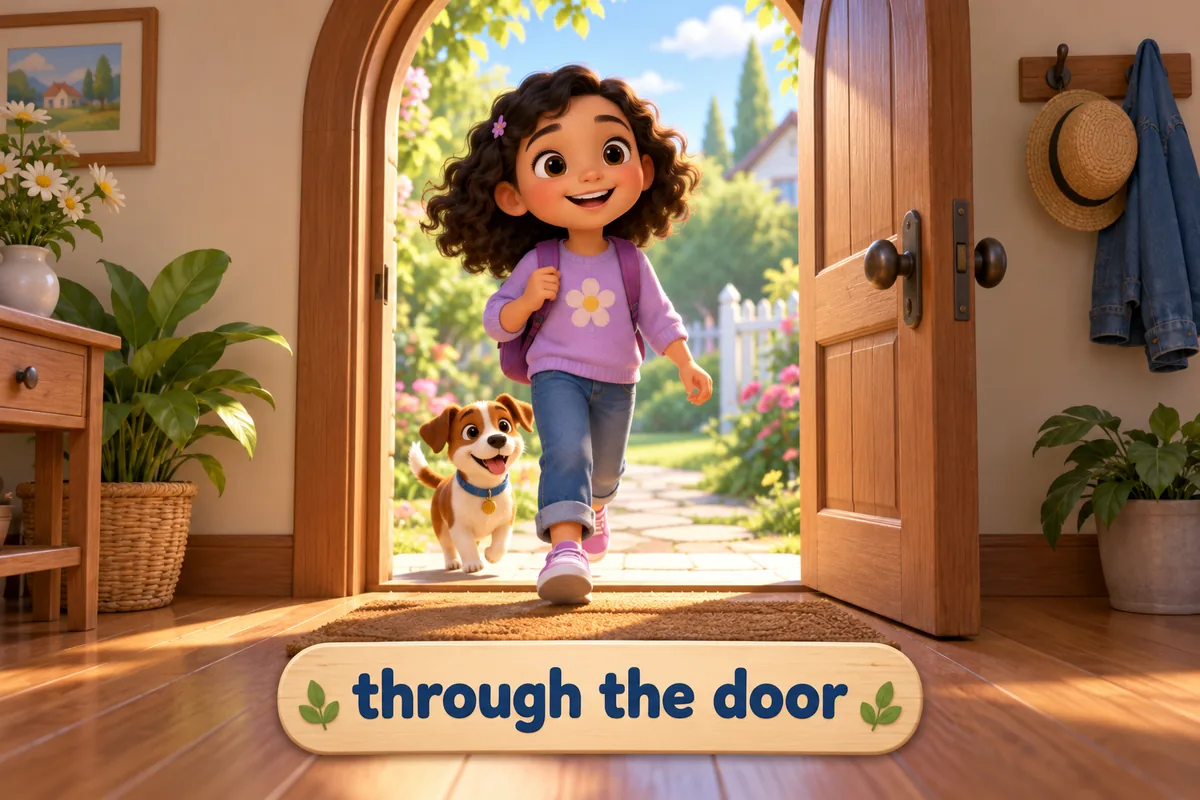
| Movement | through, across, into | through the tunnel |
| Agent | by, with | written by the class |
| Manner | with, without | with great care |
One honest limit belongs here. English fixes many verb and preposition pairs by convention rather than logic, so depend on, listen to and arrive at have to be learned as units. Assuming a direct translation from another language is the study habit that produces most of the errors below.
How do you use prepositions in a sentence?
A preposition sits before its object and rarely changes shape, which is why the phrase is stable but the choice of preposition can still trip a writer. The object never takes a different ending for the job it does, so a phrase such as with them uses the same pronoun form that appears after any other preposition. When a verb or an adjective has settled on one preposition, the pair behaves like a single vocabulary item and should be learned that way.
| Pattern | Example | What it signals |
|---|---|---|
| Preposition + noun | at school | A general location. |
| Preposition + pronoun | with them | The object is a pronoun. |
| Preposition + noun phrase | on the kitchen table | A precise position. |
| Verb + fixed preposition | depend on | A pairing learned as one unit. |
| Adjective + fixed preposition | good at | The adjective sets the preposition. |
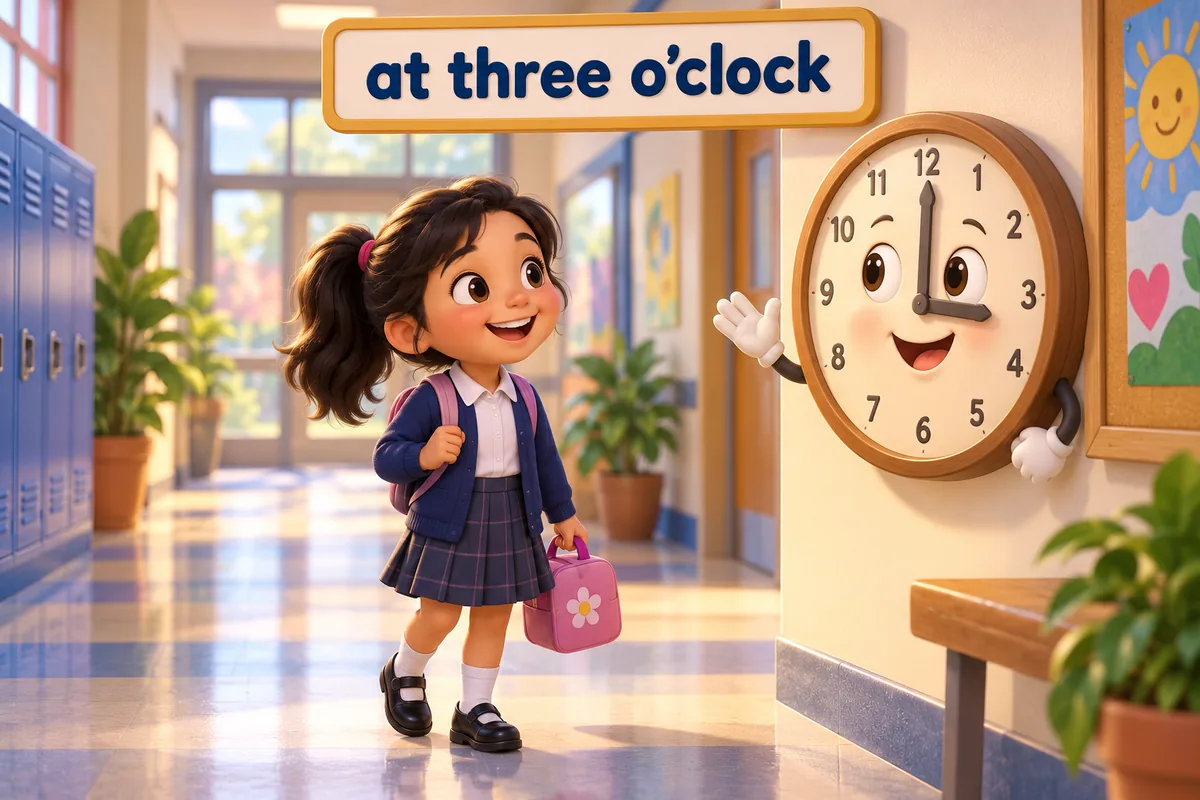
Prepositions and prepositional phrases: examples across contexts
Because the same preposition shifts meaning with its object, each context below shows the phrase doing a different job. Notice how little the preposition itself changes; the words around it carry most of the information.
| Context | Sentence | Why this works |
|---|---|---|
| Classroom | The map hangs above the door. | A place phrase marks position. |
| Workplace email | The meeting starts at nine. | A time phrase fixes the hour. |
| News report | The parade moved through the square. | A movement phrase traces the route. |
| Technical writing | Fasten the panel with two screws. | An instrument phrase names the tool. |
| Story opening | Beyond the wall stood a tall tree. | A fronted phrase sets the scene. |
| Academic essay | The data was gathered by hand. | An agent phrase names the method. |
| Conversation | I waited for you. | A fixed pairing keeps the meaning. |
| Instructions | Fold the paper along the line. | A place phrase guides the action. |
| Letter | Thank you for your help. | A reason phrase follows the verb. |
Lists speed up learning when they are grouped by topic. A reference on prepositions that start with a to z gives the full inventory. A page on prepositions of movement isolates the direction words, and a guide to prepositions after adjectives shows the fixed pairs such as good at and proud of.
Prepositions vs prepositional phrases
The two terms are not interchangeable, and keeping them apart helps when you look up a rule or mark a sentence.
| Feature | Preposition | Prepositional phrase |
|---|---|---|
| Size | A single word | Two words or more |
| Example | between | between the houses |
| Can it stand alone? | No, it needs an object | No, it needs a sentence |
| Role | Marks the relationship | Adds place, time or manner |
| Typical slip | Choosing the wrong word | Leaving out the object |
A useful companion list of adjectives with prepositions turns these fixed pairs into a quick study set.
Word forms and grammar of prepositions
Prepositions themselves barely change form, but the words around them follow clear rules. The same visible word can do two jobs, so between is a preposition in between the houses but part of a larger phrase when the object is left implied. Recognising the object is the surest test, because a true preposition always governs a noun or pronoun that follows it.
| Form | Part of speech | Example |
|---|---|---|
| Preposition | preposition | in |
| Prepositional phrase | phrase | in the drawer |
| Object of a preposition | noun or pronoun | the drawer |
| Phrasal verb | verb plus particle | give up |
| Prepositional adverb | adverb | Come in. |
Common mistakes with prepositions
| Wrong | Right | Rule |
|---|---|---|
| It depends on the weather. | Depend pairs only with on. | |
| She is good at science. | Good pairs with at for subjects and skills. | |
| Between you and me, it works. | A pronoun after a preposition takes object form. | |
| We arrived in London. | Arrive takes in for cities and at for points. | |
| He sat on the chair for an hour on Monday morning. | Time phrases stack in the order duration, day, clock. |
Practice using prepositions
These exercises test the fixed pairs and the phrase itself. Answer each in the form the prompt requests.
- Fill the gap: This book belongs ____ me.
- Fill the gap: We arrived ____ the airport early.
- Correct the error: She is afraid from dogs.
- Choose the object pronoun: The note is for you and (I / me).
- Build a sentence about a train using the pattern through the tunnel.
- Name the type: In by bicycle, is the phrase place, time or agent?
Answers
- belongs to me. Belong pairs with to for ownership.
- arrived at the airport. Arrive takes at for a point such as a building.
- She is afraid of dogs. Afraid pairs with of, not from.
- for you and me. A pronoun after a preposition takes the object form.
- The train sped through the tunnel. A movement phrase traces the route.
- Agent. By names the means or agent that performs the action.
The bottom line
Prepositions and prepositional phrases carry the links that hold a sentence together, joining a noun or pronoun to the action around it. Learn them by the job they do, place, time, movement, agent or manner, rather than as a random list. Store the fixed pairs as single units, because choosing the right preposition matters more than any other detail.
Frequently asked questions about prepositions
Is it wrong to end a sentence with a preposition?
No. Ending a sentence with a preposition is normal English, as in the person I spoke to, and has been for centuries. The old objection came from Latin grammar, where prepositions could not strand. If the sentence sounds heavy, rewrite it for rhythm rather than for a rule.
How many prepositions does English have?
English has a small core of about one hundred common prepositions and a longer tail of multi-word ones such as in front of and because of. Learners do best with the core set first, since those words appear in most sentences and drive the fixed pairs worth memorising.
Can a preposition follow a noun?
Yes, when the phrase describes the noun rather than the verb. In the house on the corner, the phrase on the corner describes the house and acts as an adjective. In she lives on the corner, the same words describe the verb live and act as an adverb.
What is the difference between in and on for time?
Use in for long periods such as months, years and seasons, so in June or in 2024. Use on for days and dates, so on Monday or on the fifth. Use at for clock times and points, so at noon. The scale of the time is what decides the choice.