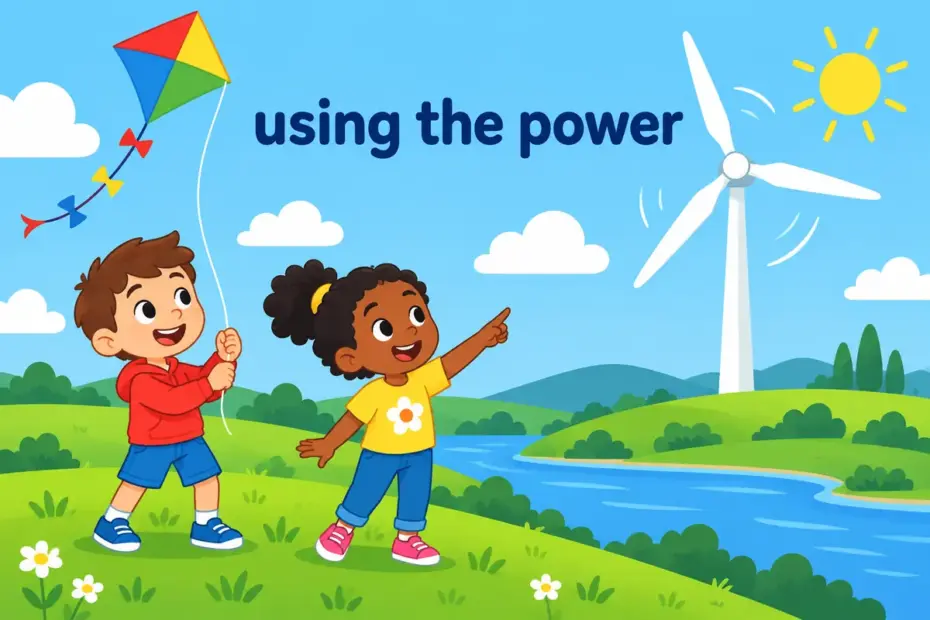
Harness means to control and use a source of power, energy or skill for a purpose. To use harness in a sentence, name the resource and the purpose: “The dam harnesses the river to make electricity.” The verb is transitive, and the noun names the straps on a working animal.
Harness at a glance
- Harness is a verb meaning to control and use power or skill, and a noun meaning an animal’s straps.
- The verb takes the resource as its object: harness the wind, harness data, harness talent.
- Common collocations are harness solar energy and harness a natural force.
- The register is neutral to formal, common in technology and sustainability writing.
- The commonest error is mixing harness up with hapless or harass, which are unrelated.
What does harness mean?
Harness is a verb meaning to gain control of a source of power or a quality and put it to work, and a noun meaning the straps that fit an animal to a load. The Cambridge entry for harness records both, and the older strap sense explains the metaphor. A bridle is the headgear alone, while a harness fits the whole body.
| Sense | Plain meaning | Example sentence |
|---|---|---|
| Control and use (verb) | Capture power and put it to work | The farm harnesses wind to pump water. |
| Straps (noun) | A set of straps on an animal | The horse pulled hard against its harness. |
| Fit with straps (verb) | Put a harness on an animal | They harnessed the pony to the cart. |
One limitation is worth stating plainly. Harness is not simply to own or to have. It implies catching something loose and directing it, so a company that owns a forest does not harness it unless the wood is actually put to use.
How do you use harness in a sentence?
Put the resource right after the verb, because harness is transitive and never stands alone. The patterns below cover almost every real sentence, and the passive is the one technology writing prefers.
| Pattern | Example | What it signals |
|---|---|---|
| harness + resource | The village harnesses the stream for power. | The resource is the object. |
| harness + resource + to + verb | Engineers harness tides to generate electricity. | States the purpose. |
| harness + abstract quality | Coaches harness nervous energy before a final. | Applies to people’s qualities. |
| be harnessed | Solar energy can be harnessed cheaply. | Passive voice, standard in tech writing. |
| harness + animal + to + noun | They harnessed the oxen to the plough. | The original physical sense. |

Harness in a sentence: examples across contexts
Harness changes setting more than it changes meaning. The nine sentences below keep the same verb while moving from a farm to a software team, and each one names the energy or skill being put to work.
| Context | Example sentence | Why this works |
|---|---|---|
| Science | The lab harnesses sunlight to split water. | Names the resource and the purpose. |
| Engineering | The dam harnesses the river for the whole valley. | Shows the scale of the resource. |
| Business | The firm harnesses customer data to improve delivery. | Applies the verb to information. |
| Education | Good teachers harness curiosity rather than quiet it. | Uses an abstract human quality as the object. |
| Sports | The sprinter harnessed her nerves on the start line. | Turns a feeling into usable energy. |
| Environment | Coastal towns are harnessing wave power at last. | Uses the progressive for a growing trend. |
| History | Farmers harnessed oxen to clear the heavy clay. | Returns to the original animal-and-straps sense. |
| Technology | The app harnesses idle phones to run small tasks. | Names an unexpected resource. |
| Conversation | We should harness that enthusiasm before the term ends. | Uses the verb for a passing mood. |
Harness vs exploit
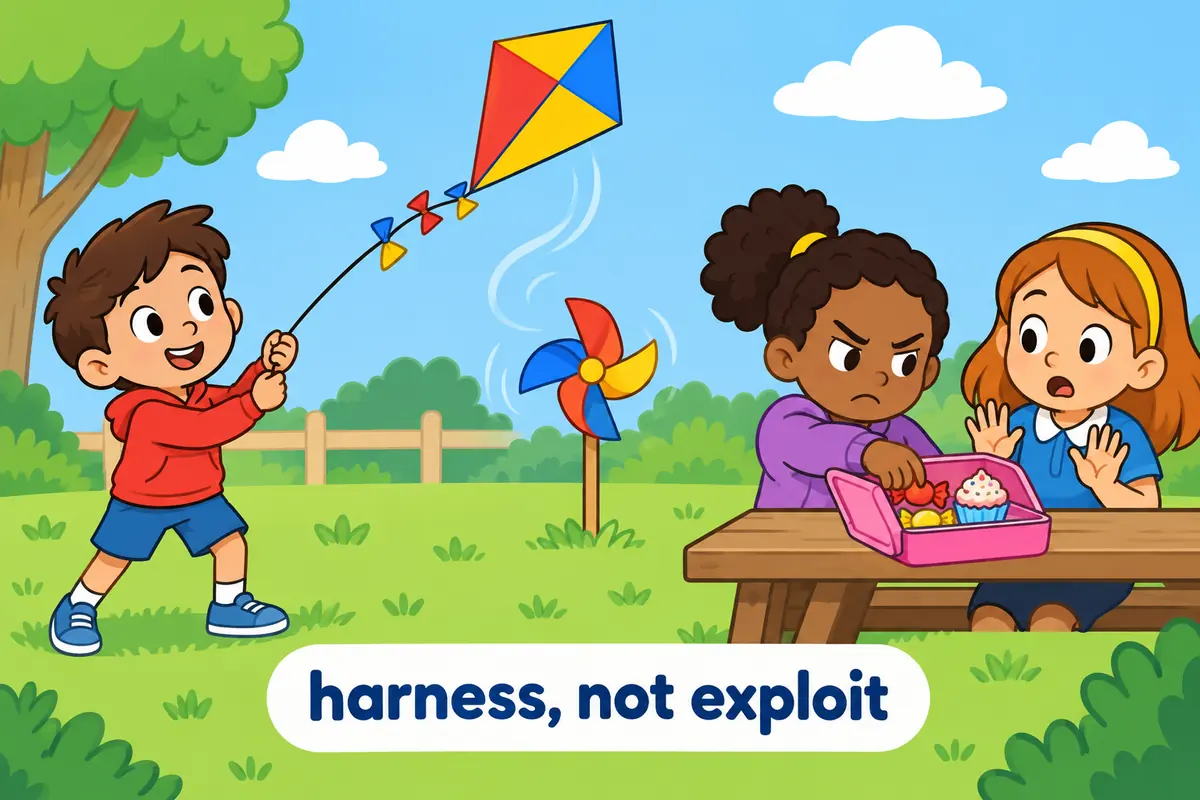
Harness means to capture a resource and put it to work, while exploit means to use something, often unfairly and for gain. The two verbs overlap when resources are involved, but exploit carries a moral charge that harness does not. Where the meaning is only to make use of something, utilize is the cooler, more technical verb.
| Attribute | harness | exploit |
|---|---|---|
| Core idea | Capture power and put it to work | Use something, often unfairly |
| Tone | Neutral or positive | Often negative |
| Typical object | Energy, data, talent | Workers, loopholes, resources |
| Usual subject | Engineers, researchers, teachers | Corporations, critics |
| Implies | Productive use | Taking advantage |
Verdict: choose harness for energy or skill turned to good use, and exploit when someone is being used for another’s gain.
Word forms and grammar of harness
Harness inflects regularly as a verb and has a matching noun. Control names the keeping in order, while harness adds the idea of putting the thing to use. The straps a driver holds are the reins, one piece of the noun harness.
| Form | Part of speech | Example |
|---|---|---|
| harness | verb, base form | We can harness the tide for power. |
| harnesses | verb, third person singular | The system harnesses spare computing time. |
| harnessed | verb, past and past participle | The mill harnessed the stream for a century. |
| harnessing | verb, present participle | They are harnessing rainfall in the dry hills. |
| harness | noun | The leather harness was worn but strong. |
Common mistakes with harness
- Incorrect:
The company harnessed the river.Correct: The company harnessed the river to make electricity. Rule: Harness usually states a purpose, so add to plus a verb. - Incorrect:
The miser harnessed his money.Correct: The miser hoarded his money. Rule: Harness puts a resource to work; money that is not used is hoarded. - Incorrect:
The hapless storm damaged the roof.Correct: The powerful storm damaged the roof. Rule: Hapless means unlucky, and harass means to pester; both are unrelated to harness. - Incorrect:
They harness the workers for long hours.Correct: They exploit the workers for long hours. Rule: Using people unfairly is exploit, not harness.
Practice using harness
Work through the six items, then check the reasoning rather than only the answer.
- Fill the gap: The new panels ______ sunlight to heat the school pool.
- Choose the better word: The factory was accused of (harnessing / exploiting) its young workers.
- Correct the error: The town harnessed the waterfall.
- Build a sentence: use be harnessed about geothermal heat in a cold country.
- Spot the register: which belongs in a science report — wave power can be harnessed at scale, or we’re going to grab all that wave energy?
- Rewrite with the noun: The straps fitted the horse for the plough. Use harness.
Answers
- harness — the panels take the resource, sunlight, as the object of the verb.
- exploiting — using people unfairly is the negative sense, which belongs to exploit.
- The town harnessed the waterfall to power its mills — the purpose should be stated.
- Model answer: In Iceland, geothermal heat is harnessed to warm homes.
- Wave power can be harnessed at scale — a science report uses the passive, not casual phrasing.
- The harness fitted the horse to the plough — the noun names the straps themselves.
The bottom line
Use harness in a sentence when something loose, such as energy or talent, is caught and put to work, and give the verb its object and purpose. The two nuances that decide most sentences are these: it is transitive with a resource, and it never carries the unfair edge of exploit. To name the act of seizing, capture is a useful alternative.
Frequently asked questions about harness
Is harness a verb or a noun?
Harness is both. The verb means to control and use power or skill, as in harness the wind. The noun means the straps that fit an animal to a load, as in the horse slipped its harness. The verb is far commoner in modern writing, especially about energy, data and talent.
What is the difference between harness and exploit?
Harness means to capture a resource and put it to productive use, a mostly neutral or positive idea. Exploit means to use something or someone, often unfairly and for gain, so it carries a moral charge. Engineers harness a river; bad employers exploit their staff.
What does harness mean in business writing?
In business writing harness usually means to put a resource, such as data, staff or technology, to productive use. It often appears in phrases like harness analytics for planning. The word can sound tired when repeated, so a plain verb such as use is sometimes the better choice.
Is harness connected to hapless?
No. Although the words begin with the same three letters, hapless means unlucky and comes from a different root. Harass, meaning to pester, is also unrelated and is pronounced differently. Harness alone carries the sense of straps and controlled power, so the three words should never be swapped.
Are you ready to learn how to effectively utilize the power of “harness” in your writing? The term “harness” refers to the act of utilizing or making use of something in a productive or effective way.
In writing, harnessing the power of words allows you to effectively convey your message, create vivid imagery, and engage your readers. Learning to harness the potential of words can greatly enhance the impact of your writing, helping you to communicate your ideas more powerfully and persuasively.
7 Examples Of Harness Used In a Sentence For Kids
- Harness your energy and run around the playground.
- Let’s learn how to harness the power of the sun to make electricity.
- Remember to always harness your creativity when drawing pictures.
- We can use a belt to harness our clothes and keep them in place.
- The farmer uses a harness to guide the bull while plowing fields.
- Harness your imagination and think of the most amazing story.
- It is important to harness the power of teamwork to accomplish our goals.
14 Sentences with Harness Examples
- Harness the power of your curiosity to explore new ideas and concepts.
- Make sure to harness the resources available in your college library for better research.
- As a college student, it is important to harness your time management skills for academic success.
- Use online learning platforms to harness knowledge beyond your textbooks.
- Harness the support of your college professors for guidance and mentorship.
- Joining student organizations can help you harness networking opportunities for future career prospects.
- Don’t underestimate the importance of harnessing your creativity for innovative projects.
- Harness the power of teamwork by collaborating with classmates on group assignments.
- Utilize campus workshops to harness your presentation skills for confident public speaking.
- Take advantage of internship opportunities to harness real-world experience in your field of study.
- Harness your critical thinking abilities to analyze complex problems and find solutions.
- Participate in college debates to harness your persuasive communication skills.
- Balance your social life with academic responsibilities to harness a well-rounded college experience.
- Harness the benefits of physical exercise for overall well-being and stress management during your college years.
How To Use Harness in Sentences?
To use Harness in a sentence, first identify the main subject or action you want to emphasize. Then, introduce the context in which the subject or action takes place. For example:
- “She used a harness to secure herself while rock climbing.”
- “The company provided a safety harness for all employees working at heights.”
Ensure that the word Harness is placed appropriately within the sentence to clearly convey its meaning. If you are uncertain, consider looking up examples online or in a dictionary.
Remember that Harness can be a noun or a verb. As a noun, it refers to a set of straps and fittings by which a draft animal (such as a horse) is fastened to something before pulling a vehicle. As a verb, it means to put a harness on an animal.
Practice using Harness in various sentence structures to become more comfortable with its usage. As you gain more experience, you can explore different ways to incorporate the word creatively and effectively in your writing.
Continue exposing yourself to different contexts where Harness is used to improve your understanding and application of the word. Over time, you will become more adept at integrating Harness into your daily vocabulary with confidence and precision.
Conclusion
In conclusion, harnessing the power of technology can greatly improve efficiency and productivity. By utilizing tools and systems effectively, businesses can streamline operations and achieve better results. For example, companies can harness data analytics to make informed decisions and drive growth, while employees can leverage project management software to collaborate efficiently on tasks.
Furthermore, harnessing renewable energy sources is crucial for a sustainable future. By investing in solar panels or wind turbines, individuals and organizations can reduce reliance on fossil fuels and limit carbon emissions. Harnessing these clean energy resources not only benefits the environment, but also offers long-term cost savings. Overall, the ability to harness technology and natural resources is key to progress and sustainability in the modern world.


