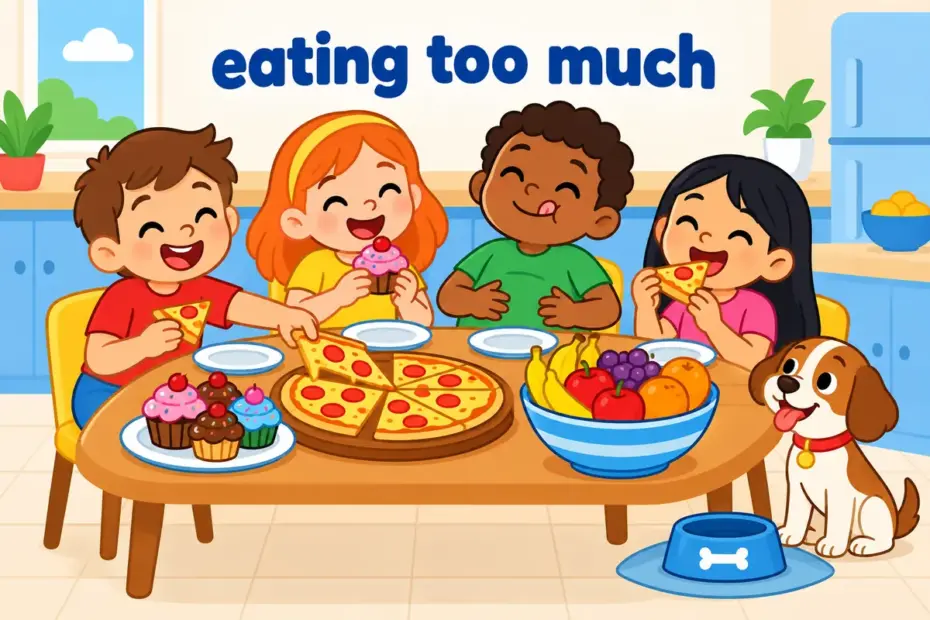
Pig out means to eat a large amount of food quickly and greedily, usually in a relaxed or celebratory mood. To use pig out in a sentence, keep it informal and intransitive: a person pigs out on pizza, never pigs out the pizza. The eater is the subject, and the food always follows on or at.
Pig out at a glance
- Pig out is an intransitive phrasal verb, so it never takes a direct object; you pig out on food, not pig out food.
- Its forms are pig out, pigs out, pigged out and pigging out, and the noun pig-out names one such session.
- The dominant pattern is pig out on plus a food, with at or in naming a place or occasion.
- Pig out belongs to informal, friendly writing rather than reports, essays or health leaflets.
- The commonest error is treating it as transitive, as in the wrong clause we pigged out the cake.
- Gorge is the closest one-word synonym, but it sounds more critical and can take an object.
What does pig out mean?
Pig out is a phrasal verb meaning to eat too much, eagerly and with pleasure. The Cambridge entry for pig out marks it informal, and that label shapes every sentence: pig out belongs in conversation, not in a company report. The phrase rarely means one extra helping. It means an occasion of overeating, often after a stretch of restraint, and the pleasure is part of the meaning.
| Sense | Plain meaning | Example sentence |
|---|---|---|
| Eat a lot, happily | Overeat for pleasure, often with other people | We pigged out on noodles after the match. |
| Indulge after restraint | Abandon a careful diet for one occasion | She pigged out on cake at the party. |
| Eat the wrong amount | Overeat in a way the speaker disapproves of | He pigged out on crisps every night. |
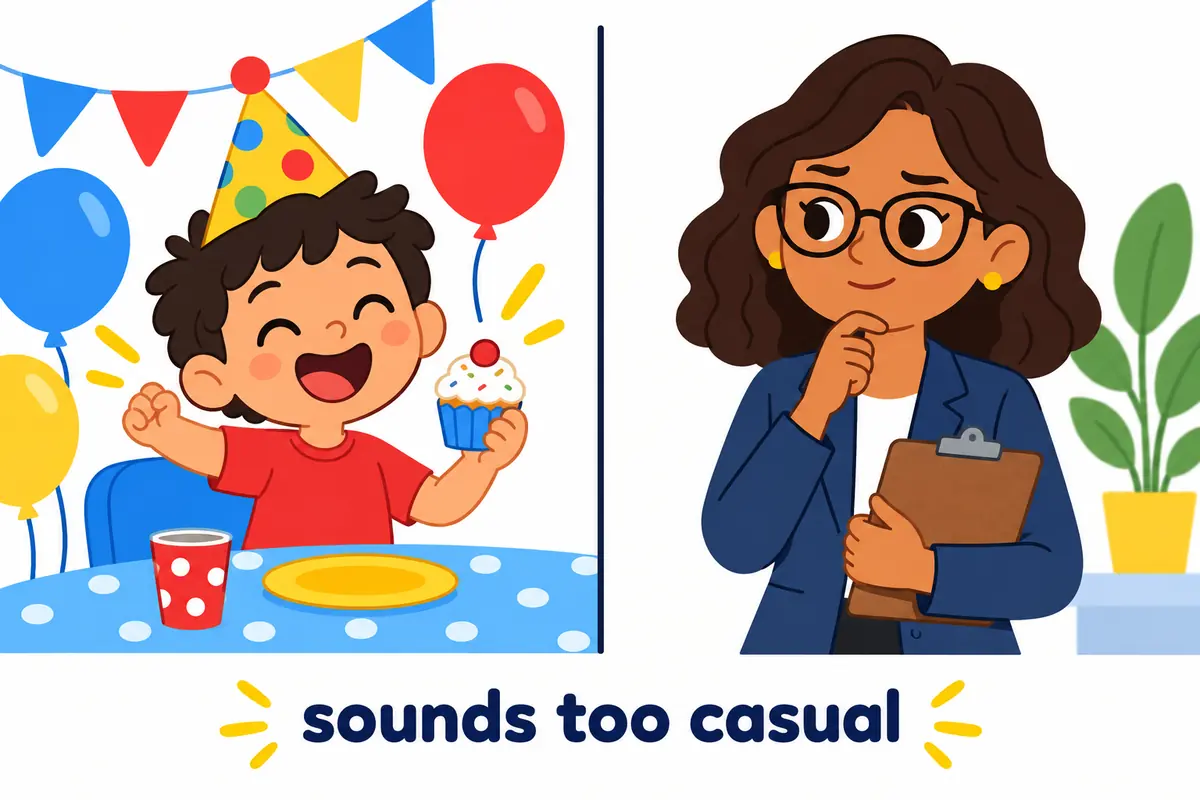
One limitation matters. Pig out is not neutral: it carries a note of criticism or self-mockery. A doctor would write overeat, and a nutritionist would write consume too much; a friend would say pig out. The verb also describes the eater rather than the food, so it never means simply to enjoy a meal. Where the tone must stay clinical, abstain from dessert and overeat are the plainer choices.
How do you use pig out in a sentence?
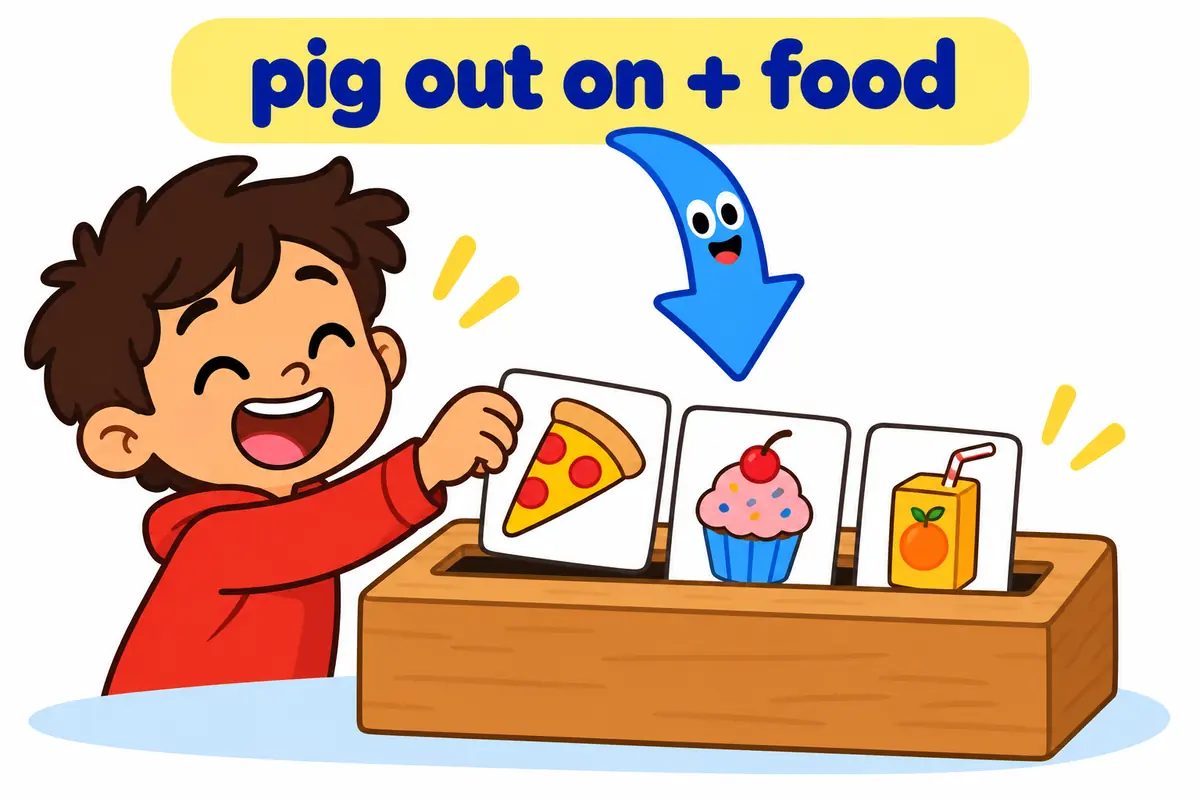
Put the eater in the subject position and the food after on. Five patterns cover almost every real sentence, and none of them allows a direct object, because this verb is intransitive. The particle out stays fixed next to the verb, so it can never be separated from pig.
| Pattern | Example | What it signals |
|---|---|---|
| pig out on + food | They pigged out on pizza and ice cream. | On introduces the food actually overeaten. |
| pig out at/in + place | We pigged out at the buffet. | Names where the overeating happened. |
| pig out (no object) | I pigged out last night. | The verb stands alone; the food is understood. |
| be pigging out | The kids are pigging out in the kitchen. | Present continuous for a scene in progress. |
| pig out on + abstract | The critics pigged out on praise. | A joking extension beyond food. |
The particle matters. The same out appears in blow out a candle, where the verb is transitive and out can move, and in many other phrasal verbs where it behaves differently. With pig out, out is locked in place and the verb keeps its informal tone.
Pig out in a sentence: examples across contexts
The verb keeps its meaning as it moves from a classroom to a memoir, but the tolerance for it changes. The ten sentences below stay informal, and each one names both the eater and the food doing the work.
| Context | Example sentence | Why this works |
|---|---|---|
| Classroom | The class pigged out on fruit after the science fair. | A concrete food makes the informal verb easy to picture. |
| Family dinner | We pig out on dumplings every New Year. | A repeated custom suits a present-tense habit. |
| Conversation | I pigged out at the wedding and regretted it. | First person plus mild regret is typical in speech. |
| Diary | Pigged out on toast at midnight again. | A dropped subject works in a diary; on links the food. |
| Friends’ plan | Let us pig out at that new burger place. | At names the venue and keeps the tone social. |
| Restaurant review | Diners pig out on the sharing platter, and it is worth it. | The verb stays informal even in a light review. |
| Health article | Children who pig out on sweets often skip dinner. | A critical frame exposes the disapproving edge. |
| Sports club | The team pigged out after the final whistle. | A celebration explains the overeating. |
| Text message | Pigging out at the airport, send help. | Present continuous plus a joke fits a text. |
| Memoir | We pigged out on rations the night the war ended. | A strong reason justifies the idiom in past narration. |
Only the conversational and diary sentences would sound wrong in a formal document. Register, not meaning, decides where pig out can appear.
Pig out vs gorge
Pig out and gorge both describe eating too much, but they differ in tone and in grammar. Gorge on cake is the harsher, more neutral choice; pig out is the friendlier, more self-mocking one.
| Attribute | pig out | gorge |
|---|---|---|
| Core meaning | Eat a lot for pleasure with others | Eat a lot, often greedily or grimly |
| Register | Informal, friendly | Neutral to critical |
| Transitivity | Intransitive; needs on | Can take on or a reflexive object |
| Typical subject | A person or group relaxing | A person or an animal feeding |
| Tone in a sentence | Warm and self-mocking | Blame, excess or disgust |
| Common pattern | pig out on cake | gorge on cake or gorge themselves |
Verdict: choose pig out for a cheerful, spoken tone and gorge when the overeating deserves a sharper, more formal word.
Word forms and grammar of pig out
Pig out inflects like a normal verb, but only the verb part changes. The particle stays put, and the noun form adds a hyphen. The last row shows the transitive form learners reach for by mistake, which is never standard.
| Form | Part of speech | Example |
|---|---|---|
| pig out | phrasal verb, base form | We pig out on Sundays. |
| pigs out | phrasal verb, third person singular | She pigs out on mangoes. |
| pigged out | phrasal verb, past and past participle | They pigged out at the fair. |
| pigging out | phrasal verb, present participle | Stop pigging out on chips. |
| pig-out | noun | One big pig-out a month is enough. |
| pig out the cake | non-standard, transitive | Wrong; the verb never takes a direct object. |
Related verbs behave differently: devour a whole loaf is transitive, so it needs none of the restructuring that pig out requires.
Common mistakes with pig out
- Incorrect:
We pigged out the pizza.Correct: We pigged out on the pizza. Rule: Pig out is intransitive, so on must introduce the food. - Incorrect:
She pigged out of the buffet.Correct: She pigged out at the buffet. Rule: At or in names a place; of marks a source, not a location. - Incorrect:
He pigged out himself.Correct: He pigged out. Rule: The verb takes no reflexive object, because it already describes the eater. - Incorrect:
We pig out on dinner.Correct: We pig out on dessert. Rule: On introduces the food actually overeaten, not the meal as a whole. - Incorrect:
The report says staff pig out on biscuits daily.Correct: The report says staff eat too many biscuits daily. Rule: Keep the informal verb out of formal documents.
Practice using pig out
Work through the six items, then read the answers for the reason, not only the key.
- Fill the gap: After the exam we ______ on ice cream.
- Choose the better word: The team (pigged out / gobbled) on burgers after winning.
- Correct the error: They pig out the whole cake.
- Build a sentence: use pig out at about a birthday party.
- Spot the register: which belongs in a health leaflet — Children who pig out on sweets risk tooth decay, or We totally pigged out?
- Rewrite with the noun: We pigged out on Saturday. Use pig-out instead.
Answers
- pigged out — the past tense fits after we, and on introduces the ice cream.
- pigged out — it is intransitive and takes on; gobble would need a direct object.
- They pigged out on the whole cake — the verb is intransitive, so on is required before the food.
- Model answer: The cousins pigged out at the birthday party — at names the venue and the verb stays informal.
- Children who pig out on sweets risk tooth decay — a leaflet avoids totally and the first person.
- Saturday brought a long pig-out — the noun needs an article and replaces the whole clause.
The bottom line
Use pig out in a sentence when you want an informal verb for eating too much, and keep it intransitive: the food follows on. The tone is warm or self-mocking rather than clinical, so a leaflet would choose overeat instead. Two nuances decide most sentences: on introduces the food while at names the place, and gorge is the transitive, harsher alternative. A relaxed feast after a fast is often just a planned pig out.
Frequently asked questions about pig out
Is pig out formal or informal?
Pig out is informal. It fits conversation, texts, diaries and light features, where self-mockery is welcome. In a report, a health leaflet or an academic essay, overeat is the safer choice. The meaning is the same, but the register decides which one a careful writer uses.
Can you say pig out on something?
Yes. The usual pattern is pig out on plus the food, as in they pigged out on noodles. On is required whenever you name what was eaten, because the verb is intransitive. Without on, the sentence they pigged out noodles is wrong.
What is the difference between pig out and binge?
Pig out means one relaxed, often social occasion of overeating. Binge on snacks is stronger and more clinical, and it often suggests loss of control or a repeated pattern. Choose pig out for a cheerful tone and binge when the habit sounds serious.
Why is pig out intransitive?
English treats the verb as describing the eater rather than the food, so it takes no direct object. You therefore say we pigged out on the pizza, not we pigged out the pizza. The prepositional phrase on plus food supplies the missing information.
Do you ever find yourself indulging in a large, indulgent feast that goes beyond mere satisfaction? This is commonly known as “pigging out,” an informal term that describes the act of indulging in a large amount of food, often to the point of overeating.
When people “pig out,” they typically eat without restraint, enjoying a bounty of delicious dishes without worrying about portion control or calories. While it can be a fun and enjoyable experience to indulge in a hearty meal every now and then, it’s important to be mindful of the consequences of regularly “pigging out” and maintaining a balanced diet for overall health and well-being.
7 Examples Of Pig Out Used In a Sentence For Kids
- Let’s pig out on some yummy fruits for snack time!
- I got a new game to play while we pig out on popcorn.
- We can pig out on our favorite sweets at the party.
- It’s fun to pig out on ice cream with friends at the park.
- We should have a picnic and pig out on sandwiches.
- At the zoo, we can pig out on delicious cotton candy.
- Let’s pig out on pizza for lunch today!
14 Sentences with Pig Out Examples
- After a long day of lectures, it’s always fun to pig out with friends at the local street food stalls.
- During exam season, it’s common for students to pig out on instant noodles to save time for studying.
- When you’re on a budget, it’s easy to pig out on the unlimited thali meals available in college canteens.
- Sometimes, instead of cooking, it’s just easier to pig out on fast food from the nearby food trucks.
- After a night of partying, college students often pig out on greasy snacks to cure their hangover.
- When hosting a movie night in the dorm room, it’s always fun to pig out on popcorn and chips.
- For a quick energy boost during intense study sessions, many students like to pig out on chocolates or candies.
- On weekends, it’s common for roommates to pig out on homemade comfort food while binging on their favorite TV shows.
- During the college festival season, students tend to pig out on the variety of street food options available on campus.
- When celebrating a friend’s birthday, it’s tradition to pig out on cake and ice cream at midnight.
- In group study sessions, it’s easy to pig out on snacks like samosas and pakoras to keep everyone motivated.
- After a successful presentation, it’s common for the team to pig out on pizza and soda to celebrate.
- Every now and then, it’s nice to just pig out on a huge meal from the mess hall without worrying about calories.
- When feeling down or stressed, many students tend to pig out on comfort foods like mac and cheese or biryani.
How To Use Pig Out in Sentences?
To use Pig Out in a sentence, start by identifying the trigger that makes you want to consume a large amount of food. For example, “After a long day at work, I like to pig out on pizza and ice cream.”
Next, make sure you are using the term in an informal context. Pig Out is a colloquial term that means to eat a large amount of food with enthusiasm or greed. It is not typically used in formal writing or speech.
When incorporating Pig Out into your sentence, remember to add emphasis to the words “pig” and “out” to convey the idea of indulging in food. For instance, “During the movie night, we pigged out on popcorn and candy.”
Avoid using Pig Out in a negative or judgmental way, as it is often used in a light-hearted manner. Instead, focus on the enjoyment or satisfaction of eating a lot of food in a casual setting.
Overall, Pig Out is a fun and casual term that can be used to express the act of indulging in a large amount of food. By following these simple steps, you can effectively incorporate Pig Out into your sentences and conversations with ease.
Conclusion
In conclusion, “pig out” is a colloquial phrase used to describe the act of eating excessively or indulging in large amounts of food. This term is often used informally in casual conversations or when describing situations where someone is eating a lot in a short period of time. For example, “I’m going to pig out on pizza tonight” suggests a plan to eat a substantial amount of pizza.
By incorporating “pig out” into our vocabulary, we can easily convey the idea of overindulging in food in a light-hearted and relatable manner. Whether discussing weekend plans or reflecting on a particularly satisfying meal, this phrase adds a touch of humor and informality to our conversations about eating habits.