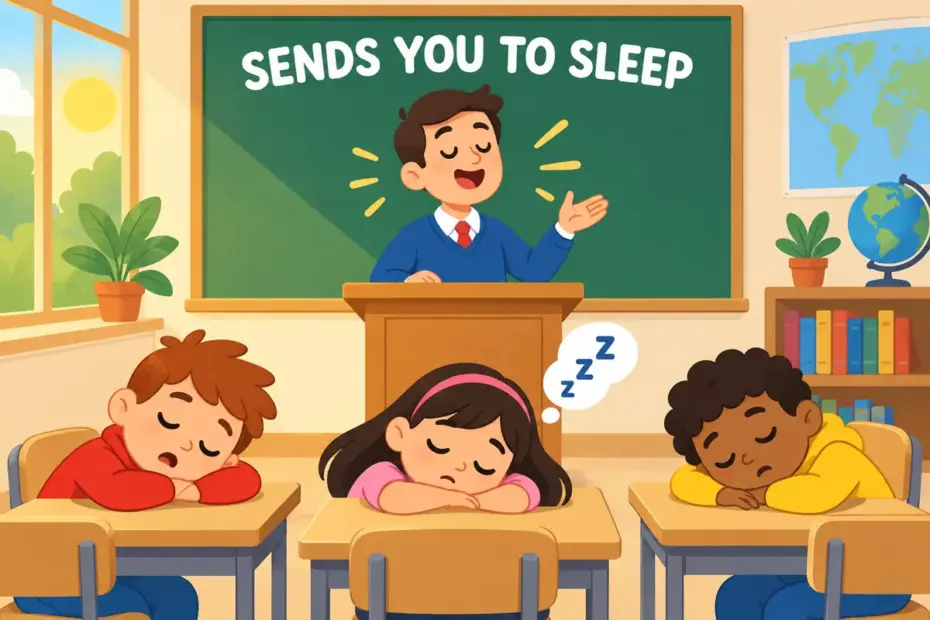
Soporific in a sentence describes something that makes you feel drowsy or, by extension, so dull that it sends you to sleep. The adjective attaches easily to speeches, warm rooms and long meetings: “The droning voice was soporific.” A soporific thing causes the tiredness, while a sleepy person merely feels it.
Soporific at a glance
- Soporific is an adjective meaning sleep-inducing; it is also a noun for a sleep-causing drug.
- The dominant pattern is soporific plus a noun, as in a soporific effect or a soporific lecture.
- It belongs to formal, descriptive and slightly literary writing rather than casual speech.
- Common partners are lecture, speech, heat, music, drug, effect and atmosphere.
- The commonest error is using soporific to describe a tired person instead of a tiring cause.
What does soporific mean?
Soporific is an adjective meaning tending to cause sleep, and a noun meaning a drug or influence that brings sleep. The Cambridge entry for soporific records both the medical sense and the figurative one, and the second is the puzzle for learners: anything so tedious that it makes an audience drowsy earns the same word.
| Sense | Plain meaning | Example sentence |
|---|---|---|
| Sleep-inducing | Physically causing drowsiness | The warm bus and its steady hum were soporific. |
| Tediously dull | So boring that it sends listeners to sleep | A soporific report on filing procedures emptied the room. |
| Sleep drug (noun) | A substance that brings on sleep | The nurse gave a mild soporific at bedtime. |
One honest limit is worth stating. Soporific is not a synonym for lazy, and it never describes a person who simply wants a nap; that person is feeling lethargic. The word also carries a faintly mocking tone when it means dull, so calling a colleague presentation soporific is a criticism, not a neutral description.
How do you use soporific in a sentence?
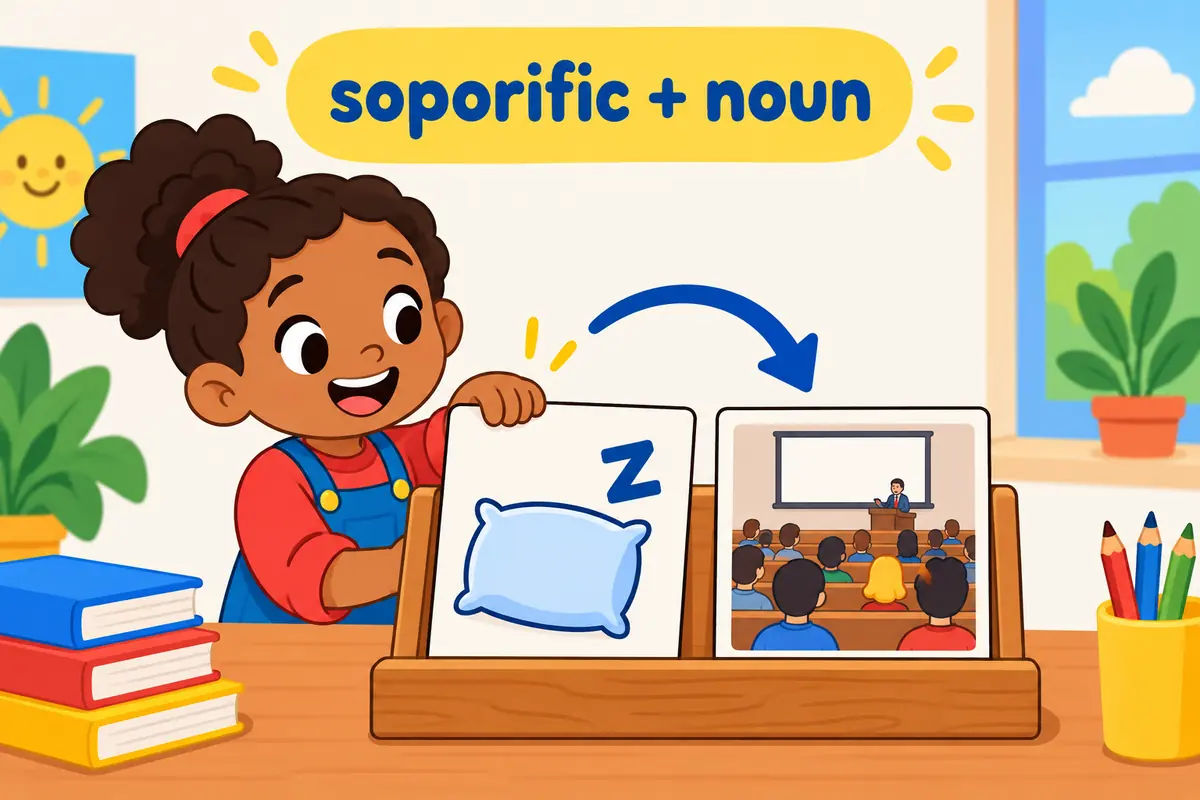
Soporific leads three main patterns. It sits before a noun, it follows a linking verb, or it names a substance as a countable noun.
| Pattern | Example | What it signals |
|---|---|---|
| soporific + noun | The soporific heat hung over the field. | The adjective points forward to the cause of drowsiness. |
| linking verb + soporific | The long sermon was soporific. | Describes the subject as a sleep-inducing thing. |
| soporific effect | The drug has a soporific effect within an hour. | Names the result rather than the thing itself. |
| a soporific (noun) | Doctors once used soporifics more freely. | Treats the sleep drug as a countable noun. |
The adjective keeps a medical edge, so a drowsy feeling is the state of a person, while a soporific influence is what produces it. Keep the two roles apart and the sentence stays precise.
Soporific in a sentence: examples across contexts
The word moves from medicine to metaphor while keeping one meaning: it names a cause of sleep. Each row below shows the register and why the sentence works.
| Context | Example sentence | Why this works |
|---|---|---|
| Classroom | The afternoon heat made the lesson soporific. | Links a physical cause to the drowsy effect. |
| Workplace email | Let us shorten the agenda; last month it was soporific. | Uses the mocking sense for a tedious meeting. |
| News report | Officials blamed a soporific drug for the driver fall asleep. | Keeps the medical, cause-based sense. |
| Book review | The middle chapters are soporific, however useful the facts. | Balances criticism with an honest concession. |
| Medical writing | The patient received a soporific before the scan. | Uses the noun for a sleep-inducing medicine. |
| Conversation | That film was soporific; I woke up at the credits. | Works in speech when the meaning is playful. |
| Travel writing | A soporific haze settled on the quiet harbour. | Lets the word paint an atmosphere. |
| Music review | The final movement is slow and faintly soporific. | Describes an artistic effect on the listener. |
| Academic writing | Long tables of figures can be soporific for a reader. | Names the effect on a specific audience. |
| Safety notice | Do not drive after taking any soporific medication. | Uses the clinical sense in a warning. |
A dull speaker bores an audience, but soporific goes further and says the boredom is literally putting them to sleep.
Soporific vs sleepy
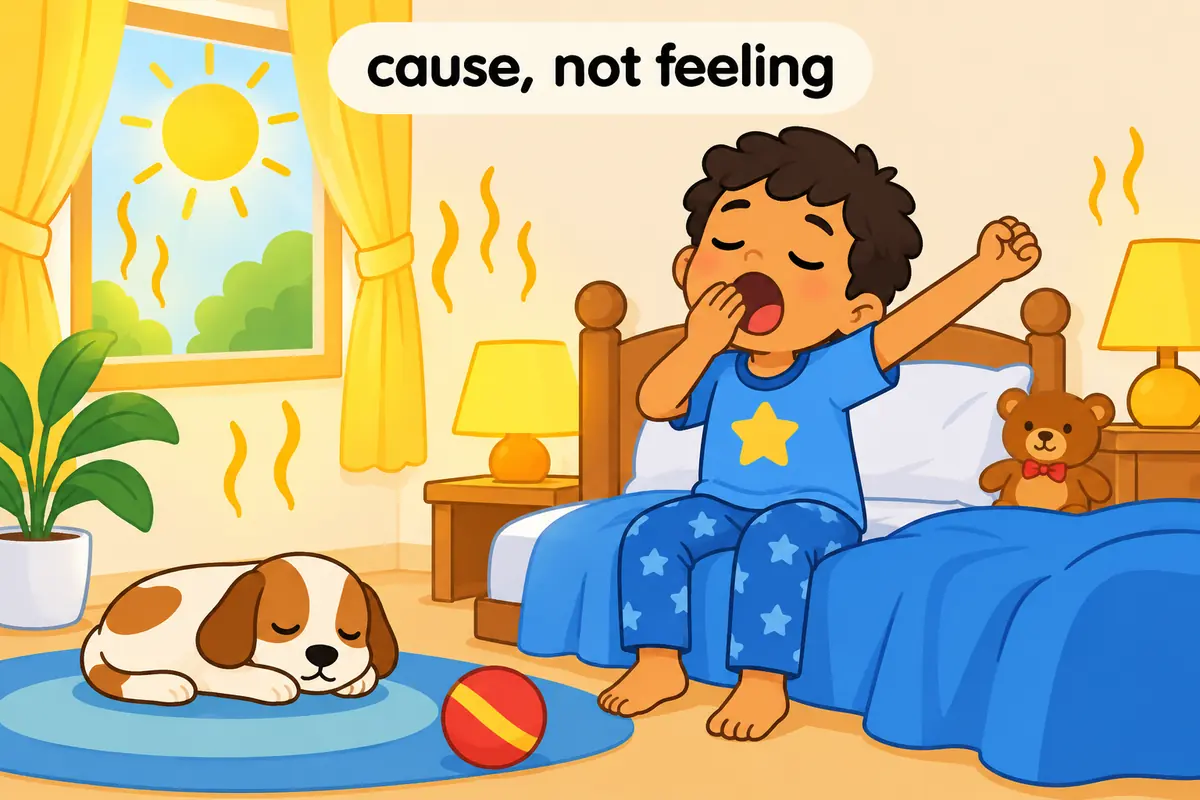
Soporific and sleepy look interchangeable and are not. Sleepy describes how a person feels, while soporific describes whatever is making that person feel sleepy.
| Attribute | soporific | sleepy |
|---|---|---|
| Core job | Names the cause of drowsiness | Names the state of a person |
| Typical subject | A lecture, drug, heat, movement | A child, patient, traveller |
| Register | Formal, medical or mocking | Neutral and everyday |
| Grammar | Describes a thing or effect | Describes a living subject |
| What it implies | It will send someone to sleep | Somebody wants to rest |
The verdict is simple: call the thing soporific and the person sleepy after lunch. A boring talk is a common cause of drowsiness, but boring names how it feels, while soporific names what it does.
Word forms and grammar of soporific
| Form | Part of speech | Example |
|---|---|---|
| soporific | adjective | The soporific music slowed the whole room. |
| soporific | noun, countable | The doctor prescribed a soporific. |
| soporifics | noun, plural | The cabinet stored old soporifics and tonics. |
| soporifically | adverb, rare | The talk droned on soporifically. |
The adverb soporifically exists but appears mostly in literary writing, so most sentences use the adjective instead. Learners sometimes invent soporificness, which is not the standard noun; use the noun soporific, or a phrase such as a sleep-inducing effect.
Common mistakes with soporific
- Incorrect:
After the long drive I felt soporific.Correct: After the long drive I felt sleepy. Rule: soporific names the cause, not the person state. - Incorrect:
The soporific lecture kept us awake and interested.Correct: The lecture was so dull that it made us drowsy. Rule: soporific means sleep-inducing, so it cannot describe something gripping. - Incorrect:
The drug was very soporific to me.Correct: The drug had a soporific effect on me. Rule: the adjective describes the drug, and the effect falls on the person. - Incorrect:
She is a soporific person.Correct: She talks in a soporific, sing-song voice. Rule: describe the sleep-inducing quality, not the person directly. - Incorrect:
The soporific coffee woke me up.Correct: The strong coffee woke me up. Rule: a stimulant is the opposite of soporific.
Practice using soporific
- Fill in the blank: The steady hum of the engine had a ______ effect on the passengers.
- Choose the better word: After the exam the students felt (soporific / sleepy).
- Correct the error: The exciting final was completely soporific.
- Build a sentence: use soporific about a warm afternoon lesson.
- Spot the register: which suits a medical leaflet – this drug is soporific, or this drug makes you drowsy?
- Fill in the blank: The committee blamed the ______ report for its own silence.
Answers
- soporific — the hum is the cause of the drowsiness.
- sleepy — the students feel the state, so the person word fits.
- The final was so dull that it sent us to sleep — soporific cannot mean exciting.
- Model answer: The soporific heat of the classroom made everyone nod.
- This drug makes you drowsy — a leaflet aims for the clearest reader-friendly wording.
- soporific — the report is the cause of the drowsiness.
The bottom line
Use soporific in a sentence to name something that causes sleep, whether a warm room, a heavy drug or a tediously dull meeting. The two facts that decide most sentences are that soporific describes the cause while sleepy describes the person, and that the mocking sense for dullness is a real part of the word. Keep the cause-and-state split clear and the sentence will sound native.
Frequently asked questions about soporific
Is soporific a noun or an adjective?
Soporific is mainly an adjective, as in a soporific speech, but it is also a countable noun for a sleep-inducing drug, as in the nurse gave a soporific. The adjective is far more common in general writing, so learners can reserve the noun for medical and clinical contexts.
What is the difference between soporific and sleepy?
Sleepy describes a person who wants to sleep, while soporific describes the thing that makes a person want to sleep. A warm room, a long drive or a dull lecture can be soporific; the passengers, students or readers are sleepy. Mixing the two is the single commonest error with this word.
Why is a boring speech called soporific?
The literal sense is sleep-inducing, and a tedious speech produces the same result as a drug: the audience grows drowsy. The figurative use has a mildly mocking tone, so describing a talk as soporific is a criticism. It works best when the boredom is real and the remark is fair.
Does soporific have a negative meaning?
It depends on the sense. In medicine, a soporific drug is neutral and useful, and the word simply describes its effect. In everyday writing, calling a film, meeting or book soporific is negative because it means the thing is dull enough to put people to sleep. Context decides the tone.
Have you ever felt like reading a book or listening to a lecture that put you into such a deep sleep-like state? That’s the power of a soporific – something that has a sedative or sleep-inducing effect.
Soporific substances and activities can lull you into a sense of tranquility and relaxation, making it difficult to stay awake or focused. From calming bedtime routines to monotonous tasks, anything that has a soporific quality can leave you feeling drowsy and ready to drift off to sleep.
7 Examples Of Soporific Used In a Sentence For Kids
- I feel soporific after a big lunch.
- The soft lullaby was soporific and calming.
- My cozy bed always feels soporific at bedtime.
- Reading a boring book can be soporific.
- The gentle rain outside was soporific for my cat.
- A warm blanket on a rainy day can be soporific.
- The humming of the fan was soporific during nap time.
14 Sentences with Soporific Examples
- The professor’s monotonous voice had a soporific effect on the students in the lecture hall.
- After a heavy meal in the campus canteen, many students experienced a soporific feeling during their afternoon classes.
- The hot weather outside combined with the lack of ventilation in the classroom created a soporific atmosphere.
- The lengthy readings assigned for homework had a soporific impact on the students trying to stay awake to complete them.
- The dimly lit library corner with cozy chairs proved to be a soporific spot for students trying to study late at night.
- The long delays in public transportation made the commute to college a soporific experience for many students.
- The early morning classes were especially challenging for students prone to feeling soporific at that time of day.
- On a rainy day, the sound of raindrops against the windows had a soporific effect on the students in the classroom.
- The lack of engaging activities during the college fest left many students feeling soporific and uninterested in participating.
- The constantly buzzing fluorescent lights in the classroom had a soporific impact on certain students with light sensitivity.
- The heavy workload and tight deadlines during exam season rendered many students soporific from stress and fatigue.
- The tedious data entry tasks in the computer lab proved to be quite soporific for students already exhausted from a long day of classes.
- The repetitive nature of certain practical sessions in the science lab had a soporific effect on students eager to learn something new.
- The slow-paced slideshow presentation by a guest speaker was so soporific that some students struggled to maintain their focus.
How To Use Soporific in Sentences?
To use Soporific in a sentence, you can incorporate it in a way that highlights its meaning of causing sleepiness or drowsiness.
Example sentence: The gentle sound of rain on the roof had a soporific effect on the tired students, lulling them into a peaceful slumber during their study session.
When using Soporific in a sentence, it is important to consider the context in which you are describing the sleep-inducing quality. You can use it in a variety of contexts including describing the effect of a medication, the ambiance of a room, or the sound of soothing music.
Here are a few more examples:
1. The aroma of lavender essential oil has a soporific effect on me, helping me relax before bedtime.
2. The boring lecture was so soporific that many attendees struggled to keep their eyes open.
3. As the sun dipped below the horizon, the tranquil evening became soporific, encouraging a sense of calm among the campers.
By using Soporific in your sentence, you can effectively convey the idea of something that induces sleep or drowsiness. Experiment with different scenarios and contexts to get a better grasp of how to incorporate this word into your vocabulary with confidence.
Conclusion
In conclusion, the soporific effect of the medication was evident as soon as the patient took it, causing them to fall into a deep sleep shortly after. The monotonous voice of the speaker had a soporific quality, lulling the audience into a state of drowsiness during the long presentation.
Overall, whether it be a bedtime story, a lecture, or a medication, anything with a soporific effect induces sleepiness or drowsiness. Being aware of the soporific nature of certain elements can help individuals recognize when they might need to stay alert or when it’s appropriate to relax and let the calming influence take over.