Take the bull by the horns means to confront a difficult situation directly instead of avoiding it. To use take the bull by the horns in a sentence, treat it as one fixed unit that acts like a verb: “She took the bull by the horns and called the bank.” Only the verb tense changes.
Take the bull by the horns at a glance
- Take the bull by the horns is a fixed idiom meaning to face a hard problem boldly.
- It works as a verb phrase, so it takes a subject and changes tense through take.
- The expression belongs to advice, journalism and conversation rather than formal reports.
- Its usual topic is a decision somebody has been putting off.
- The commonest error is slipping in a possessive or changing the fixed words.
- It means the opposite of avoiding the issue or burying your head in the sand.
What does take the bull by the horns mean?
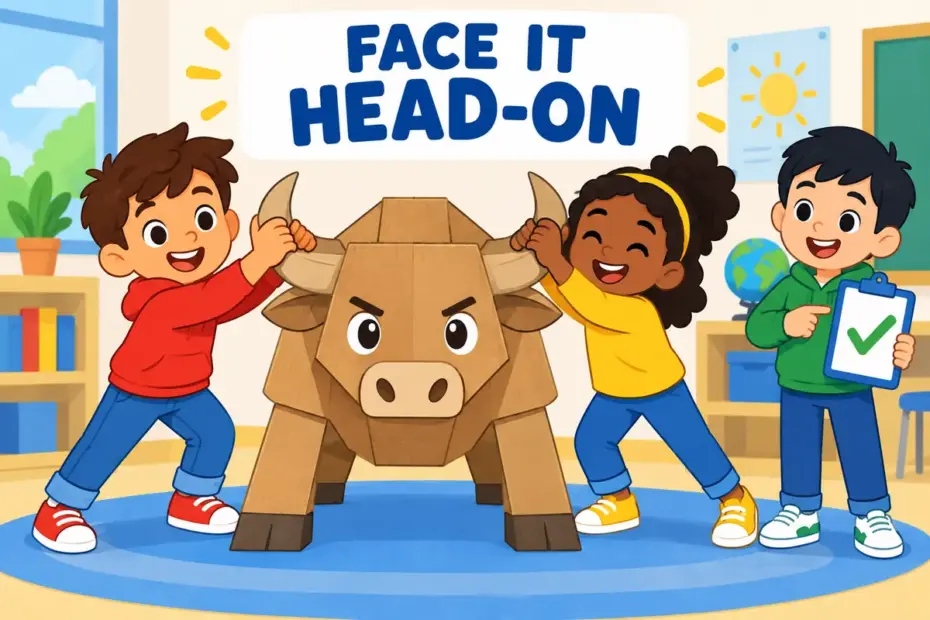
Take the bull by the horns is a fixed idiom meaning to confront a difficult problem directly and decisively rather than waiting or dodging it. The Cambridge entry for take the bull by the horns records the confront sense, and the image explains the advice: gripping the horns is the decisive, dangerous act. Where the point is simply to meet a problem, confront is the plain verb underneath the idiom.
| Shade of meaning | What it stresses | Example sentence |
|---|---|---|
| Face a problem | Deal with it instead of avoiding it | We took the bull by the horns and told the client. |
| Act decisively | Stop deliberating and move | Taking the bull by the horns, she resigned that morning. |
| Take charge | Assume responsibility for a hard task | Someone had to take the bull by the horns. |
One limitation deserves stating plainly. The idiom praises action, but it says nothing about whether the action is wise; taking the bull by the horns can be reckless when nobody has thought it through. In formal business writing it is also a cliché, and naming the concrete step usually reads better than the image.
How do you use take the bull by the horns in a sentence?
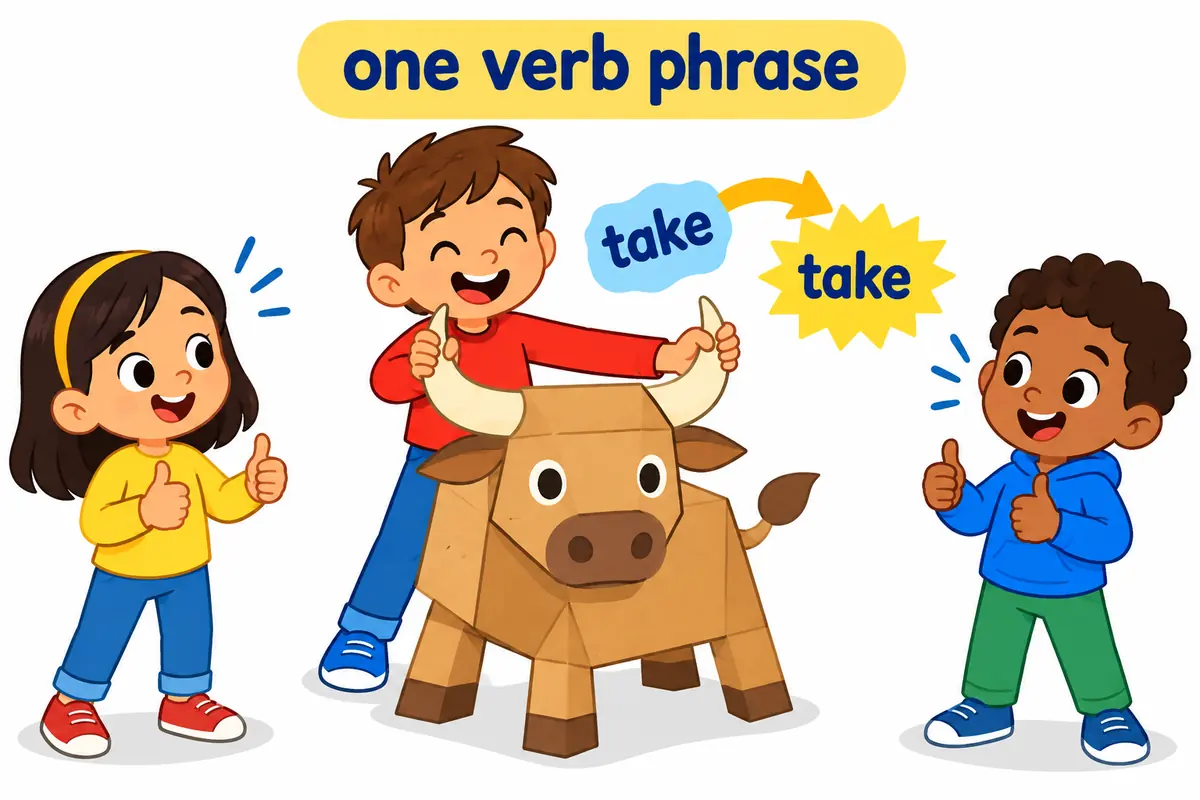
Take the bull by the horns is a verb phrase, so it needs a subject and shifts tense through take. Five patterns cover almost every real sentence, and the participle is the one that crowds the most information into a single clause.
| Pattern | Example | What it signals |
|---|---|---|
| subject + take the bull by the horns | We need to take the bull by the horns. | Plain present-day advice. |
| subject + took the bull by the horns | She took the bull by the horns. | Past narrative of a decisive act. |
| taking the bull by the horns | Taking the bull by the horns, he rang the landlord. | A participle clause of manner. |
| It is time to + idiom | It is time to take the bull by the horns. | Urges action without naming the actor. |
| have to + idiom | You have to take the bull by the horns. | Obligation and encouragement. |
When the sentence names the specific obstacle rather than the whole situation, tackle is a natural single verb that carries the same energy.
Take the bull by the horns in a sentence: examples across contexts
The idiom changes register more than meaning, so the ten sentences below move from a classroom to a news desk without changing what it says. Each one names the decision that was finally faced.
| Context | Example sentence | Why this works |
|---|---|---|
| Classroom | When the science project stalled, Maya took the bull by the horns and emailed a local engineer. | Shows initiative in a safe school setting. |
| Workplace email | Rather than wait for guidance, the team took the bull by the horns and redrew the schedule. | Frames decisiveness as a virtue at work. |
| Family conversation | Dad took the bull by the horns and booked the appointment himself. | Everyday register with a clear action. |
| News report | The mayor took the bull by the horns and ordered the bridge closed. | Public decision-making under pressure. |
| Advice column | If nobody else will act, take the bull by the horns and start the group yourself. | Second-person encouragement. |
| Sports writing | The captain took the bull by the horns and changed the formation at half time. | Leadership at a decisive moment. |
| Memoir | I took the bull by the horns and moved abroad alone. | Personal narrative of a bold choice. |
| Business profile | She took the bull by the horns and renegotiated every contract. | Corporate feature with a concrete task. |
| Conversation | Someone had to take the bull by the horns, so I did. | Spoken register, decisive and brief. |
Notice how often the sentence sets action against delay. Where the meaning is to pause first, hesitate is the opposite verb, and where the meaning is to pull back entirely, retreat is the plainest choice.
Take the bull by the horns vs bite the bullet
Take the bull by the horns and bite the bullet both describe doing something hard, which is why they are so often mixed up. To take sudden hold of an opportunity, seize is the closer verb, and to show courage in spite of fear, brave works.
| Attribute | take the bull by the horns | bite the bullet |
|---|---|---|
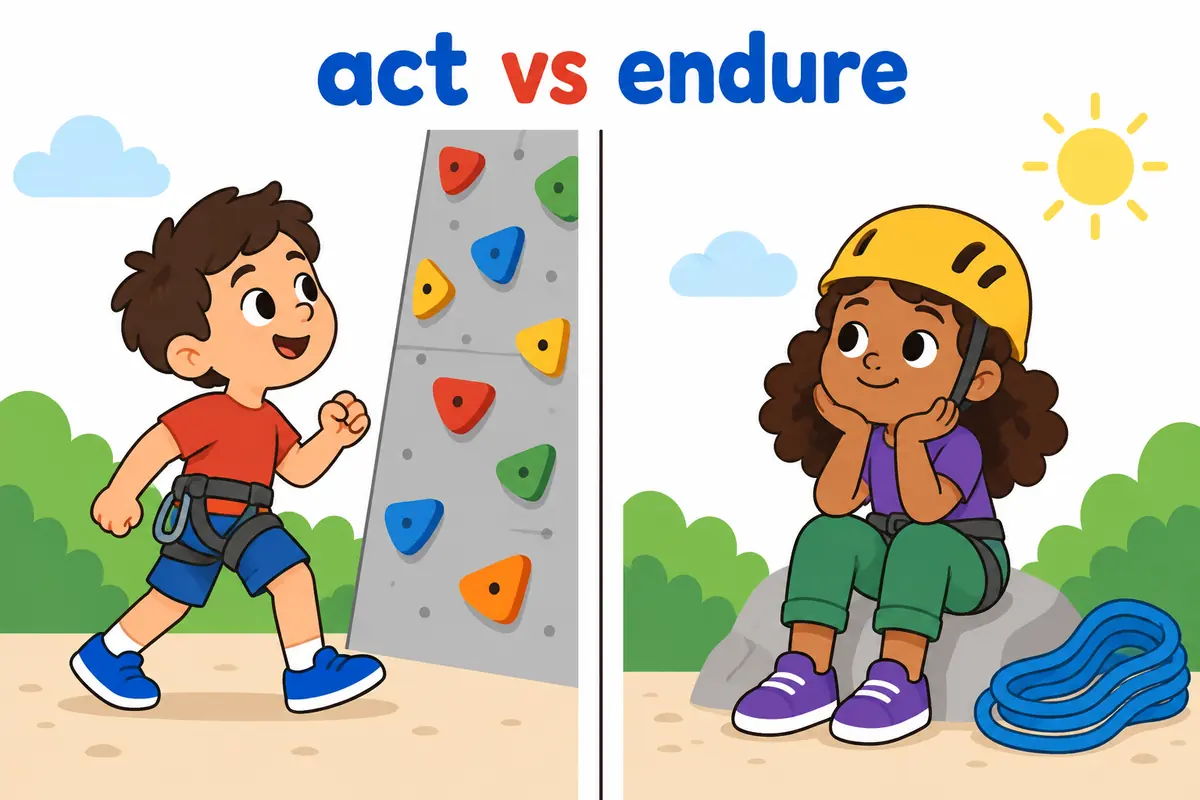
| Core idea | Confront a problem you have been avoiding | Endure an unpleasant thing you cannot avoid |
| Moment | Before or when you act | At the point you accept the pain |
| Mood | Bold and proactive | Resigned and stoic |
| Typical action | Starting a difficult task | Paying a cost or facing a procedure |
| What it stresses | Control of the situation | Tolerance of discomfort |
Verdict: take the bull by the horns when the point is to seize a decision, and bite the bullet when the point is to endure something unavoidable. If action is the wrong idea and delay is the plan, avoid names it exactly.
Word forms and grammar of take the bull by the horns
The idiom is fixed, so only the verb may change; every other word is locked. The table shows what may vary inside the phrase and what breaks it.
| Element | Fixed or variable | Example or note |
|---|---|---|
| take | Tense only | take, takes, took, taking; do not swap in a different verb. |
| the | Fixed | The article never changes. |
| bull | Fixed | A different animal destroys the image. |
| by | Fixed | By, not from or with. |
| the horns | Fixed plural | The plural horns is required; the possessive does not appear. |
| whole phrase | Used as a verb | It takes a subject and never takes a direct object. |
One variant is common enough to recognise: grab the bull by the horns. It means the same thing, but take is the safer choice in careful writing.
Common mistakes with take the bull by the horns
- Incorrect:
The manager took the bull by its horns.Correct: The manager took the bull by the horns. Rule: By the horns is fixed; a possessive breaks the idiom. - Incorrect:
She took the bull by the horn.Correct: She took the bull by the horns. Rule: The plural horns belongs to the fixed phrase. - Incorrect:
We decided to take the bull by the horns the meeting.Correct: We took the bull by the horns and ran the meeting. Rule: The idiom takes no direct object. - Incorrect:
He grazed the bull by the horns.Correct: He took the bull by the horns. Rule: Only take, or the accepted variant grab, fits. - Incorrect:
They took the bull by the horns to avoid the problem.Correct: They faced the problem head-on. Rule: The idiom means confronting, not avoiding, so the logic must match.
Practice using take the bull by the horns
Work through the six items, then check the reasoning rather than only the answer.
- Fill the gap: Rather than wait any longer, the team ______ and called the supplier.
- Choose the better meaning: The idiom means to (avoid / confront) a problem.
- Correct the error: She took the bull by the horn.
- Build a sentence: use taking the bull by the horns about a class decision.
- Spot the register: which fits a formal report — the board took the bull by the horns, or the board decided to settle the matter itself?
- Rewrite with the plain verb: They took the bull by the horns. Use confront instead.
Answers
- took the bull by the horns — the past tense of take carries the idiom.
- confront — the image means facing the problem, not dodging it.
- She took the bull by the horns — the fixed phrase uses the plural horns.
- Model answer: Taking the bull by the horns, the class asked the head teacher directly — the participle clause sets up the decision.
- The board decided to settle the matter itself — a formal report avoids the cliché.
- They confronted the problem — the plain verb states the action without the idiom.
The bottom line
Use take the bull by the horns in a sentence when you mean that somebody faced a hard problem instead of dodging it. Two facts decide most uses: the idiom works as a single verb, so only its tense changes, and it praises decisiveness without judging whether the decision was wise. For formal writing, the plain verb confront usually reads better.
Frequently asked questions about take the bull by the horns
Is take the bull by the horns formal enough for a report?
It is not, in most cases. The idiom belongs to advice, journalism and conversation, where its energy helps. A formal report reads better with a plain verb such as confront, address or resolve, because those words name the action without the cliché.
Is it take or grab the bull by the horns?
Both appear, and they mean the same thing. Take is the standard version and the safer choice in careful writing. Grab is a little more informal and more vivid, so it suits speech and feature writing. Keep every other word exactly as it is.
Can you say the bull by its horns?
No. The possessive breaks the fixed idiom, which always uses by the horns. A sentence such as she took the bull by its horns sounds wrong even though the meaning is obvious. Treat the four words by the horns as one unchangeable block.
What is a simpler way to say take the bull by the horns?
Plain alternatives include confront the problem, face it head-on, take charge or act decisively. Each names the action directly, which suits formal writing better. Choose the plain verb when the idiom would read as a cliché rather than as fresh emphasis.
“Taking the bull by the horns” is an idiom that encourages tackling challenges directly and assertively. This phrase conveys the notion of seizing control of a difficult situation instead of avoiding it.
When faced with obstacles or uncertainties, choosing to “take the bull by the horns” suggests a proactive approach that involves confronting problems head-on. It embodies a sense of determination and courage in the face of adversity.
7 Examples Of Take The Bull By The Horns Used In a Sentence For Kids
- Let’s take the bull by the horns and finish our coloring activity.
- We should take the bull by the horns and clean up our toys together.
- Remember to take the bull by the horns and share your snacks with friends.
- It’s important to take the bull by the horns and listen to our teacher in class.
- Let’s take the bull by the horns and play nicely with our classmates.
- We can take the bull by the horns and help each other tie our shoelaces.
- Don’t forget to take the bull by the horns and say “thank you” to others.
14 Sentences with Take The Bull By The Horns Examples
- Take the bull by the horns and start preparing for your exams well in advance.
- Make sure to take the bull by the horns and volunteer for the upcoming college event.
- Don’t hesitate to take the bull by the horns and confront your roommate about the issues you’re facing.
- It’s important to take the bull by the horns and participate in extracurricular activities to enhance your college experience.
- Take the bull by the horns and approach your professor for clarification on areas you’re struggling with.
- When it comes to internships, don’t wait for opportunities to come to you – take the bull by the horns and actively seek them out.
- Take the bull by the horns and join a study group to improve your understanding of challenging subjects.
- If you’re interested in a particular subject, take the bull by the horns and explore additional resources beyond your textbook.
- Take the bull by the horns and initiate discussions with your classmates to exchange study tips and insights.
- When facing a difficult assignment, don’t shy away from seeking help – take the bull by the horns and consult your professor or a tutor.
- Take the bull by the horns and create a weekly schedule to effectively manage your academic and personal commitments.
- In group projects, it’s essential to take the bull by the horns and assign tasks to ensure productivity and timely completion.
- Don’t procrastinate on your assignments; instead, take the bull by the horns and prioritize completing them ahead of deadlines.
- Take the bull by the horns and make use of the resources available at the college library to enhance your learning process.
How To Use Take The Bull By The Horns in Sentences?
Take The Bull By The Horns means facing a difficult situation directly and with courage. When using this expression in a sentence, make sure to emphasize the importance of dealing with challenges head-on.
Here’s how you can use Take The Bull By The Horns in a sentence:
- “She decided to Take The Bull By The Horns and confront her fears by giving a presentation in front of a large audience.”
Remember to use this phrase when describing a situation where someone tackles a problem or fear directly and doesn’t shy away from it. It signifies bravery and the willingness to confront challenges instead of avoiding them. By incorporating this phrase into your writing or speech, you can convey a sense of determination and courage.
Ensuring that the phrase is used appropriately will help you effectively communicate the idea of facing difficulties with bravery and confidence. It’s a powerful expression that encourages others to tackle their problems head-on and not be intimidated by obstacles in their way.
In summary, when using Take The Bull By The Horns in a sentence, remember to highlight the act of confronting challenges with courage and determination. Whether in a conversation or a written piece, this phrase can inspire others to face their fears and take control of their circumstances with strength and resolve.
Conclusion
In conclusion, taking the bull by the horns means facing challenges head-on with confidence and determination. This phrase emphasizes the importance of tackling problems proactively and assertively, rather than shying away from them. By taking the bull by the horns, individuals show a readiness to confront difficulties directly and take control of the situation.
This idiom serves as a reminder that confronting challenges, no matter how daunting they may seem, can lead to personal growth, problem-solving skills, and ultimately, success. Instead of avoiding or delaying difficult tasks, taking the bull by the horns encourages a proactive approach that empowers individuals to overcome obstacles and achieve their goals.