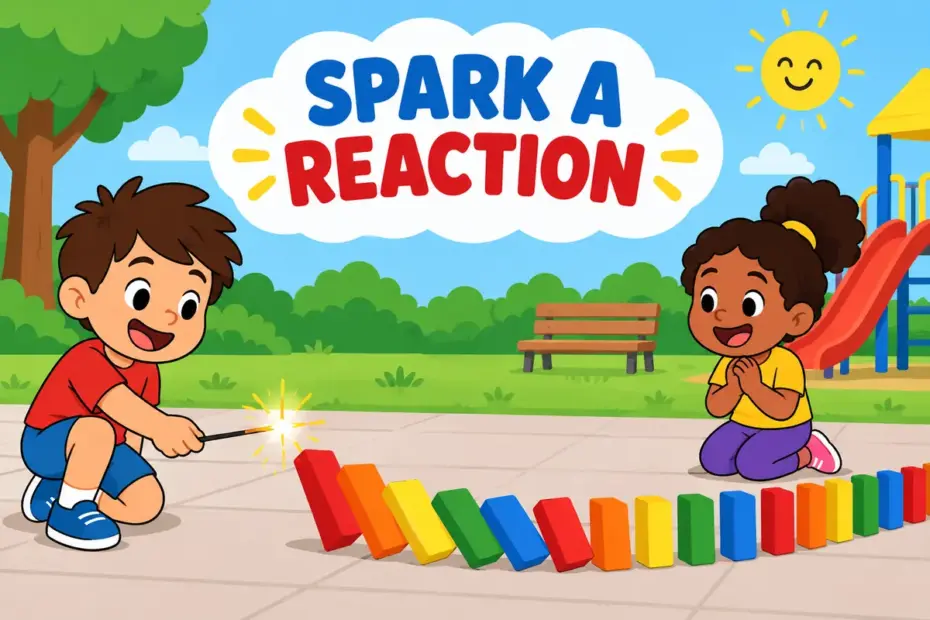
Touch off is a phrasal verb meaning to ignite something or to cause an event to begin suddenly: a single remark touched off a long debate. The verb is transitive and comfortably separable, so a pronoun object sits between the parts, as in the spark touched it off.
Touch off at a glance
- Touch off is a transitive phrasal verb; its forms are touches off, touched off and touching off.
- Its two senses are literal ignition and the sudden starting of an event or reaction.
- The object normally follows the particle: touch off a riot, touch off a wave of protest.
- A pronoun object must split the phrase, giving touched it off rather than touched off it.
- The commonest error is the spelling touched of, which confuses the particle with the preposition of.
What does touch off mean?
Touch off is a phrasal verb meaning to set something alight or to start it abruptly. The Cambridge entry for touch off records both the literal sense of igniting and the figurative sense of causing an event, and the figurative use now dominates news writing.
| Sense | Plain meaning | Example sentence |
|---|---|---|
| Ignite literally | Set a fuse, firework or flame going | A stray match touched off the fireworks. |
| Start an event | Cause trouble or debate to begin suddenly | The ruling touched off a wave of protests. |
| Start a reaction | Set off laughter, panic or applause | Her remark touched off laughter across the hall. |
One limitation is worth stating plainly. Touch off does not mean to continue or to worsen something; it marks the first moment only. Where a writer wants a neutral description of contact, plain touch is correct, and where the cause is mechanical, trigger is the nearer everyday word.
How do you use touch off in a sentence?
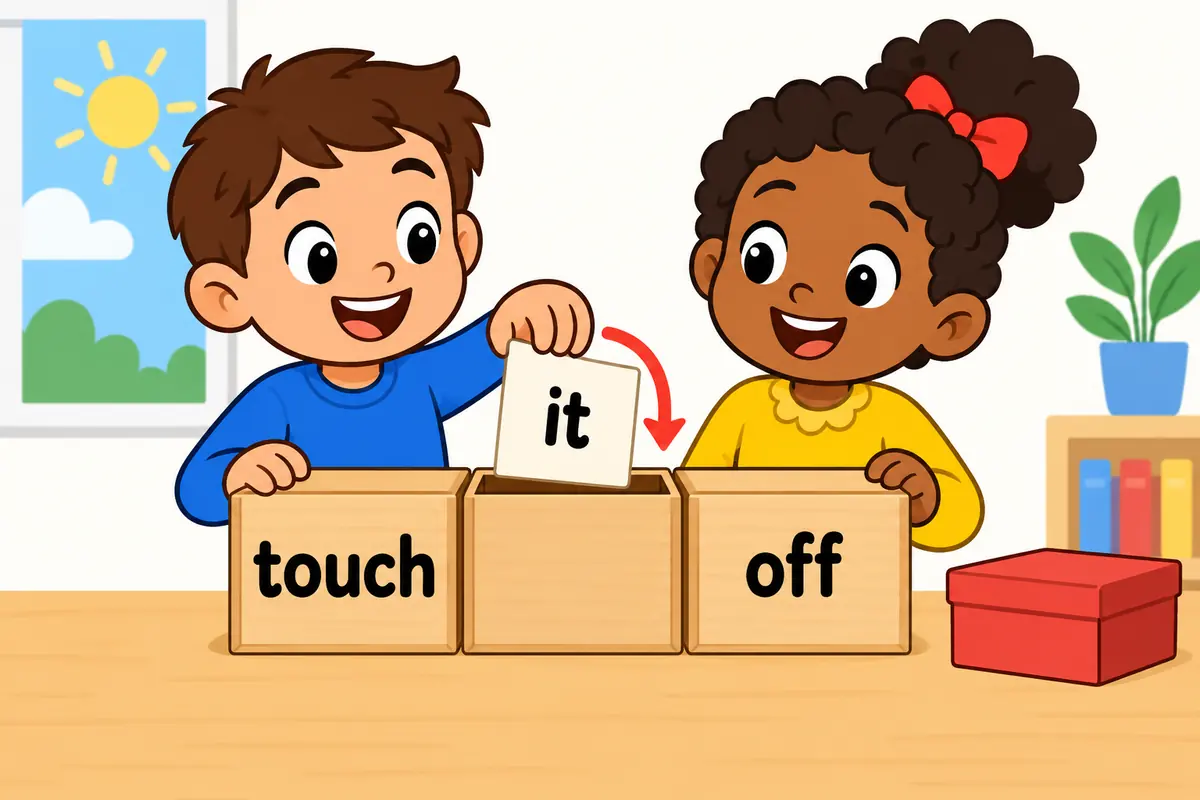
Touch off is transitive, and the object usually follows the whole phrase because it names the thing that gets started. The phrase is separable, but the split matters most when the object is a pronoun.
| Pattern | Example | What it signals |
|---|---|---|
| touch off + event | The verdict touched off a night of protests. | A sudden public reaction to a trigger. |
| touch off + reaction | The joke touched off laughter in the back row. | An immediate emotional response. |
| touch + pronoun + off | The rumour touched it off. | Separable form; the pronoun must sit inside. |
| be touched off by | The blaze was touched off by faulty wiring. | Passive, naming the source of the cause. |
| touch off + firework or fuse | They touched off the display at dusk. | The literal ignition sense. |
Touch off in a sentence: examples across contexts
Touch off earns its keep wherever a writer needs a compact cause with a dramatic effect. Eight contexts show how far that reaches, from a school noticeboard to a news flash.
| Context | Example sentence | Why this works |
|---|---|---|
| News report | The fuel-price rise touched off strikes in three cities. | Packs cause and consequence into one clause. |
| Sports writing | A disputed penalty touched off a brawl near the tunnel. | Shows how a single moment starts chaos. |
| Workplace email | The memo touched off a round of complaints from the night shift. | Names the trigger and the reaction precisely. |
| History essay | The tax touched off a rebellion that lasted a decade. | Connects a small cause to a long consequence. |
| Classroom | The announcement touched off cheers across the playground. | Uses the reaction sense in a familiar setting. |
| Political commentary | The interview touched off a debate about press freedom. | Frames a controversy without blaming a person. |
| Technical safety | A fault in the panel touched off the whole alarm system. | Applies the sense to a mechanical trigger. |
| Conversation | One joke touched off a whole hour of stories. | Shows the mild, everyday end of the range. |
Unlike back off, which means to withdraw, touch off always points forward into something new.
Touch off vs set off
Touch off and set off share the sense of starting something, and in a news sentence the two are close to interchangeable. Set off is the wider verb, because it also means to begin a journey and to detonate a device, while touch off keeps a hint that the trigger was small and the result was sudden.
| Attribute | touch off | set off |
|---|---|---|
| Core job | Start an event or reaction abruptly | Start, detonate or begin a journey |
| Range of senses | Two: ignite and cause | Three or more, including travel |
| Typical subject | A remark, ruling or stray spark | A person, timer or alarm |
| Register | Journalistic and formal | Neutral, used everywhere |
| What it implies | A small cause with a big result | No comment on the size of the cause |
Verdict: reach for set off when the subject is a person or the sense is travel, and choose touch off when a small trigger releases a sudden public reaction.
Word forms and grammar of touch off
Touch off behaves like most separable phrasal verbs. The literal sense is served best by ignite, which carries no suggestion of trouble, and a smaller opening event is often said to spark a much larger response.
| Form | Part of speech | Example |
|---|---|---|
| touch off | phrasal verb, base form | Angry letters will touch off another review. |
| touches off | phrasal verb, third person | A careless word touches off a quarrel. |
| touched off | phrasal verb, past and participle | The decision touched off weeks of argument. |
| touching off | phrasal verb, present participle | The ruling is touching off fresh protests. |
| touched it off | separable form with pronoun | The photograph touched it off. |
Common mistakes with touch off
- Incorrect:
The match touched off it.Correct: The match touched it off. Rule: a pronoun object must sit between the verb and the particle. - Incorrect:
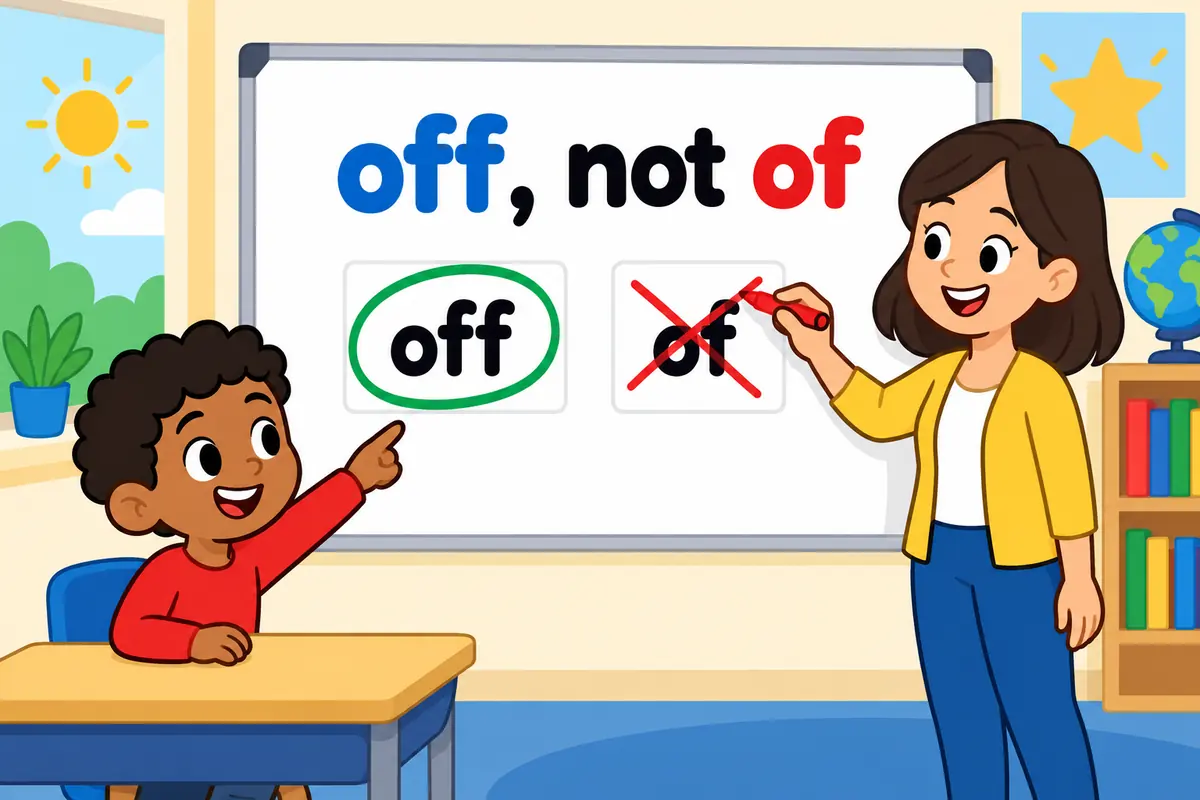
The joke touched of laughter.Correct: The joke touched off laughter. Rule: the particle is off; of is a preposition and never completes this phrasal verb. - Incorrect:
The protest touched off the ruling.Correct: The ruling touched off the protest. Rule: the cause is the subject and the effect is the object, never the reverse. - Incorrect:
She touched off the vase.Correct: She touched the vase. Rule: touch off means ignite or start, not merely make contact. - Incorrect:
The baby touched off crying.Correct: The baby started crying. Rule: touch off suits news and formal writing, so everyday speech prefers start.
Practice using touch off
Work through the six items, then read the reasons as closely as the answers.
- Fill the gap: The referee’s decision ______ a heated argument on the pitch.
- Choose the better word: A single spark (touched off / touched of) the dry grass.
- Correct the error: The applause touched off by the young violinist.
- Build a sentence: use touch off about an email that starts a long debate.
- Spot the register: which belongs in a news report — the ruling touched off protests, or the ruling started a big fuss?
- Rewrite in the passive: A faulty wire touched off the alarm. Use be touched off by.
Answers
- touched off — the decision is the cause and the argument is the effect.
- touched off — the particle is off, and of would leave the phrasal verb incomplete.
- The young violinist’s playing touched off the applause — the cause must be the subject, and the sentence needs an object.
- Model answer: One short email touched off a week of argument about the timetable.
- The ruling touched off protests — a report keeps the formal phrasal verb and avoids the vague fuss.
- The alarm was touched off by a faulty wire — the passive puts the effect first and names the cause with by.
The bottom line
Use touch off in a sentence when a small trigger sets an event or reaction going, and place the cause in the subject slot. Two nuances decide most sentences: the phrase is separable, so a pronoun object belongs in the middle, and it marks the first moment only rather than a continuing process. In casual speech, plain start often does the same job, and to stop the chain at its source, writers reach for prevent instead.
Frequently asked questions about touch off
Is touch off one word or two?
Touch off is written as two words, and the same holds in every form: touches off, touched off and touching off. The two parts are not joined by a hyphen in ordinary text. Only a noun made from the verb, such as a touch-off point, would take a hyphen.
Can you say touch off it?
No. When the object is a pronoun, it must come between the verb and the particle, so the correct order is touch it off. A full noun object is more flexible and may follow the particle, as in touch off a riot, or, less commonly, precede it.
What is the difference between touch off and set off?
Both can mean to start something, but set off also means to detonate a device or to begin a journey, which touch off never does. Touch off adds the idea that a small trigger produced a sudden result, and it sits more often in news and formal writing than in speech.
Does touch off always describe something bad?
No, although trouble is its commonest subject. A firework display, a round of applause or a wave of laughter can all be touched off. The verb is neutral about whether the result is welcome; it only insists that the result began abruptly.
“Touch off” means to initiate or start something, typically a chain of events or a reaction. This phrase implies the beginning of a process that has the potential to lead to further developments or outcomes.
When something “touches off” a situation or reaction, it acts as a catalyst, setting in motion a series of events or responses. This term is often used to describe the trigger or starting point of a sequence that can have significant consequences.
7 Examples Of Touch Off Used In a Sentence For Kids
- I can touch off the sparkler to see the colorful sparks.
- Let’s be careful not to touch off the firecrackers indoors.
- The teacher used a matchstick to touch off the candle’s flame.
- We must not touch off the crackers without adult supervision.
- The birthday boy will touch off the candles on his cake.
- The fireworks will touch off a beautiful display in the sky.
- Remember to not touch off the firecrackers near any trees.
14 Sentences with Touch Off Examples
- Touch off the celebration with some delicious snacks and music at the college annual fest.
- Make sure to touch off the debate competition with a thought-provoking opening statement.
- Before the exam, try to touch off your memory by quickly revising key points from your notes.
- The guest speaker’s inspiring speech touched off a wave of motivation among the students.
- Touch off the start of your group project by assigning roles and setting deadlines.
- The sports club plans to touch off their fundraising campaign with a fun run event.
- Touch off your morning routine with a cup of hot coffee before heading to classes.
- The workshop aims to touch off discussions on sustainable practices among the college community.
- Touch off your study session by creating a quiet and organized study space.
- Use positive affirmations to touch off a productive and focused mindset for your assignments.
- The film screening will touch off conversations on social issues and representation in media.
- Touch off your creative spark by exploring different art forms and techniques in your projects.
- The club’s initiative hopes to touch off a campus-wide conversation on mental health awareness.
- A friendly game of basketball can touch off a sense of camaraderie and teamwork among classmates.
How To Use Touch Off in Sentences?
To use “Touch Off” in a sentence, you should be familiar with its meaning and usage. “Touch Off” is a phrasal verb that means to trigger or initiate something, often an event or a series of actions. It can also mean to start a process or set something in motion. Here’s a guide on how to correctly incorporate “Touch Off” into a sentence:
-
Identify the context: Before using “Touch Off,” make sure you understand the situation or event you want to describe. This will help you use the phrase appropriately.
-
Choose the right subject: Determine the subject that will touch off the action or event you are describing. This can be a person, object, or situation.
-
Formulate the sentence: Construct a sentence that includes the subject, the phrase “Touch Off,” and the action or event that is being initiated. For example, “His careless words touched off a heated argument.”
-
Ensure correct usage: Double-check that you are using “Touch Off” in the correct tense and form based on the context of your sentence.
-
Practice using it: To become more comfortable with using “Touch Off” in sentences, practice incorporating it into your daily language until you are confident in its proper usage.
Remember to be mindful of the meaning of “Touch Off” when using it in a sentence to ensure that it accurately conveys the action or event being initiated.
Conclusion
In summary, the examples of sentences created with the keyword “touch off” demonstrate its versatility in describing a variety of situations where something triggers or starts an event or reaction. From a simple spark that touches off a fire to a comment that touches off a heated argument, this phrase is commonly used to highlight the initial cause of an outcome. Whether it is used in a literal sense like a switch that touches off a sequence of events or in a figurative sense like a rumor that touches off panic, “touch off” effectively conveys the idea of ignition or initiation.
By examining these sentences, we can understand how “touch off” is a powerful and adaptable phrase that vividly captures the beginning of a chain reaction. It serves as a compelling expression in depicting the moment when a small action leads to significant consequences, emphasizing the crucial role of triggers in various scenarios.