Hold Off in a Sentence: Meaning, Patterns & Practice
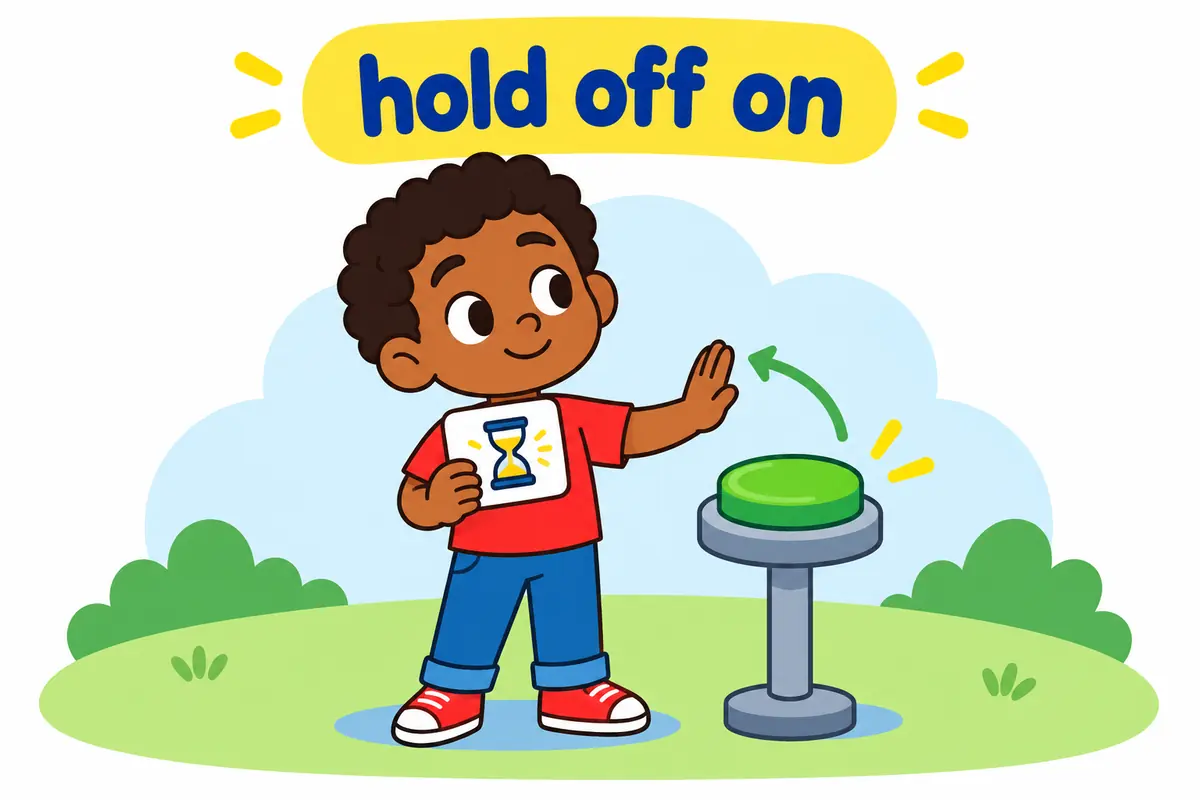
Hold off means to delay doing something until a later time, and it can also mean to keep a person or thing away. To use hold off in a sentence, name the thing you postpone after on, or let the verb stand alone: “Let us hold off on a decision until Monday.” The particle off never moves here.
Hold off at a glance
- Hold off is a phrasal verb; its other forms are held off and holding off.
- The delay sense is intransitive or takes on before the thing postponed.
- The keep-away sense is transitive, and the object follows off, as in hold off the crowd.
- In the delay sense the particle is fixed, so hold the plan off is not English.
- The commonest error is confusing hold off with hold back.
What does hold off mean?
Hold off is a phrasal verb meaning to delay an action or keep something at a distance. The Cambridge entry for hold off records the delay sense and the keep-away sense. The delay sense is the one people mean when they postpone a decision rather than cancel it. To delay an action on purpose is the core of hold off. In the keep-away sense the verb holds an attacker, a crowd or bad weather at bay. A third shade means to refrain from a step until the facts are in.
| Sense | Plain meaning | Example sentence |
|---|---|---|
| Delay an action | Wait before doing something | Let us hold off until the rain stops. |
| Refrain from a step | Choose not to do it yet | She held off on signing the deal. |
| Keep away | Repel or fend something off | The sandbags held off the flood. |
One limitation is worth stating plainly. Hold off is not permanent. It always implies a later moment, so it is the wrong word for cancelling or abandoning something for good. Where a plan is dropped entirely, call off or abandon is the accurate verb, and hold off would promise a return that is not coming.
Register is worth a note too. Hold off sits in ordinary speech and in business writing, where a manager might ask a team to hold off on a launch. In academic and legal prose the same idea usually appears as defer or suspend, because hold off sounds conversational.
How do you use hold off in a sentence?
In the delay sense the verb stands alone or takes on before the thing postponed. In the keep-away sense it is transitive and the object follows off. Deciding which sense you mean comes first, because the two take different followers and different objects.
| Pattern | Example | What it signals |
|---|---|---|
| hold off | Let us hold off for now. | Intransitive delay with no stated target. |
| hold off on + noun or doing | They held off on the launch. | Names the postponed step. |
| hold off + until + time | Hold off until Friday. | Sets the trigger for acting. |
| hold off + object | The gate held off the crowd. | Keep-away sense, object after the verb. |
| hold off + from + doing | He held off from replying. | Refrain, slightly more formal. |
The delay and keep-away senses never share an object. A writer says hold off on the decision but hold off the crowd, and swapping them produces nonsense. When in doubt, ask whether something is being awaited or fended off.
Hold off in a sentence: examples across contexts
Hold off changes company more than meaning, moving from a building site to a family kitchen. The twelve sentences below cover both senses, and each one shows whether time is passing or something is being kept at bay.
| Context | Example sentence | Why this works |
|---|---|---|
| Workplace email | We will hold off on the launch until the tests pass. | The standard delay pattern with on. |
| Team meeting | The chair held off on a vote while numbers arrived. | Names the postponed step. |
| Construction | Builders held off until the storm had passed. | Intransitive delay tied to weather. |
| Family | Mum held off on booking until we confirmed dates. | Everyday use with a clear condition. |
| Sports | Play held off until the pitch was safe. | The subject is the event, not a person. |
| Farming | Growers held off on spraying in the wind. | Technical setting, same pattern. |
| News report | Officials held off on releasing the figure. | Formal news keeps the on pattern. |
| Community | Volunteers held off the flood with sandbags. | Keep-away sense, object after off. |
| History essay | The wall held off the attackers for a month. | Repel sense in formal narrative. |
| Customer service | Please hold off sending the parcel until Monday. | Polite instruction with a time trigger. |
| Academic writing | The team held off from drawing conclusions. | Refrain shade, more formal follower. |
| Conversation | I held off, but the offer closed the next day. | Intransitive delay in plain speech. |
Only the community and history rows keep something at bay; the rest wait for a better moment. That division is the practical test, because a reader should never have to guess whether time is passing or an attack is being repelled.
Hold off vs hold back and hold on
Hold back means to restrain something or hold it in, which is a different job from waiting to start. Hold on means to wait briefly or to grip something firmly. The same off particle also appears in back off, which means to retreat. To wait is the plain synonym, and hold off adds that the waiting is deliberate.
| Attribute | hold off | hold back | hold on |
|---|---|---|---|
| Core meaning | Delay starting something | Restrain or withhold | Wait briefly or grip |
| Focus | Time | Control | Duration |
| Typical follower | on, until, from | A person or an emotion | A moment, a second |
| Sense of motion | None; a pause | Backward | Stationary |
| Register | Neutral | Neutral to formal | Spoken |
Verdict: choose hold off to delay an action, hold back to restrain or conceal something, and hold on when the waiting is short or the grip is literal.
Word forms and grammar of hold off
Hold off inflects regularly and keeps the particle fixed in the delay sense. The rare noun is formed with a hyphen, and the commonest misspelling drops a letter.
| Form | Part of speech | Example |
|---|---|---|
| hold off | base form | We should hold off until spring. |
| held off | past and past participle | They held off on the repair. |
| holding off | present participle | She is holding off for now. |
| a hold-off | noun, rare | A short hold-off gave the team time. |
| hold of | non-standard | No sentence: the particle is off, not of. |
The spelling hold of belongs to the phrase get hold of, which means to obtain or contact something. It has nothing to do with hold off. Keeping that final f is the difference between delaying an action and seizing an object.
Common mistakes with hold off
- Incorrect:
The board held of the decision.Correct: The board held off the decision. Rule: The particle is off, with a final f. - Incorrect:
Let us hold the plan off until June.Correct: Let us hold off on the plan until June. Rule: The delay sense does not split the particle. - Incorrect:
They held off the launch.(meaning delay) Correct: They held off on the launch. Rule: Name the postponed step after on. - Incorrect:
The gate hold off the crowd.Correct: The gate held off the crowd. Rule: A past time word needs the past form held. - Incorrect:
We decided to hold off the project forever.Correct: We decided to call off the project. Rule: Hold off implies a later moment, not a permanent end. - Incorrect:
She held off to sign the deal.Correct: She held off on signing the deal. Rule: The follower is on plus a noun or an -ing form.
Practice using hold off
Work through the seven items, then read the reason beside each answer rather than only the key.
- Fill the gap: The council will ______ off on the vote until the report arrives.
- Choose the better word: Flood barriers (held off / held back) the rising water.
- Correct the error: We decided to hold off the new timetable.
- Build a sentence: use hold off until about painting a wall.
- Spot the register: which belongs in an email to a supplier — Please hold off sending the goods, or Just hold off for a bit, yeah?
- Rewrite with the plain synonym: We will hold off on deciding. Use wait.
- Change to the past: They hold off on the launch. Put it in the past.
Answers
- hold — the future plan takes the base form after will, and on names the postponed vote.
- held off — the barriers repelled the water, which is the keep-away sense of hold off.
- We decided to hold off on the new timetable — the delay sense needs on before the postponed thing.
- Model answer: We should hold off until the wall is dry before painting.
- Please hold off sending the goods — a supplier email stays polite and complete.
- We will wait before deciding — wait is the plain synonym, and hold off adds deliberateness.
- They held off on the launch — the past form is held, with the particle unchanged.
The bottom line
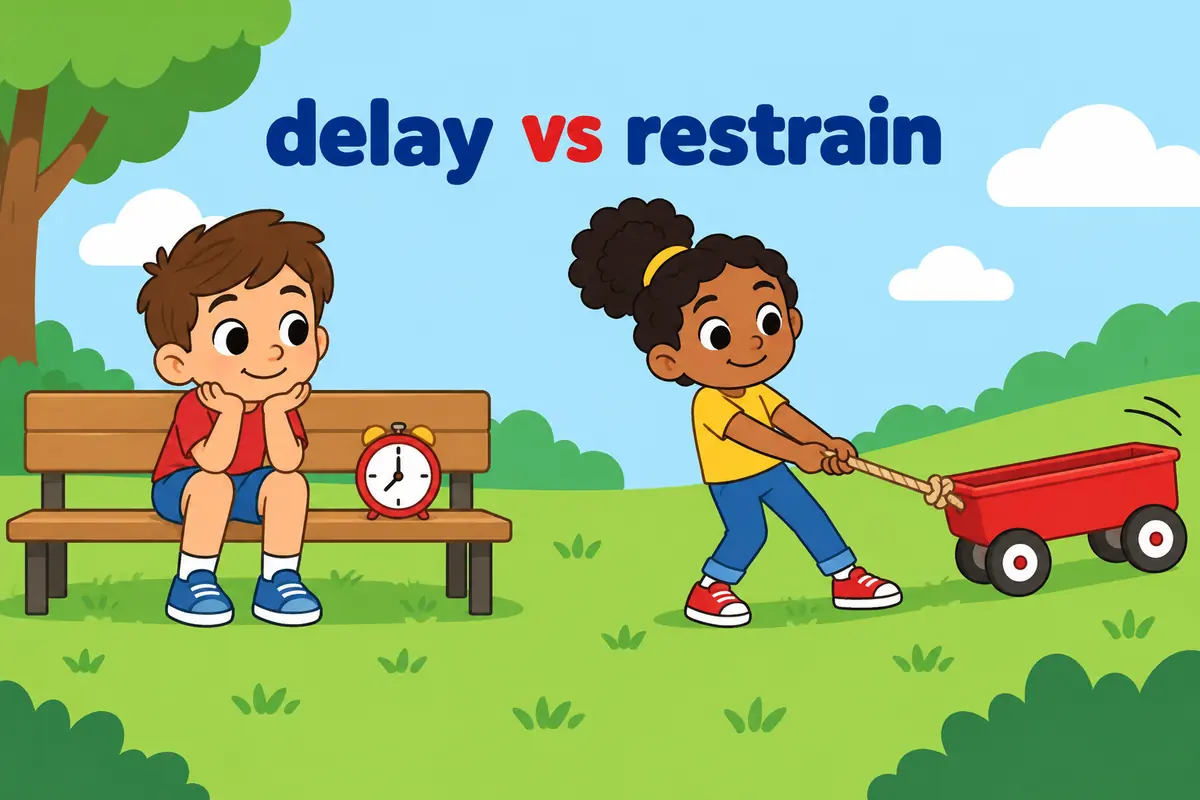
Use hold off in a sentence to delay an action until a better moment, and add on before the thing you postpone. The two nuances that decide most sentences are these: the delay sense fixes the particle, so the object never splits it, and the word always implies a later return rather than a permanent end. Where a plan is dropped for good, call off is the accurate verb.
Frequently asked questions about hold off
Is hold off formal?
Hold off is neutral rather than formal, so it fits a workplace email, a news report and ordinary conversation. It is too casual for a legal filing, where a writer would choose defer or suspend. The phrase carries no urgency, so it suits a polite request to wait rather than a firm order to stop.
What does hold off on mean?
Hold off on means to delay a particular step, and the word after on names what is postponed. In they held off on the launch, the launch is the delayed item. The pattern takes either a noun or an -ing form, so hold off on signing is also correct, and the particle stays fixed after hold.
Is it hold off or hold out?
They are different phrasal verbs. Hold off means to delay or keep something away, while hold out means to resist or to last, as in the defenders held out for a week. Hold out for also means to wait for a better offer. Choose hold off when time is what you are buying.
Can hold off mean keep away?
Yes, one sense of hold off is to keep someone or something at a distance. The sandbags held off the flood and the guard held off the crowd both use that meaning, and in this sense the object follows the particle directly. The delay sense instead stands alone or takes on before the postponed thing.