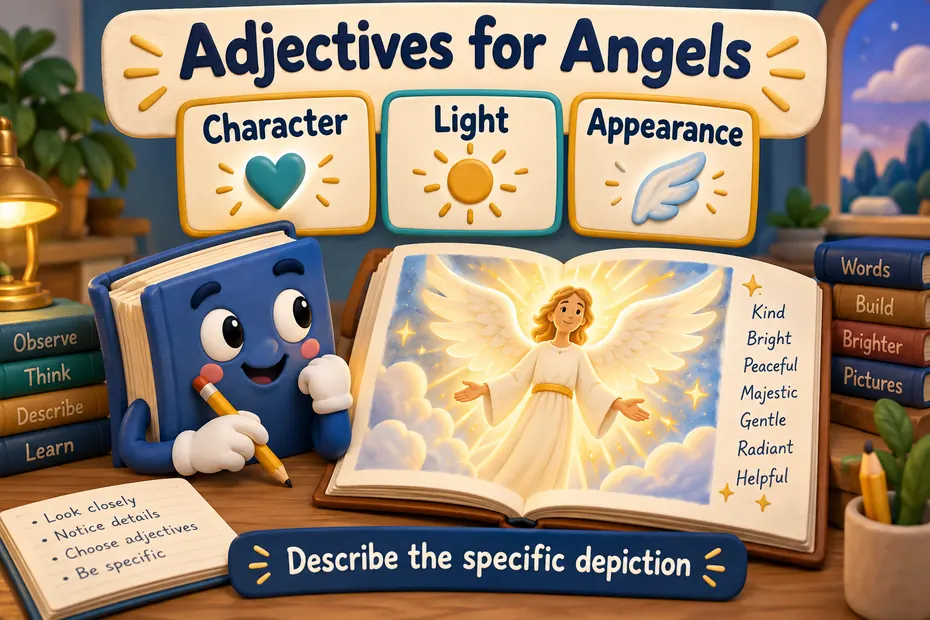
Adjectives for Angels: Meanings and Examples
The right adjective depends on the scene you are writing. Some words describe a figure’s kindness, while others suggest light, atmosphere, or a particular artistic depiction. These are writing choices; beliefs and portrayals of angels vary across traditions and works.
Character and role
- Benevolent: “In the story, a benevolent messenger offers the travelers help.”
- Gentle: “The gentle guardian spoke in a calm voice.”
- Angelic: “The artist gave the figure an angelic expression.”
Benevolent means kind and helpful. Angelic can mean belonging to an angel, or figuratively like an angel in kindness or beauty.

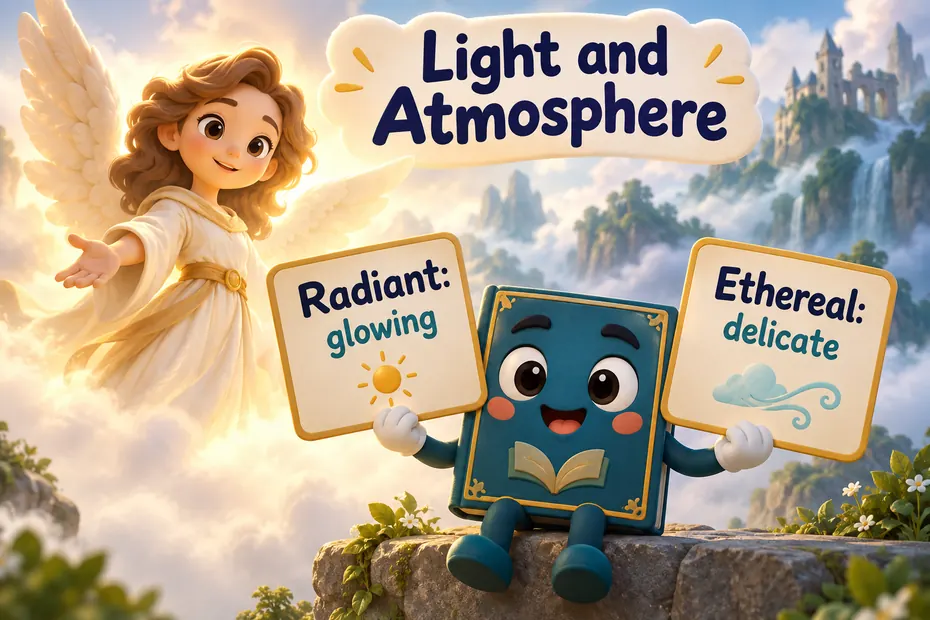
Light and atmosphere
- Radiant: “A radiant glow surrounded the figure in the painting.”
- Ethereal: “An ethereal silhouette appeared through the mist.”
- Heavenly: “The composer paired the scene with heavenly music.”
Radiant can refer to light or a very happy, beautiful appearance. Ethereal suggests something light and delicate, almost outside the ordinary physical world. Heavenly can mean related to heaven, or simply very pleasing.
Appearance in a particular depiction
- Winged: “The mural shows a winged figure above the city.”
- Luminous: “A luminous outline separates the figure from the dark background.”
- Celestial: “The poem describes a celestial visitor crossing the night sky.”
These words fit specific artistic descriptions; they should not be treated as features shared by every depiction or belief tradition.

Choosing an adjective
- Decide whether you mean character, light and atmosphere, or visible appearance.
- Choose a word that describes the detail in your scene.
- Use surrounding context to show whether the word is literal, figurative, or poetic.
For definitions, see Cambridge Dictionary entries for angelic, benevolent, radiant, and ethereal, along with Dictionary.com’s entry for celestial.
Make each adjective do a different job
A strong description combines distinct observations instead of several near synonyms. “A radiant, luminous, shining figure” repeats the idea of light. “A radiant figure with a gentle expression” gives readers both light and character. If the scene needs movement, try graceful or hovering; if it needs mood, try solemn or serene, provided those details fit the passage.
Compare “The angel was beautiful” with “In the mural, the winged messenger had a serene expression and a luminous outline.” The second sentence makes clear that the writer is describing an artwork. It names visible features without claiming that every tradition depicts angels the same way. For a fictional character, show behavior as well: “The benevolent guardian offered shelter to the lost travelers.”
Questions about adjectives for angels
Can angelic describe an ordinary person?
Yes. Angelic can be used figuratively for a person’s kindness, beauty, or apparently innocent expression. “The child gave an angelic smile” describes how the smile seemed to the speaker; it does not identify the child as an angel. Keep the literal and figurative senses clear by naming the person, expression, or artistic figure being described.
Are radiant and luminous the same?
They overlap when describing light, but radiant can also describe a very happy appearance, such as a radiant smile. Luminous focuses more directly on shining or emitting light. In an artwork description, “a luminous outline” identifies a visible effect, while “a radiant expression” may describe the impression of happiness rather than literal illumination.
Does ethereal mean invisible?
No. Ethereal suggests lightness, delicacy, or an impression of being outside the ordinary physical world. An ethereal figure can still be visible in a painting or story. If the figure is literally difficult to see, add the relevant detail: “An ethereal silhouette appeared through the mist.” The adjective supplies atmosphere rather than a precise rule about visibility.
Should every angel be described as winged?
No. Winged is useful when wings appear in the particular artwork or fictional depiction you are describing. It is a visible-feature adjective, not a claim that every religious tradition or story presents angels in that form. Check the source you are discussing and select words for its actual details instead of relying on a familiar illustration.
How can I describe a serious angelic character?
Words such as solemn, watchful, commanding, or resolute can fit a serious fictional figure when the actions or appearance support them. Kindness and softness are not the only possible qualities in a story. Explain the evidence: “The watchful messenger stood at the gate” is more specific than simply giving the character a long list of adjectives.
Angels are celestial beings that have captivated human imagination for centuries. Their ethereal beauty and divine presence inspire awe and wonder. In this article, I’ll delve into the world of angelic adjectives, exploring the descriptive words that can be used to paint a vivid picture of these heavenly beings. From radiant and serene to benevolent and celestial, these adjectives will help you capture the essence of angels in your writing. So, whether you’re a writer looking to add depth to your characters or simply curious about the language of angels, join me as we explore the enchanting world of adjectives for angels.
Angels are often depicted as beings of pure light and goodness, and their appearance is often described as ethereal and otherworldly. Words like celestial, radiant, and luminescent perfectly capture their divine glow. But it’s not just their appearance that sets angels apart; their nature is equally important. Adjectives like benevolent, compassionate, and serene reflect the kindness and peace that angels are believed to embody. By using these descriptive words, you can bring your readers closer to the celestial realm and evoke a sense of awe and reverence for these heavenly creatures.
In this article, I’ll provide you with a comprehensive list of adjectives for angels, along with examples of how they can be used in sentences. Whether you’re a writer seeking inspiration or simply fascinated by the angelic realm, this guide will help you find the perfect words to describe these celestial beings. So, let’s dive into the enchanting world of angelic adjectives and discover the language of angels together.
How to Describe angel? – Different Scenarios
Describing angels can be a beautiful and poignant task, allowing us to capture their celestial essence. Here are some scenarios where you can use adjectives to paint a vivid picture of angels:
- Appearance:
When describing the physical attributes of an angel, it’s important to convey their ethereal and otherworldly nature. Here are some adjectives that can help:
- Radiant
- Serene
- Translucent
- Majestic
- Heavenly
Example: “The angel appeared before me with radiant wings, their translucent form glowing with an otherworldly light.”
- Personality:
Angels are often portrayed as beings of unparalleled goodness and compassion. Here are some adjectives that can capture their benevolent nature:
- Loving
- Compassionate
- Merciful
- Gracious
- Nurturing
Example: “The angel’s compassionate gaze brought me comfort and reassurance during my darkest moments.”
- Actions:
Angels are known for their acts of kindness and protection. Here are some adjectives that can convey their actions:
- Guiding
- Shielding
- Comforting
- Encouraging
- Lifting
Example: “The angel gently reached out their hand, guiding me through the treacherous path, offering solace in times of uncertainty.”
Remember, the key to accurately describing angels is to tap into the awe-inspiring and reverential qualities associated with them. By using these adjectives in your writing, you can bring a sense of wonder and appreciation for these heavenly beings.
Now that we have explored different scenarios, let’s delve into a comprehensive list of adjectives for angels and see how they can be used in sentences.
Describing Words for angel in English
In this section, I’ll provide you with a list of adjectives that can be used to describe angels. Angels are often depicted as majestic, heavenly beings with awe-inspiring qualities. By using these adjectives, you can paint a vivid picture and capture the essence of angels in your descriptions. Let’s explore some of the most commonly used adjectives for angels:
- Radiant: Angels are often described as radiating light and beauty, symbolizing their divine nature and purity.
- Graceful: Their movements are described as graceful, as they glide effortlessly through the celestial realms.
- Serene: Angels exude a sense of tranquility and peace, calming those around them with their presence.
- Ethereal: Their ethereal presence gives them an otherworldly quality, as if they belong to a realm beyond our own.
- Merciful: Angels are known for their compassion and mercy, reaching out to help and comfort those in need.
- Divine: Their divine nature and connection to the spiritual realm make angels truly extraordinary beings.
- Luminous: Angels are often depicted as emanating a gentle glow, illuminating their surroundings with their celestial light.
Here are some examples of how these adjectives can be used in sentences:
- “The angel appeared in a radiant aura, illuminating the dark night.”
- “Her graceful wings fluttered softly as she descended from the heavens.”
- “The angel’s serene presence brought a sense of calm to the troubled souls.”
- “They were captivated by the angel’s ethereal beauty, as if she was a creature from another world.”
- “With merciful eyes, the angel offered solace to the grieving.”
- “We stood in awe of the angel’s divine wisdom and guidance.”
- “The room was bathed in a luminous glow as the angel spread its wings.”
These adjectives will help you create vivid and enchanting descriptions of angels, capturing the awe-inspiring and reverential qualities associated with these celestial beings.
Adjectives for angel
Positive Adjectives for Angels with 12 Example Sentences
When it comes to describing angels, there are various positive adjectives that come to mind. These words capture the ethereal and awe-inspiring qualities often associated with these celestial beings. Here are some examples of positive adjectives that can be used to describe angels, along with example sentences:
| Adjective | Example Sentence |
|---|---|
| Radiant | The angel appeared in a radiant glow. |
| Graceful | With every movement, the angel displayed gracefulness. |
| Serene | The angel had a serene smile on her face. |
| Ethereal | The angel’s wings shimmered in an ethereal light. |
| Majestic | As the angel descended, a majestic presence filled the air. |
| Harmonious | The sound of the angel’s voice was harmonious and soothing. |
| Pure | The angel’s heart was filled with pure love. |
| Transcendent | The angel’s presence felt transcendent and otherworldly. |
| Blissful | The angel’s laughter was a blissful melody. |
| Merciful | The angel showed mercy and compassion to all. |
| Divine | The angel’s beauty was truly divine. |
| Enlightened | With wisdom beyond words, the angel spoke with an enlightened voice. |
Negative Adjectives for Angels with 5 Example Sentences
While angels are often associated with positivity, there can also be negative adjectives that describe certain aspects or characteristics. Here are some examples of negative adjectives that can be used to describe angels, along with example sentences:
| Adjective | Example Sentence |
|---|---|
| Fallen | The fallen angel had a hint of sadness in her eyes. |
| Haunting | The haunting presence of the angel sent shivers down my spine. |
| Unforgiving | The angel’s judgment was unforgiving and stern. |
| Wrathful | The wrathful angel unleashed a storm of fury. |
| Bewitching | The bewitching angel had an enchanting allure. |
By using these adjectives, you can create vivid descriptions of angels, capturing their radiant beauty and awe-inspiring qualities. Whether positive or negative, these words help to paint a picture of these celestial beings in our imagination, reinforcing the wonder and reverence associated with them.
Synonyms and Antonyms with Example Sentences
Synonyms for angel
When describing angels, there are several synonyms that can be used to paint a vivid picture of these celestial beings. Here are some words that can be used as synonyms for angel:
Synonyms
- Seraph
- Divine being
- Heavenly
- Celestial
- Heavenly being
Example sentences:
- The seraphic figure hovered above us, radiating a warm glow.
- Her smile was divine, like that of an angelic creature.
- The heavenly messenger delivered a message of peace and hope.
- We were visited by a celestial being with wings of pure gold.
- The room was filled with an atmosphere of holiness as the heavenly being stood before us.
Antonyms for angel
In contrast to positive adjectives, antonyms can be used to describe angels with negative connotations or qualities. Although angels are traditionally depicted as pure and virtuous, using antonyms can help create a more dynamic and nuanced description. Here are some antonyms that can be used to describe angels:
Antonyms
- Devilish
- Sinful
- Fallen
- Dark
- Demonic
Example sentences:
- His smile had a devilish quality that concealed his true intentions.
- The sinful angel was banished from the heavens for her transgressions.
- The fallen angel sought redemption after succumbing to temptation.
- A sense of darkness surrounded the enigmatic figure, reminiscent of a fallen angel.
- The atmosphere grew heavy as the demonic presence made itself known.
By using synonyms and antonyms, we can create a more nuanced and vibrant picture of angels. Whether we choose to highlight their heavenly qualities or explore their darker aspects, the descriptions can help us better understand and appreciate these celestial beings. So, let’s continue our exploration of adjectives for angels and delve deeper into the realm of these divine creatures.
Conclusion
In this article, we have delved into the world of adjectives that can be used to describe angels. By providing a comprehensive list of synonyms and antonyms, we have explored the various qualities and characteristics associated with these celestial beings. Through the use of example sentences, we have created vivid descriptions that bring these angels to life.
Our goal has been to paint a more nuanced and vibrant picture of angels, whether it be by highlighting their heavenly qualities or delving into their darker aspects. By doing so, we hope to inspire further exploration into the realm of these divine creatures.
Remember, the power of adjectives lies in their ability to evoke emotions and create imagery. So, whether you are writing a story, a poem, or simply want to capture the essence of an angelic encounter, the adjectives provided in this article will serve as valuable tools.
Continue to explore the adjectives for angels and let your imagination soar as you uncover the depths of their beauty and mystery.


