How to Choose the Right Adjective for Blue
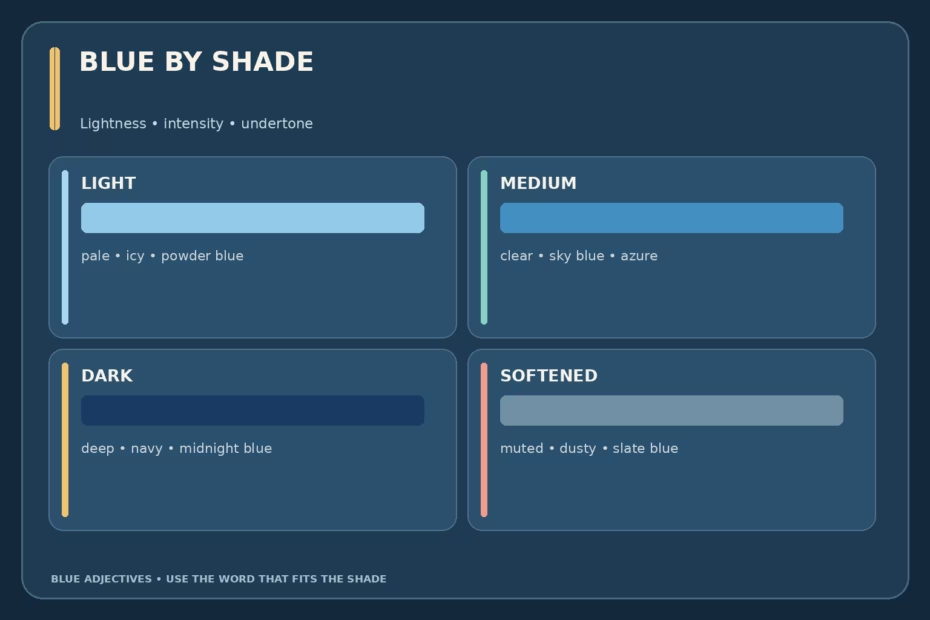
Blue can look pale and airy, bright and energetic, or dark and almost black. To describe it precisely, think about three features: lightness (how light or dark it appears), intensity (how vivid or muted it is), and undertone (whether it leans toward green, violet, or gray). These features are more useful than relying on a general impression such as “pretty blue.”
For example, pale describes a light blue; vivid describes a strongly saturated one; and slate blue suggests a subdued blue with a gray cast. A single color can be both deep and muted, or light and vivid. Use more than one adjective only when each adds useful information.
Blue Adjectives by Shade and Quality
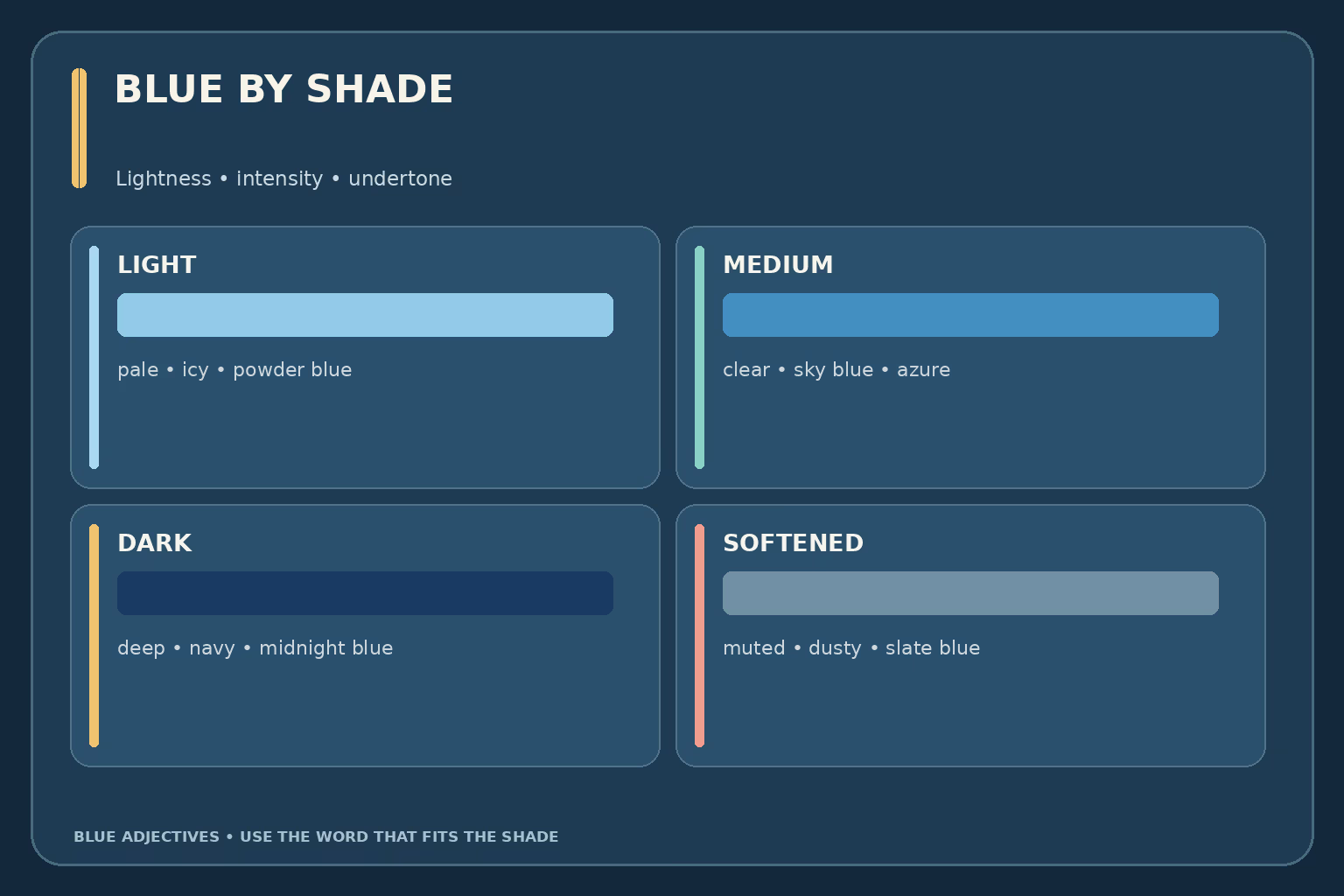
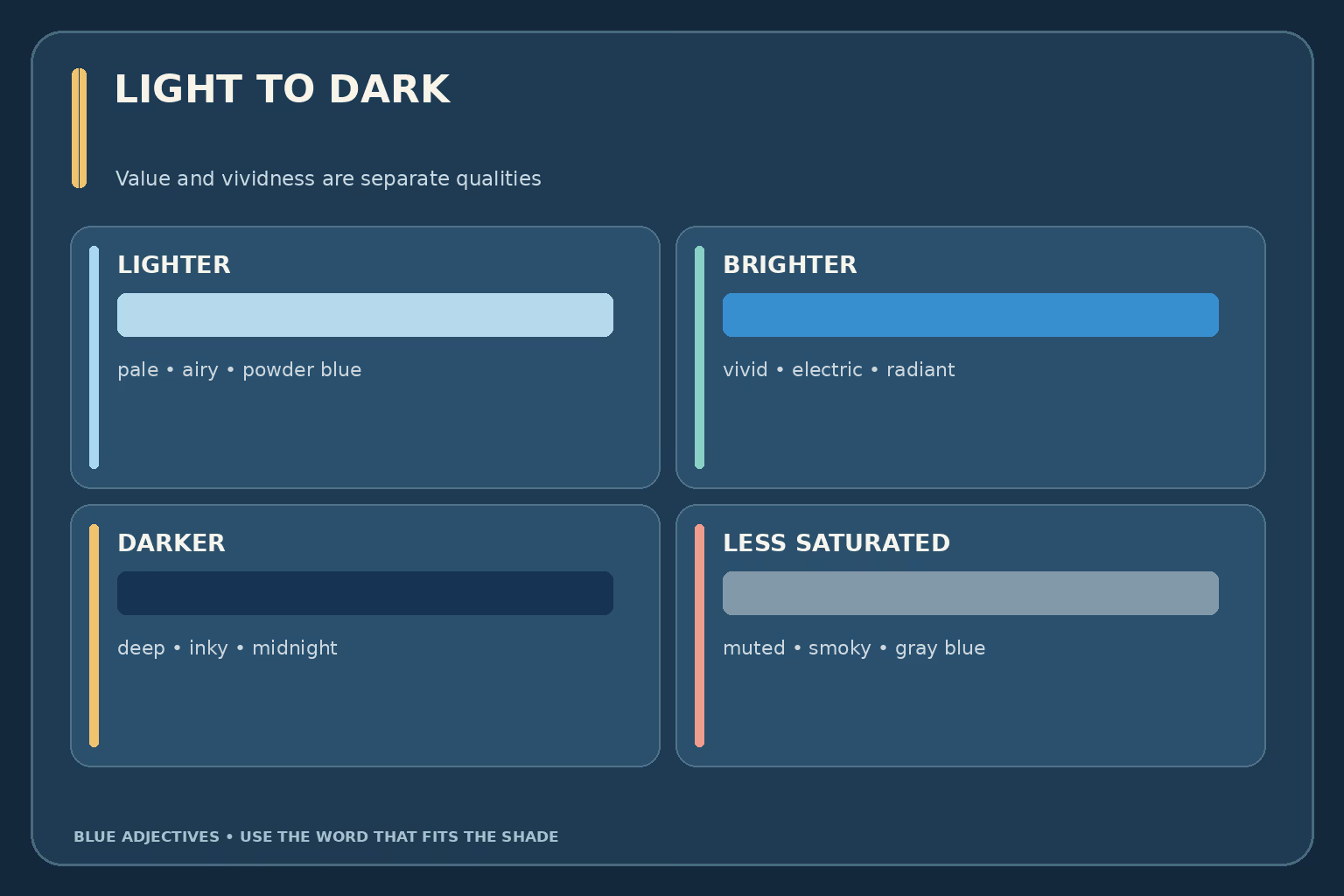
- Light blue: pale, light, airy, delicate, powder blue, baby blue, or icy. These words fit a blue with a high, light value. “Icy” can also suggest a cool cast.
- Bright blue: vivid, bright, brilliant, electric, radiant, or saturated. Use these for a color that appears intense. “Electric blue” is an informal name for an especially bright blue, not one fixed standardized shade.
- Dark blue: deep, navy, midnight, inky, or dark. Inky is figurative and often suggests a nearly black blue; navy typically refers to a dark, relatively subdued blue.
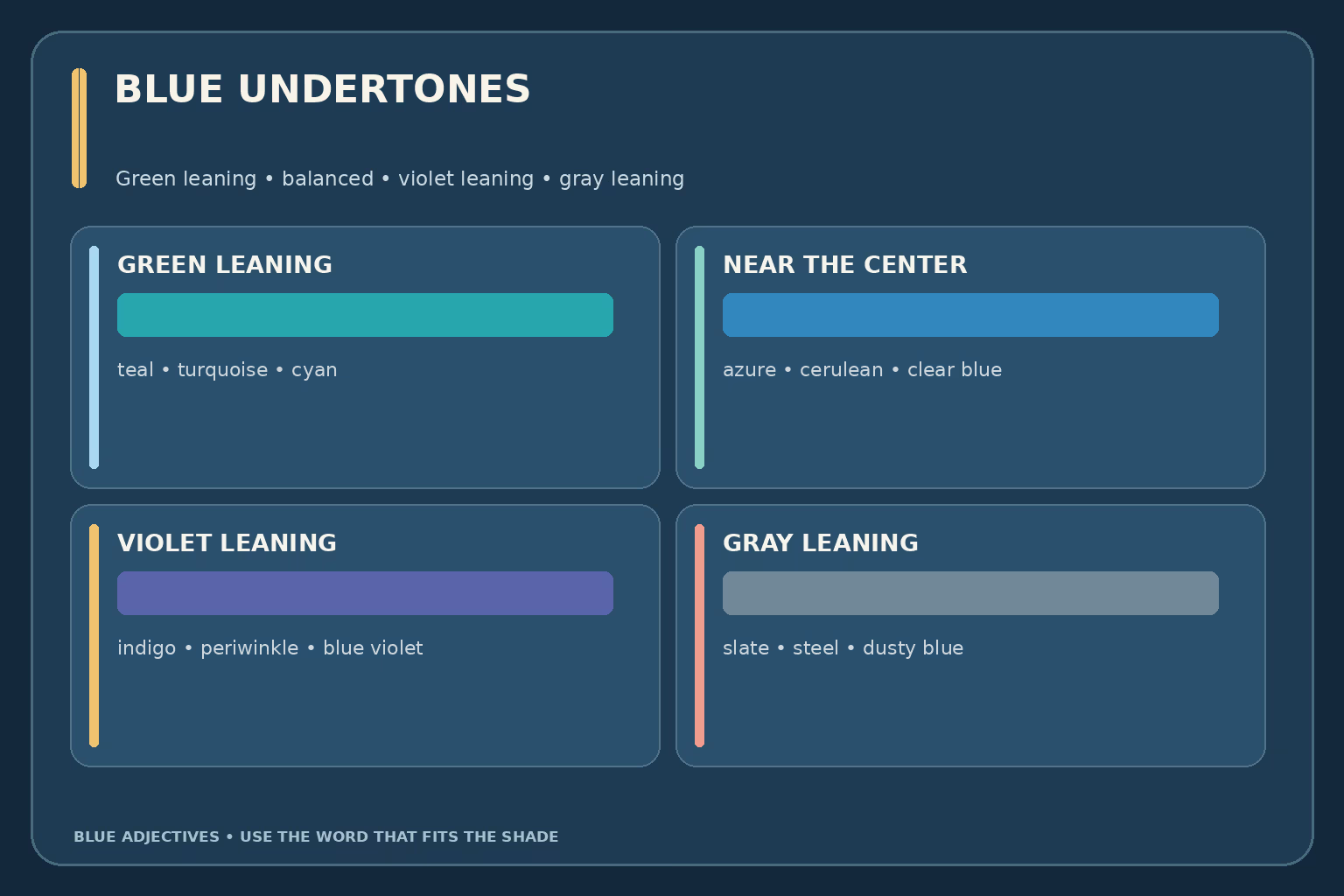
- Soft or muted blue: dusty, smoky, subdued, muted, grayish, or slate blue. These suggest lower intensity or a gray cast. “Dusty blue” is a flexible descriptive name, so the exact shade can vary.
- Green leaning: teal, turquoise, cyan, or blue-green. These names point toward neighboring hues; turquoise and teal can range from greenish blue to blue-green depending on context.
- Violet leaning: indigo, periwinkle, lavender blue, or blue-violet. Periwinkle usually names a light blue-violet; indigo is conventionally a deeper blue-violet.
- Clear or cool blue: crisp, clean, cool, or clear. These describe an impression or appearance rather than a precise color measurement. Add the object or lighting when the distinction matters.
Color names do not always map to one exact swatch. Screen settings, lighting, paint, fabric, and printing can change how a blue appears. When accuracy matters, provide a sample, color code, or comparison instead of relying on the name alone.
Words for Blue in Different Contexts
Sky and weather
A cloudless daytime sky may look clear, bright, or azure; a hazy sky may appear pale, washed-out, or grayish blue. Before a storm, the sky can seem dark or leaden, though “leaden” often describes a gray, heavy-looking sky rather than blue itself. Mention the time of day or weather to make the description more specific.
Water
Water can look turquoise, blue-green, clear, or deep blue depending on depth, suspended material, surroundings, and light. These are descriptions of appearance; they do not identify water quality or safety. “The shallow pool looked turquoise in the afternoon sun” gives a concrete visual detail without suggesting that every pool has that hue.
Clothing, paint, and objects
For clothes or décor, navy, cobalt, powder blue, slate, and teal can help readers picture a shade. Add a second adjective when useful: a “muted teal jacket,” “vivid cobalt mug,” or “pale, cool-blue wall.” For product descriptions or instructions, include a labeled swatch or exact color reference because shade names can differ by manufacturer.
Art and materials
Blue names can refer to both a visible hue and the pigment or dye used to create it. Historical art materials include ultramarine, cobalt blue, and Prussian blue, which are distinct pigments with their own histories and properties. Museums identify pigments through examination of particular artworks; a painting that looks blue cannot be assigned a pigment name by appearance alone. See the Metropolitan Museum of Art’s notes on pigments in Thomas Cole’s paintings and blue pigments in Impressionist art.
Blue Adjectives in Example Sentences
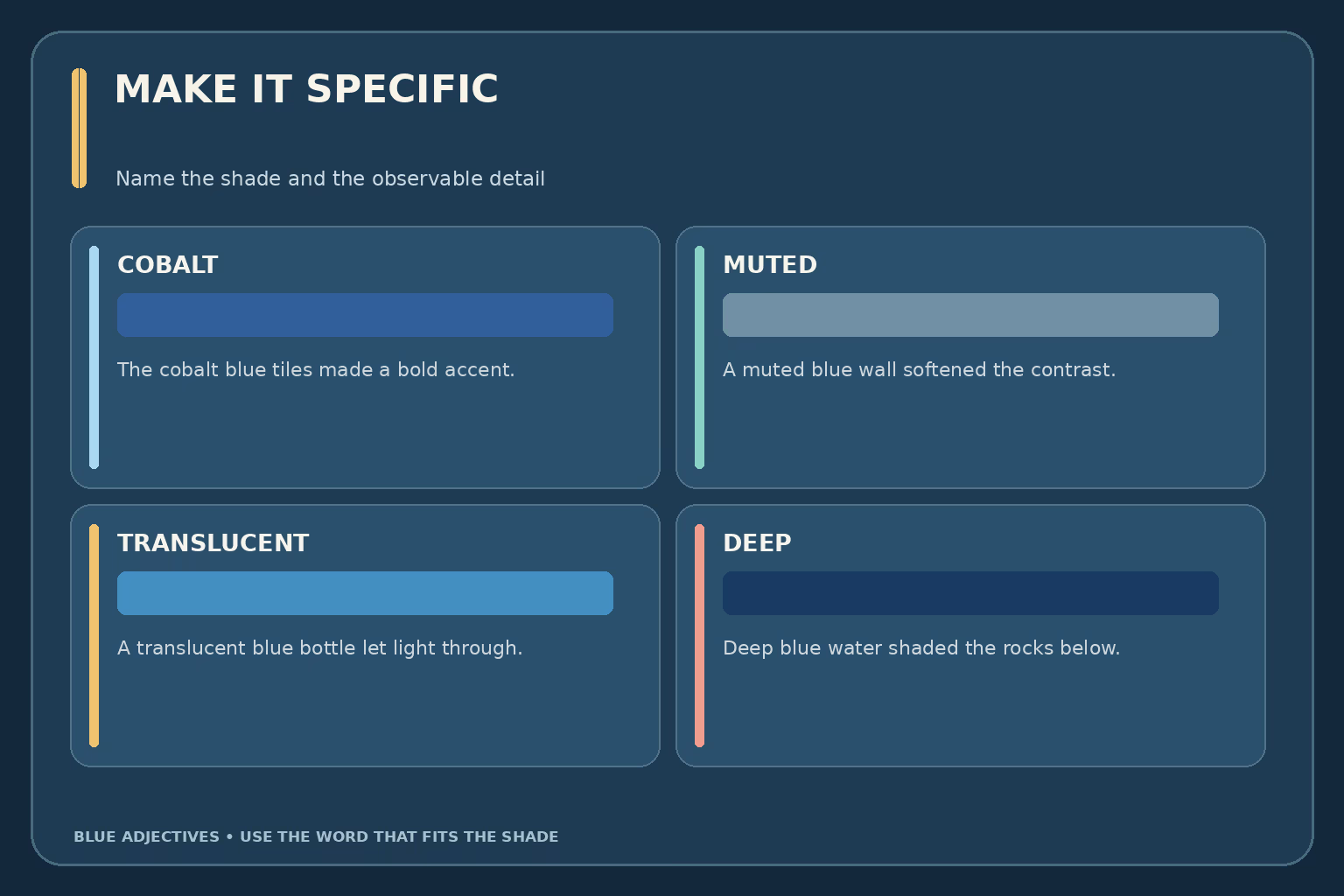
Pair a color adjective with an object and an observable detail. That makes the description more informative than a list of similar words.
- Pale: “A pale blue ribbon framed the invitation without overpowering the lettering.”
- Vivid: “Vivid blue tiles stood out against the white grout.”
- Muted: “The muted blue paint created a quiet background for the wooden shelves.”
- Deep: “Deep blue shadows gathered beneath the bridge at dusk.”
- Turquoise: “Turquoise water showed through the glass-bottom boat.”
- Indigo: “The indigo scarf looked almost violet beside the navy coat.”
- Translucent: “Sunlight passed through the translucent blue glass and colored the table.”
When writing creatively, blue can also suggest a mood: serene and tranquil may describe a peaceful scene, while melancholy or gloomy can convey sadness or heaviness. These words express the writer’s interpretation, not a universal response to the color. Make the source of the mood clear: “The empty, blue-gray street felt melancholy in the rain.”
Frequently Asked Questions
What are positive adjectives for blue?
Depending on the context, you might use vivid, radiant, serene, tranquil, refreshing, or brilliant. Choose a word that describes the actual shade or the mood of the scene; “radiant” suggests brightness, while “serene” describes an impression.
What is another word for dark blue?
Navy, midnight blue, deep blue, and inky blue are common alternatives. They are not perfect synonyms: navy is a familiar named shade, while midnight and inky are more figurative and suggest very dark blue.
Is turquoise blue or green?
Turquoise sits between blue and green, and speakers may describe a particular shade as either turquoise or blue-green. If the distinction matters, show the shade or name the color reference.
Can “blue” describe a feeling?
Yes. In informal English, blue can mean sad or low in spirits, as in “I felt blue after the trip ended.” This figurative meaning is separate from describing a blue-colored object.
Sources and Further Reading
- The Metropolitan Museum of Art: Modern Pigments Found in Thomas Cole’s Paintings (identification and history of pigments including cobalt blue and ultramarine).
- The Metropolitan Museum of Art: Impressionism: Art and Modernity (nineteenth-century synthetic pigments and the use of cerulean and ultramarine blue).

Blue, the color of the sky and the ocean, holds a special place in our hearts. It is a hue that evokes feelings of calmness, serenity, and tranquility. But how do we capture the essence of this captivating color in words? In this article, I’ll be sharing a collection of adjectives that perfectly describe the color blue, along with examples to help you understand their usage.
When we think of blue, words like “deep,” “vibrant,” and “rich” come to mind. These adjectives paint a vivid picture of the intensity and boldness that this color can possess. On the other hand, we also have adjectives like “pale,” “soft,” and “gentle,” which convey a sense of delicacy and subtlety. From the darkest navy to the lightest baby blue, there are countless shades to explore, each with its own unique set of descriptive words.
How to Describe color blue? – Different Scenarios
When it comes to describing the color blue, there are countless adjectives that can be used to convey its various characteristics. Whether we’re talking about the sky, the ocean, or even a blueberry, each scenario calls for a different set of descriptive words. Let’s explore some examples:
1. The Sky:
- Vibrant: When the sky is clear and the sun is shining, the blue can be described as vibrant, representing a powerful and vivid shade.
- Calm: On a peaceful day, the blue of the sky can be described as calm, evoking a sense of tranquility and serenity.
2. The Ocean:
- Deep: The deep blue of the ocean is often associated with mystery and vastness, reflecting its incredible depth.
- Turquoise: When the water is crystal clear, the blue can be described as turquoise, capturing its unique and vibrant hue.
3. Blueberry:
- Rich: The blue of a ripe blueberry is often described as rich, implying a depth of color and intensity.
- Juicy: Describing a blueberry as juicy enhances the sensory experience, suggesting its succulent and flavorful nature.
These are just a few examples of how we can describe the color blue in different scenarios. From the sky to the ocean to everyday objects, the possibilities are endless. By using descriptive adjectives, we can paint a vivid picture and engage our senses when talking about this beautiful color.
Remember, the color blue is incredibly diverse, and each shade has its own unique qualities. Exploring and experimenting with different adjectives will help us better describe and understand the nuances of this captivating color.
Adjectives for Color Blue
Now that we‚Äôve explored how to describe the color blue in different scenarios, let’s dive deeper into a comprehensive list of adjectives that can be used to describe blue in various contexts.
Adjectives for the intensity and boldness of blue:
- Deep
- Vibrant
- Rich
- Bold
- Intense
Adjectives for the delicacy and subtlety of blue:
- Pale
- Soft
- Gentle
- Subtle
- Serene
Describing Words for color blue in English
Blue is a vibrant and versatile color that can evoke a variety of emotions and impressions. When describing the color blue in English, there are numerous adjectives that can be used to capture its different qualities and characteristics. Whether it’s the deep blue of the ocean or the soft blue of the sky, each shade of blue has its own set of descriptive words. Here are some adjectives that can be used to describe the color blue:
- Intense blue: Bold, powerful, striking, vibrant
- Light blue: Delicate, soft, gentle, serene
- Dark blue: Deep, mysterious, strong, enigmatic
- Bright blue: Lively, vivid, radiant, energetic
- Pale blue: Subtle, airy, ethereal, tranquil
The extensive variety of blues means that there is a perfect adjective to describe every shade. Whether you’re teaching kids about colors or simply looking to expand your vocabulary, these adjectives can help add depth and precision when describing the color blue.
Here are some examples of how these adjectives can be used:
- The intense blue of the painting captivated me with its boldness and vibrancy.
- The light blue of the newborn’s eyes was as soft and gentle as a summer sky.
- The dark blue evening sky seemed to hold a mysterious allure that was impossible to resist.
- The bright blue balloons added a lively and vivid touch to the birthday party decorations.
- The pale blue walls in the bedroom created a peaceful and tranquil atmosphere.
As you can see, these adjectives help paint a clearer picture and bring the color blue to life. With their use, you can create rich and engaging descriptions that will captivate your readers or students.
When teaching young children about colors, it’s important to make learning fun and interactive. Encourage them to use and explore these adjectives while describing different shades of blue. This will not only help expand their vocabulary but also foster their creativity and ability to express themselves.
Remember, when describing the color blue, the possibilities are endless. With the right adjective, you can transport your reader or student into a world of blue hues, capturing the essence and beauty of each shade. So, embrace the vast palette of blues and have fun exploring the language of colors!
Adjectives for color blue
When it comes to describing the color blue, there are countless adjectives that can be used to convey its beauty, depth, and various shades. In this section, I will provide you with both positive and negative adjectives to describe the color blue, along with example sentences to help you understand their usage.
Positive Adjectives for Color Blue
Using positive adjectives can help create vibrant and captivating descriptions of the color blue. Here are 12 such adjectives along with example sentences:
| Adjective | Example Sentence |
|---|---|
| Serene | The serene blue sky provided a calming backdrop for the picnic. |
| Tranquil | I find solace in gazing at the tranquil blue ocean waves. |
| Vivid | Her eyes sparkled with vivid blue, like sapphires. |
| Radiant | The radiant blue flowers bloomed in the garden. |
| Luminous | The luminous blue moon cast an enchanting glow over the night sky. |
| Majestic | The majestic blue mountains stood tall against the horizon. |
| Dynamic | The dynamic blue hues in the abstract painting caught everyone’s attention. |
| Refreshing | I took a dip in the refreshing blue pool on a hot summer day. |
| Invigorating | The invigorating blueberry smoothie gave me an energy boost. |
| Mesmerizing | I was mesmerized by the crystal-clear blue waters of the Caribbean. |
| Exquisite | The bride wore an exquisite blue gown that left everyone in awe. |
| Enchanting | The enchanting blue butterflies fluttered gracefully in the garden. |
Negative Adjectives for Color Blue
While the color blue is often associated with positivity, negative adjectives can add depth and contrast to your descriptions. Here are 5 negative adjectives to describe the color blue, along with example sentences:
| Adjective | Example Sentence |
|---|---|
| Gloomy | The gloomy blue clouds foretold an approaching storm. |
| Melancholic | The melancholic blue notes of the song evoked strong emotions. |
| Dreary | The dreary blue walls in the room made it feel cold and lifeless. |
| Cold | The cold blue ice sent shivers down my spine. |
| Dull | The dull blue paint on the walls needed a fresh coat to brighten up the room. |
Remember, the color blue offers a wide range of emotions and sensations. Experiment with these adjectives to create engaging and colorful descriptions of the color blue, whether you’re teaching young children about colors or simply exploring the beauty of the world around us.
Synonyms and Antonyms with Example Sentences
Synonyms for Color Blue
When it comes to describing the color blue, there are numerous synonyms that can help us paint a vibrant picture. Here are some synonyms that capture the essence of this beautiful color:
- Azure: The azure sky is a sight to behold.
- Cobalt: The cobalt ocean sparkles under the sun.
- Sapphire: Her sapphire eyes shone with intensity.
- Sky-blue: The sky-blue dress she wore complemented her eyes perfectly.
- Turquoise: The turquoise waters of the tropical paradise left us in awe.
These synonyms not only add variety to our language but also allow us to convey the different shades and moods associated with the color blue. Whether it’s the clear blue of a sunny day or the deep blue of the ocean, these synonyms provide us with a rich vocabulary to describe this captivating hue.
Antonyms for Color Blue
Just as there are synonyms for the color blue, there are also antonyms that represent colors opposite to blue. These antonyms can be used to create contrast or to describe situations where blue is absent. Here are a few examples:
- Red: The fiery red sunset painted the sky with vibrant hues.
- Yellow: The field of sunflowers added a cheerful splash of yellow to the landscape.
- Orange: The glowing orange flames danced in the fireplace.
- Green: The lush green leaves rustled in the breeze.
- Pink: The soft pink petals of the cherry blossoms gently fell to the ground.
Using antonyms alongside adjectives for blue can create a vivid and dynamic imagery in our descriptions. By contrasting blue with other colors, we can highlight its uniqueness and create more engaging narratives.
So, whether we choose to use synonyms or antonyms, we have a wide array of words at our disposal to capture the beauty and essence of the color blue.
Conclusion
Describing the color blue can be a fascinating endeavor, as it encompasses a wide range of shades and moods. By utilizing synonyms such as azure, cobalt, sapphire, sky-blue, and turquoise, we can paint a vivid picture and evoke specific emotions in our descriptions. On the other hand, incorporating antonyms like red, yellow, orange, green, and pink can create a striking contrast and add depth to our narratives.
By exploring these adjectives for blue, we can unlock the true potential of this captivating color. Whether we’re describing a serene sky, a vibrant ocean, or the eyes of a loved one, the right choice of words can bring our descriptions to life. It’s important to remember that language has the power to transport readers to different worlds, and by utilizing synonyms, antonyms, and adjectives, we can create a truly engaging reading experience.
So, the next time you find yourself needing to describe the color blue, don’t limit yourself to just one word. Instead, embrace the richness and diversity that this color offers, and let your words paint a masterpiece.


