


How to Choose Precise Customer-Service Adjectives
Choose a word that describes a specific part of the interaction: what the representative said or did, how quickly a reply arrived, whether the explanation answered the question, or what happened next. A single exchange can support a description of that encounter; it does not automatically establish someone’s personality or the quality of every interaction with the organization.

| Adjective | Useful when you observed… | Example wording |
|---|---|---|
| Attentive | The representative listened, checked details, or noticed an important part of the request. | “The representative was attentive and confirmed the account number before making the change.” |
| Clear | The explanation or next step was easy to understand. | “The instructions were clear, so I knew which form to submit.” |
| Responsive | A reply or follow-up arrived within the timeframe you can describe. | “The team was responsive and replied the same afternoon.” |
| Thorough | The answer addressed the relevant questions or steps. | “The agent gave a thorough explanation of the return process.” |
| Patient | The representative allowed time for questions or repeated information without rushing. | “The representative was patient while I checked the serial number.” |
| Delayed | You can identify a wait or missed response window. | “The follow-up was delayed by two days.” |
| Incomplete | A requested answer or promised action was still missing. | “The response was incomplete because it did not explain the next step.” |
| Dismissive | The words or conduct brushed aside a stated concern; explain what happened. | “I felt dismissed when the reply repeated the policy without addressing my question.” |
These descriptions focus on an exchange, not a fixed personal trait. “The reply was delayed” is more specific than “the team is unreliable” when you have evidence about only one contact. Likewise, “I felt dismissed when…” makes clear that the word describes your experience and names the conduct behind it.
Separate the Interaction From the Outcome
A courteous conversation and an unsuccessful result can happen together. An employee may explain a policy respectfully even when the policy means the request cannot be granted; a fast response may still omit an important detail. Describe the communication and the resolution separately so that praise or criticism points to the part you mean.
A useful feedback sequence is: situation (what you needed), action (what the representative did), effect (what that changed for you), and outcome (whether the issue was resolved). For example: “I asked about a duplicate charge. The agent listened, confirmed the transaction, and explained when the adjustment would appear. The clear explanation helped, although the refund was not immediate.”
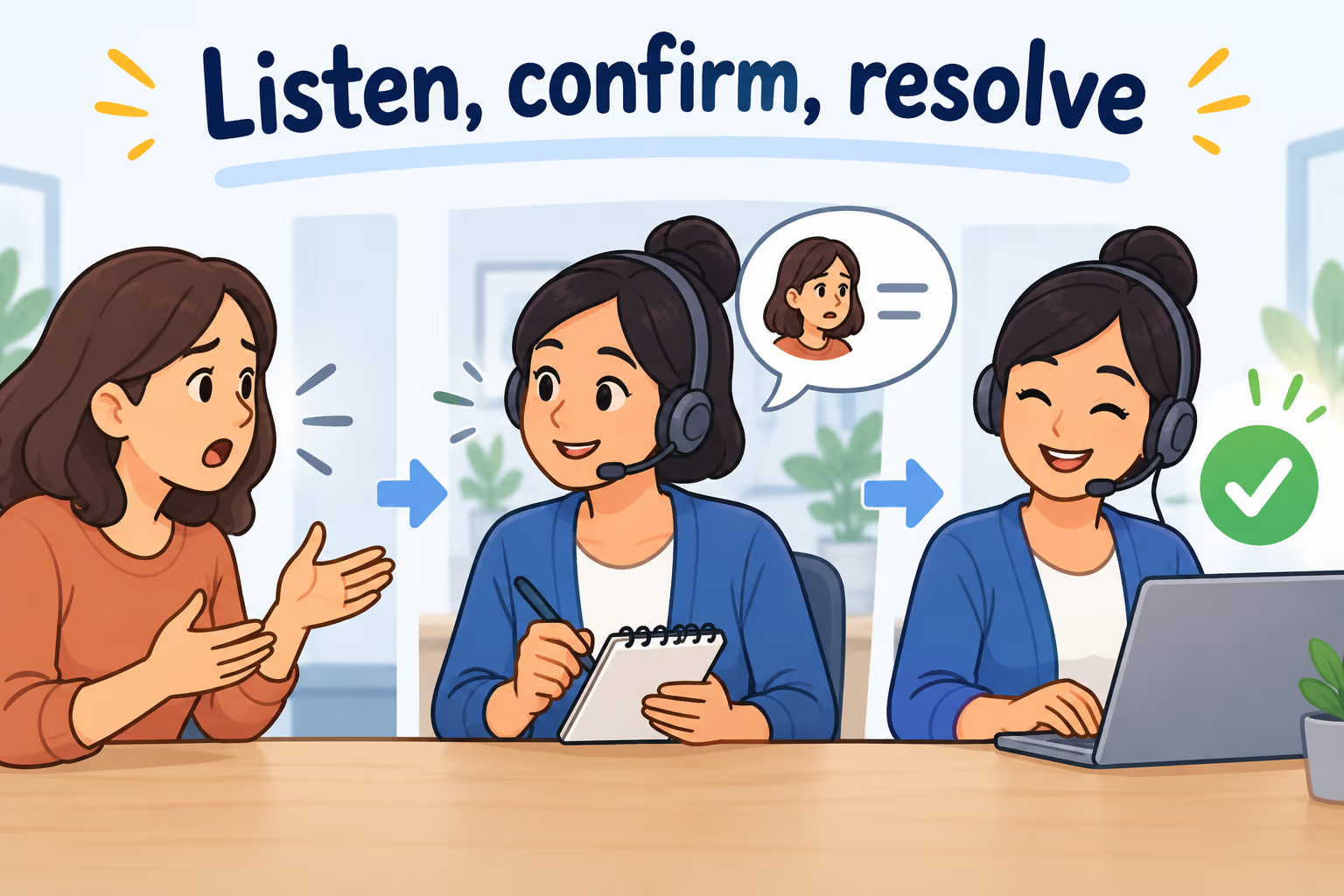
Research on service encounters supports paying attention to observable interaction behaviors, but its findings have limits. One study recontacted 282 guests who had complained to a single hotel call center and found listening behaviors relevant to service recovery; it does not establish a universal ranking of traits for every industry or worker. Mount and Mattila, “Last Chance to Listen”.
Describe Communication in Its Context
People may prefer different levels of detail, formality, directness, or follow-up, and the channel can affect what a good explanation looks like. A concise chat reply may be useful for a simple request; a complicated issue may need a fuller explanation. Describe what happened in that exchange instead of assuming that one communication style works for everyone.
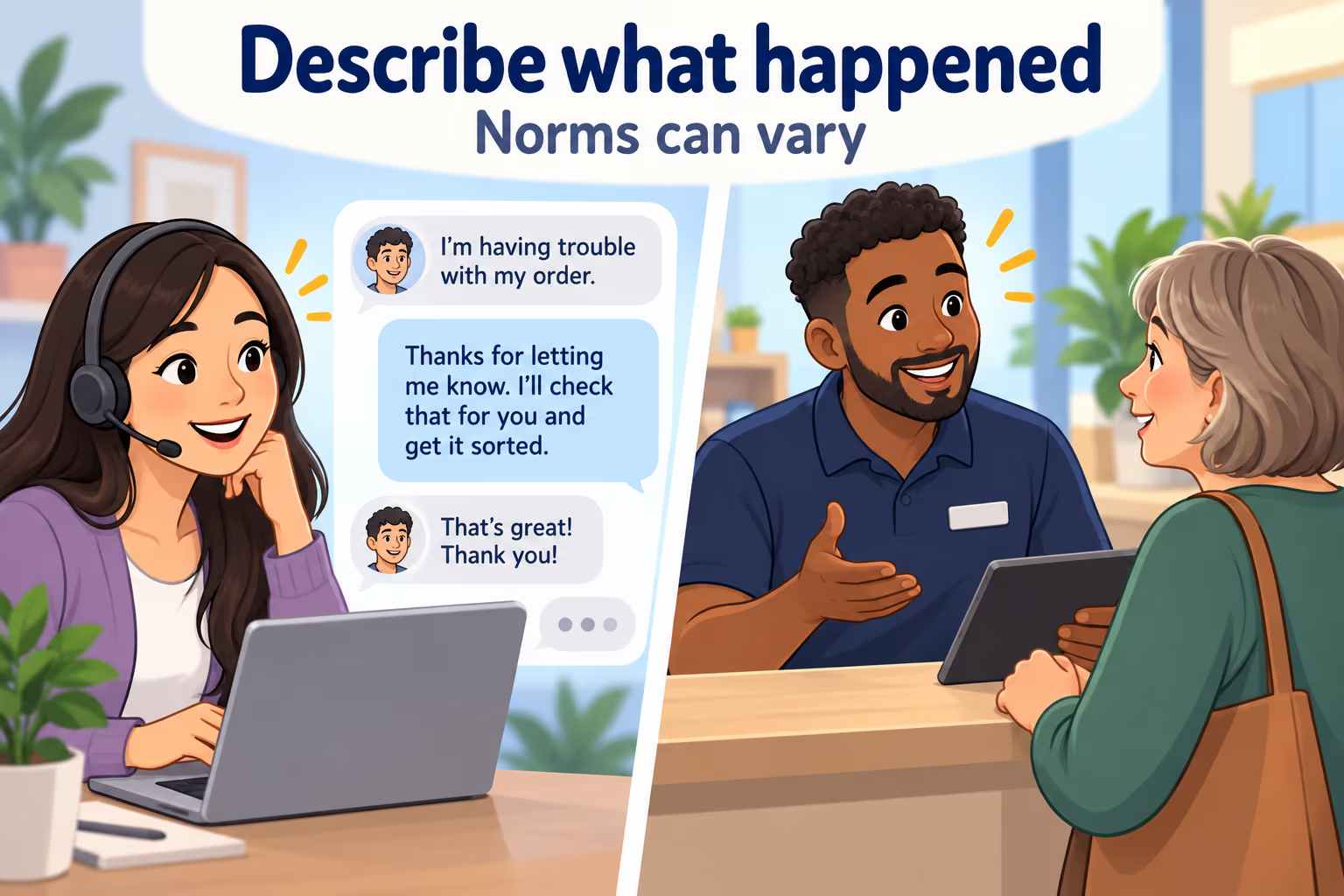
Cross-cultural service research also cautions against treating expectations as universal. A U.S.–Japan comparison reported differences in service behaviors and customer evaluations across those study settings, while a hospitality scenario study examined responses to communication accommodation. These studies can prompt careful questions about context; they do not justify predicting an individual’s preferences from cultural identity. Winsted, “The service experience in two cultures”; Wang, Miao, and Mattila, “Customer responses to intercultural communication accommodation strategies”.
Quick Review-Writing Checklist
- Name the interaction and the issue you contacted support about.
- Use an adjective that matches an observable action, response time, explanation, or result.
- Separate a representative’s communication from a policy or system outcome.
- Quote or paraphrase the relevant conduct when using a strong label such as “dismissive.”
- Limit broad claims to the evidence you have, and include what would have helped.
Are “attentive” and “responsive” the same?
No. Attentive describes noticing and engaging with the details of a request. Responsive usually describes replying or acting in a timely way. A person can be attentive but slow to reply, or quick to respond without fully addressing the issue.
Can customer service be polite but still poor?
Yes. Polite describes manner, while words such as incomplete, delayed, or unresolved can describe information, timing, or outcome. State each part separately for a fairer account.
When it comes to customer service, the right words can make all the difference. As someone who has had their fair share of experiences with various businesses, I understand the impact that exceptional customer service can have on a customer’s perception and loyalty. That’s why I want to share with you a comprehensive list of adjectives that can be used to describe outstanding customer service, along with real-life examples to illustrate their application.
In this article, I’ll be diving into the world of customer service adjectives, exploring words that go beyond the basic “good” or “bad” to truly capture the essence of a customer service experience. From “attentive” and “responsive” to “courteous” and “knowledgeable,” these adjectives will help you paint a vivid picture of the level of service provided. Whether you’re a business owner looking to enhance your customer experience or a consumer seeking to articulate your satisfaction or frustration, this guide will equip you with the right words to express your thoughts effectively.
So, without further ado, let’s delve into the world of adjectives for customer service and discover the power of descriptive language when it comes to shaping our perceptions and experiences.
How to Describe customer service? – Different Scenarios
When it comes to describing customer service, it’s important to tailor your description to the specific scenario you experienced. The way you describe customer service can vary depending on whether it was exceptional, mediocre, or poor. Let’s explore different scenarios and the appropriate adjectives to describe them:
- Exceptional Customer Service
When you receive truly exceptional customer service, it’s important to use words that convey the level of excellence. Here are some adjectives that can help you describe exceptional customer service: - Mediocre Customer Service
Mediocre customer service may not be terrible, but it also doesn’t leave a lasting positive impression. Here are some adjectives to describe a mediocre customer service experience: - Poor Customer Service
Unfortunately, there may be instances where you encounter poor customer service. It’s important to express your dissatisfaction using appropriate adjectives:
Describing Words for customer service in English
When describing customer service, it’s important to choose the right words that accurately convey the quality of the experience. Whether it’s outstanding, mediocre, or poor, the words we use play a crucial role in shaping our customers’ perception and loyalty. In this section, I’ll provide you with a range of adjectives to effectively describe different aspects of customer service. Let’s dive in!
Adjectives for Outstanding Customer Service
When customer service goes above and beyond expectations, it deserves to be recognized. Here are some adjectives to describe outstanding customer service:
- Exceptional: Providing service that stands out from the rest.
- Exemplary: Setting a positive example for others to follow.
- Attentive: Giving undivided attention to customers’ needs.
- Prompt: Responding quickly and efficiently to customer inquiries.
- Courteous: Showing politeness and respect towards customers.
- Empathetic: Understanding and addressing customers’ emotions and concerns.
- Knowledgeable: Possessing extensive understanding of products or services.
Adjectives for Mediocre Customer Service
Sometimes, customer service falls short of expectations. Here are some adjectives to describe mediocre customer service:
- Average: Providing service that meets the standard, but lacks any exceptional elements.
- Indifferent: Showing a lack of interest or concern towards customers’ needs.
- Inconsistent: Providing varying levels of service quality.
- Impersonal: Treating customers as mere transactions rather than individuals.
- Slow: Taking an extended amount of time to address customer inquiries or issues.
- Unresponsive: Failing to promptly acknowledge or assist customers.
Adjectives for Poor Customer Service
Unfortunately, there are times when the customer service experience is downright unsatisfactory. Here are some adjectives to describe poor customer service:
- Rude: Displaying disrespectful or offensive behavior towards customers.
- Incompetent: Lacking the knowledge or skills to effectively assist customers.
- Neglectful: Failing to address customers’ needs or concerns.
- Unhelpful: Providing little or no assistance to customers.
- Disorganized: Exhibiting a lack of structure or efficiency in handling customer interactions.
Adjectives for customer service
As an experienced blogger, I know that using the right words to describe customer service experiences is crucial. It helps convey our thoughts effectively and articulately, whether we’re business owners or consumers. In this section, I will provide you with a comprehensive list of adjectives for customer service, along with examples to help you describe your experiences. Let’s dive right in!
Positive Adjectives for Customer Service
When it comes to outstanding customer service, there are several adjectives that come to mind. Here are twelve positive adjectives you can use to describe exceptional customer service, along with example sentences:
| Adjective | Example Sentence |
|---|---|
| Attentive | The staff at the hotel was attentive and catered to my needs. |
| Friendly | The salesperson was friendly and made me feel welcome. |
| Efficient | They provided efficient service, saving me time and effort. |
| Knowledgeable | The customer service representative was knowledgeable and answered all my questions. |
| Responsive | The company’s response to my inquiry was prompt and professional. |
| Courteous | The restaurant staff was courteous and attentive throughout the evening. |
| Proactive | The company took a proactive approach in resolving my issue. |
| Empathetic | The customer support agent showed empathy and understood my frustration. |
| Accommodating | The hotel staff was accommodating and went above and beyond to make our stay comfortable. |
| Reliable | I appreciate the reliable service provided by the delivery company. |
| Polite | The sales associate was polite and treated me with respect. |
| Personalized | They offered personalized assistance, tailoring their service to my specific needs. |
Negative Adjectives for Customer Service
While we hope for exceptional customer service, sometimes we encounter experiences that fall short. Here are five negative adjectives you can use to describe poor customer service, along with example sentences:
| Adjective | Example Sentence |
|---|---|
| Unhelpful | The customer service representative was unhelpful and dismissive. |
| Rude | I was taken aback by the rude behavior of the cashier. |
| Inefficient | The company’s inefficient service caused unnecessary delays. |
| Disorganized | The lack of coordination among the staff resulted in a disorganized experience. |
| Indifferent | The employees displayed an indifferent attitude towards my concerns. |
Remember, using the right adjectives can effectively communicate your experiences with customer service. Whether it’s exceptional or poor, these words will help you articulate your thoughts clearly and confidently.
Synonyms and Antonyms with Example Sentences
Synonyms for customer service
When talking about customer service, there are several synonyms that can be used to describe a positive experience. These words capture the essence of excellent customer service and can help you clearly convey your thoughts. Here are some synonyms for customer service:
| Synonym | Definition | Example Sentence |
|---|---|---|
| Outstanding | Extremely good or impressive | I received outstanding customer service at that store. |
| Exceptional | Unusually good; outstanding | The staff provided exceptional customer service. |
| Superior | Higher in quality or value; excellent | The company’s superior customer service impressed me. |
| Remarkable | Worthy of attention; strikingly good | The level of service I received was remarkable. |
| Exemplary | Serving as a desirable model; commendable | The staff’s exemplary customer service was admirable. |
Using these synonyms, you can effectively express your positive experiences with customer service.
Antonyms for customer service
In contrast, there are also antonyms that describe poor customer service experiences. These words can be used to express dissatisfaction or disappointment with a company’s support or assistance. Here are some antonyms for customer service:
| Antonym | Definition | Example Sentence |
|---|---|---|
| Inadequate | Not sufficient or suitable | I was highly disappointed with the inadequate service. |
| Mediocre | Of only average quality; not very good | The mediocre customer service left a lot to be desired. |
| Subpar | Below average; not up to standards | The company’s subpar customer service was unacceptable. |
| Dismal | Depressing; dreary; causing gloom | I had a dismal experience with their customer service. |
| Horrible | Extremely bad or unpleasant | The horrible customer service ruined my day. |
These antonyms can help you express your negative experiences with customer service more effectively.
Remember, using the right adjectives when describing customer service experiences can help communicate your thoughts clearly and confidently, whether you are a business owner or a consumer.
Conclusion
In this article, I have discussed the importance of using the right adjectives to describe customer service experiences. By choosing the appropriate words, we can effectively communicate our thoughts and articulate our experiences with confidence. Throughout the article, I have provided a comprehensive list of positive and negative adjectives, along with example sentences, to help you describe exceptional and poor customer service.
Whether you are a business owner looking to improve your customer service or a consumer wanting to express your experiences, this guide will assist you in effectively conveying your thoughts. I have also included synonyms and antonyms for customer service, along with example sentences, to help you express positive and negative experiences more effectively.
Remember, the words we use have the power to shape perceptions and influence others. By carefully selecting our adjectives, we can create a more accurate and compelling description of customer service experiences. So, the next time you want to share your thoughts about customer service, choose your adjectives wisely and let your words make an impact.


