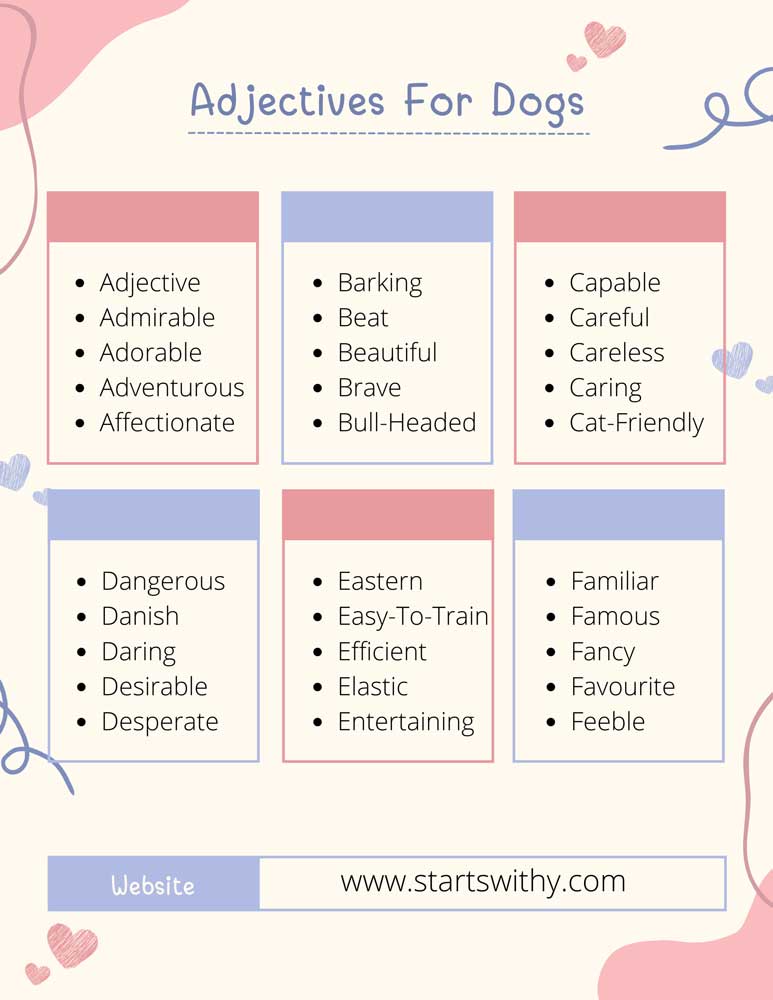
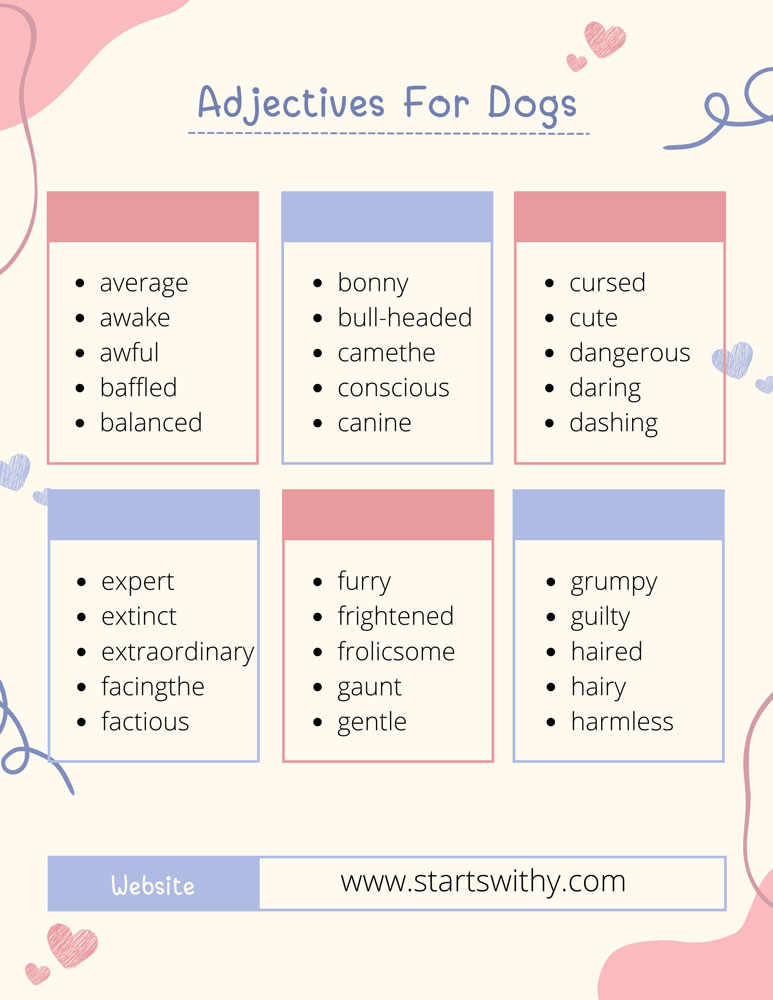
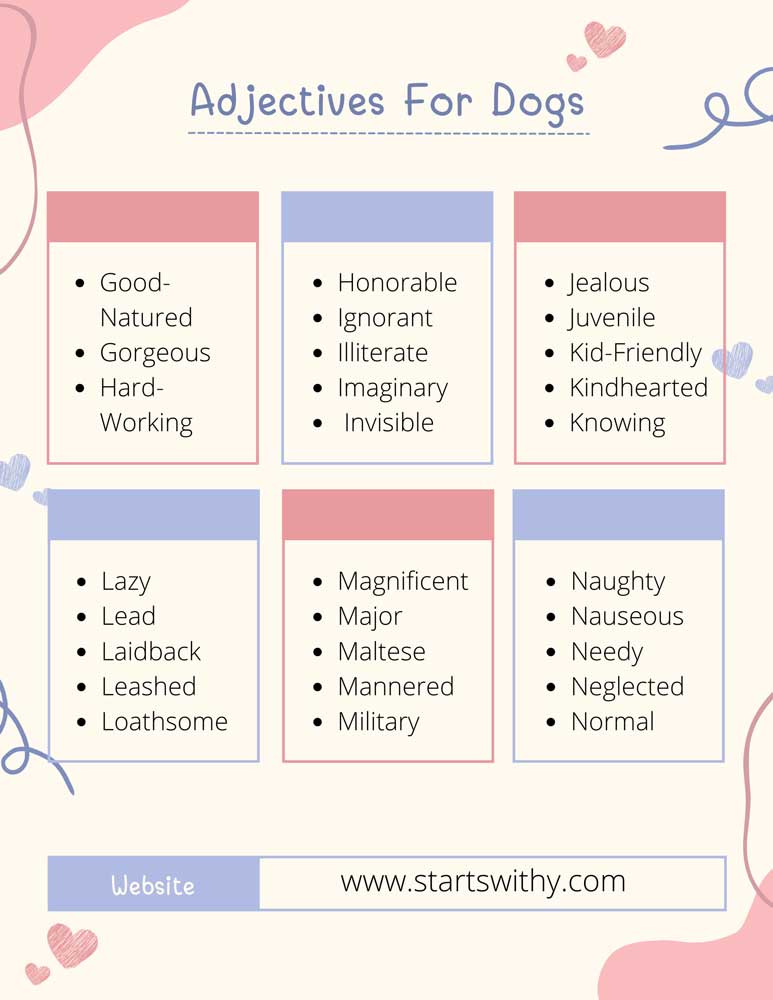
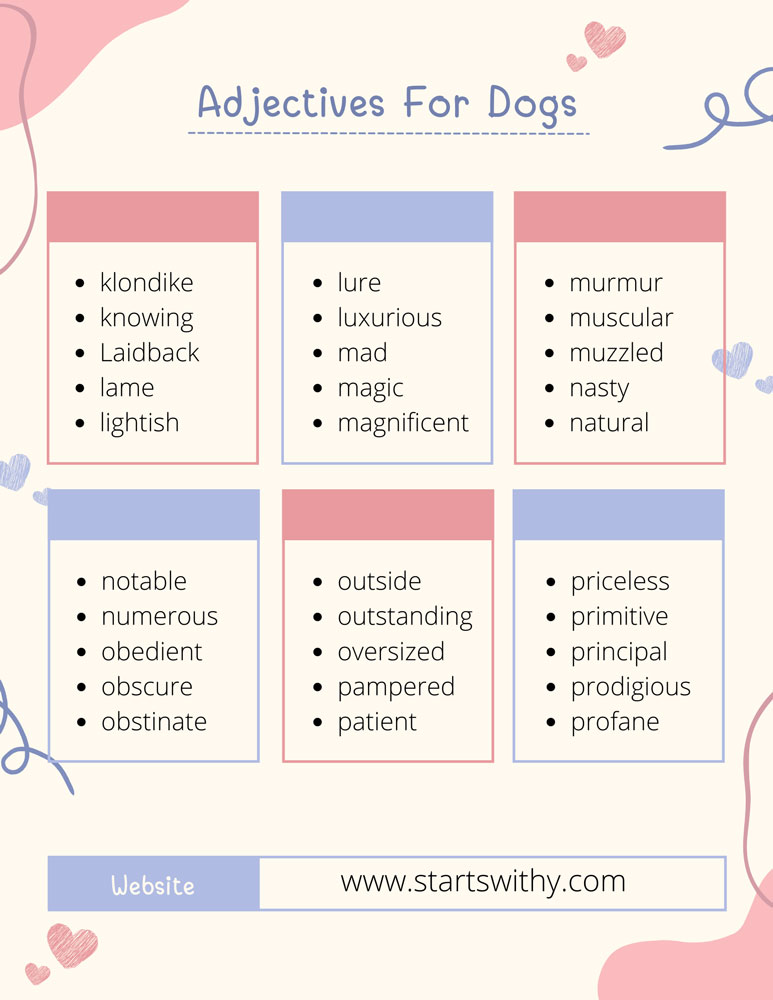
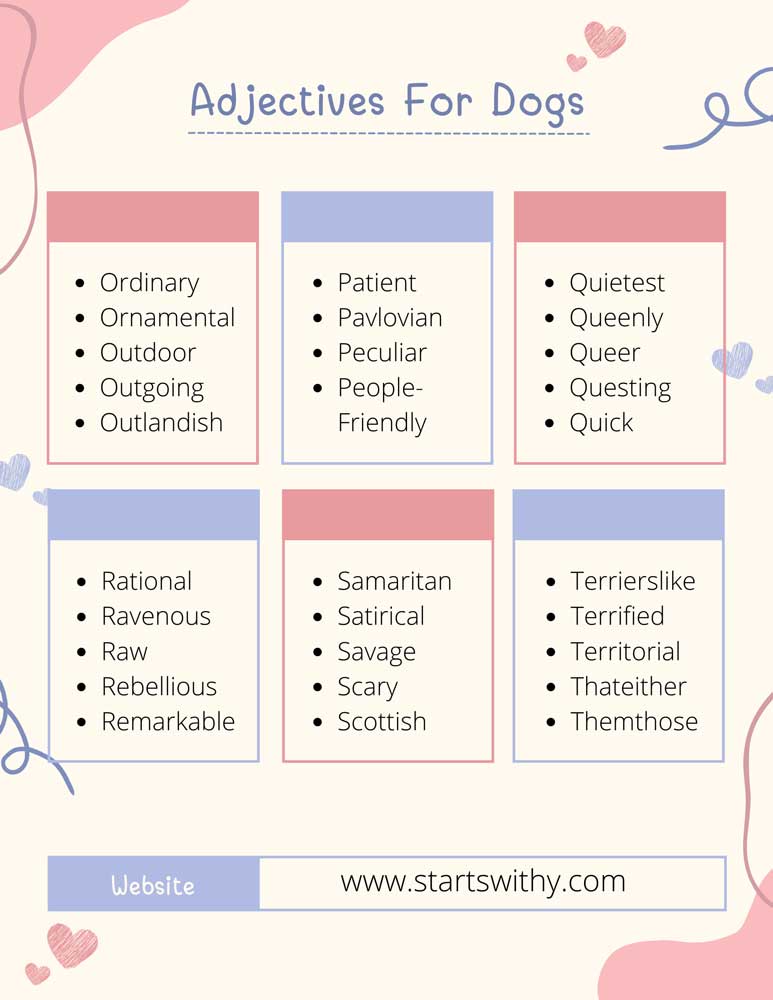
Quick answer: Adjectives for dogs describe a dog’s visible features, behavior in a particular situation, or a writer’s impression. The source’s three-column index has 312 rows and 936 cells, including 914 filled labels and 22 blanks. Some entries are misspelled or poor fits, so choose words that match observable details and context.
An adjective modifies or describes a noun; in “a playful dog,” playful describes the noun dog.
The original index has 312 rows, 936 cells, 914 distinct filled labels, and 22 blank cells.
“Aggresive” and “Agressive” are misspellings of aggressive; the original spellings remain in the source list.
“Adjective” names a word class, while “Afternoonthe” is malformed and has no reliable correction.
“Alaskan” can describe origin or association, but it does not predict a dog’s temperament.
What Does an Adjective Do in a Dog Sentence?
An adjective modifies a noun or pronoun by adding a quality or narrowing what the noun means. In “a curious dog,” curious modifies dog; the Cambridge Dictionary defines an adjective as a word that describes a noun or pronoun. A word’s grammatical job depends on its sentence: the source cell “Adjective” names the word class rather than describing a dog.
Which Kind of Dog Description Do You Need?
Choose a word based on the detail you want to express. The categories below help separate visible features from behavior, temporary states, origin, and opinion.
Description type
Examples in the source list
Use the word when
Appearance
fluffy, spotted, tiny
The feature is visible and relevant to the sentence.
Activity or interaction
active, playful, friendly
You can point to behavior across a relevant situation; avoid turning one event into a permanent trait.
State or impression
calm, curious, anxious
The description fits the context, and you qualify an impression when it concerns one moment.
Origin or association
Alaskan
Geography or association matters; the word says nothing by itself about personality.
Figurative or opinion-based
aristocratic, abominable
You intend a literary or subjective effect, not a neutral behavior description.
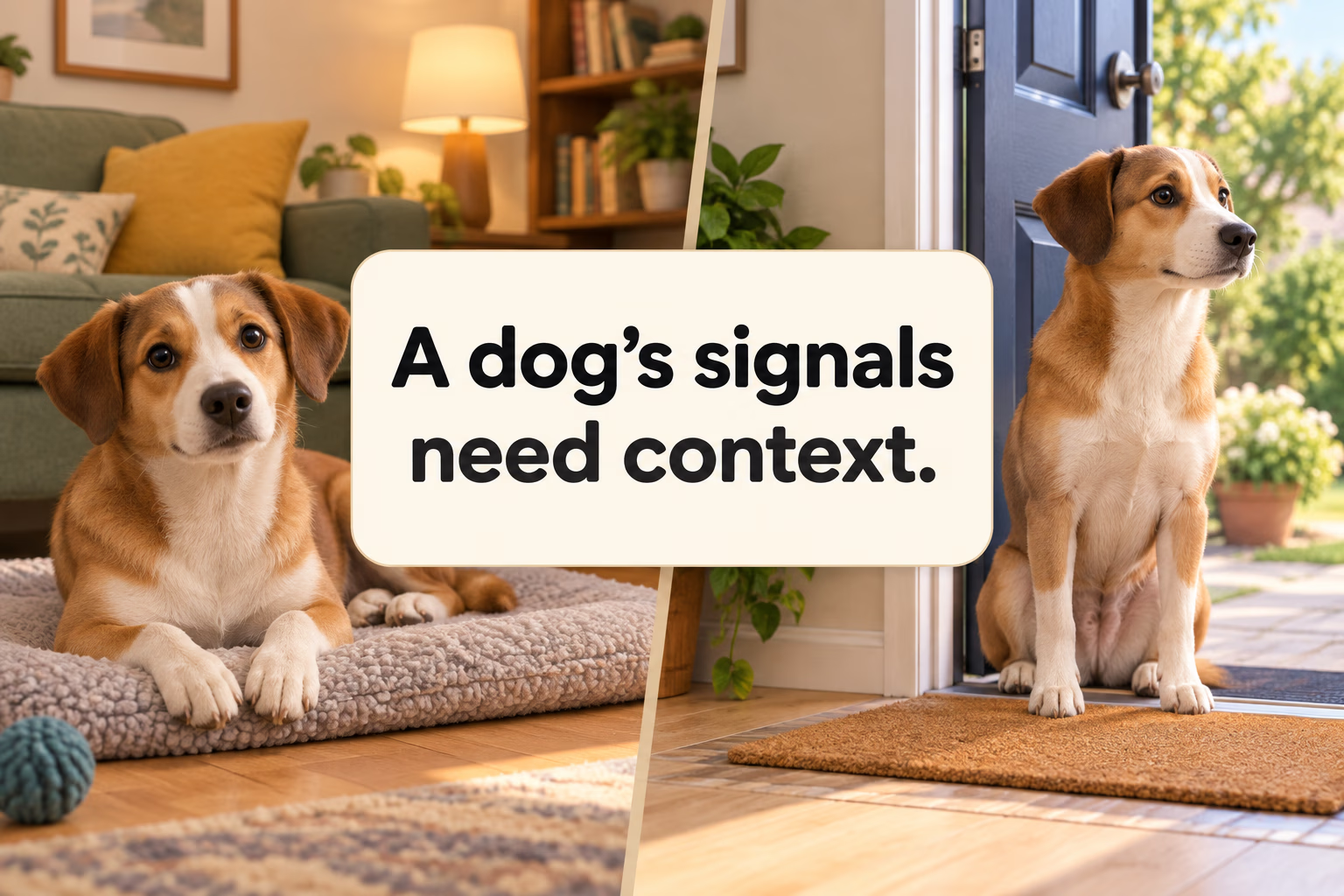
A dog’s signals need context; one cue does not tell the whole story.
How Can You Describe a Dog Without Guessing?
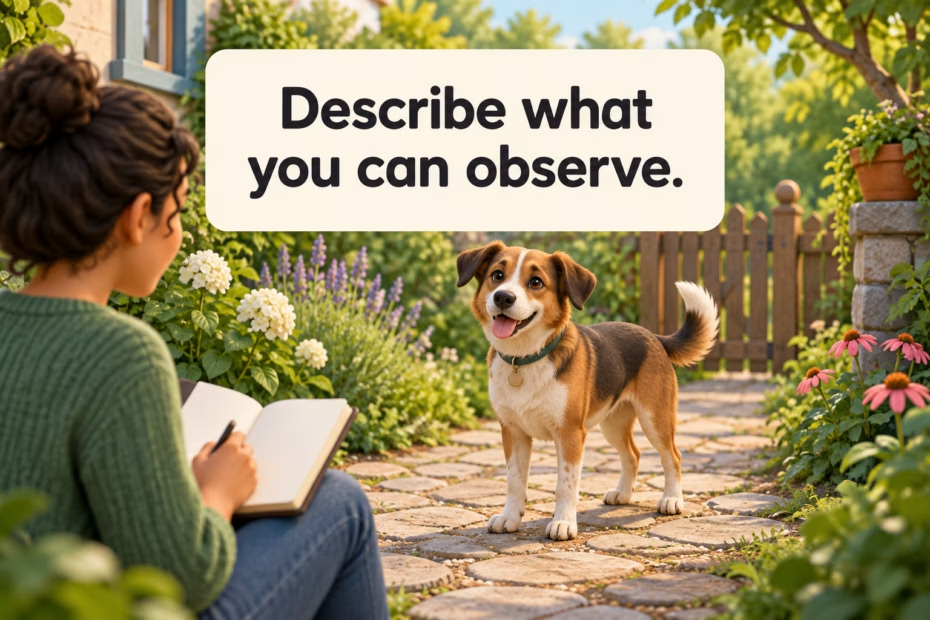
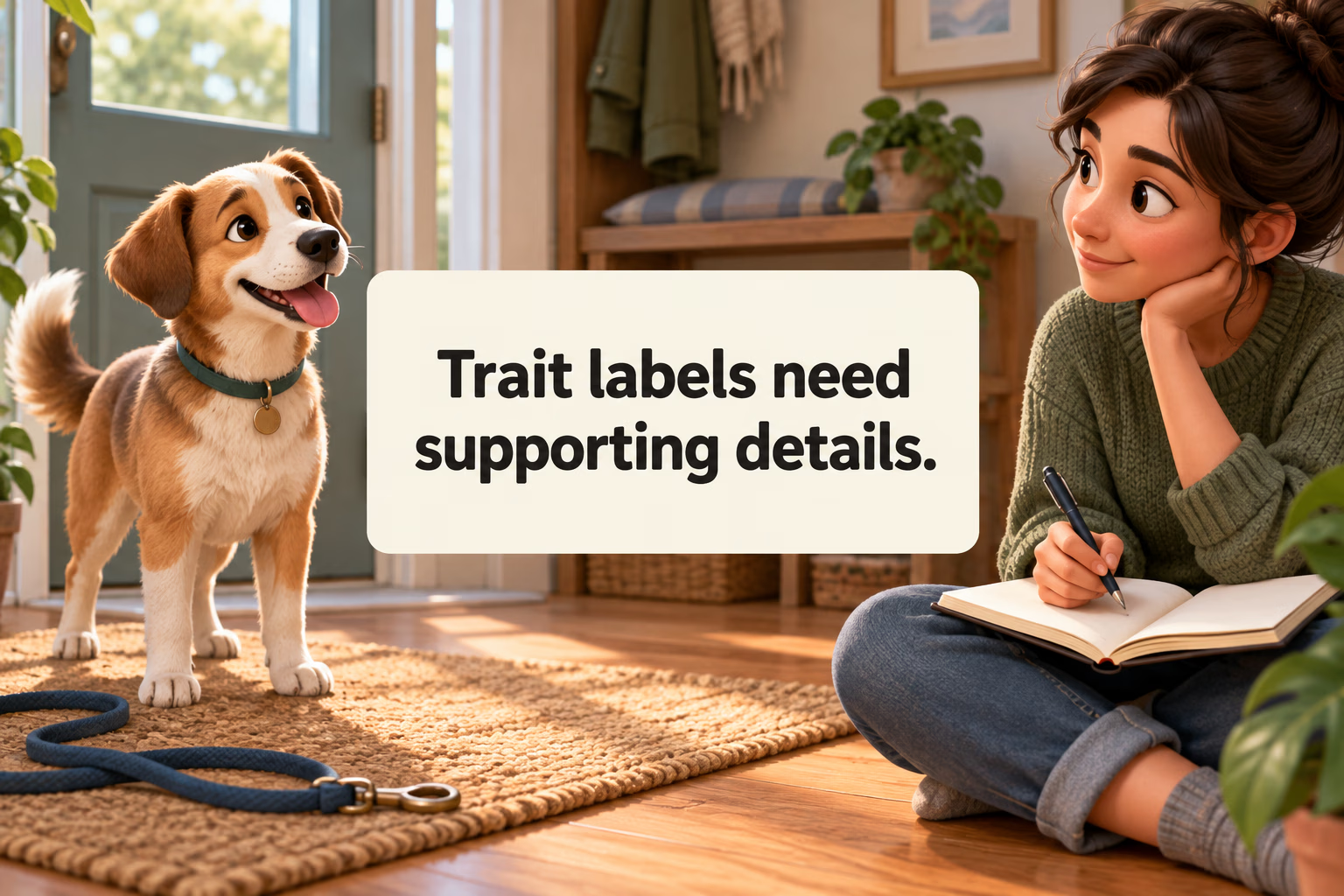
Start with an observable action, add the situation, and use a broader trait word only when it helps. A specific account gives readers more information than a label by itself.
Observable description
Broad label
Why the detail helps
The dog barked twice when the doorbell rang.
“The dog is aggressive.”
The first sentence records an action and its setting without guessing at a lasting trait.
The dog sniffed a new toy, then stepped away.
“The dog is curious.”
The action is observable; “curious” is an interpretation that may fit, but it is less specific.
The dog rested on a mat while the room was quiet.
“The dog is always calm.”
A single quiet moment does not establish how the dog behaves in other situations.
Record what happened: note an action or visible feature without adding a motive.
Add the setting: say when or around what the behavior occurred.
Choose a fitting adjective: use playful for observed play or spotted for a visible coat pattern.
Keep conclusions modest: do not treat one moment, a breed, or a geographic word as proof of temperament.
If a dog’s behavior concerns you, use the word list as vocabulary help only; ask a veterinarian or qualified behavior professional for individualized guidance. The ASPCA recommends professional help for aggressive behavior rather than relying on a label alone.
Describe the action and setting before summarizing it with a trait word.
Which Source Entries Need Correction or Caution?
Several table entries need a note before you reuse them. The original cells stay unchanged below, while this guide identifies the malformed terms and separates origin or opinion from a dog’s observable qualities.
Original entry
Clarification
Adjective
This is the name of a part of speech, not a dog quality in this standalone list entry.
Afternoonthe
This appears to be a malformed or merged string. Its intended wording is uncertain, so do not silently guess a correction.
This can describe origin or association. It is not a temperament label and should not be used to infer how a dog behaves.
Abominable / aristocratic
These can work as expressive or figurative writing, but they express an opinion rather than a neutral, observable feature.
Example words followed by names such as Angel, Ace, or Sherlock
The original five bullets shift from describing dogs to suggesting pet names. A name can use the same word as an adjective, but a name like Sherlock does not describe the dog’s behavior or appearance.
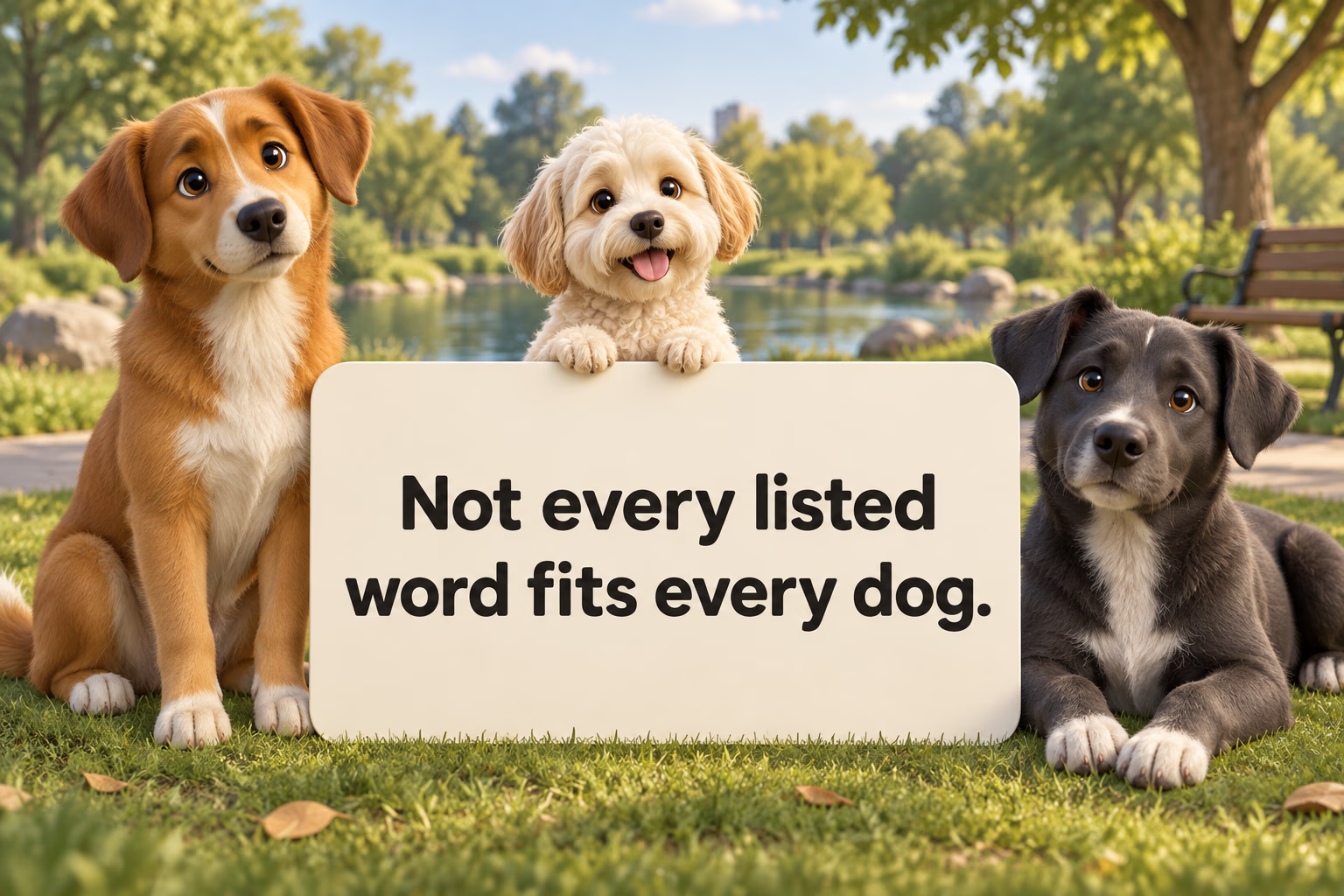
Use the source list as a word bank, then select a word that fits the individual dog and sentence.
How Many Filled Labels Are in the Original Index?
The original three-column index has 312 rows and 936 cells. A cell-by-cell count finds 914 nonempty labels and 22 blank cells; the filled labels are distinct when compared without case. The count supports “900+” as an index size, but it is not a claim that all 914 labels are verified, useful adjectives for dogs.
The five original list examples and all 312 table rows remain below exactly as supplied. Treat the entries as a broad vocabulary bank: check the grammar, spelling, meaning, and context before using a word for a real dog.
A new generated AVIF is used for the featured image.
Original Article and Full Alphabetized Word List
The full source article follows unchanged, including its paragraphs, five list items, all tables and blank cells, and five original in-body images. The notes above clarify how to read the list without rewriting the source text.
Dogs are often called man’s best friend, and for good reason. They are loyal, loving, and make great companions. But did you know that there are different types of dogs, each with their own unique personality?
In this article, we’ll explore some of the different adjectives used to describe dogs. From big to small, playful to calm, there’s a dog out there for everyone. So what are you waiting for? Find your perfect furry friend today!
Adjectives For Dogs
Dogs are amazing creatures that bring joy and happiness into our lives. They provide us with unconditional love and companionship that we can’t get from any other animal. As dog owners, we want to give them the best life possible, and that includes giving them a name that suits their personality perfectly.
When it comes to choosing a name for your dog, the sky’s the limit. You can go with a traditional name like Fido or Rover, or you can get creative and choose a name that reflects your dog’s personality. If you’re looking for some inspiration, here are a few adjectives that are perfect for describing dogs:
Affectionate: Dogs are known for their affectionate nature. They show their love for their humans through kisses, cuddles, and wagging tails. If you’re looking for a name that reflects your dog’s affectionate personality, consider names like Angel, Babe, or Lovey.
Active: Dogs are active creatures that need plenty of exercise. If you have an active dog, consider names like Ace, Jogger, or Runner.
Curious: Dogs are curious by nature. They’re always exploring their surroundings and sniffing everything they can get their nose on. If you have a curious dog, consider names like Sherlock, Snoopy, or Watson.
Friendly: Dogs are known for being friendly creatures. They love meeting new people and playing with other dogs. If you have a friendly dog, consider names like Buddy, Daisy, or Lulu.
Loyal: Dogs are incredibly loyal creatures. They stick by their humans through thick and thin. If you’re looking for a name that reflects your dog’s loyal personality, consider names like Faithful, Guardian, or Loyal.
No matter what adjectives you choose to describe your dog, the most important thing is that you choose a name that you and your dog will love.
A
Abject
Abominable
Accursed
Active
Actual
Adjective
Admirable
Admired
Adolescent
Adorable
Adventurous
Affectionate
African
Afternoonthe
Aggresive
Aggressive
Agile
Agreeable
Agressive
Alaskan
Albanian
Alert
Alive
Alleged
Allied
Amazing
Amiable
Amusing
Ancient
Angered
Angry
Anthropomorphic
Anti
Anxious
Apprehensive
Aristocratic
Artless
Asleep
At-The-Ready
Athletic
Atopic
Attractive
Audible
Australian
Avenging
Average
Awake
Awful
B
Badput
Baffled
Balanced
Bally
Barking
Basic
Beat
Beauful
Beautiful
Behavioral
Belgian
Believetreacherous
Beloved
Best
Bewildered
Big
Bird
Black
Blind
Bloodthirsty
Blue
Bluff
Bodied
Bolder
Boned
Bonny
Brainthe
Brave
Bray
Bred
Breed
Brief
Bright
Bright-Eyed
Brindle
Bristlesalso
British
Brown
Bull-Headed
C
Calm
Camethe
Canadian
Canine
Cantankerous
Capable
Careful
Careless
Caring
Casual
Cat-Friendly
Celebrated
Certain
Chained
Characterthe
Cheap
Cheeky
Cheerful
Chill
Chinese
Chiny
Christian
Chubby
Civil
Civilized
Classic
Classy
Clean
Clear
Clever
Close
Clumsy
Coated
Cobby
Cocky
Coloured
Comfortable
Comic
Commercial
Commonplace
Compact
Companionable
Competitive
Confounded
Conscious
Constantinople
Continual
Contrary
Conventional
Cornered
Correct
Country
Coupled
Courageous
Cowardly
Crafty
Crate-Trained
Crazy
Crazy Cute
Crippled
Cross
Crucifying
Cruel
Cuddly
Cunning
Cur
Curious
Curled
Curled Up
Curly
Cursed
Cute
Cutest
D
Dangdest
Dangerous
Danish
Daring
Dashing
Dead
Deaf
Dear
Decent
Decrepit
Dedicated
Defiant
Delicate
Delicious
Delighted
Delightful
Demanding
Dependent
Depict
Desirable
Desolate
Desperate
Determined
Detest
Devoted
Dignified
Dingy
Dirty
Disabled
Discriminating
Disgracea
Dismal
Dismayed
Disobedient
Disrespectable
Distant
Distinctive
Distressed
Docked
Dogsof
Dogssleepy
Dogthy
Dogwild
Domestic
Dominant
Double
Doubtfulthe
Downward
Dreadful
Dreary
Dripping
Drive
Drunken
Dull
Dumb
Dyed
E
Eager
Eager-To-Please
Eastern
Easy
Easy-To-Train
Efficient
Elastic
Elderly
Elegant
Emaciated
Endless
Energetic
English
Enhanced
Enormous
Enraged
Entertaining
Entire
Epic
Eskimo
Esquimaux
Eurasian
European
Exasperating
Excellent
Excited
Exhausted
Exotic
Expectant
Expensive
Expert
Extinct
Extraordinary
Eyed
F
Faced
Facingthe
Factious
Faithful
Familiar
Family-Friendly
Famous
Fancy
Fast
Fastidious
Fat
Fatal
Fatherth
Favorite
Favour
Favourite
Feeble
Fellow
Female
Feral
Ferocious
Festive
Feudal
Fierce
Fiercely Loyal
Fiery
Filthy
Final
Fine
Finer
Finished
Fit
Fixed
Flat
Flighty
Fluffy
Focused
Fond
Foolish
Foreign
Foremost
Forlorn
Formidable
Foster
Four-Legged
Fourth
Frantic
French
Frenzied
Fresh
Friendly
Frightened
Frisky
Frolicsome
Frosty
Fuzzy
Fun
Funny
Furious
Furry
Future
G
Gaunt
Gay
Gentle
Gentlemanly
German
Giant
Gigantic
Golden
Good
Good-Natured
Goofy
Gorgeous
Graceful
Grand
Grateful
Gray
Greedy
Green
Greyish
Grim
Grizzly
Grumpy
Guilty
H
Haired
Hairy
Half-Obedient
Handier
Handsome
Happy
Hard
Hard-Working
Hardy
Harmless
Hateful
Healthy
Hearted
Heartwarming
Heavy
Hebrew
Heretic
Heroic
Heterozygous
Hideous
Hilarious
Hoarse
Holy
Homeless
Homely
Honest
Honorable
Hopeful
Hossa
Hot
Housebroken
Householdersome
Huge
Huggable
Human
Humourous
Hung
Hungarian
Hungry
Hunted
Husky
Hybrid
Hyper
Hyperactive
Hypoallergenic
I
Iconic
Ideal
Idle
Idolatrous
Ignorant
Illiterate
Imaginary
Immense
Imperial
In Good Health
Incoming
Incorrect
Independent
Indian
Individual
Indoor
Inexperienced
Infernal
Influential
Infuriated
Injured
Innocent
Innumerable
Inquisitive
Inside
Insolent
Instinctual
Insubordinate
Intact
Intelligent
Interesting
Invisible
Irish
Irregular
Irreverent
Italian
J | K
Jackal
Japanese
Jealous
Jolly
Joyful
Joyous
Juvenile
Keen
Kid-Friendly
Kind
Kindhearted
Kingly
Klondike
Knowing
L
Laidback
Lame
Large
Lathy
Lazy
Lead
Lean
Leashed
Legged
Lifeless
Light
Lighthearted
Lightish
Likable
Limbed
Lithe
Little
Live
Lively
Loathsome
Lonely
Long-Haired
Loose
Lost
Lousy
Lovable
Loved
Lovely
Loving
Loyal
Lucky
Lure
Luxurious
M
Mad
Magic
Magnanimous
Magnificent
Major
Male
Maltese
Mangy
Manly
Mannered
Marked
Marvelous
Massive
Masterless
Mature
Mean
Meatless
Mechanical
Medium
Mellow
Mere
Merry
Mexican
Middle
Mighty
Military
Miniature
Mischievous
Miserable
Missing
Mixed
Mixed Breed
Mlecca
Mock
Modern
Molossian
Monstrous
Moody
Moorish
Morn
Mouthed
Multi
Multiple
Municipal
Murderous
Murmur
Muscular
Mute
Muzzled
Mysterious
N
Nasty
Native
Natural
Natured
Naughty
Nauseous
Needy
Neglected
Negro
Nervous
Neutered
Newfoundland
Nice
Numerous
Noble
Noisy
Normal
Northern
Nosed
Notable
Noted
O
Obedient
Obscure
Obstinate
Occasional
Odd
Offending
Official
Ordinary
Original
Ornamental
Otherthe
Outdoor
Outgoing
Outlandish
Outmost
Outrageous
Outside
Outstanding
Oversized
P
Pampered
Patient
Pavlovian
Paynim
Peculiar
Pekinese
Pekingese
People-Friendly
Perfect
Personable
Pet
Pied
Pious
Pitiful
Plain
Playful
Pleasant
Pleased
Plebeian
Plucky
Plump
Pomeranian
Ponderable
Pony
Poodle
Poor
Popular
Portly
Potential
Potty-Trained
Powerful
Prairie
Precious
Predatory
Pregnant
Premium
Prepared
Presumptuous
Pretty
Priceless
Primitive
Principal
Problem-Solving
Prodigious
Profane
Profligate
Progressive
Prominent
Promising
Protective
Proud
Proverbial
Prussian
Psychiatric
Psychopathic
Puppy
Pure
Purebred
Puzzled
Pyrenean
Q
Quarrelsome
Queenly
Queer
Questing
Quick
Quiet
Quietest
Quirky
R
Rabid
Ragged
Rainy
Rambunctious
Rare
Rascal
Rash
Rational
Ravenous
Raw
Ready-To-Please
Real
Rebel
Rebellious
Reckless
Red
Reddish
Regal
Regular
Relaxed
Remarkable
Rescued
Resident
Respectable
Responsive
Restive
Restless
Rich
Ridiculous
Rightthe
Rival
Roasted
Robotic
Robust
Romantic
Rotten
Rough
Round
Rounded
Rowdy
Royal
Rude
Rufous
Runaway
Russian
S
Sable
Sacred
Sad
Sagacious
Sallow
Samaritan
Satirical
Savage
Scared
Scary
Scorned
Scottish
Scrawny
Scruffy
Seasoned
Selfish
Senior
Sensible
Sensitive
Severe
Shabby
Shadowy
Shaggy
Shallow
Sheep
Shepherd
Shiny
Shipthe
Shooter
Short
Short-Haired
Shy
Siberian
Sick
Sickly
Sightthose
Significant
Silent
Silly
Single
Sized
Skilled
Skinned
Skinny
Sled
Sleek
Sleeping
Sleepy
Sly
Smart
Smelly
Smitten
Smooth
Snails
Sneaky
Snuggly
Sober
Sociable
Socialized
Soft
Solemn
Solitary
Somali
Sorry
Sound
Sour
Spanish
Spayed
Specialized
Speckled
Spectacular
Spirited
Splendid
Spoiled
Spoiled Rotten
Sporty
Spotted
Sprightly
Spry
Square
Stanch
Starving
Stately
Steady
Stout
Strange
Stray
Strong
Structured
Stubborn
Stuffed
Stupendous
Stupidest
Sturdy
Subdued
Submissive
Successful
Sundry
Super
Superannuated
Superior
Sure-Footed
Surly
Sweet
Sweetest
Swell
Swift
Swiss
Symmetrical
T
Tailless
Tame
Tank
Teased
Temperamental
Terrain
Terrible
Terrier
Terrierslike
Terrified
Territorial
Thateither
Thee
Themthose
Therapeutic
Thet
Thirsty
Thorough
Thoughtful
Timid
Tiny
Tired
Tiresome
Toothless
Tormented
Tortured
Totemic
Tough
Traditional
Tragic
Trainable
Trained
Treacherous
Treasonable
Troublesome
Trustworthy
Trusty
Typical
U
Ugly
Unangelic
Uncanny
Uncertain
Uncivilised
Unclaimed
Unconscionable
Undemonstrative
Undersized
Undesirable
Undisputed
Undistinguishable
Undutiful
Uneasy
Unfortunate
Unfriendly
Ungainly
Ungrateful
Unhappy
Unholy
Uninterested
Unique
Unleashed
Unmanageable
Unmannerly
Unmuzzled
Unoccupied
Unofficial
Unowned
Unprincipled
Unprovoked
Unregistered
Unrelated
Unresponsive
Unruly
Unseemly
Unsociable
Unspeakable
Unsuspecting
Unthankful
Untrainable
Untravelled
Untried
Unvarying
Unwanted
Unwary
Up
Upper
Upward
Useful
Useless
Usual
V
Valiant
Valuable
Veriest
Vicious
Vigilant
Vile
Villainous
Viral
Vocal
Vulgar
W
Wagging
Wakeful
Wallachian
Wandering
War
Warm
Washed
Watch
Watchful
Weak
Weary
Weighty
Well-Bred
Well-Trained
Wet
Wheezy
Wicked
Wide
Wild
Willing
Willing-To-Learn
Winded
Winding
Winterhappy
Wise
Wolfish
Wonderful
Wooden
Woolly
Working
Worrying
Worthless
Wretched
Wrong
Wunnerful
Yellow
Yere
Yoong
Yore
Zippy
Final verdict
In conclusion, there are an endless amount of adjectives that can be used to describe dogs. They can be loyal, friendly, playful, and obedient, among other things. No matter what adjective you choose, dogs will always be man’s best friend. It’s no wonder that they are one of the most popular pets in the world.
Frequently Asked Questions
Are all 900+ words good adjectives for dogs?
No. The original index has 914 filled labels, but it includes misspellings, a word-class name, origin terms, figurative words, and entries that may not suit an individual dog. Check a word’s grammar and meaning, then use it only when it fits the detail and situation you want to describe.
How many nonblank labels does the source table contain?
The source grid has 936 cells across 312 rows and three columns. Twenty-two cells are blank, leaving 914 filled labels, and none of the nonblank labels repeats when capitalization is ignored. That count describes the source index; it does not certify every label as useful or accurate for describing a dog.
Does a wagging tail mean that a dog is friendly?
Not by itself. The ASPCA explains that a wagging tail can appear alongside other body signals and does not always mean friendliness. Read the dog’s full posture and the situation, and give an unfamiliar dog space if its behavior makes you uncertain. A vocabulary list cannot assess an individual dog’s safety or mood.
Is “aggressive” the right word for every dog that barks?
No. Barking is an observable action, while “aggressive” is a broader and stronger description. A clear account says what happened and when—for example, “the dog barked twice when the doorbell rang.” If behavior concerns you, ask a veterinarian or qualified behavior professional rather than relying on one word.
How should I handle “Afternoonthe” in the original list?
Treat “Afternoonthe” as a malformed source entry, not as a verified adjective. Its intended correction is unclear from the cell alone, so the source spelling remains unchanged and this guide flags it rather than inventing a replacement. Use a standard dictionary to check any word you plan to reuse.
Robin founded StartsWithy in 2022 to make English words easier to understand and use. Robin oversees our 30,000+ guides, checks meanings and grammar against trusted dictionaries such as Cambridge, Oxford Learner’s and Collins, and is accountable for every correction we make.