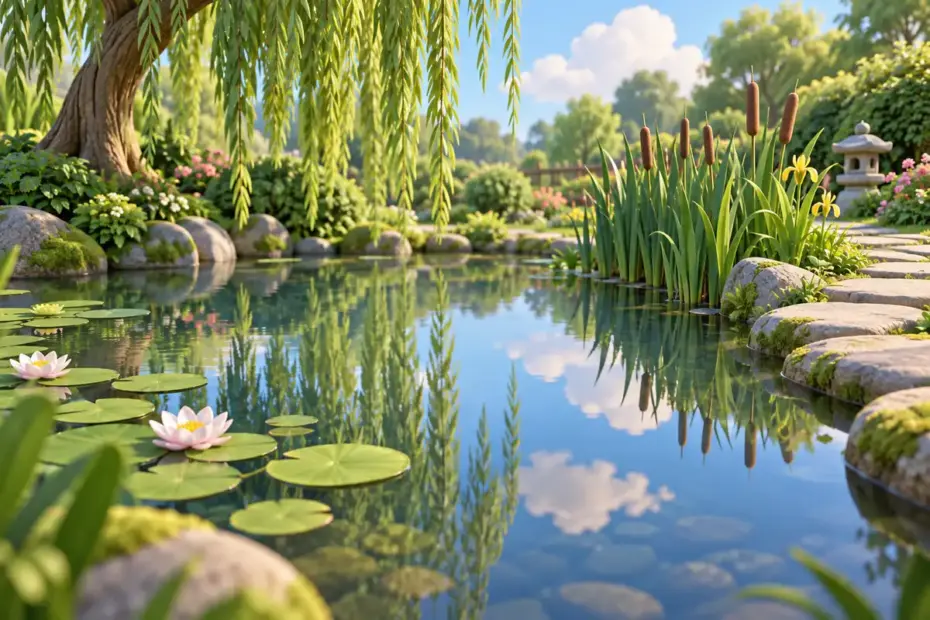
Good adjectives for a pond describe what can be seen, heard, or inferred from the scene: reflective water, reed-fringed banks, or a placid surface. Cambridge Dictionary defines a pond as an area of water smaller than a lake, often artificially made. Choose words for the specific pond rather than treating every pond as pristine or still.
At a glance: adjectives for ponds
- Surface: still, rippling, glassy, reflective.
- Water: clear, murky, shallow, cold.
- Edges: reed-fringed, muddy, rocky, overgrown.
- Mood: serene, secluded, gloomy, or lively.
- Pair a mood word with a visible detail to make the description concrete.
Which adjectives describe a pond’s surface?
Use still or placid when the water is calm, rippling when wind or movement disturbs it, and reflective when it mirrors nearby objects. These words describe different visible conditions, so choose the one that matches the scene.
| Adjective | Best used when | Example |
|---|---|---|
| glassy | The surface appears smooth and mirrorlike | The glassy pond held the reflection of the moon. |
| rippling | Small waves cross the surface | A breeze made the pond rippling beneath the reeds. |
| placid | The water seems calm and undisturbed | The placid pond barely moved at dawn. |
| murky | The water looks cloudy or difficult to see through | The murky pond hid the stones below the surface. |
How can you describe pond plants and edges?
Choose a compound adjective that names a visible feature: reed-fringed, lily-covered, muddy-banked, or tree-lined. A pond with reeds, lilies, or other wetland plants can support a range of wildlife, but the exact plants and animals vary by location and season.
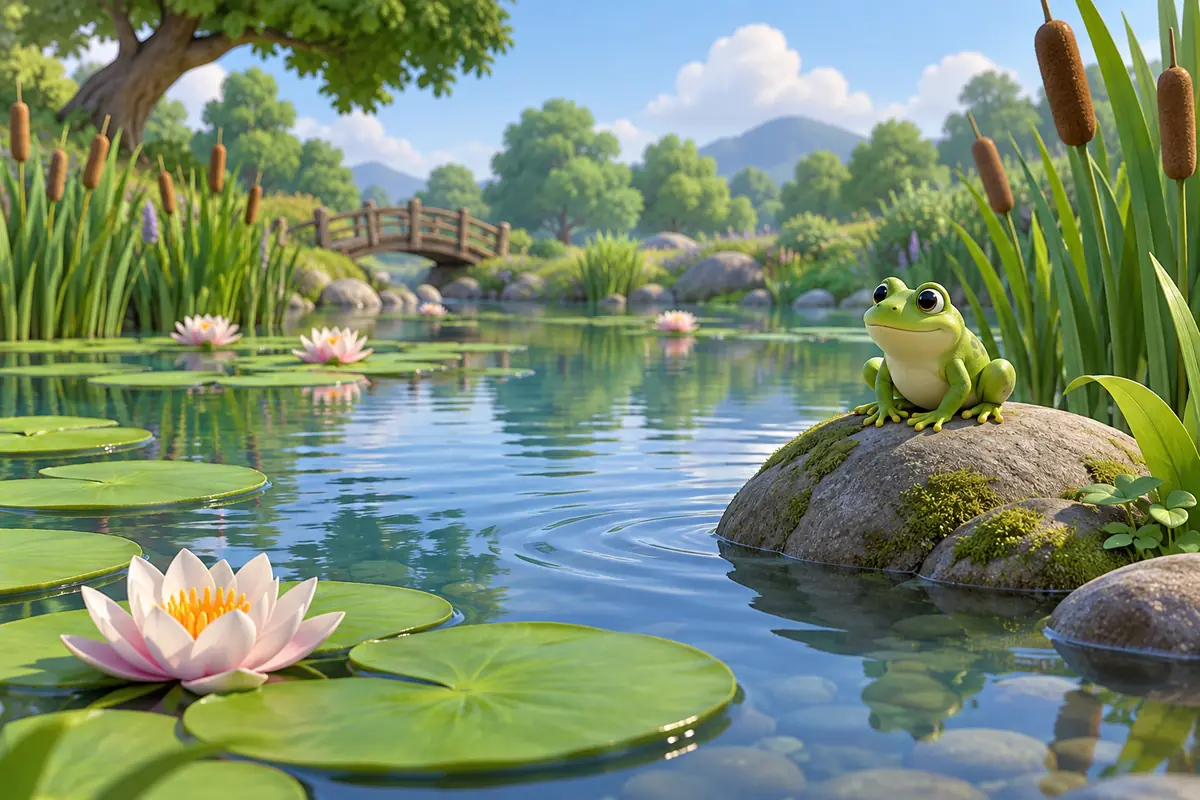
- Reed-fringed: Reeds grew along the reed-fringed pond bank.
- Leaf-strewn: A leaf-strewn pond reflected the branches overhead.
- Overgrown: An overgrown pond was partly hidden by tall grass.
- Rocky: The rocky pond edge made a clear boundary with the path.
How do you describe a pond’s mood?
Use serene, secluded, or peaceful for a quiet scene; choose gloomy for dim light or an uneasy mood; use lively when movement or sound fills the setting. A mood adjective is an interpretation, so support it with concrete details such as bird calls, shade, or wind.

How do you avoid vague pond descriptions?
Replace broad praise such as “a beautiful pond” with the feature that creates the impression: “a reflective pond bordered by yellow reeds.” Cambridge notes that a pond may be natural or artificial, so include a detail such as a stone rim, garden path, or marshy bank when it matters to the scene.
Frequently asked questions
What is a good adjective for a calm pond?
Placid, still, and serene can fit a calm pond. Placid and still focus on the water; serene describes the overall feeling of the setting.
What is the opposite of a still pond?
Depending on the water, try rippling, choppy, or turbulent. A pond may show small ripples without being turbulent, so select a word that matches how much the surface moves.
Can “murky” describe a pond?
Yes. Murky describes water that looks cloudy or difficult to see through. It is an appearance word and by itself does not identify why the water looks that way.
More adjectives and examples for ponds
When it comes to describing a pond, there’s a whole world of adjectives to dive into. From serene and tranquil to vibrant and teeming, the words we use to paint a picture of a pond can truly bring it to life. In this article, I’ll be exploring a variety of adjectives that capture the essence of a pond, along with examples to illustrate their meaning. Whether you’re a nature enthusiast, a writer in need of descriptive words, or simply curious about the beauty of ponds, this article will provide you with a rich vocabulary to enhance your descriptions. So, let’s take a deep breath and immerse ourselves in the captivating world of adjectives for ponds.
A pond can be a place of enchantment, with its shimmering surface and hidden depths. It’s a habitat for a diverse range of flora and fauna, each contributing to its unique character. From the gentle ripples caused by a passing breeze to the symphony of croaking frogs at dusk, the pond is a sensory wonderland. In this article, I’ll be sharing adjectives that capture the various aspects of a pond, from its physical attributes to the emotions it evokes. So, whether you’re looking to create vivid descriptions in your writing or simply appreciate the beauty of these aquatic ecosystems, this article will be your guide to exploring the enchanting world of adjectives for ponds.
How to Describe pond? – Different Scenarios
Describing a pond can be a delightful task, as it allows you to paint a vivid picture in the reader’s mind. Whether you are a nature enthusiast or a writer looking to enhance your descriptions, here are some different scenarios that can help you describe a pond effectively:
1. Tranquil Pond:
A tranquil pond exudes peace and serenity. When describing a tranquil pond, focus on using words that evoke a sense of calmness and tranquility. Here are some adjectives to consider:
- Serene
- Calm
- Quiet
- Still
- Reflective
For example:
“The tranquil pond lay undisturbed, its surface mirroring the surrounding trees. It was a serene oasis of calmness amidst the bustling city.”
2. Vibrant Pond:
Ponds can also be vibrant and teeming with life. Highlight the diversity of flora and fauna that thrive in these ecosystems. Use descriptive words that convey energy and liveliness. Consider these adjectives:
- Lush
- Colorful
- Bustling
- Animated
- Bountiful
For example:
“The vibrant pond teemed with life. Its lush vegetation and colorful flowers attracted a wide array of birds, butterflies, and dragonflies. It was a bustling haven of activity.”
3. Mysterious Pond:
Ponds can also hold an air of mystery and intrigue. When describing a mysterious pond, use words that evoke a sense of enigma and curiosity. Here are some adjectives to consider:
- Enigmatic
- Unfathomable
- Eerie
- Alluring
- Secretive
For example:
“I stumbled upon a mysterious pond nestled deep within the forest. Its enigmatic waters seemed to hold secrets untold. I couldn’t help but feel drawn to its eerie beauty.”
4. Pristine Pond:
A pristine pond is one that is untouched by human interference. When describing a pristine pond, emphasize its purity and untouched beauty. Here are some adjectives to consider:
- Pristine
- Crystal-clear
- Unspoiled
- Pure
- Untouched
For example:
“As I gazed upon the pristine pond, its crystal-clear waters sparkled in the sunlight. It was a sight of untouched beauty, a testament to nature’s resilience.”
Describing Words for pond in English
When it comes to describing a pond, there are many adjectives that can help paint a vivid picture. As an experienced writer and nature enthusiast, I have compiled a list of describing words for ponds to enhance your writing and storytelling. Let’s dive in and explore the different facets of a pond using these descriptive words:
- Tranquil: A tranquil pond exudes a sense of calmness and serenity. Imagine a peaceful body of water, undisturbed by any external factors. Here are some adjectives to describe a tranquil pond:
- Vibrant: A vibrant pond bursts with life and energy. It is teeming with colorful flora and fauna. Explore these adjectives to describe a vibrant pond:
- Mysterious: A mysterious pond holds an air of intrigue and secrets waiting to be discovered. It evokes a sense of curiosity and hidden wonders. Consider these adjectives to depict a mysterious pond:
- Pristine: A pristine pond is pure, untouched, and unspoiled. It showcases the natural beauty and pristine condition of its surroundings. Here are some adjectives to describe a pristine pond:
Adjectives for pond
As a nature enthusiast, I find ponds to be incredibly captivating. The tranquil waters, vibrant life, mysterious depths, and pristine surroundings all contribute to their beauty. And what better way to enhance our descriptions of ponds than to use carefully chosen adjectives? In this section, I will provide you with a list of both positive and negative adjectives for ponds, along with example sentences to help bring these words to life.
Positive Adjectives for Pond
- Serene: The pond reflected the clear blue sky, creating a serene atmosphere.
- Lush: The lush vegetation surrounding the pond added to its natural beauty.
- Harmonious: The ducks gliding gracefully on the calm water created a harmonious scene.
- Idyllic: The small, rustic bridge was the perfect addition to the idyllic pond.
- Picturesque: The golden rays of the setting sun turned the pond into a picturesque masterpiece.
- Tranquil: Sitting by the tranquil pond, I could feel my worries melting away.
- Enchanting: The fireflies dancing above the pond at night created an enchanting spectacle.
- Teeming: The pond was teeming with life, with frogs croaking and dragonflies darting around.
- Breathtaking: The panoramic view of the vast pond took my breath away.
- Radiant: The shimmering reflection of the colorful autumn leaves made the pond look radiant.
- Invigorating: Taking a dip in the cool waters of the pond was an invigorating experience.
- Magical: As night fell, the pond transformed into a magical realm, illuminated by the moonlight.
- Murky: The pond water was so murky that you couldn’t see what lay beneath the surface.
- Stagnant: The pond had become stagnant, with a foul odor emanating from its still waters.
- Polluted: The pond suffered from pollution, with trash and debris floating on its surface.
- Algae-infested: The pond’s green, algae-infested waters made it unappealing for swimming.
- Neglected: The neglected pond had fallen into disrepair, with overgrown plants and litter scattered around.
By incorporating these descriptive adjectives into your writing, you can paint a vivid picture of a pond and transport your readers to this natural oasis. Whether you want to convey the tranquility, vibrancy, mystery, or pristine beauty of a pond, the right adjectives can make all the difference.
Now that we’ve explored the positive and negative adjectives for ponds, let’s move on to the next section, where we will delve into different scenarios for describing a pond at various times of the day.
Synonyms and Antonyms with Example Sentences
Synonyms for pond
Synonyms and Antonyms with Example Sentences
When it comes to describing a pond, using a diverse range of synonyms can help paint a vivid picture. Here are some synonyms that can be used to describe a pond:
- Lake: A large body of water surrounded by land.
Example sentence: The calm and tranquil pond looked as serene as a peaceful lake.
- Pool: A small, still body of water.
Example sentence: The pond in the park was like a crystal-clear pool, reflecting the vibrant colors of the surrounding flowers.
- Lagoon: A shallow body of water separated from the sea by a barrier.
Example sentence: Birds flocked to the lagoon-like pond, attracted by the abundance of fish.
- Basin: A natural or artificial hollow place containing water.
Example sentence: The pond nestled in the basin of the forest, providing a haven for various aquatic plants and animals.
- Reservoir: A place where water is collected and stored.
Example sentence: The pond had the appearance of a serene reservoir, reflecting the clear blue sky above.
Antonyms for pond
Although ponds are often associated with beauty and tranquility, there are also antonyms that can be used to describe ponds that are less desirable or in unfavorable conditions. Here are some antonyms for pond:
- Swamp: An area of wetland with stagnant or slow-moving water.
Example sentence: The neglected pond had turned into a murky swamp, overgrown with algae.
- Desert: A barren area with little or no vegetation.
Example sentence: What was once a thriving pond now resembled a desert, devoid of any signs of life.
- Wasteland: A barren or uncultivated land.
Example sentence: The abandoned pond had become a wasteland, filled with debris and polluted water.
- Dry Land: An area without water or moisture.
Example sentence: The drought had transformed the pond into a dry land, leaving behind cracked mud and emptiness.
- Barren: Incapable of sustaining life or growth.
Example sentence: The polluted pond had become a barren wasteland, devoid of any signs of beauty or vitality.
Remember, choosing the right adjectives and antonyms can help create vivid and engaging descriptions of ponds. Whether it’s capturing the serenity of a peaceful lake or highlighting the negative aspects of a neglected pond, your choice of words can transport your readers to the beauty or the challenges of this unique ecosystem.
Conclusion
In this article, I have provided a comprehensive list of adjectives that can be used to describe ponds. By using these descriptive words, you can paint a vivid picture of different types of ponds and their unique characteristics. Whether you want to transport your readers to the serene beauty of a lagoon or highlight the challenges of a barren pond, the right choice of adjectives can make all the difference.
I have also included example sentences to demonstrate how these adjectives can be used in context. This will help you to effectively incorporate them into your writing and create engaging descriptions that captivate your audience.
Remember, when describing ponds, it is important to choose the right adjectives and antonyms that accurately convey the desired image. By doing so, you can bring your readers closer to the enchanting world of ponds and allow them to experience the wonders of this remarkable ecosystem.
So, whether you are a writer, a nature enthusiast, or simply someone who appreciates the beauty of ponds, I hope this article has provided you with valuable insights and inspiration to enhance your descriptions. Happy writing!


