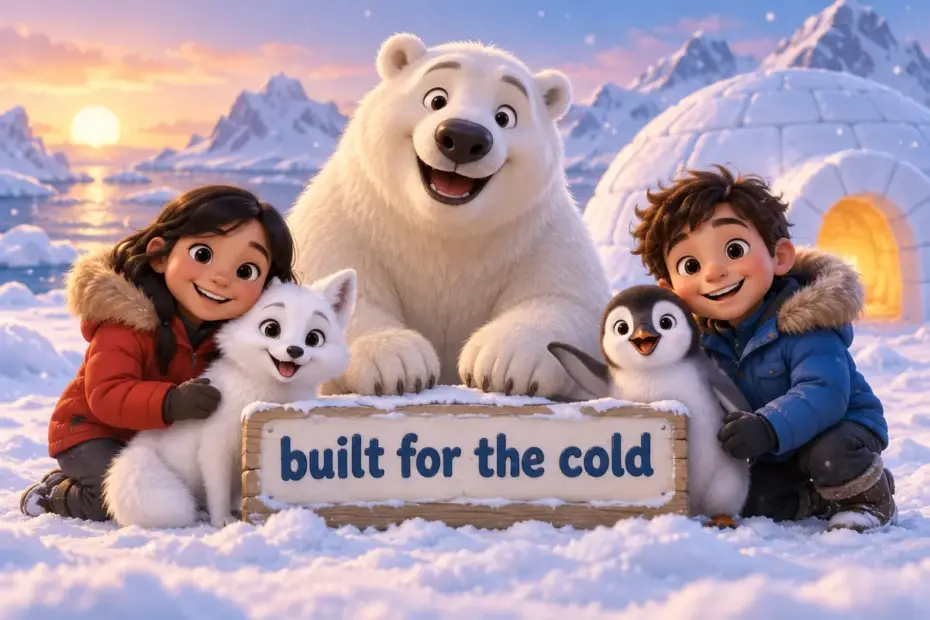
Arctic and polar animals are the birds and mammals that survive at the coldest edges of the world, from the frozen ocean to the tundra. The list runs from the polar bear and the Arctic fox to the snowy owl, the walrus, the narwhal and the beluga. Each animal carries a thick coat, a layer of fat, or both.
Arctic and polar animals at a glance
- Arctic and polar animals live around the North Pole and the South Pole, not in one single habitat.
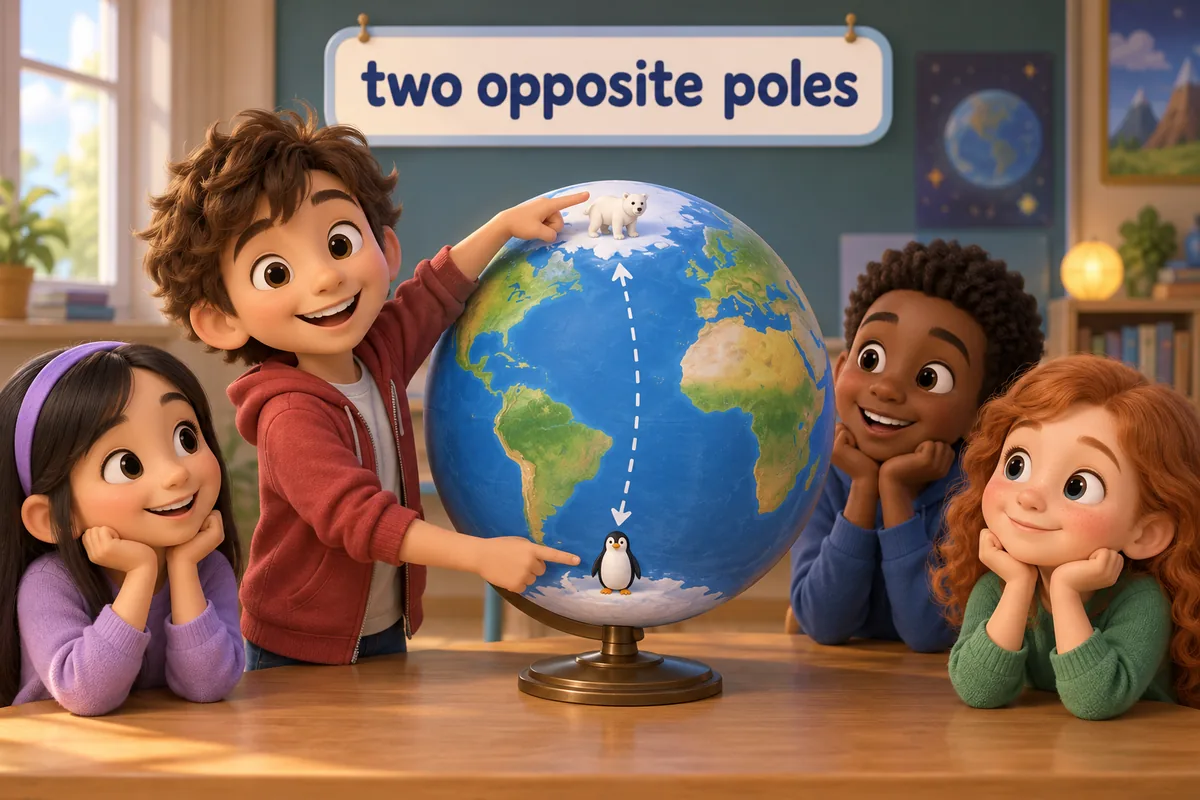
- The Arctic is an ocean ringed by land; the Antarctic is a continent ringed by ocean.
- Polar bears, Arctic foxes and musk oxen live in the Arctic, while penguins live in the Antarctic.
- Thick fur, a fat layer called blubber, and small rounded ears are the classic cold-weather adaptations.
- Most polar animals eat fish, seals or low tundra plants and have very few natural predators.
What are arctic and polar animals?
Arctic and polar animals are the birds and mammals that live in the polar regions, the icy zones around the two poles. The Arctic is an ocean surrounded by the land of Canada, Greenland, Russia and Scandinavia; the Antarctic is a continent surrounded by ocean. That single difference decides which animals appear on each list, because land and sea ice offer different places to hunt, breed and rest.
| Species | Group | Home region | Key adaptation |
|---|---|---|---|
| Polar bear | mammal | Arctic sea ice | White fur and a fat layer for hunting seals. |
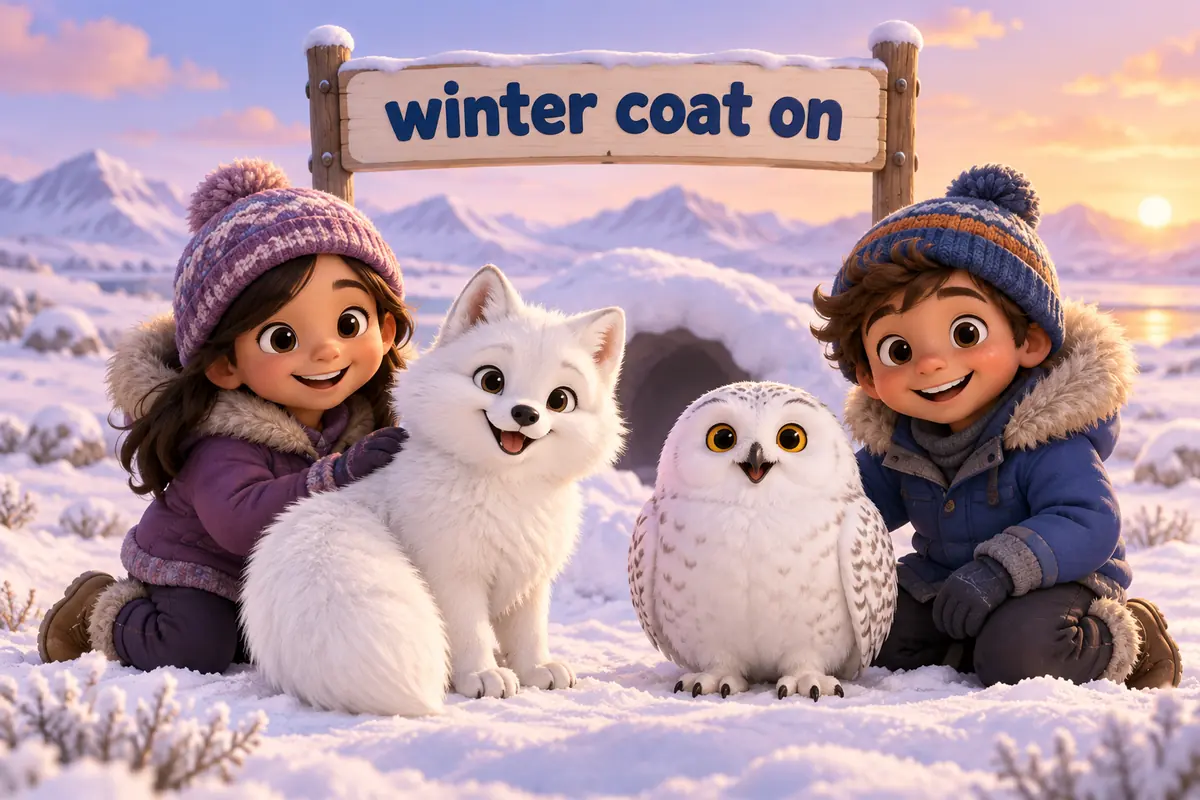
| Arctic fox | mammal | Arctic tundra | A white winter coat that turns brown in summer. |
| Musk ox | mammal | Arctic tundra | A dense undercoat and a tight herd circle. |
| Walrus | mammal | Arctic coast | Tusks to haul onto ice and a heavy fat layer. |
| Narwhal | mammal | Arctic ocean | A long spiral tusk and a body built for cold water. |
| Beluga | mammal | Arctic ocean | A pale body and a rounded head for icy seas. |
| Snowy owl | bird | Arctic tundra | Feathered legs and feet for insulation. |
| Emperor penguin | bird | Antarctic coast | Huddling in groups to share body heat. |
| Weddell seal | mammal | Antarctic coast | Teeth that keep breathing holes open in the ice. |
| Reindeer | mammal | Arctic tundra | Wide hooves for walking on deep snow. |
One honest limit sits at the edge of this list. Not every cold-weather animal is a polar animal: a mountain goat or a snow leopard lives in cold places but far from either pole, so the label is about location, not temperature alone. To see one of them in context, read polar bear in a sentence, and for the wider setting see polar region in a sentence. The boundary of the far north appears in examples of the Arctic Circle in a sentence.
How do you use arctic and polar animals in a sentence?
The phrase works as a plural group label, so it takes a plural verb and pairs happily with examples, rankings and place phrases.
| Pattern | Example | What it signals |
|---|---|---|
| plural subject | Arctic and polar animals live where the sea freezes. | a whole group |
| such as + example | Polar animals such as the Arctic fox grow a winter coat. | one example from the group |
| one of the + superlative | The walrus is one of the largest polar animals. | ranking inside the group |
| place phrase | Polar bears roam the sea ice of the Arctic. | location |
| adjective + animal | The snowy owl is a familiar polar bird. | description |
Arctic and polar animals: examples across contexts
The same group label shifts its job from classroom chart to documentary script, and each register asks for a slightly different sentence.
| Context | Example sentence | Why this works |
|---|---|---|
| Classroom | The class drew a chart of arctic and polar animals, from the Arctic fox to the emperor penguin. | a simple group label |
| Science report | Arctic and polar animals depend on sea ice for hunting and resting. | a formal cause-and-effect claim |
| Travel writing | On the tundra we watched arctic and polar animals move through the snow. | a scene-setting observation |
| Conversation | Which arctic and polar animals have you seen at the zoo? | an informal question |
| Zoo guide | Our polar zone houses arctic and polar animals such as the snowy owl and the walrus. | an exhibit label |
| Documentary script | Arctic and polar animals face a shorter season of solid ice each year. | measured narration |
| News article | Warmer seas are pushing arctic and polar animals to new hunting grounds. | reported change |
| Poster headline | Five arctic and polar animals to spot on a northern trip. | a list headline |
| Field notes | We logged every arctic and polar animal seen along the coast. | record keeping |
| Academic writing | Arctic and polar animals show clear adaptations to extreme cold. | a general claim |
Which polar animal should you learn first?
Match the animal to the point you want to make, because each one stands for a different idea about the poles.
| Situation | Pick | Example |
|---|---|---|
| A famous Arctic hunter | polar bear | The polar bear is the best-known Arctic predator. |
| A colour-changing mammal | Arctic fox | The Arctic fox turns white in winter and brown in summer. |
| A bird from the far south | emperor penguin | The emperor penguin breeds on Antarctic ice. |
| A group that faces the wind | musk ox | Musk oxen form a circle to shelter their calves. |
Choose the polar bear to talk about the Arctic food chain, and the penguin to talk about the Antarctic; the two almost never share a sentence, and that pairing alone settles most beginner confusion.
Word forms and grammar of arctic and polar animals
People often meet this topic through the words arctic, polar and tundra, so the spelling and capitalisation of each one matter. A full alphabetical index sits in animal names from A to Z, and to describe each one precisely you can borrow adjectives for animals.
| Form | Part of speech | Example |
|---|---|---|
| Arctic | proper adjective | An Arctic wind swept the coast. |
| polar | adjective | The polar regions are the coldest on Earth. |
| Antarctic | proper adjective | The Antarctic summer runs from December to February. |
| pole | noun | The two poles mark the ends of the Earth’s axis. |
| tundra | noun | The tundra stays frozen for most of the year. |
| polar animal | noun phrase | A polar animal such as the walrus lives near the ice. |
| blubber | noun | A thick layer of blubber keeps seals warm. |
Common mistakes with arctic and polar animals
Mistake 1: putting penguins in the Arctic. Incorrect: Penguins live in the Arctic. Correct: Penguins live in the Antarctic. Rule: penguins belong to the southern hemisphere, so the Arctic is the wrong pole.
Mistake 2: lower-casing a region name. Incorrect: The arctic is cold. Correct: The Arctic is cold. Rule: Arctic and Antarctic name regions, so they take a capital letter.
Mistake 3: pairing the two predators. Incorrect: Polar bears and penguins live together. Correct: Polar bears live in the Arctic and penguins live in the Antarctic. Rule: the two poles are opposite ends of the planet.
Mistake 4: treating polar as a noun. Incorrect: A polar lives on the ice. Correct: A polar animal lives near a pole. Rule: polar is an adjective and needs a noun after it.
Mistake 5: misspelling the continent. Incorrect: Antartica is the coldest continent. Correct: Antarctica is the coldest continent. Rule: the continent ends in -ctica, while the adjective is Antarctic.
Practice using arctic and polar animals
- Fill in the blank: Penguins live in the ___, not the Arctic.
- Choose the better word: The walrus is one of the (largest / larger) polar animals.
- Correct the error: The arctic fox lives in the artic.
- Build a sentence: use such as to name two arctic and polar animals.
- Spot the register: which line suits a science report, (a) Polar bears are cool, or (b) Arctic and polar animals show clear adaptations to extreme cold?
- Fill in the blank: A thick layer of ___ keeps seals warm in icy water.
Answers
- Antarctic, because penguins live at the southern pole.
- largest, because one of the takes a superlative.
- The Arctic fox lives in the Arctic; the region name takes a capital letter.
- Polar animals such as the Arctic fox and the snowy owl live in the far north.
- (b), because it is formal and states a testable claim.
- blubber, because blubber is the fat layer that traps heat.
The bottom line
Arctic and polar animals are the species that live at the two ends of the Earth, where land, sea ice and cold decide what can survive. The Arctic holds the polar bear, the Arctic fox and the walrus, while the Antarctic holds the penguin and the Weddell seal. Learn the region each animal calls home and the geography stops being confusing.
Frequently asked questions about arctic and polar animals
Where do arctic and polar animals live?
Arctic and polar animals live in the two polar regions, around the North Pole and the South Pole. The Arctic is an ocean ringed by land and includes polar bears, Arctic foxes and walruses. The Antarctic is a continent ringed by ocean and includes penguins, seals and sea birds.
Is Antarctica part of the Arctic?
No. Antarctica and the Arctic are opposite regions at opposite ends of the planet. The Arctic sits in the north around the North Pole, while Antarctica is the southern continent around the South Pole. Their wildlife differs sharply, which is why polar bears and penguins never meet in the wild.
Which arctic and polar animals are birds?
The snowy owl is the best-known Arctic bird, and the emperor penguin is the best-known Antarctic one. Other polar birds include the Arctic tern, which migrates between the two poles, and several Antarctic petrels. All of them rely on feathers and body fat to survive the cold.
How do polar animals stay warm?
Polar animals stay warm through fur, feathers and a thick fat layer called blubber. Small ears and compact bodies reduce heat loss, and many grow a paler winter coat that also hides them from prey. Grouping together, as penguins and musk oxen do, shares body heat further.