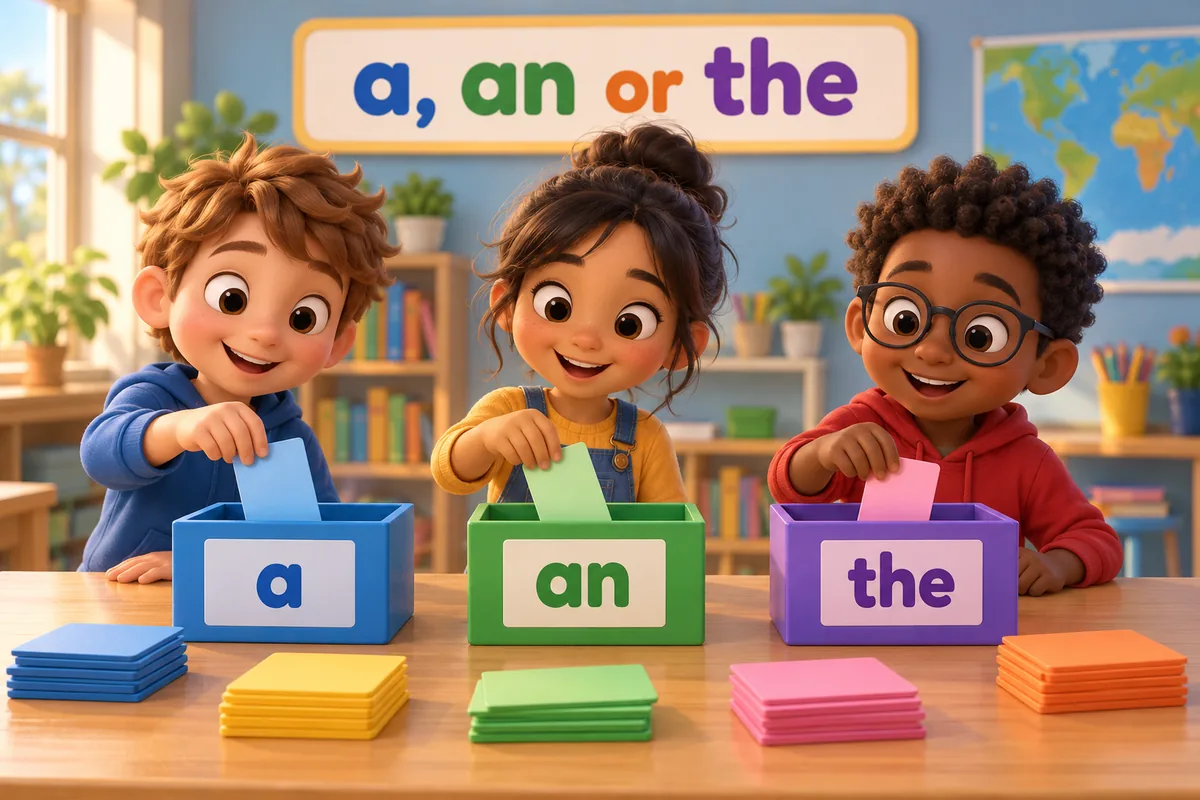
Asking and giving opinions is the everyday skill of finding out what someone thinks and stating your own view with care. A question such as “What do you think?” invites a reply, and a hedge such as I think softens a claim. The pair “I agree” and “I see it differently” shows both directions.
Asking and giving opinions at a glance
- Ask with a short frame such as what do you think, then name the topic.
- Give an opinion with a hedge, as in I think the plan is fair.
- Agree and disagree phrases keep a discussion open rather than closing it.
- In my opinion and I think do not appear in the same sentence.
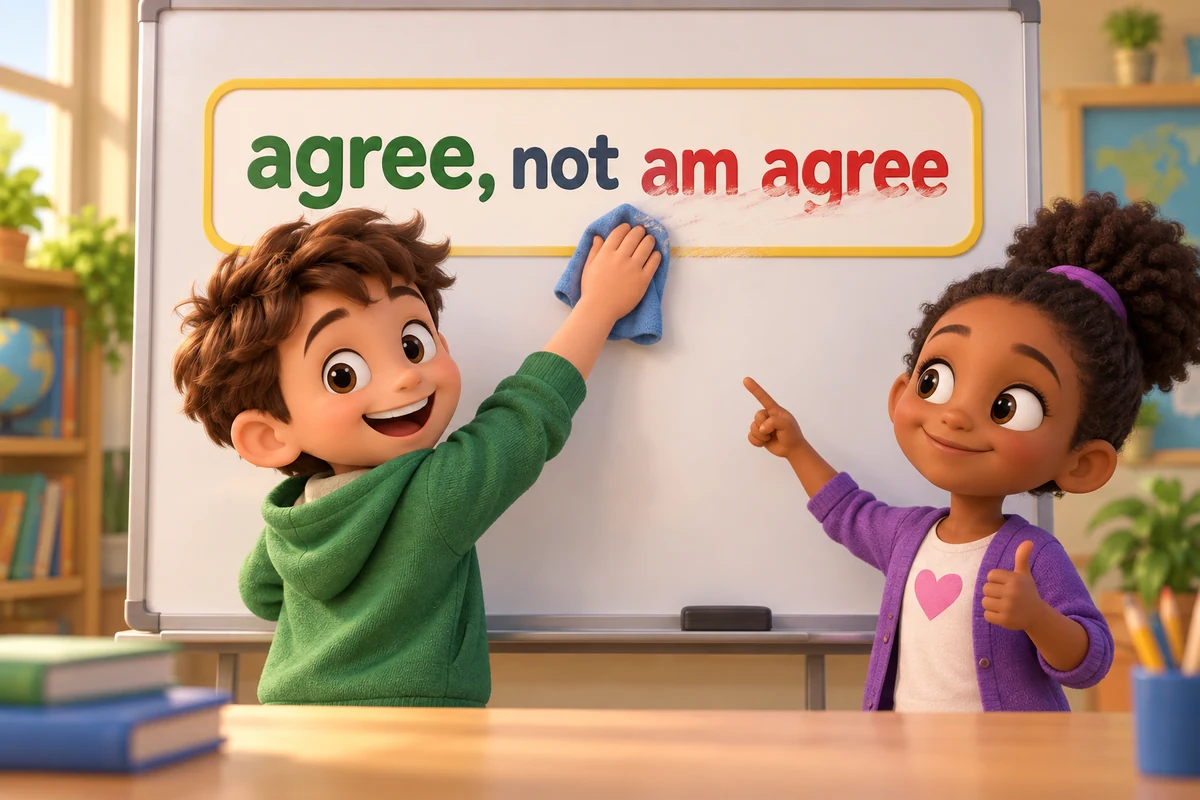
- The commonest learner error is adding am before the verb agree.
What are asking and giving opinions phrases?
These phrases fall into two groups: questions that invite a view and statements that offer one. Each phrase does a single job, so a learner can swap one for another inside the same frame. A set of full lines at the opinion sentence page shows how each one reads in context.
| Phrase | Job | When to use it |
|---|---|---|
| What do you think about the plan? | asks for a view | opening a friendly discussion |
| How do you feel about the change? | asks about feelings | when emotion matters as well as logic |
| Do you agree with the decision? | asks for agreement | a yes or no answer is expected |
| What is your opinion on the topic? | asks formally | a meeting or a debate |
| I think the plan is fair. | gives a hedged view | keeping a claim modest |
| In my opinion, the cost is too high. | states a view clearly | a formal comment |
| I could not agree more. | agrees strongly | sharing the same position |
| I see it differently. | disagrees gently | disagreeing without a clash |
| I see your point, but the cost matters. | partly agrees | disagreeing without a clash |
| That is a fair point. | accepts a view | acknowledging before you reply |
How do you ask for an opinion politely?
A polite question leaves room for any answer, so it avoids a direct challenge and often adds a softener such as please or at all. The topic follows the question frame, and the verb order stays in the standard question pattern.
| Pattern | Example | What it signals |
|---|---|---|
| what do you think + about + topic | What do you think about the plan? | The most common invitation. |
| how do you feel + about + topic | How do you feel about the new rule? | Invites an emotional view. |
| do you agree + with + noun | Do you agree with the teacher? | Asks for a clear yes or no. |
| what is your opinion + on + topic | What is your opinion on the fee? | Formal and measured. |
| would you say + clause | Would you say the plan works? | Softens a direct judgement. |
The invitation what do you think is the safest opener, because it fits almost any topic and asks for a view rather than agreement. When the question concerns a feeling, how do you feel about works better, and for a formal setting what is your opinion on carries the right weight. A single frame used well beats a long list.

Asking and giving opinions across contexts
The same frames shift in tone with the setting. The table shows nine places they appear, from a class debate to a family meal.
| Context | Example sentence | Why this works |
|---|---|---|
| Class debate | What is your opinion on the new timetable? | A formal frame suits a set topic. |
| Group project | I think we should split the tasks. | A hedge keeps the group open. |
| Family meal | How do you feel about moving house? | Feelings matter in a close setting. |
| Work meeting | In my opinion, we need more time. | A clear view suits a decision. |
| Friendly chat | Do you agree with the ending of that film? | A light topic invites a quick reply. |
| Review | I could not agree more with the earlier point. | Strong agreement in writing is common. |
| Polite refusal | I see it differently, but I understand. | A softener keeps the tone warm. |
| Would you say the deadline is realistic? | A cautious frame suits a message. | |
| Interview | What is your opinion on teamwork? | Formal phrasing fits a formal room. |
| Book club | What did you think of the ending? | A shared topic invites an easy view. |
| Customer survey | How do you feel about the service? | A neutral frame collects honest feedback. |
Agreeing and disagreeing compared
Both directions need a phrase that names the other view before your own. Strong agreement or disagreement suits a close friend, while a gentler form protects a working relationship.
| Point | agreeing | disagreeing |
|---|---|---|
| Common phrase | I agree with you. | I see it differently. |
| Strong form | I could not agree more. | I am afraid I disagree. |
| Tone | warm and supportive | calm and respectful |
| Verb pattern | agree with plus a person or idea | disagree with plus a person or idea |
| Effect | keeps the talk moving | opens a new angle |
The tension in a disagreement is rarely about the fact and usually about the tone. Opening with a phrase that accepts the other view, such as I see your point, lets a speaker disagree without sounding hostile, and the discussion keeps its momentum.
Word forms and grammar of opinions
One root gives a noun, an adjective and a matching verb, and the ending shows which job the word does. A set of describing words at the adjectives for opinion page shows how a view can be tuned.
| Form | Part of speech | Example |
|---|---|---|
| opinion | noun | She shared a clear opinion. |
| opinions | plural noun | Their opinions differ sharply. |
| opinionated | adjective | He is an opinionated speaker. |
| agree | verb | I agree with your point. |
| disagree | verb | We disagree about the date. |
| agreement | noun | We reached an agreement quickly. |
| disagreement | noun | A small disagreement arose. |
| persuade | verb | She persuaded the group to wait. |
Common mistakes with opinions
Most errors come from doubled opinion phrases, from the verb agree, and from the preposition that follows it.
- Incorrect:
What you think about the plan?Correct: What do you think about the plan? Rule: a question needs the helping verb do. - Incorrect:
In my opinion I think it is good.Correct: In my opinion, it is good. Rule: in my opinion and I think do not double. - Incorrect:
I am agree with you.Correct: I agree with you. Rule: agree is a verb, so it takes no am. - Incorrect:
I do not agree of this idea.Correct: I do not agree with this idea. Rule: agree takes the preposition with. - Incorrect:
According to me, the plan works.Correct: In my opinion, the plan works. Rule: according to reports other people, not the speaker. - Incorrect:
Your opinion is different than mine.Correct: Your opinion is different from mine. Rule: different takes the preposition from.
Practice asking and giving opinions
Try each item, then read the reason beside the answer. A set of lines about a difference of view sits at the difference of opinion sentence page.
- Fill in the blank: What do you ________ about the new rule?
- Fill in the blank: ________ my opinion, the cost is too high.
- Choose the better word: I (agree / am agree) with your point.
- Correct the error: In my opinion I think the plan is fair.
- Build a sentence: ask a classmate for a view on a school trip.
- Spot the register: which fits a work meeting, “I see it differently” or “Nah, that’s wrong”?
- Fill in the blank: Do you ________ with the decision?
Answers
- think: what do you think about is the standard invitation.
- In: in my opinion opens a formal statement of view.
- agree: agree is a verb, so it takes no am.
- In my opinion, the plan is fair: in my opinion and I think do not double.
- Sample: What do you think about the trip to the museum? The frame invites a view without pressure.
- The first: a work meeting takes a calm, respectful disagreement.
- agree: agree with is the fixed pattern for sharing a position.
The bottom line
Asking and giving opinions comes down to a few frames that invite a view and offer one without a clash. Ask with what do you think about, hedge a claim with I think, and keep in my opinion and I think apart. Agree and disagree phrases carry a preposition, so agree with and disagree with stay fixed. A calm tone does the rest.
Frequently asked questions about opinions
How do you ask for someone’s opinion politely?
Use a full frame such as what do you think about the plan, or the softer would you say the plan works. These forms invite any answer rather than demanding one, and they suit a meeting, a class or a friendly chat without sounding blunt.
What are phrases for giving an opinion?
The commonest are I think, in my opinion and as far as I know. I think hedges a claim and suits speech, while in my opinion reads as a formal statement. Each one introduces a view, so only one is used in a sentence.
How do you disagree politely in English?
Name the other view first, then give your own, as in I see it differently or I am afraid I disagree. A softener such as I understand keeps the tone warm, and the phrase agree with keeps the grammar right. This keeps a discussion open instead of closing it.
What does in my opinion mean?
In my opinion signals that the sentence states a personal view rather than a fact. It comes first in the sentence and takes a comma, as in in my opinion, the cost is too high. It never doubles with I think, because both already mark a view.