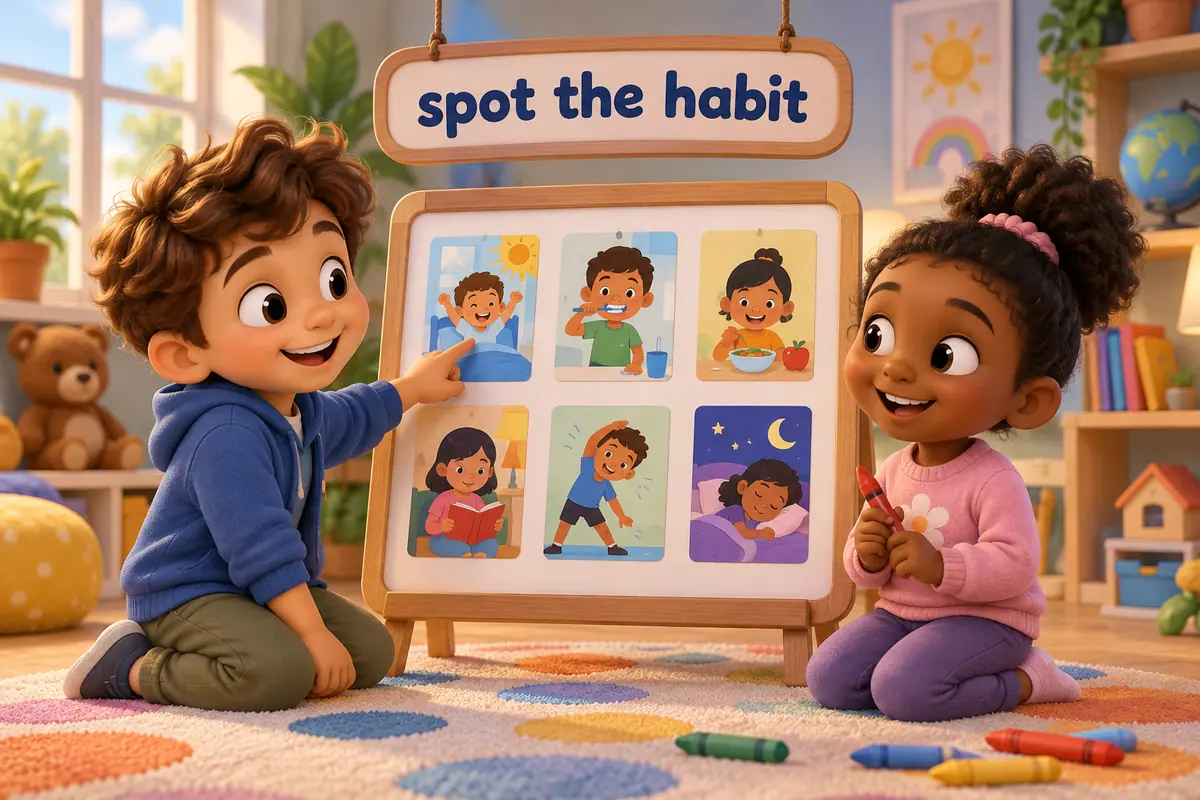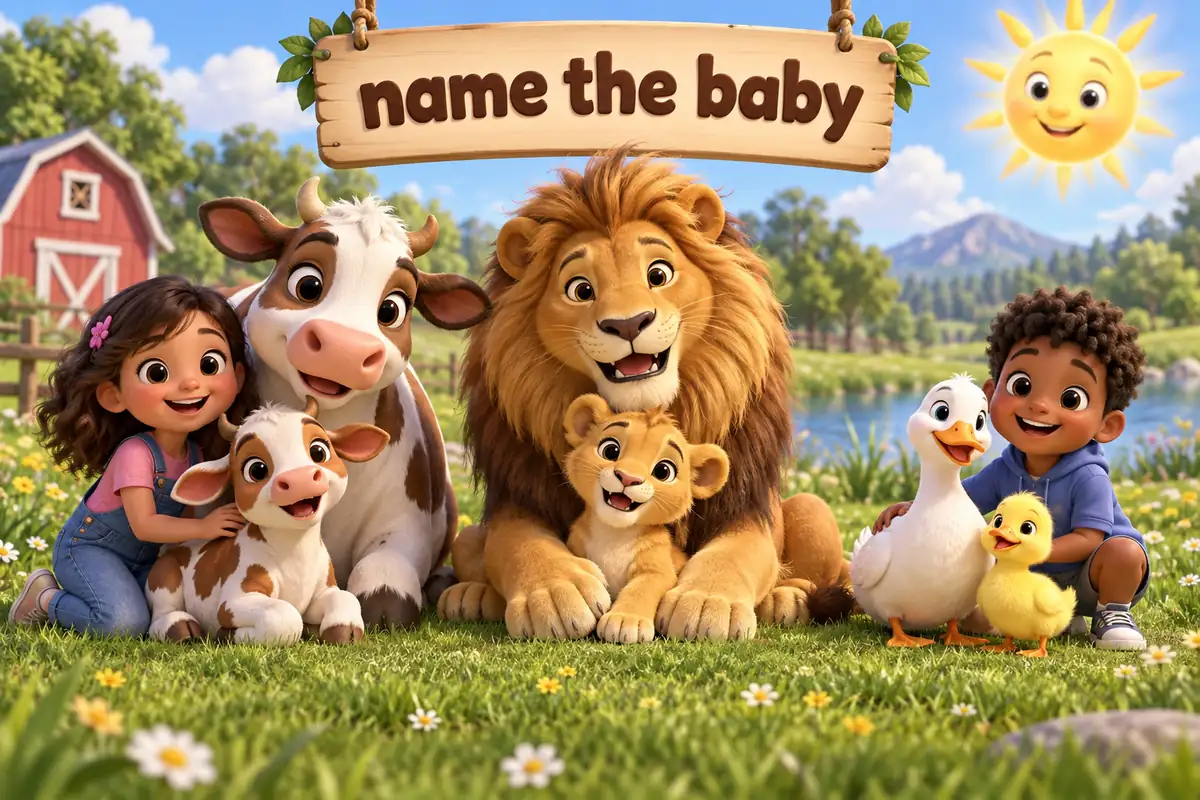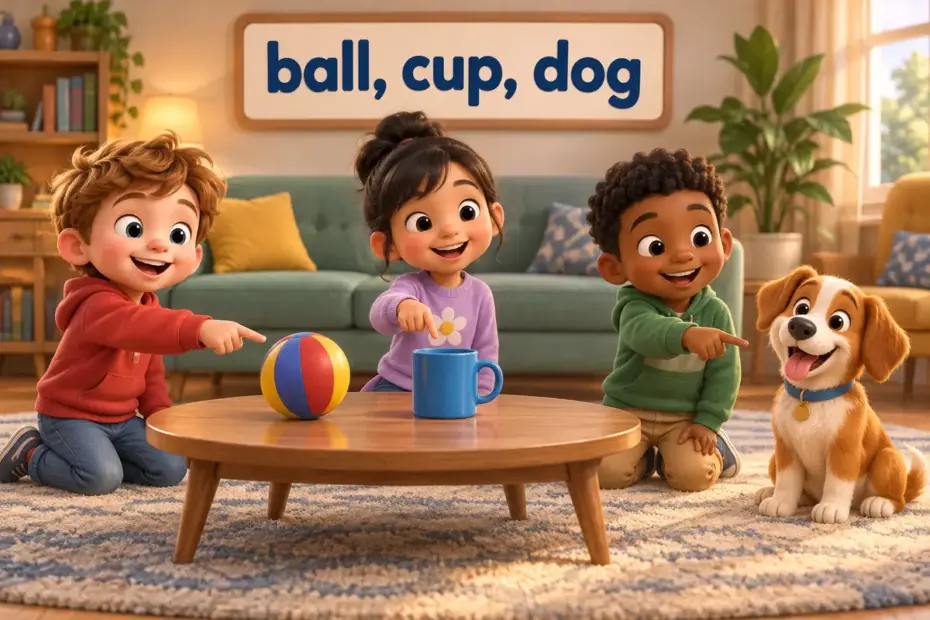
Basic English vocabulary words for kids are the everyday words a child meets first: names for people, animals, food, actions and feelings. A short list works best, because children learn a word faster when they can point to the thing. A child who can say “ball,” “run” and “happy” already holds the base for a sentence.
Basic English vocabulary words for kids at a glance
- The first useful sets are nouns for people and things, action verbs and simple describing words.
- Words stick when a child can see, touch or act out what the word names.
- Short, common words come before rare or long ones, because frequency builds fluency.
- Most early words are learned in phrases, not alone: big ball, run fast, very happy.
- Review matters more than volume, so a small list used daily beats a long list used once.
What are basic English vocabulary words for kids?
Basic English vocabulary words for kids are the small set of high-frequency words that let a child name the world and begin building sentences. They cluster into a few groups, and a child who owns one group can start using it immediately; a wider starter set sits in words that start with a for kids.
| Word type | Examples | What it lets a child do |
|---|---|---|
| Naming nouns | ball, cup, dog, mum | point at and name people and things |
| Action verbs | run, eat, sleep, jump | say what happens |
| Describing words | big, red, soft, happy | add detail to a noun |
| Position words | in, on, under, next to | say where something is |
| Question words | what, where, who, why | ask for information |
| Joining words | and, but, because | link two ideas in one sentence |
Each group builds on the last: a child names a thing, then says what it does, then describes it. Keeping the groups small means a child can combine them early, so two nouns and one verb already make a sentence such as the dog can run.
How do you teach basic English vocabulary words to kids?
A new word enters a child’s speech through a short routine rather than a definition, so the useful patterns pair each word with an action or an object. A longer word bank for the same age is gathered in words that start with c for kids.
| Pattern | Example | What it builds |
|---|---|---|
| name + point | This is a cup. | links a sound to a real object |
| action + object | Kick the ball. | pairs a verb with its noun |
| describing word + noun | a soft blanket | adds detail early |
| sorting game | Find all the red things. | groups words by meaning |
| sentence frame | I like ___. | slots new words into a fixed shape |
Repeat each routine across a week rather than a single day, so the word moves from recognition to use. A child who answers What is this? without a prompt has learned the word, not merely heard it. Acting a word out also fixes the meaning faster than saying it alone.
Basic English vocabulary words in sentences across contexts
Each setting below shows a starter word doing real work, so a parent or teacher can copy the frame as it stands.
| Context | Example sentence | Why this works |
|---|---|---|
| Home | Put your cup on the table. | a position word with a familiar noun |
| Playground | Throw the ball to me. | an action verb with an object |
| Storytime | The bear was very sleepy. | a describing word before an action |
| Classroom | Colour the small star. | a describing word plus a noun |
| Kitchen | We need three eggs. | a number word plus a noun |
| Bedtime | Say goodnight to the moon. | a set phrase with a noun |
| Shopping | Find the red apples, please. | a colour word with a noun |
| Doctor | My tummy hurts. | a body word in a full sentence |
| Party | Blow out the candles. | an action phrase a child can act out |
| Weather | Put on your warm coat. | a describing word plus clothing |
The exact wording matters less than the habit, so a child who says me throw ball is still understood and can be gently reshaped into Throw the ball to me. Praise the attempt first, then model the standard order once, and let the child repeat it while doing the action.
Which words should a child learn first?
Order matters as much as choice, because a child can use a whole sentence sooner when the first words belong to one everyday theme.
| Starting theme | Words to teach | First sentence |
|---|---|---|
| Family | mum, dad, baby, gran | This is my baby. |
| Household objects | cup, spoon, shoe, door | Open the door. |
| Common actions | eat, drink, go, stop | Stop at the corner. |
| Feelings | happy, sad, tired, cross | I feel tired. |
| Animals | dog, cat, bird, fish | The bird can fly. |
Choose one theme at a time and stay with it until the child uses the words without a prompt. Mixing four themes in one day scatters attention, while a single theme used in several routines gives the same words repeated practice.
Word forms and building blocks of early vocabulary
Starter words grow in predictable ways, and showing a child the pattern turns one word into several; compound words for kids and describing words for kids extend the same base.
| Form | Example | What it teaches |
|---|---|---|
| single word | dog | one clear sound and meaning |
| word family | jump, jumps, jumped, jumping | one root, several forms |
| compound word | rain + bow = rainbow | two words join to name one thing |
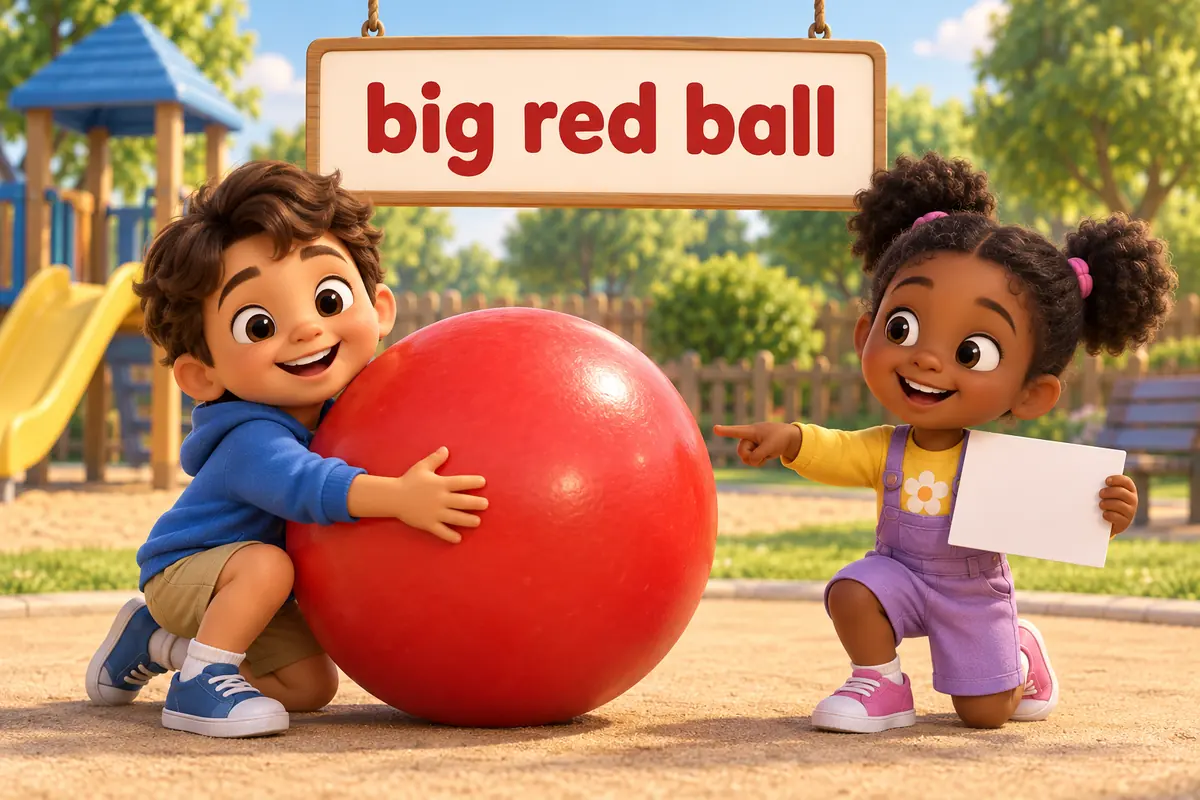
| fixed phrase | a big red ball | words learned together in order |
| opposite pair | hot and cold | meaning learned by contrast |
Showing the pattern turns one word into a family, so a child who knows jump soon reads jumps, jumped and jumping. Point out the shared part aloud, because hearing the common root helps a child guess the next form.
Common mistakes when teaching vocabulary words for kids
The slips below slow learning more than a missing word does, because each one separates a word from the context that gives it meaning.
- Incorrect: teach
encyclopediabefore cat. Correct: teach cat first. Rule: high-frequency words come before impressive ones. - Incorrect: learn words
aloneas a cold list. Correct: learn them inside a sentence. Rule: context fixes meaning. - Incorrect: add
tennew words a day with no review. Correct: review five, then add two. Rule: repetition builds memory. - Incorrect: translate
everyword into the first language. Correct: show the object or act it out. Rule: direct meaning avoids double translation. - Incorrect: correct
everysound at once. Correct: fix one sound at a time. Rule: too many corrections stop a child speaking.
Each fix keeps a word attached to its meaning, which is the only way a starter list grows into real speech.
Practice using basic English vocabulary words
- Fill in the blank: Put the milk ___ the cup.
- Choose the better starter word: (encyclopedia / spoon) for a kitchen theme.
- Correct the error: The dog can
flyed. - Build a sentence: use one colour word and one object word about a hat.
- Spot the theme: which pair belongs together, (a) run and jump, or (b) run and roof?
- Fill in the blank: I feel ___ when I get a present.
Answers
- in, because the milk goes inside the cup.
- spoon, because it belongs to the kitchen theme.
- The dog can fly; can takes the base verb, not a past form.
- A red hat, which joins a colour word to an object word.
- (a), because both are action verbs on one theme.
- happy, because a present is a pleasant event.
The bottom line
Basic English vocabulary words for kids work best as a short, everyday set used in sentences rather than a long list recited in isolation. Start with naming words, action verbs and simple describing words, and always tie a new word to something a child can see or do. Review a few words often, add new ones slowly, and let phrases such as a big red ball carry the meaning. A child who uses ten words daily learns faster than one who simply hears a hundred.
Frequently asked questions about starter vocabulary
How many new words should a child learn each week?
Five to ten well-used words a week is plenty for a young learner, because use matters more than volume. A child should meet each word in a sentence, say it aloud and act it out. Review older words alongside the new ones, since forgetting is fastest in the first few days.
Is it better to read stories or repeat word lists at home?
Stories win, because a word met in a story arrives with a meaning and a feeling attached. A word list gives sound alone, so a child may recite it without understanding. Read the same short book more than once, pause on a target word, and ask the child to point at the picture that matches it.
Should a child spell a word before using it in a sentence?
Speaking and spelling grow at different speeds, so a child can use a word correctly long before writing it. Let the child say the word in a sentence first, then add the written form later. Pushing spelling too early can make a child avoid a word they already know how to use.
Can children learn vocabulary words in two languages at once?
Children can hold two sets of words, but the same word is best kept to one language in a single activity so the meaning stays clear. Teach a theme in one language, then the same theme in the other, rather than mixing both in one sentence. Consistent labels on real objects help each language stay separate.