
Callow is an adjective that describes a young person who is immature, inexperienced or still untested. To use callow in a sentence, place it before the person or group it judges: “a callow recruit”, “callow youth”. It belongs to formal and literary writing and usually carries mild disapproval.
Callow at a glance
- Callow is an adjective; its forms are callower, callowest and the noun callowness.
- The usual position is attributive, directly before the noun: a callow intern.
- It describes people, especially the young, and their behaviour, not objects or places.
- Callow suits formal, literary or mildly critical writing rather than neutral description.
- The commonest error is confusing callow with callous, which means unkind or unfeeling.
What does callow mean?
Callow is an adjective meaning young and inexperienced, and often naively confident because of it. The Cambridge entry for callow gives this sense of an immature person, and the word normally judges someone who has not yet been tested by real work. A naive beginner may simply misread a situation, while a callow one adds youth and untested enthusiasm. Close in meaning is immature behaviour, though callow points specifically at inexperience rather than at emotional childishness.
| Sense | Plain meaning | Example sentence |
|---|---|---|
| Young and inexperienced | A person who has not yet been tested | The callow recruit saluted a little too eagerly. |
| Naively confident | Marked by confidence that experience has not yet earned | His callow certainty annoyed the older engineers. |
| Unfledged, of a bird | Not yet covered with feathers, used in older writing | The callow chicks huddled in the nest. |
Callow is a judgment, not a neutral label. Calling a colleague callow says they lack experience and shows a hint of condescension, so for a plain description choose young or inexperienced instead. It also says nothing about intelligence, kindness or talent, only that time and testing are still ahead.
How do you use callow in a sentence?
The adjective almost always attaches to a person or to the trait that experience has not yet polished.
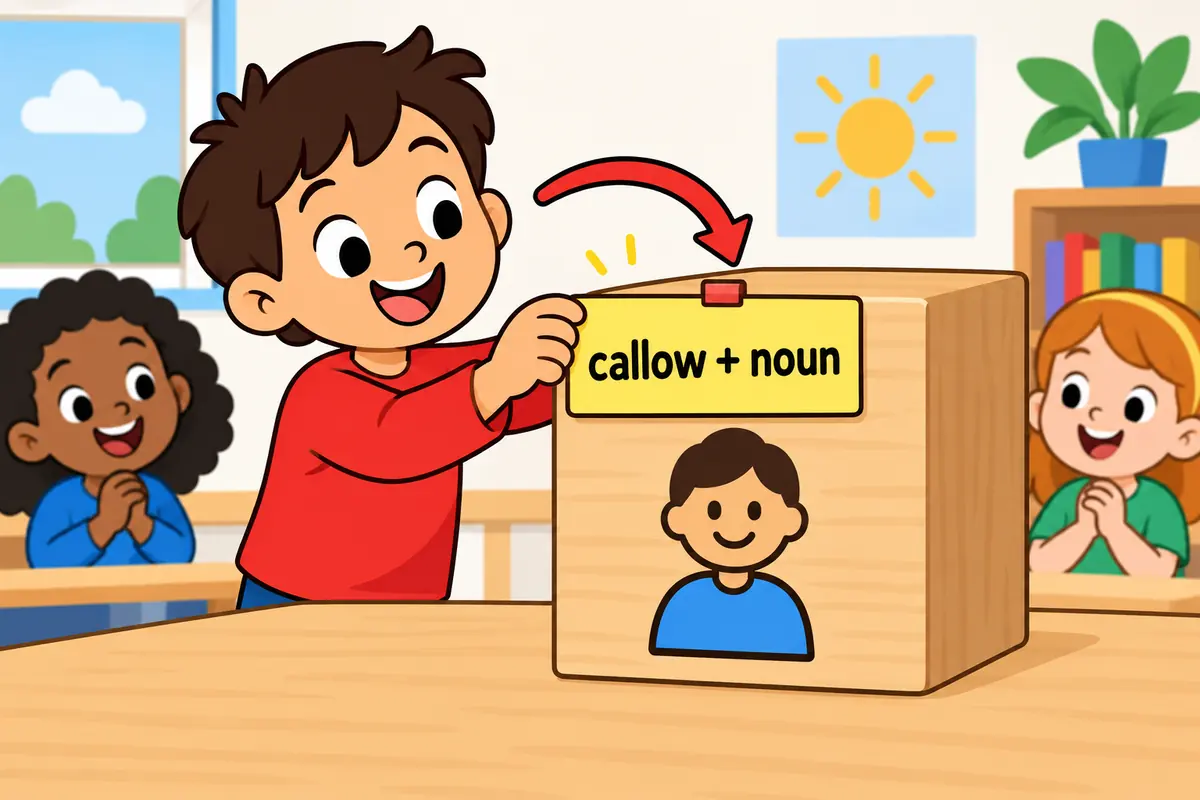
| Pattern | Example | What it signals |
|---|---|---|
| callow + person noun | A callow youth took the minutes. | The standard attributive use. |
| callow + quality noun | She smiled at his callow enthusiasm. | Judges the trait, not the whole person. |
| linking verb + callow | The new reporter was callow but keen. | Predicative use, common with a contrast. |
| callow + team or group | A callow squad lost its first three matches. | Extends the word to a collective. |
Callow in a sentence: examples across contexts
| Context | Example sentence | Why this works |
|---|---|---|
| Classroom | The callow new pupil copied every note without asking why. | Shows inexperience through a small action. |
| Workplace email | Please pair the callow intern with a mentor for the first month. | Uses the word as a practical instruction. |
| News report | The callow captain struggled against seasoned opponents. | Sets inexperience against its opposite. |
| Sports writing | A callow defence was exposed in the closing minutes. | Applies the word to a unit. |
| Literary prose | He arrived callow and loud, certain he already knew the city. | Predicative, paired with a contrast. |
| Academic writing | The study follows a callow cohort through its first year. | Formal and measured. |
| Conversation | We were all callow once, and none of us listened. | Softens the judgment with shared experience. |
| Review writing | The novel is a callow first effort, full of borrowed voices. | Criticism of a work via its author. |
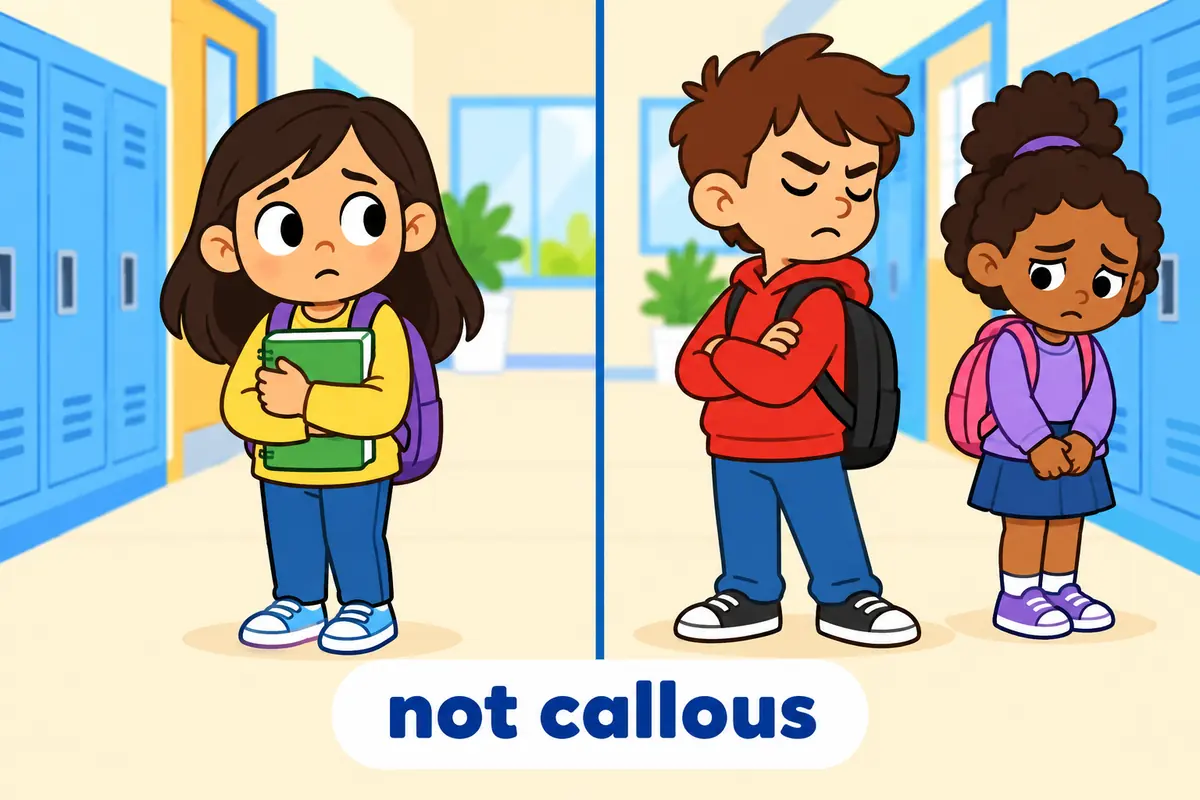
Callow vs callous
The nearest confusable is callous, which differs by a single letter but means something quite different.
| Attribute | Callow | Callous |
|---|---|---|
| Core meaning | Young and inexperienced | Unkind and unfeeling |
| Emphasis | Lack of experience | Lack of sympathy |
| Register | Formal and literary | Neutral, often critical |
| Typical subject | A young person or team | A person, remark or decision |
| What it implies | Time will teach them | They should have known better |
| Common collocation | Callow youth | Callous remark |
Use callow for the untested and callous for the callous remark that shows no feeling. A callow colleague may still be kind; a callous one has stopped caring.
Word forms and grammar of callow
| Form | Part of speech | Example |
|---|---|---|
| callow | adjective | A callow apprentice dropped the tray. |
| callower | comparative adjective | He looked even callower beside her. |
| callowest | superlative adjective | The callowest of the recruits spoke first. |
| callowness | noun | His callowness showed in every question. |
| callowly | adverb, rare | Avoid callowly; rewrite with the adjective instead. |
Both callower and more callow are acceptable comparatives, though the one-word form is tidier in formal prose.
Common mistakes with callow
- Incorrect:
His callow remark hurt everyone at the table.Correct: His callous remark hurt everyone at the table. Rule: an unkind remark is callous; callow describes inexperience. - Incorrect:
They left the callow field unplanted.Correct: They left the fallow field unplanted. Rule: unused land is fallow field, not callow. - Incorrect:
She is a callow.Correct: She is callow. Rule: callow is an adjective, so it never takes a or an as a noun. - Incorrect:
The elderly judge was callow.Correct: The elderly judge was experienced. Rule: callow marks youth and inexperience, so it clashes with age. - Incorrect:
a youth callow and strongCorrect: a callow youth. Rule: in formal prose place the adjective before the noun. - Incorrect:
callow of experienceCorrect: callow and inexperienced. Rule: callow does not take of to name what it lacks.
Practice using callow
- Fill in the blank: The ______ recruit volunteered for every task on her first day.
- Choose the better word: His (callow / callous) joke about the accident upset the room.
- Correct the error: The team was callow of experience.
- Build a sentence: use callow about a young player facing a famous opponent (pattern: callow + player noun).
- Spot the register: which fits a formal match report, callow or inexperienced?
- Fill in the blank: Nothing in his ______ confidence suggested he had ever failed.
Answers
- callow. It describes her youth and lack of experience, and it sits before the noun.
- callous. Only callous means unkind, which fits a joke that upsets people.
- The team was callow. Callow does not take of, so the phrase stands alone as an adjective.
- Model: The callow winger was tested at once by a famous opponent. The adjective precedes the young player.
- inexperienced. It states the fact without the literary judgment that callow carries.
- callow. The confidence of someone untested fits the sense exactly.
The bottom line
Callow in a sentence describes a young person who has not yet been tested, and it normally sits directly before the noun. Keep it for formal or slightly critical writing, and use young or inexperienced when you want a plain, neutral statement. Above all, do not confuse it with callous, which means unkind; a seasoned professional is the natural opposite of a callow one.
Frequently asked questions about callow
Is callow a negative word?
Callow is mildly negative. It points out that someone is young, untested and perhaps overconfident, which can sound condescending. In a neutral sentence, young or inexperienced is safer. Many writers soften it by pairing it with praise, as in callow but keen.
What is the noun form of callow?
The noun is callowness, meaning the state of being young and inexperienced. It takes the same judgment as the adjective, as in his callowness showed in every question. There is no common verb form, so the adjective and noun cover nearly all uses.
Can callow describe a thing rather than a person?
Not normally. Callow applies to people, especially the young, and to a group or its behaviour. It does not describe places or objects, which is where fallow belongs. The one historic exception is a bird not yet feathered, a sense that survives only in older literary writing.
Does callow mean the same as immature?
The two overlap but are not identical. Immature can criticise emotional behaviour at any age, while callow specifically links the shortcomings to youth and inexperience. A calm older person can be immature, but callow would sit strangely on them because it carries the idea of being new.
Do you know what it means to be callow? Simply put, callow refers to someone who is inexperienced, immature, or lacking in knowledge or sophistication. It describes a person who is naive or inexperienced in a particular aspect of life or skill.
When someone is described as callow, it suggests that they may not have fully developed their abilities or understanding yet. This term is often used to highlight a person’s lack of experience or wisdom in a given situation.
7 Examples Of Callow Used In a Sentence For Kids
- The callow chickadee chirped loudly in the tree.
- The baby duck waddled awkwardly with its callow steps.
- The young puppy’s eyes were bright and callow with curiosity.
- The colorful butterflies fluttered around the callow flowers.
- The tiny kittens played together with their callow paws.
- The callow tadpoles swam swiftly in the pond.
- The children watched in wonder as the callow caterpillars transformed into beautiful butterflies.
14 Sentences with Callow Examples
- Callow freshmen often struggle with time management and prioritizing assignments in their first semester.
- It’s common for callow students to feel overwhelmed by the academic workload at the beginning of the semester.
- Many callow students make the mistake of waiting until the last minute to start studying for exams.
- The callow student’s lack of experience in writing essays was evident in their poorly constructed argument.
- Being callow in their understanding of plagiarism, some students unintentionally commit academic dishonesty.
- Some callow students underestimate the importance of attending classes regularly and end up falling behind.
- The callow student’s naive belief that they could party all night and still perform well in exams was quickly shattered.
- It’s not uncommon for callow students to struggle with homesickness when they first move away to college.
- The callow student’s tendency to procrastinate led to a series of late-night cramming sessions before exams.
- Feeling callow and unsure of their career path, many students seek guidance from career counselors on campus.
- The callow student’s lack of preparation for their internship interview was evident in their nervous demeanor.
- Some callow students are easily swayed by peer pressure and end up making poor decisions.
- The callow student’s eagerness to fit in with their classmates sometimes causes them to compromise their values.
- It’s important for callow students to seek advice from seniors and mentors to navigate the challenges of college life.
How To Use Callow in Sentences?
Callow can be used in a sentence to describe someone who is inexperienced or immature. For example, “The callow recruit had a lot to learn before he could become a skilled soldier.” In this sentence, callow is used to emphasize the lack of experience and youthfulness of the recruit.
To use callow effectively in a sentence, consider the context and use it to convey the idea of inexperience or immaturity. You can use callow to describe a person, a behavior, or a decision that reflects a lack of maturity or experience. For instance, “His callow attempt at starting a business quickly led to failure due to his lack of knowledge in the industry.”
When incorporating callow into your writing, make sure the sentence flows naturally and the word is used appropriately. Avoid overusing callow and vary your vocabulary to maintain a rich and engaging writing style. Remember that callow is a descriptive term that paints a vivid picture of someone or something being inexperienced, so choose your sentence structure carefully to highlight this trait.
Practice using callow in different contexts to become more comfortable with incorporating it into your vocabulary. By mastering the usage of callow, you can add depth and nuance to your writing while accurately conveying the idea of inexperience or immaturity.
Conclusion
In conclusion, callow individuals often exhibit an inexperienced or immature characteristic that is evident in their actions and decisions. The callow nature of someone can be seen in their naive approach to situations, showing a lack of depth or understanding. This quality highlights a stage of youth or disregard for wisdom in their behavior.
It is important to recognize and guide individuals through their callow phases, offering support and education to help them grow and develop into more mature and knowledgeable individuals. With time and guidance, those who display callow tendencies can evolve and gain the wisdom needed to navigate life’s challenges with a greater level of maturity and understanding.


