Skip to content

Confused Words

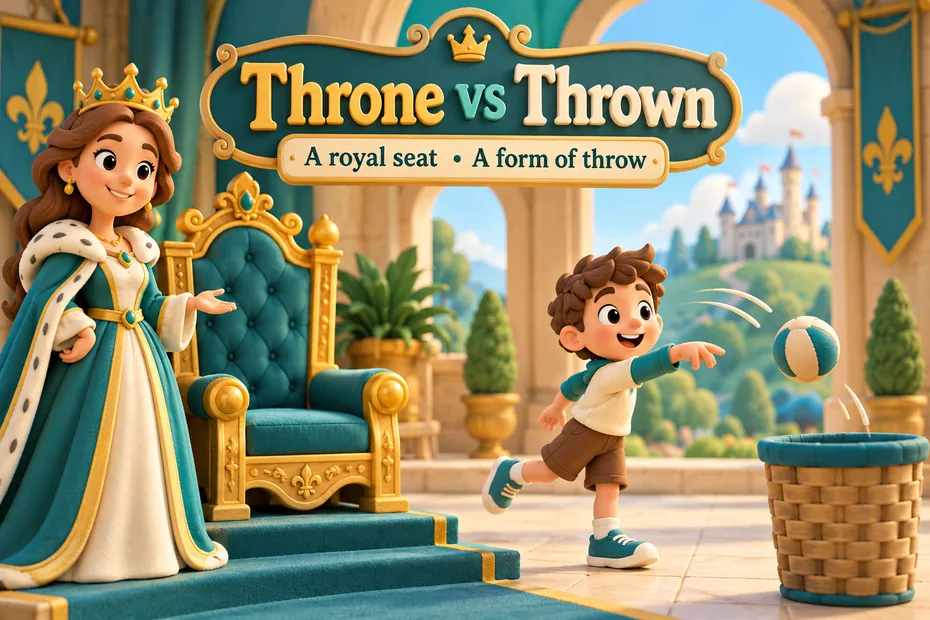
Throne vs thrown: a royal seat and a form of throw

Understanding the Proper Usage of ‘Throne’ vs ‘Thrown’ for Enhanced Clarity in Writing

    Have you ever found yourself confused between “throne” and “thrown”? Don’t worry, you’re not alone. These two words may sound similar, but they have completely different meanings. In this text, I’ll guide you through the proper usage of “throne” and “thrown” so you can confidently use them in your writing.
    Firstly, let’s talk about “throne.” When we think of a throne, we envision a majestic seat o
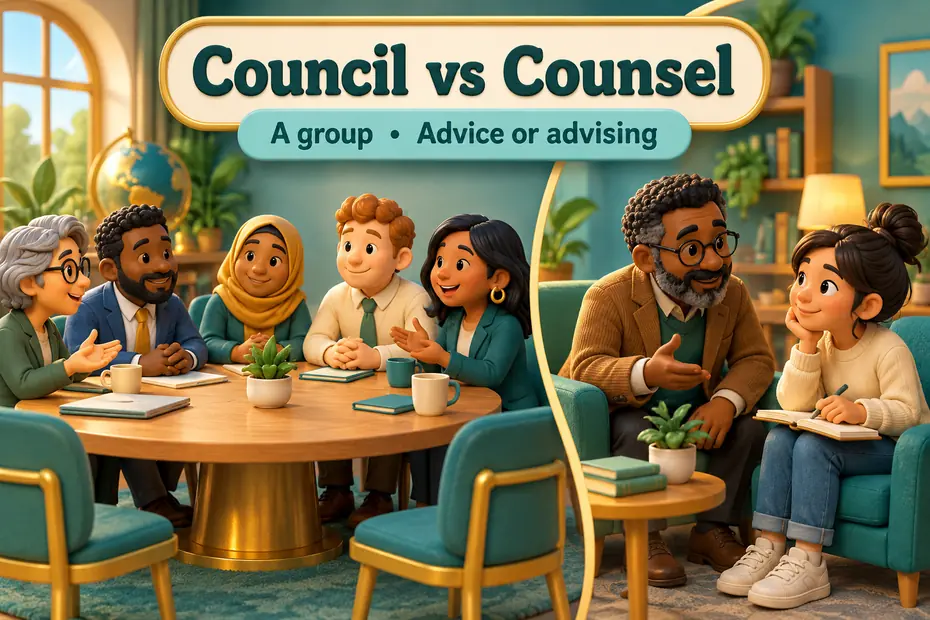
    Council vs counsel: a group and advice or advising

    Understanding the Distinction: Council vs Counsel and How to Use Them Appropriately

      Council vs counsel: the direct answer A council is a group or assembly that discusses matters, advises, or makes decisions. Counsel means advice, the act of advising, or a lawyer acting as an adviser or representative. Write “The council met on Tuesday,” but “The teacher offered helpful counsel.” You can use both correctly in one… Read More »Understanding the Distinction: Council vs Counsel and How to Use Them Appropriately

      Emerge vs immerge: come out versus go under

      Understanding the Proper Usage of Emerge vs Immerge: How to Use the Words Appropriately

        Have you ever found yourself confused about when to use “emerge” and when to use “immerge”? As an expert writer, I’ve encountered this dilemma numerous times, and I’m here to shed some light on this linguistic conundrum. In this text, I’ll guide you through the proper usage of these two words, so you can confidently incorporate them into your writing.
        Understanding the difference between “emerge”

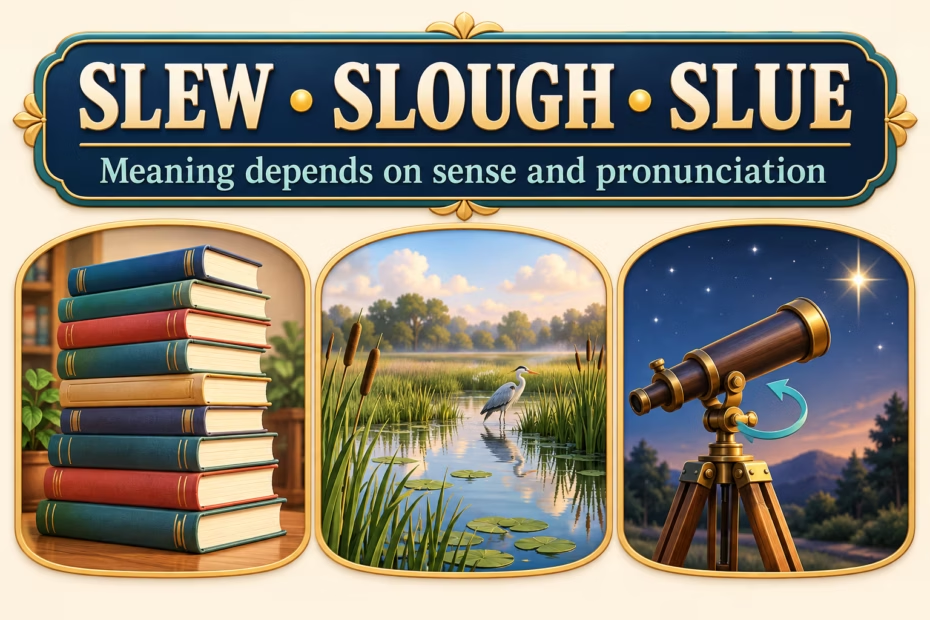
        Three word labels, slew, slough, and slue, beside books, a marsh, and a pivoting telescope illustrating their overlapping meanings

        Slew vs Slough vs Slue: Understanding and Using Appropriately

          Have you ever found yourself confused between words that sound similar but have different meanings? Well, you’re not alone. In the English language, there are countless examples of words that can trip us up, and “slew,” “slough,” and “slue” are no exception. In this text, I’ll jump into the nuances of these three words and help you understand when and how to use them appropriately.
          First, let’s ad

          FVS, FVSE, and four: abbreviations need context; four is a number

          FVS vs FVSE vs Four: Using Appropriately in Communication – Best Practices and Case Studies

            When it comes to choosing the right tool for the job, it’s essential to understand the differences between fvs, fvse, and four. As an expert in the field, I’ve spent years working with these technologies and have gained valuable insights into their appropriate usage. In this text, I’ll guide you through the nuances of fvs, fvse, and four, helping you make informed decisions based on your specific

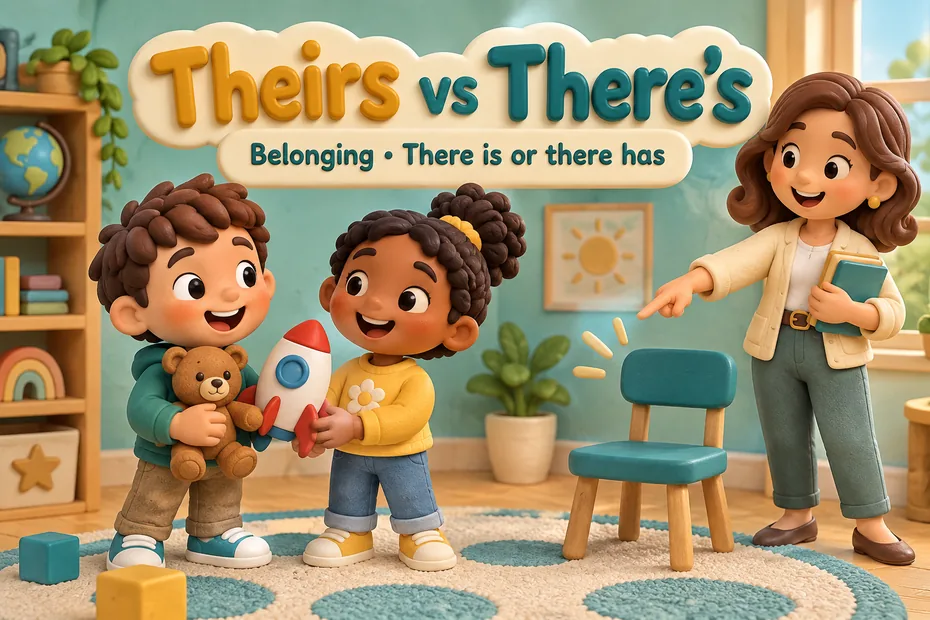
            Theirs vs there's: belonging versus there is or there has

            Using “Theirs” and “Theres” Appropriately: A Guide to Understanding the Difference

              Have you ever found yourself confused about when to use “theirs” and “theres”? You’re not alone. In this text, I’ll walk you through the correct usage of these two commonly misused words. Understanding the difference between “theirs” and “theres” is essential for effective communication. Whether you’re writing an email, a report, or even a text message, using these words appropriately can make a s

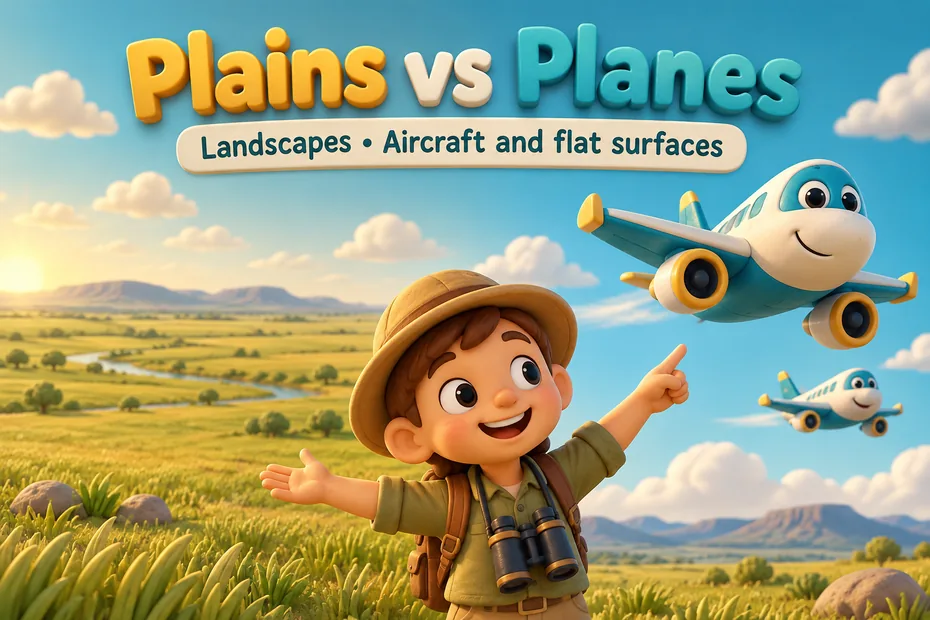
              Plains vs planes: landscapes versus aircraft and flat surfaces

              Understanding the Differences: Plains vs. Planes and How to Use them Appropriately

                Have you ever found yourself confused between the words “plains” and “planes”? Well, you’re not alone. As an expert writer, I’ve seen this common mistake pop up time and time again. In this text, I’ll provide you with a clear understanding of when to use “plains” and when to use “planes” appropriately. Understanding the difference between these two words is crucial, especially if you want to avoid

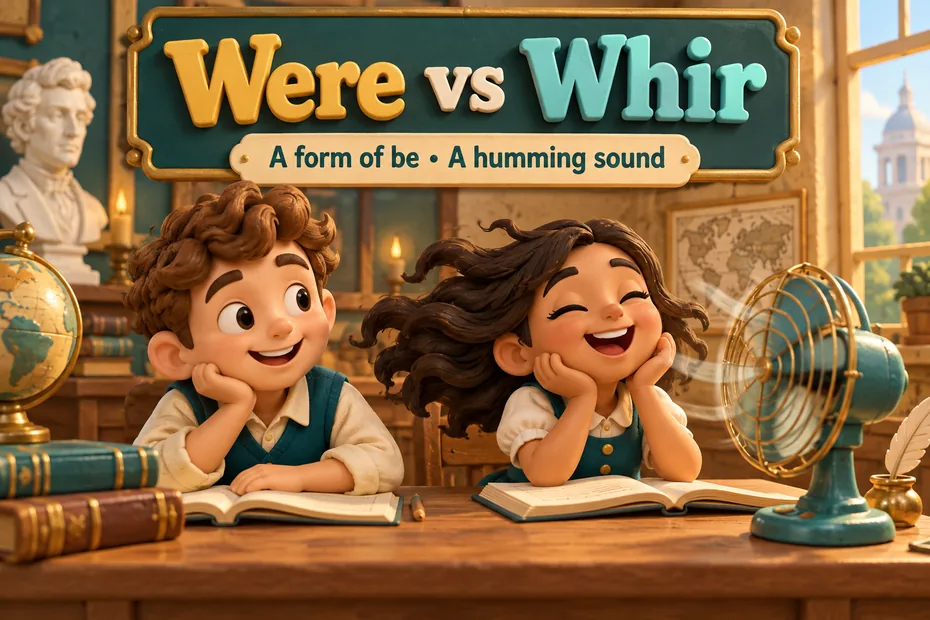
                Were vs whir: a form of be versus a humming sound

                When to Use ‘Whir’ Appropriately: A Comprehensive Guide to Differentiating ‘Were’ and ‘Whir’

                  Were vs whir: the quick answer Were is a form of be: “They were ready” and “You were early.” Whir names a continuous humming or vibrating sound associated with rapid movement, or acts as a verb describing that movement and sound: “The fan made a whir” and “The fan whirred.” These words can sound alike… Read More »When to Use ‘Whir’ Appropriately: A Comprehensive Guide to Differentiating ‘Were’ and ‘Whir’

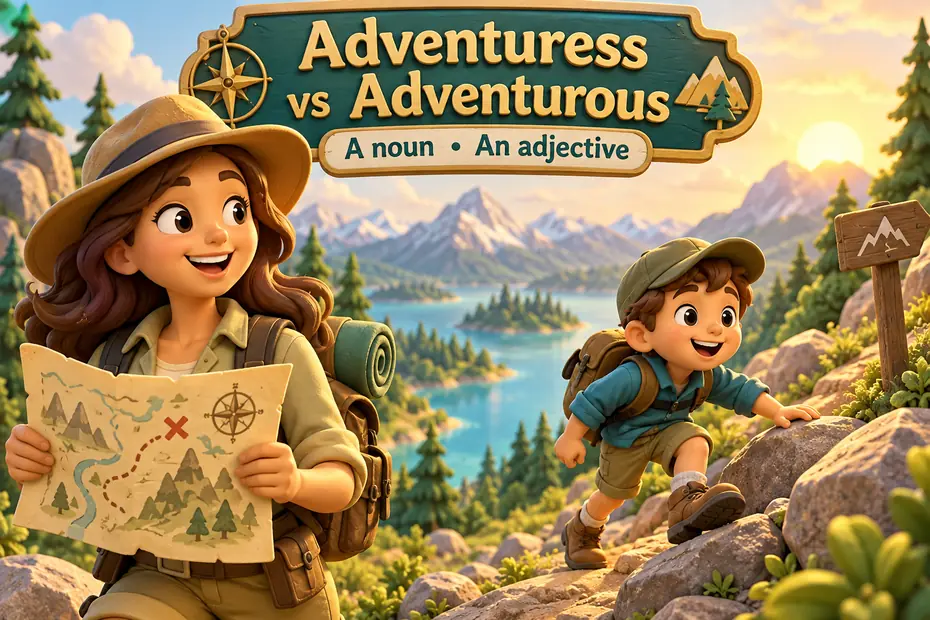
                  Adventuress vs adventurous: a noun versus an adjective

                  Mastering the Difference: How to Appropriately Use Adventuress and Adventurous

                    Adventuress vs adventurous: the quick answer Adventuress is a noun referring to a woman, traditionally a female adventurer and, in another old-fashioned sense, someone seeking status or livelihood through questionable means. Adventurous is an adjective describing a willingness to try new experiences or accept risks. Write “She is adventurous” or “She is an adventurous traveler.”… Read More »Mastering the Difference: How to Appropriately Use Adventuress and Adventurous

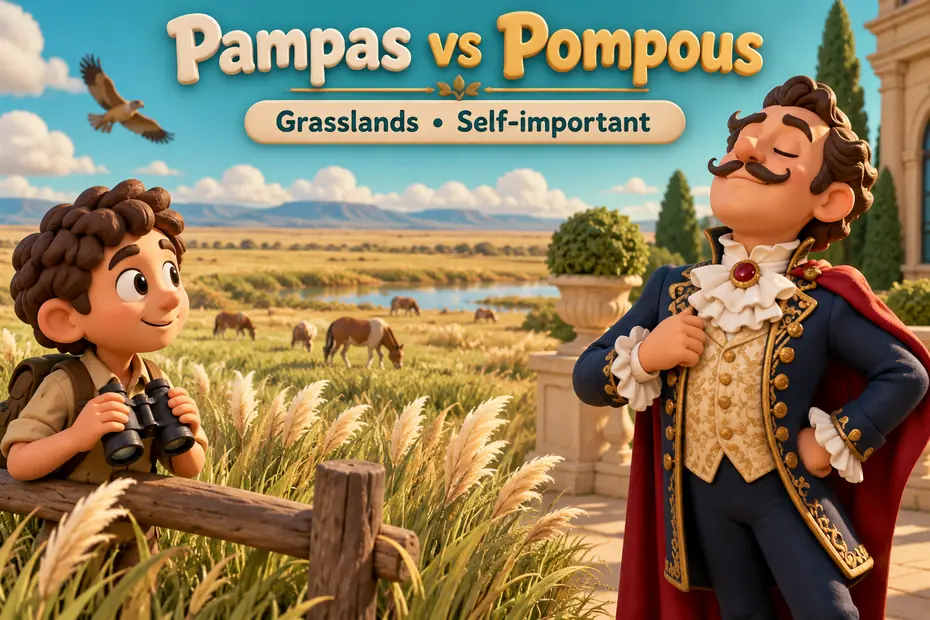
                    Pampas vs pompous: grasslands versus self-important

                    Pampas vs. Pompous: Understanding the Appropriate Usage and Differences

                      Pampas vs pompous: the quick answer Pampas refers to grassy plains, especially the South American region called the Pampas. Pompous is an adjective commonly describing an exaggerated sense of importance or an overly grand style: “His introduction sounded pompous.” Use the first word for the landscape and the second for the manner or tone. A… Read More »Pampas vs. Pompous: Understanding the Appropriate Usage and Differences

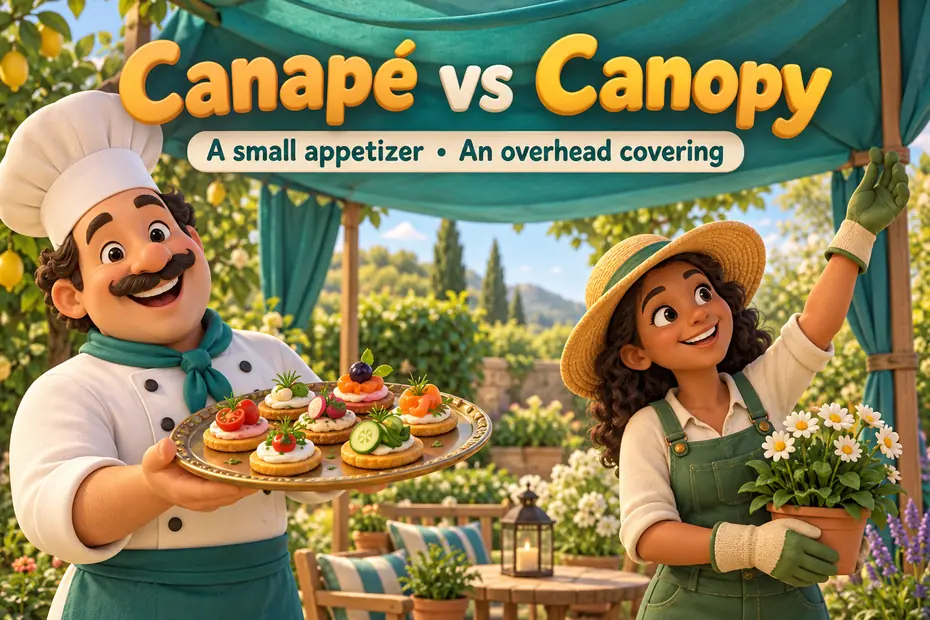
                      Canapé vs canopy: a small appetizer and an overhead covering

                      Understanding the Differences and Benefits of Canapés and Canopies: Using Them Appropriately

                        Canapé vs. canopy: the quick answer A canapé is a small appetizer, commonly made with a bread, toast, or cracker base and a savory topping. A canopy is an overhead covering or a layer that spreads above something. Serve canapés on a tray; sit under a canopy. The plural spellings are different: canapés adds s,… Read More »Understanding the Differences and Benefits of Canapés and Canopies: Using Them Appropriately

                        Resister, resistor, and resistvs: choose by meaning and context

                        Resister vs Resistvs: Using Appropriately and Avoiding Common Mistakes

                          When it comes to using the right words, precision is key. And in the world of language, even the smallest difference can make a big impact. That’s why today, I want to talk about a common confusion that many people encounter: the difference between “resister” and “resistvs”. As an expert in language and communication, I’ve seen this mistake made time and time again. But fear not, because in this t

                          Snees vs sneeze: use sneeze for the familiar reflex

                          Understanding the Difference between “Snees” and “Sneeze” and Using them Appropriately

                            Snees vs. sneeze: the quick answer Use sneeze for the familiar reflex involving a sudden expulsion of breath through the nose and mouth. The correct forms are sneeze, sneezes, sneezed, and sneezing. “I sneeze,” “She sneezes,” and “He sneezed yesterday” are ordinary modern English examples. If you mean this action, snees is the wrong spelling.… Read More »Understanding the Difference between “Snees” and “Sneeze” and Using them Appropriately