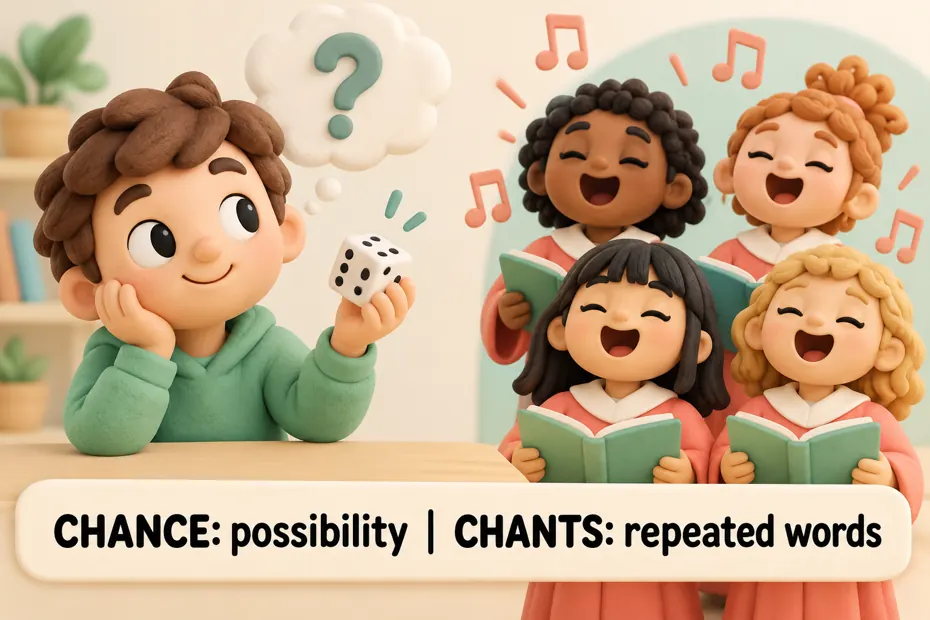
Chance means possibility, opportunity, or luck. Chants is the plural of chant, a repeated rhythmic phrase or song; it can also be the present-tense verb in “she chants.” Use chance for something that might happen or an opportunity, and chants for repeated words or sounds. “Give me a chance” asks for an opportunity.
Chance vs chants: key facts
- Chance commonly names a possibility, opportunity, or luck.
- Chants can name more than one chant.
- Chants can also be a verb with a singular subject.
- The plural of chance is chances, not chants.
- Sentence meaning and grammar distinguish the similar sounds.

Which word matches the idea?
If someone asks to try, discusses a possible outcome, or mentions luck, chance is the relevant word. If a crowd repeats a phrase or a group sings rhythmically, chant or chants is relevant. Read what is actually happening rather than choosing a spelling from sound alone.
| Meaning | Word | Original example |
|---|---|---|
| Opportunity | chance | Give the learner a chance to answer. |
| Possibility | chance | There is a chance of rain. |
| Luck or accident | chance | We met by chance at the station. |
| Several repeated phrases | chants | The crowd’s chants filled the square. |
| Repeats words rhythmically | chants | She chants the rhythm softly. |
Merriam-Webster’s chance entry documents opportunity, possibility, and luck-related meanings. Its chant entry supplies the noun and verb behind chants. The sentences here are original practice examples showing those distinctions.
Is chants a noun or a verb?
In “The chants grew louder,” chants is a plural noun. In “The singer chants softly,” chants is a present-tense verb. The singer is singular, so the verb receives s. For several singers, write “The singers chant softly.” The shared spelling can therefore play two different roles in different sentences.
Compare “The class learned two chants” with “The class chants the phrase.” The first names two rhythmic pieces; the second describes an action. To make the distinction visible while editing, underline the subject and circle the main verb. The word’s position and meaning will show whether it names something or states what someone does.
How do chance and chances differ?
Chance can be a singular count noun when it means an opportunity: “She had one chance to try.” The plural is chances: “She had three chances to try.” It can also appear in expressions about luck, such as by chance. Do not write chants when you mean several opportunities.
“What are the chances?” asks about likelihood or possibility, depending on context. “What are the chants?” asks about the repeated phrases or songs. The difference is especially important in a short question because both spellings are valid words and an automatic spelling checker may not detect the unintended meaning.
Useful expressions with chance
“Have a chance to” introduces an opportunity: “You will have a chance to revise.” “Take a chance” concerns accepting a risk or trying despite uncertainty: “They took a chance on a new route.” “By chance” describes something accidental or unplanned: “We found the missing card by chance.”
These expressions do not concern chanting. If you are describing rhythmic repetition, name the words, sound, or performer instead: “The supporters repeated a short chant.” Clear context can also resolve ambiguity in speech. “A chance to sing” is an opportunity; “chants to sing” would refer to pieces that can be sung.
Verb forms and original practice
The verb chant has the forms chant, chants, chanted, and chanting. Write “She chanted yesterday,” “She has chanted before,” and “She is chanting now.” After did, use the base form: “Did she chant?” The noun chance does not become chanted when you put an opportunity in the past; write “She had a chance.”
Fill these gaps: “Give him a ___ to speak.” “The crowd repeated several ___.” “She ___ the phrase every morning.” “We met by ___.” The answers are chance, chants, chants, chance. In the second sentence, chants names several repeated phrases; in the third, it describes what she does.
For a mixed example, read “The group had a chance to learn the chants.” Chance names the opportunity, and chants names what the group learned. Explain each word’s role before checking the spelling. That practice helps you recognize the distinction in new sentences rather than memorizing one example.
Frequently asked questions
Is it give me a chance or give me chants?
Write give me a chance when asking for an opportunity. Give me chants would ask someone to provide repeated phrases or songs, which is a different request. The surrounding purpose determines the spelling, so ask whether the speaker wants an opportunity or something to repeat rhythmically.
Is chants the plural of chance?
No. The plural of chance is chances. Chants is the plural of chant and can also be a present-tense verb. Compare “three chances to answer” with “three chants to learn.” Both are plural noun phrases, but they name different things and need different spellings.
Can chance be used as a verb?
Yes, chance also has verb uses, such as risking something or happening to do something. Those uses still belong to chance rather than chant. For learners choosing between this pair, first establish the meaning; then check the correct form and construction for the particular sentence.
Original article and examples
Have you ever wondered about the power of chance and the significance of chants? In this text, I’ll investigate into the intriguing area of chance and chants and explore how they can be used appropriately in various aspects of our lives. From personal growth to professional success, chance and chants have the potential to shape our experiences and outcomes. So, whether you’re looking to harness the power of luck or seeking to tap into the energy of positive affirmations, this article will provide valuable insights and practical tips to help you navigate the delicate balance between chance and chants. Get ready to unlock the secrets of these two powerful forces and discover how to use them effectively to manifest your desires.
Key Takeaways
- Chance refers to unpredictable events or circumstances that occur without any apparent cause or design, and it plays a significant role in shaping our experiences and outcomes.
- Embracing chance and being adaptable can turn unexpected events into valuable learning experiences and transformative moments.
- Chants are rhythmic verbal expressions that can influence our state of mind and evoke specific emotions.
- Chants have the power to help us reframe our thoughts and beliefs, induce relaxation and meditation, and facilitate spiritual connection.
- Chance events can act as catalysts for personal growth by pushing us out of our comfort zones, fostering adaptability, and prompting self-reflection and learning.
- By incorporating chants into our daily routines, we can reinforce positive affirmations, shift our mindset towards success, and cultivate personal growth.
- Chance and chants can both contribute to professional success by embracing unexpected opportunities, setting powerful intentions, and using chants as a tool for self-affirmation, focus, and motivation.
Understanding the Power of Chance
When it comes to our lives, chance plays a significant role in shaping our experiences and outcomes. Understanding the power of chance can help us navigate through life with a deeper sense of awareness and perspective. So, what exactly is chance?
Chance refers to the unpredictable events or circumstances that occur without any apparent cause or design. It is the element of unpredictability that brings both excitement and uncertainty to our lives. Chance can manifest in various forms, such as random encounters, unexpected opportunities, or unforeseen challenges.
The key to understanding chance lies in recognizing that it is beyond our control. We cannot influence or manipulate chance to work in our favor. But, what we can do is embrace chance and make the most of the opportunities it presents. By keeping an open mind and being adaptable, we can turn unexpected events into valuable learning experiences or even transformative moments.
In the quest for a successful and fulfilling life, it’s crucial to strike a balance between relying on chance and taking intentional actions. While chance brings forth opportunities, it is our proactive efforts that allow us to seize those opportunities and create positive outcomes. Chance acts as a catalyst, but we are the ones who must propel ourselves forward.
Recognizing the power of chance enables us to embrace uncertainty and step outside our comfort zones. It encourages us to explore new possibilities, take risks, and cultivate resilience. By embracing chance, we open ourselves up to a world of endless opportunities and remarkable growth.
Understanding how chance operates in our lives also helps us develop a sense of gratitude. When we acknowledge and appreciate the role of chance, we gain a deeper appreciation for the people, events, and experiences that have shaped our journey. By recognizing the role of chance, we can embrace the present and cultivate a positive mindset.
Exploring the Significance of Chants
Chants have long held a significant place in human history across cultures and traditions. They are rhythmic, repetitive, and purposeful verbal expressions that can be used in various aspects of our lives. In this section, I will investigate into the significance of chants and how they can impact our thoughts, emotions, and overall well-being.
What is a Chant?
A chant is a form of repetitive vocalization that is often accompanied by rhythmic movements or actions. It can consist of specific words or sounds that are repeated in a particular pattern or sequence. Chants have been used for centuries in religious, spiritual, and cultural practices, as well as in sports, personal development, and meditation.
The Power of Chants
Chants have a unique power to influence our state of mind and evoke specific emotions. When we chant, we tap into the power of sound and vibration, which can have a profound effect on our physical, mental, and emotional well-being. The repetitive nature of chants helps to focus our attention and create a sense of rhythm and harmony within us.
Chants for Positive Affirmation
One significant aspect of chants is their ability to help us reframe our thoughts and beliefs. By incorporating positive affirmations into chants, we can shift our mindset and reinforce empowering beliefs. For example, chanting phrases like “I am worthy” or “I am capable” can boost our self-confidence and inner strength.
Chants for Relaxation and Meditation
Chants are commonly used as a tool for relaxation and meditation. The rhythmic repetition of sounds or words can induce a state of deep relaxation, allowing us to experience a sense of calmness and tranquility. Chanting can also help us achieve a meditative state by quieting the mind and focusing our attention on the present moment.
Chants for Spiritual Connection
In various spiritual traditions, chants are used as a means to connect with the divine or higher consciousness. The vibrations created through chanting are believed to transcend the physical area and open channels of communication with the spiritual area. Chants can help us cultivate a deeper sense of connection, reverence, and gratitude.
How Chance Can Shape Personal Growth
In personal growth and self-improvement journeys, the role of chance should not be underestimated. While chance may seem like a random occurrence, it actually has the potential to shape our lives and contribute to our personal development. Let’s explore how chance can play a significant role in shaping personal growth.
Definition of Chance: Chance refers to an unpredictable event or circumstance that occurs without any apparent design or purpose. It is something that happens by luck or accident, often beyond our control. On the other hand, personal growth pertains to the continuous process of self-improvement, learning, and expanding one’s potential.
How Chance and Personal Growth Intersect: Although chance events may seem unrelated to personal growth, they have the potential to act as catalysts, leading to transformative experiences and growth opportunities. Here’s how:
- Spontaneity and Discovering New Paths: Chance encounters, unexpected opportunities, or even mistakes can push us out of our comfort zones and lead to new paths of personal growth. Embracing these unplanned moments can help us discover hidden talents, develop new skills, or uncover passions we never knew we had.
- Adapting to Change: Chance events often require us to adapt and cope with unexpected circumstances. This adaptability fosters resilience and flexibility, key qualities for personal growth. By embracing the uncertainties of chance, we can enhance our ability to navigate through life’s challenges and adapt to change.
- Self-Reflection and Learning: Chance occurrences can serve as moments of reflection, prompting us to reevaluate our goals, values, and priorities. Through introspection and analysis, we can extract valuable lessons from chance events, enabling us to make more informed decisions and continue our journey of personal growth.
- Serendipity and Connecting the Dots: Chance can also bring unexpected connections and opportunities into our lives. By being open-minded and receptive, we can seize these serendipitous moments and use them as stepping stones for personal growth. It’s important to recognize and embrace these opportunities, even if they may not align with our original plans.
Using Chants for Positive Affirmations
Chants can be powerful tools for harnessing positive energy and promoting self-confidence and growth. By incorporating chants into our daily routines, we can reinforce positive affirmations and shift our mindset towards success and self-belief. Here’s how you can effectively use chants for positive affirmations:
- Set an Intention: Start by understanding the specific areas of your life that you want to improve or the qualities you want to develop. Whether it’s boosting self-confidence, improving focus, or cultivating gratitude, clarity on your intentions will guide your choice of affirmations.
- Choose Empowering Affirmations: Select affirmations that are aligned with your intentions. For example, if you want to enhance your self-esteem, you could chant phrases like “I am confident,” “I am worthy,” or “I believe in myself.” Make sure your affirmations are positive, present tense, and reflect what you want to embody.
- Create a Chanting Ritual: Find a quiet and calm space where you can engage in your chanting practice. You can light a candle, burn incense, or play soft instrumental music to enhance the ambiance. Set aside a few minutes each day to chant your affirmations.
- Repetition is Key: Repeat your chosen affirmations with conviction and focus. The repetitive nature of chanting helps to rewire your subconscious mind, creating new neural pathways that support your desired outcomes. As you chant, imagine yourself already embodying the qualities or achieving the goals represented by your affirmations.
- Engage Your Body and Emotions: While chanting, engage your whole being. Stand or sit with good posture, allowing your body to open up and energetically receive the affirmations. Feel the words resonate within you, visualizing their positive impact on your life.
- Stay Consistent and Patient: Like any practice, the key to achieving results is consistency. Commit to a regular chanting routine and be patient with the process. It may take time for the affirmations to sink in and for you to start noticing tangible changes in your thoughts, emotions, and actions.
Remember, the power of chants lies in your belief and commitment. By integrating positive affirmations into your daily life through chanting, you can shift your mindset and pave the way for personal growth and self-improvement.
- MindValley. (2021). How to Use Chants for Positive Affirmations.
Harnessing the Power of Chance and Chants in Professional Success
As individuals on a path of personal growth and self-improvement, it’s essential to recognize the role that both chance and chants can play in our journey towards professional success. While these concepts may seem unrelated at first, they both have the potential to profoundly impact our careers and open up doors we never could have anticipated.
Chance events, whether they be chance encounters, unexpected opportunities, or even mistakes, can serve as catalysts for transformative experiences and growth. These unplanned moments have the power to push us out of our comfort zones, leading to new paths of personal and professional development. It’s in these serendipitous instances that we have the chance to discover hidden talents, develop new skills, and uncover passions we never knew we had. Embracing chance requires adaptability and resilience, qualities that are crucial for success in any professional field.
On the other hand, chants can complement our journey towards professional success by providing a powerful tool for self-affirmation, focus, and motivation. Chanting positive affirmations such as “I am confident,” “I am capable,” or “I am successful” can boost our self-belief and reinforce a positive mindset. By harnessing the power of sound and repetition, chants have the ability to rewire our subconscious mind, aligning our thoughts and actions with our desired goals. This focused intention and alignment can pave the way for enhanced performance, increased productivity, and eventually, professional success.
Integrating chance and chants into our professional lives requires intentional practice and consistency. Here are some ways to harness their power:
- Embrace Chance: Be open-minded and receptive to unexpected opportunities. Step outside of your comfort zone and embrace the unknown. These chance encounters or unplanned events can lead to significant career breakthroughs.
- Set Intentions: Clarify your career goals and set powerful intentions. Use chants as a tool to reinforce these intentions. Repeat affirmations related to professional success daily, such as “I am a successful professional,” “I attract fulfilling career opportunities,” or “I am a confident communicator.”
- Create a Ritual: Establish a chanting ritual in a quiet and calm space. Set aside dedicated time each day for chanting affirmations. This practice creates a sense of focus and consistency, enhancing the impact of the chants on your subconscious mind.
Conclusion and Practical Tips for Using Chance and Chants Appropriately
In this text, we have explored the power of chants and the role of chance in personal growth and professional success. Chants, with their repetitive vocalizations, have the ability to influence our thoughts, emotions, and overall well-being. Whether used for positive affirmations, relaxation, or spiritual connection, chants tap into the power of sound and vibration to evoke specific emotions and enhance our state of mind.
On the other hand, chance events, although seemingly unrelated to personal growth, can act as catalysts for transformative experiences and growth opportunities. Embracing these unplanned moments requires us to adapt, fostering resilience and flexibility, which are key qualities for personal growth.
To effectively use chants for positive affirmations, it is important to set intentions and choose empowering affirmations that align with our goals. Creating a chanting ritual in a calm space, repeating the affirmations with conviction, and engaging our body and emotions while chanting can shift our mindset and pave the way for personal growth.
In terms of professional success, embracing chance events can lead to the discovery of hidden talents and passions. Chants can complement this journey by providing a tool for self-affirmation, focus, and motivation. By aligning thoughts and actions with desired goals through chanting, we can enhance our performance and increase productivity.
To conclude, by embracing chance and incorporating chants into our lives, we can open ourselves up to transformative experiences, personal growth, and professional success. Take
Frequently Asked Questions
Q: What are chants and how do they impact our well-being?
Chants are repetitive vocalizations that can be used in various aspects of our lives, including religious, spiritual, and cultural practices, as well as in sports, personal development, and meditation. Chants have the power to influence our state of mind and evoke specific emotions by tapping into the power of sound and vibration. They can be used for positive affirmations, relaxation and meditation, and spiritual connection.
Q: Can chants boost self-confidence?
Yes, chanting phrases like “I am worthy” or “I am capable” can boost self-confidence. The rhythmic repetition of sounds or words in chants can induce a state of deep relaxation and help in cultivating a positive mindset.
Q: How can chants be used for relaxation and meditation?
Chants can be used for relaxation and meditation by creating a chanting ritual in a quiet and calm space. Repeating positive affirmations with conviction and focus while engaging the body and emotions can help shift the mindset and pave the way for personal growth and self-improvement.
Q: How can chance events contribute to personal growth?
Chance events, such as chance encounters, unexpected opportunities, or even mistakes, can act as catalysts for transformative experiences and growth opportunities. Embracing these unplanned moments can help us discover hidden talents, develop new skills, and uncover passions we never knew we had.
Q: Can chants be integrated into professional success?
Yes, chants can complement the journey towards professional success by providing a tool for self-affirmation, focus, and motivation. By chanting positive affirmations, one can boost self-belief, reinforce a positive mindset, and align thoughts and actions with desired goals.
Q: How can one integrate chance and chants into their professional lives?
To integrate chance and chants into professional lives, it’s important to embrace chance events, set intentions, and create a chanting ritual. By being open-minded and receptive to serendipitous moments, one can seize opportunities for personal and professional growth.


