
To chase up means to contact someone and remind them to finish something they have not yet done. In a sentence, the phrasal verb takes the task or the person as its object: “I will chase up the missing invoice.” The expression is chiefly British and belongs to everyday business writing, where American English usually prefers follow up.
Chase up at a glance
- Chase up is a transitive phrasal verb meaning to prompt someone about a pending task.
- It is separable: you can chase up the invoice or chase the invoice up.
- A pronoun must sit between the verb and the particle: chase it up, never chase up it.
- The expression is chiefly British and neutral-informal, common in offices and email.
- The commonest error is adding to or for before the object, as in chase up to the supplier.
What does chase up mean?
Chase up is a phrasal verb meaning to contact somebody in order to remind them about a task or hurry it along. The Cambridge entry for chase up gives this prompting sense for British English, and a second, rarer sense of searching until you find something. Where the physical act of running after someone is meant, the base verb pursue or chase alone is the right choice.
| Sense | Plain meaning | Example sentence |
|---|---|---|
| Prompt a person | Remind someone to do a task | I chased him up about the report. |
| Hurry a task along | Ask for something to be done sooner | She chased up the late delivery. |
| Track something down | Search until a thing is found | He chased up the missing file at last. |
One limitation is worth stating plainly. Chase up does not mean simply asking a question, and it is not a synonym for nagging: it implies a task that is already owed. In a formal report, and in most American writing, the plain phrase follow up or a direct request reads better than the phrasal verb.
How do you use chase up in a sentence?
The verb is transitive, so it always needs an object, and it is separable, so the object may sit either side of the particle. The one fixed rule is the pronoun: it goes in the middle. Five patterns cover nearly every sentence a learner will need.
| Pattern | Example | What it signals |
|---|---|---|
| chase up + object | I will chase up the invoice today. | The commonest order, with the task straight after the verb. |
| chase + object + up | I will chase the invoice up today. | The separated form, identical in meaning. |
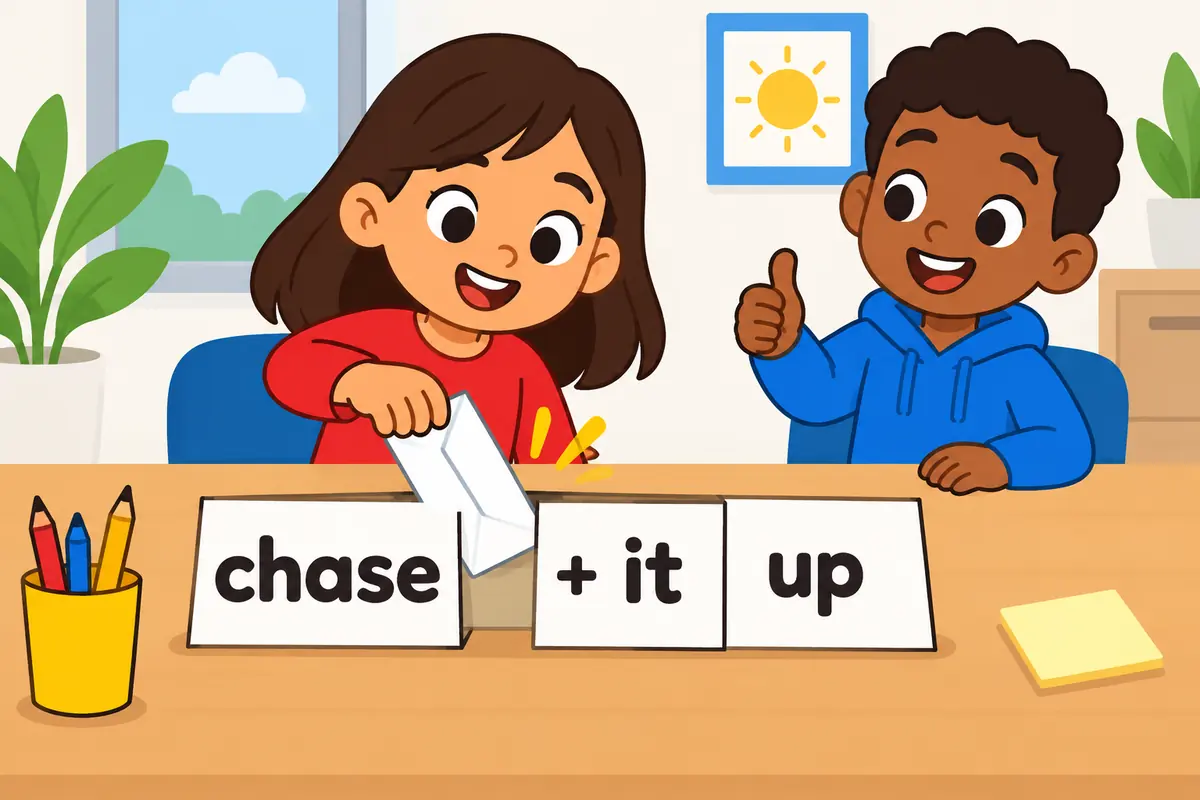
| chase + pronoun + up | Please chase it up before Friday. | A pronoun must sit between verb and particle. |
| chase up + person + about + thing | She chased the supplier about the delay. | Names who is prompted and what they owe. |
| be chased up | The order was chased up twice. | Passive form, common in office records. |
The particle may not strand at the end of a clause when the object is a pronoun: chase it up is correct and chase up it is not. When the object is a full noun phrase, both orders are standard.
Chase up in a sentence: examples across contexts
Chase up changes its tone more than its meaning. The nine sentences below move from a friendly reminder to a formal record, and each one names the task or the person being pursued.
| Context | Example sentence | Why this works |
|---|---|---|
| Office email | Could you chase up the signed contract when you have a moment? | Softens the request with could and a time phrase. |
| Team chat | I will chase it up with the printers this afternoon. | Uses the pronoun form correctly in the middle. |
| Project meeting | We need to chase up the two overdue invoices. | Keeps the task as the object in a planning sentence. |
| Customer service | Our team chased up your parcel and it leaves today. | Shows the passive-adjacent past use in a service update. |
| News report | Officials chased up the missing records before the hearing. | Uses the searching sense rather than the prompting one. |
| Freelance work | I chased the client up about payment twice last week. | Separates the verb and particle around a full noun. |
| Formal record | The booking was chased up on 3 May with no reply. | Uses the passive form that office logs prefer. |
| Conversation | Have you chased up your insurance yet? | Relaxed speech keeps the phrasal verb whole. |
| Academic office | The department chased up references for every applicant. | Tracks a routine administrative task. |
Notice that the phrasal verb usually pairs with an abstract object, an invoice, a reply, a reference. A writer who means chasing a person around a field needs the plain base verb, not the particle. In a busy office the same sentence often appears in the past passive, which records that a task was pushed without naming who did the pushing.
Chase up vs follow up
The nearest rival to chase up is follow up, and the two are not fully interchangeable. The choice turns on how much pressure the writer wants to convey and which side of the Atlantic the reader sits on. A blunter option is expedite, which asks for speed without any reminder.
| Attribute | chase up | follow up |
|---|---|---|
| Core meaning | Prompt someone about a task they owe | Check on progress or continue contact |
| Usual region | Chiefly British | British and North American alike |
| Register | Neutral-informal business | Neutral, from casual to formal |
| Typical object | An invoice, reply or person | A topic, lead or meeting |
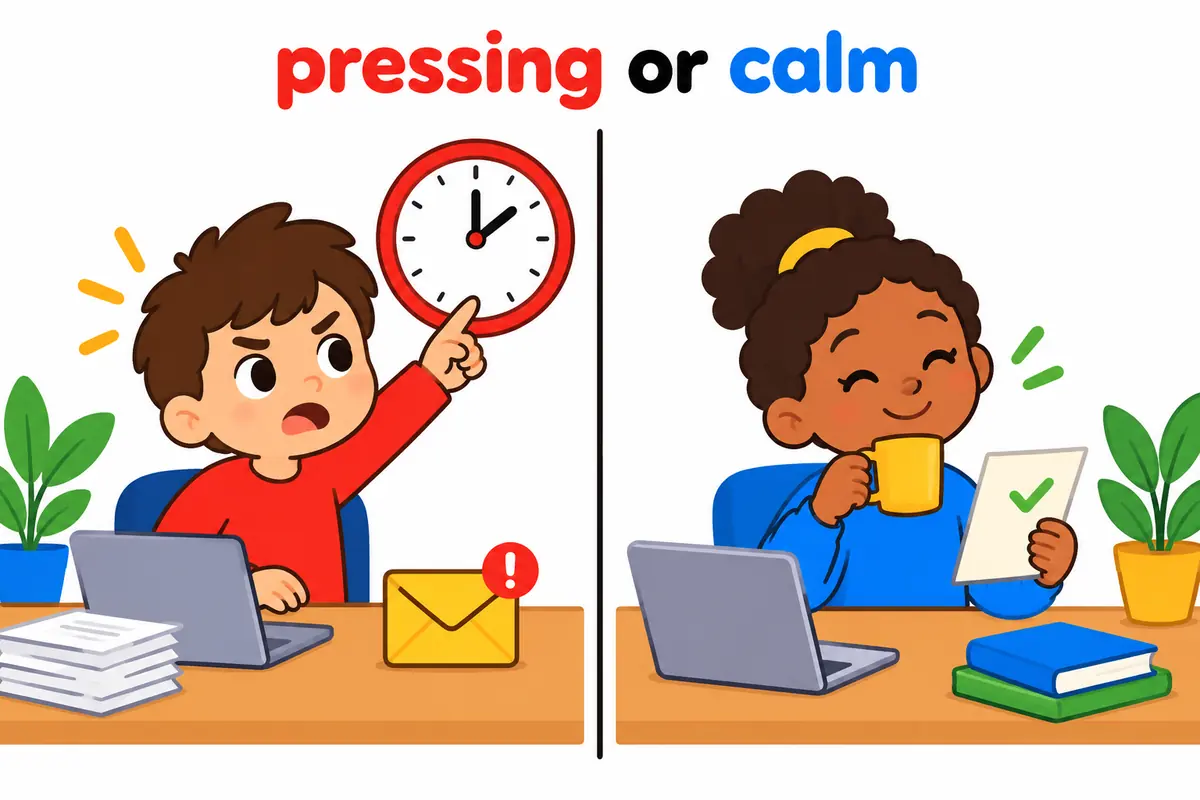
| Tone | Pressing, slightly impatient | Neutral and unhurried |
| Particle pattern | Separable: chase it up | Usually inseparable: follow up on it |
Verdict: choose chase up when a task is overdue and somebody needs reminding, and choose follow up when you simply want to check progress without applying pressure. Save the harsher edge of nag for repeated reminders that the writer is criticising.
Word forms and grammar of chase up
As a phrasal verb, chase up inflects on the verb, never on the particle. It also produces a noun-like compound, the chase-up, which appears in office English. The same particle turns up in other verbs such as back up and add up.
| Form | Part of speech | Example |
|---|---|---|
| chase up | phrasal verb, base | I will chase up the report. |
| chases up | phrasal verb, third person singular | He chases up every late payment. |
| chasing up | present participle | She is chasing up the missing order. |
| chased up | past and past participle | I chased up the invoice yesterday. |
| chase-up | noun or modifier | Send a chase-up email on Monday. |
Keep the particle attached to the verb in the base form, and remember that the tense marking never moves: chased up, not chase upped. The compound noun then takes the plural, two chase-ups, like any ordinary noun.
Common mistakes with chase up
- Incorrect:
I will chase up it after lunch.Correct: I will chase it up after lunch. Rule: A pronoun object must sit between the verb and its particle. - Incorrect:
I will chase up to the supplier.Correct: I will chase up the supplier. Rule: The phrasal verb is transitive and takes no preposition before its object. - Incorrect:
Please chase up for the report.Correct: Please chase up the report. Rule: Put the thing that is owed straight after the verb, with no for in between. - Incorrect:
He chased up the dog around the park.Correct: He chased the dog around the park. Rule: Chase up means prompt or track down, not to run after something physically. - Incorrect:
We chased up on the deadline.Correct: We chased up the deadline. Rule: The standard phrase is follow up on, not chase up on; keep chase up transitive.
Practice using chase up
Work through the six items, then read the reasoning rather than only the answers.
- Fill the gap: Could you ______ the unpaid invoice before the month ends?
- Choose the better word: The client asked us to (chase up / chase up on) the missing samples.
- Correct the error: I will chase up them tomorrow morning.
- Build a sentence: use chase + person + up about + task for a late report.
- Spot the register: which belongs in a formal American report — the records were chased up, or the records were followed up?
- Rewrite with the pronoun: She chased the order up. Replace the order with it.
Answers
- chase up — the task follows the verb directly in the commonest pattern.
- chase up — the verb is transitive, so no on is needed before the object.
- I will chase them up tomorrow morning — the pronoun must sit in the middle.
- Model answer: I chased the editor up about the late report.
- The records were followed up — a formal American report avoids the chiefly British phrasal verb.
- She chased it up — the pronoun replaces the full noun between verb and particle.
The bottom line
Use chase up in a sentence when a task is overdue and you need to remind the person who owes it, keeping the thing owed as the object of the phrasal verb. The two nuances that decide most sentences are these: the verb is separable, so a pronoun goes in the middle as chase it up, and the expression is chiefly British, so American and formal writing usually prefers follow up.
Frequently asked questions about chase up
Is chase up British or American?
Chase up is chiefly British and very common in UK offices and email. American English usually says follow up or follow up on instead. An American reader will understand chase up without trouble, but the phrase may sound distinctly British, so writers aiming at a US audience often avoid it in formal documents.
Is chase up a separable phrasal verb?
Yes, chase up is separable. You may write chase up the invoice or chase the invoice up, and both are standard. The one restriction concerns pronouns: they must appear between the verb and the particle, so chase it up is correct while chase up it is not. Keep the tense ending on chase.
What is the difference between chase up and follow up?
Chase up carries more pressure, because it implies a task is already overdue and somebody must be reminded. Follow up is neutral and simply means checking progress or continuing contact. So you chase up an unpaid invoice but follow up on a job application you have not heard about.
Can you chase up a person?
You can, and the pattern is chase somebody up about something, as in I chased the supplier up about the delay. When the object is a full noun, the pronoun rule does not apply and the order is flexible. If the person is not being reminded about a task, plain chase is the better verb.