Concede is a verb meaning to admit that something is true, usually with reluctance, or to give up a point, a goal or a contest to someone else. It is transitive, so it takes an object: concede defeat, concede a point, or concede that the plan needs work. The word keeps the resistance of the speaker in view.
Concede at a glance
- Concede is a transitive verb; its forms are concedes, conceded and conceding.
- The dominant pattern is concede + that-clause, as in she conceded that the plan was rushed.
- A single noun object also works: concede defeat, concede a point, concede a goal.
- The verb belongs to formal and public writing, where an admission carries weight.
- The commonest error is inserting to before a that-clause: conceded to that.
What does concede mean?
Concede is a transitive verb meaning to admit something, often unwillingly, or to give something up to another person. The Cambridge entry for concede records both the admission and the yielding senses, and acknowledge a fact covers the neutral case where no reluctance is involved.
| Sense | Plain meaning | Example sentence |
|---|---|---|
| Admit something is true | Agree that a claim is correct, often unwillingly | She conceded that the estimate was optimistic. |
| Admit defeat | Accept that you have lost a contest | The candidate conceded before midnight. |
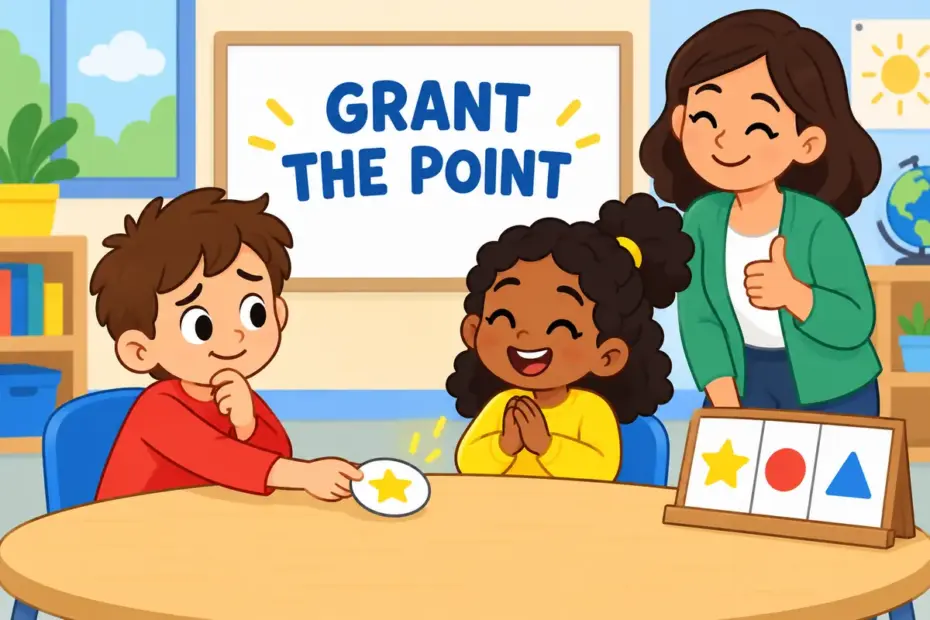
| Grant a point or right | Give up a point in an argument or a role | He conceded the argument to his sister. |
| Allow a score | Let the opponent gain a goal or point | The goalkeeper conceded two goals. |
One limitation is worth stating plainly. Concede rarely means wholehearted agreement, because it keeps the resistance of the speaker in view. Where no reluctance exists, accept or acknowledge is the plainer choice, and where the point is a formal decision, grant fits better.
How do you use concede in a sentence?
Concede takes a direct object in every sense, so the thing admitted or given up sits right after the verb. The object may be a clause, a single noun, or a noun with a person introduced by to. The verb never needs a helper preposition unless a recipient is named.
| Pattern | Example | What it signals |
|---|---|---|
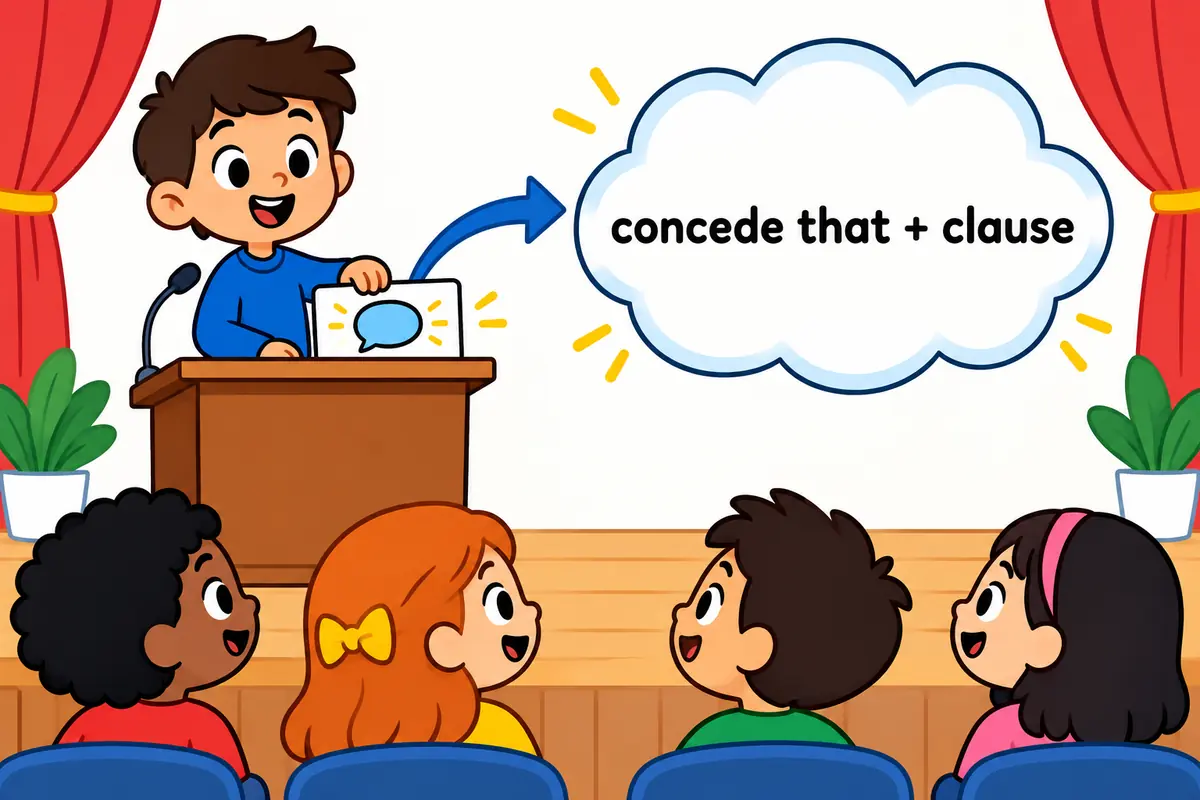
| concede + that-clause | She conceded that she had misjudged the timing. | Reports an admission with its content in a full clause. |
| concede + noun | The minister conceded defeat. | A single noun carries everything that is admitted. |
| concede + noun + to + person | He conceded the argument to his sister. | Names the thing given up and the person who gains. |
| concede to + noun | The board conceded to the union’s demands. | Yields under pressure to a demand or a group. |
| concede + object, sports | The keeper conceded two goals. | Allows the opponent to score, a fixed sporting use. |
When a formal body gives way rather than merely agreeing, writers often prefer grant a request, which names the act of giving without implying that a fight was lost.
Concede in a sentence: examples across contexts
The verb moves easily from a courtroom to a football pitch, and the object tells the reader which sense is in play. The nine sentences below keep the admission or the surrender visible in each setting.
| Context | Example sentence | Why this works |
|---|---|---|
| Classroom | He conceded that his partner had the clearer diagram. | A small contest makes the reluctant admission easy to picture. |
| Workplace email | We concede that the first schedule was too tight. | Accepts a fault without weakening the rest of the message. |
| News report | The mayor conceded the race shortly after ten. | Names the contest as the object, which is standard election reporting. |
| Debate | She conceded the point and moved to her next argument. | Shows the tactical use of giving up one point to protect another. |
| Sports report | The defence conceded only one goal all season. | Uses the fixed sporting sense with a score as the object. |
| Legal writing | Counsel conceded that the evidence was incomplete. | Keeps the admission formal and precisely scoped. |
| Academic prose | The study concedes that its sample was small. | Signals honest limitation inside an otherwise confident argument. |
| Business letter | We concede the deadline to the supplier. | Names both the thing given up and the party who gains it. |
| Conversation | I will concede that your route was faster. | The first person suits a friendly argument between equals. |
Two of these sentences use a that-clause, and both are formal. In speech the same admission usually becomes a bare noun object, as in fine, you win that point.
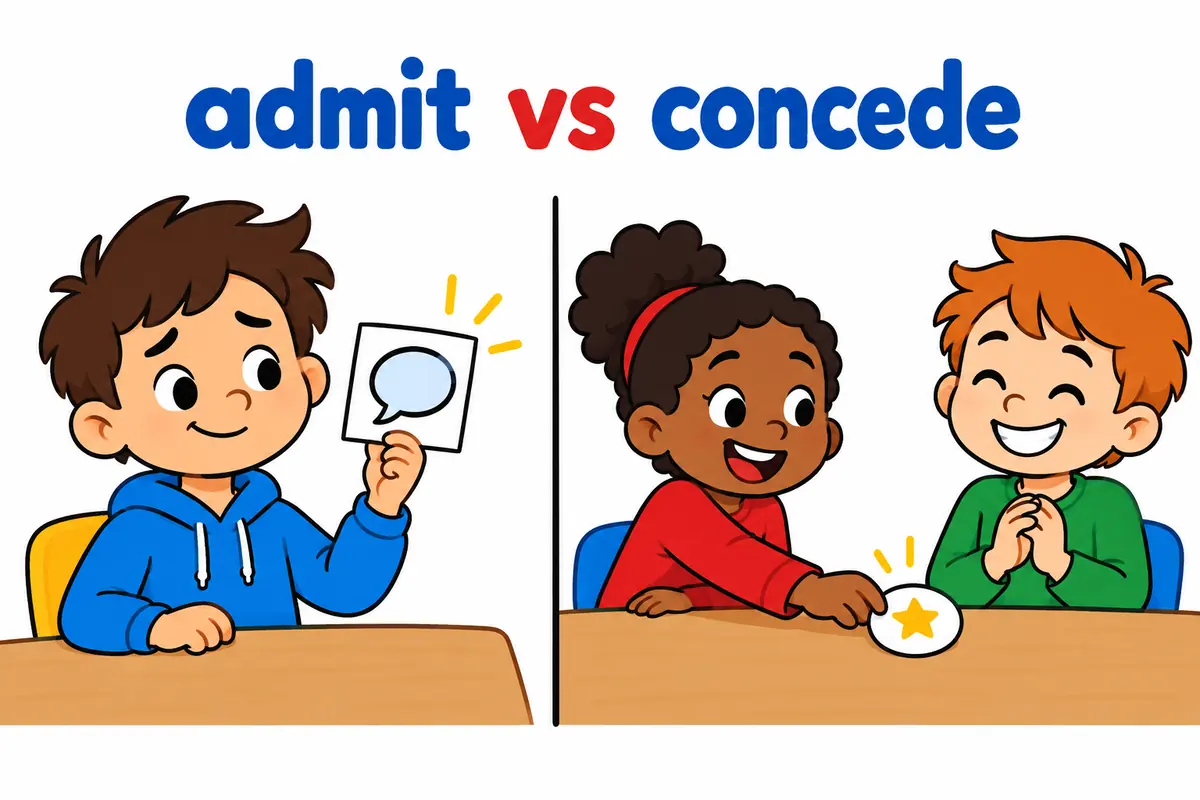
Concede vs admit
Concede is closest to admit, and the difference is reluctance. A person admits a fact at any temperature; a person concedes a point that costs something.
| Attribute | concede | admit |
|---|---|---|
| Core job | Give up a point under pressure | State that something is true |
| Reluctance | Built in; the speaker resists | Possible but not required |
| Typical object | Defeat, a point, a goal, a right | A fact, a mistake, a feeling |
| Register | Formal and public | Neutral, everyday to formal |
| What it implies | Someone else gains ground | The truth is simply reported |
| Example | He conceded the seat to his rival. | He admitted the report was late. |
Two near neighbours sharpen the picture further. To yield is to give way gradually, and to capitulate is to stop resisting altogether, so capitulate is stronger than either concede or yield.
Verdict: choose admit to state a fact, concede when the admission costs something, and capitulate only when resistance has stopped completely.
Word forms and grammar of concede
Concede inflects regularly, and its noun concession is far more common than the adjective. The table also lists the form learners build by mistake.
| Form | Part of speech | Example |
|---|---|---|
| concede | verb, base form | We concede that the results were mixed. |
| concedes | verb, third person singular | She concedes the point graciously. |
| conceded | verb, past and past participle | They conceded the match at dusk. |
| conceding | verb, present participle | He kept conceding ground in the debate. |
| concession | noun | The deal included one small concession. |
| concessive | adjective, grammar | An although-clause is a concessive clause. |
| conceded to that | non-standard | Write conceded that instead. |
The noun concession is useful in negotiation writing, where it names the thing given away rather than the act of giving it.
Common mistakes with concede
Most errors come from adding a preposition the verb does not need, or from a lookalike word. conceive means to imagine or form an idea, and concise means brief, so neither can replace concede.
- Incorrect:
She conceded to that the plan failed.Correct: She conceded that the plan failed. Rule: no to before a that-clause. - Incorrect:
He conceded the election to.Correct: He conceded the election. Rule: a transitive verb needs its object, with no dangling preposition. - Incorrect:
The team conceded to the match.Correct: The team conceded the match. Rule: the thing lost is the direct object, so no of or to is needed. - Incorrect:
I concede the argument into my brother.Correct: I concede the argument to my brother. Rule: use to for the person who gains the point. - Incorrect:
He was conceded that he was wrong.Correct: He conceded that he was wrong. Rule: the person who admits stays the subject; concede is active here.
Practice using concede
Work through the six items, then check the reasoning rather than only the answer.
- Fill the gap: The coach ______ that the other side had played better.
- Choose the better word: The senator finally accepted the result and (conceded / conceived) the race.
- Correct the error: She conceded to that the deadline was impossible.
- Build a sentence: use concede + noun + to + person about a debating point.
- Spot the register: which belongs in a formal statement — we concede the schedule was tight, or yeah, okay, you win.
- Rewrite with the noun: They conceded one small point. Use concession.
Answers
- conceded — the coach admits a fact, and the that-clause carries the admission.
- conceded — conceding fits a reluctant acceptance, while conceived means to imagine.
- She conceded that the deadline was impossible — drop to before the that-clause.
- Model answer: I conceded the final point to the other team.
- We concede the schedule was tight — a formal statement avoids slang.
- The deal contained one small concession — the noun needs an article.
The bottom line
Use concede in a sentence when an admission costs something or hands an advantage to another party, and let the object show whether a fact, a contest or a score is at stake. Two details decide most sentences: the verb is transitive, so it needs a direct object rather than a preposition, and it always carries reluctance, which is why admit stays the neutral alternative when no resistance is meant.
Frequently asked questions about concede
Is concede always reluctant?
Very nearly always. The word signals that a point is given up rather than shared willingly, which is why it suits debate, politics and negotiation. If no resistance is involved, accept and acknowledge are the plainer verbs, and they carry no sense of defeat.
What does concede mean in sports?
In sport, concede means to allow the opponent to score: a keeper concedes a goal, and a team concedes a penalty. The object is the score itself, so no preposition follows. It is also common in the passive, as in three goals were conceded in the second half.
Can you concede a point in an argument?
Yes, and this is the word at its most useful. Conceding a point lets a speaker surrender one small claim while defending the main case. The object is the point, and the person who gains it is named with to, as in she conceded that point to her opponent.
What is the noun form of concede?
The noun is concession, meaning the thing given up or the act of yielding. A negotiator might win a concession on price, or make a concession on timing. The person or body that gives way can also be called the conceder, though that form is rare in everyday writing.
Have you ever found yourself in a discussion where you had to reluctantly agree with someone else’s point of view? This act of conceding in a debate or argument involves acknowledging the validity of the opposing side’s argument.
When you concede, you are essentially admitting that the other person has made a fair and convincing point that you cannot ignore. This can sometimes lead to a change in perspective or understanding on a certain issue.
7 Examples Of Concede Used In a Sentence For Kids
- I will concede that you are a good friend.
- Let’s concede that sharing is caring.
- It’s okay to concede when you make a mistake.
- Sometimes we need to concede to play fair.
- Don’t forget to concede when you lose a game.
- We should concede to others when they need help.
- Concede that saying sorry is important.
14 Sentences with Concede Examples
- Concede that sometimes taking breaks is necessary for mental health.
- Joining a study group can help you concede certain misconceptions about a subject.
- It’s important to concede when you need help with assignments or projects.
- Concede that time management is crucial for balancing academic and personal life.
- Attending workshops and seminars can help you concede new perspectives on various topics.
- It’s okay to concede that not every exam will go perfectly and learn from it.
- Concede that networking with seniors and alumni can open up new opportunities.
- Utilizing campus resources can help you concede difficult concepts in your courses.
- Instead of stressing about every small detail, learn to concede that mistakes are a part of the learning process.
- Concede that seeking feedback from professors can greatly improve your academic performance.
- Concede that healthy eating habits and regular exercise contribute to your overall well-being.
- Concede that collaborating with classmates on group projects can lead to better outcomes.
- It’s important to concede that seeking advice from mentors can guide you in the right direction.
- Concede that participating in extracurricular activities can enhance your college experience.
How To Use Concede in Sentences?
To use concede in a sentence, first identify a situation where you are willing to admit that something is true or valid, even if you disagree with it. For example, “I had to concede that my friend was right about the best way to solve the problem.”
Next, place the word concede in your sentence at the appropriate point where you want to acknowledge a point made by someone else. Make sure to use it in a way that shows you are giving in to a different perspective or accepting a fact presented by someone else.
Here are a few more examples to help you understand how to use concede in a sentence:
- “Although I disagreed with my coworker’s proposal, I had to concede that it was a well-thought-out idea.”
- “After a long debate, Sarah finally got John to concede that she had a valid point.”
- “Even though I didn’t want to concede defeat, I knew it was time to accept the inevitable outcome.”
Remember, using concede in a sentence shows that you are acknowledging another person’s viewpoint or a fact that you may not necessarily agree with. By incorporating this word into your conversations, you can demonstrate openness to different opinions and perspectives.
Conclusion
In conclusion, the use of sentences containing the word “concede” often involves acknowledging an opponent’s point or admitting defeat in an argument. These sentences show a willingness to accept the validity of another person’s perspective or to yield in a discussion. Whether it is in a debate, negotiation, or a casual conversation, the word “concede” is used to signal an acceptance of a certain fact or viewpoint.
By incorporating sentences with “concede” into our language, we can demonstrate humility, open-mindedness, and a willingness to engage in constructive dialogue. It is important to remember that conceding a point does not necessarily equate to weakness, but rather reflects maturity and respect for differing opinions.