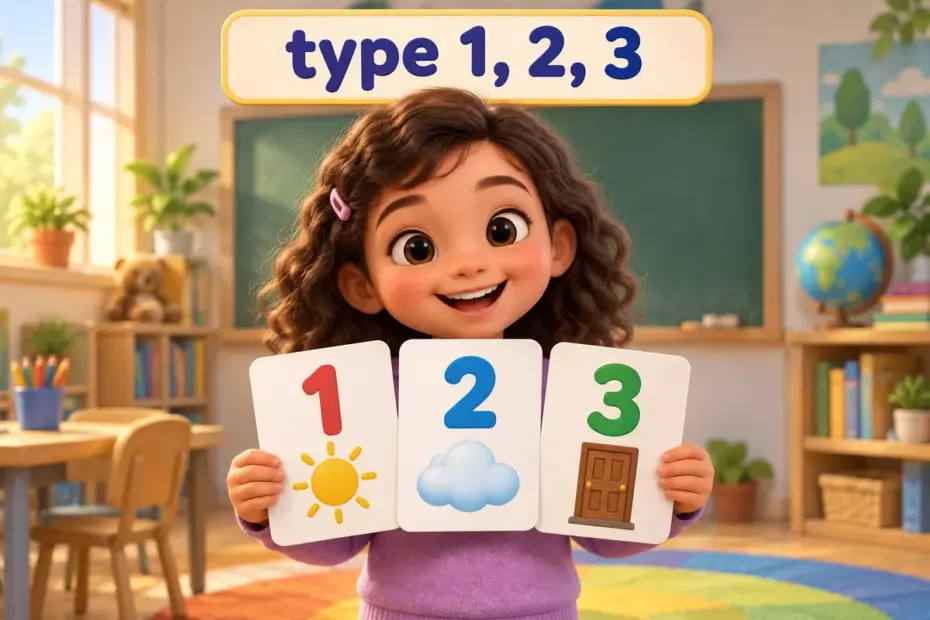
Conditional sentences types 1 2 and 3 describe real, unlikely and impossible conditions, and each type pairs its own verb tense. Type 1 takes a present if-clause and will, type 2 takes a past if-clause and would, and type 3 takes had with would have. “If I had known, I would have called” is type 3.
conditional sentences types 1 2 and 3 at a glance
- Type 1 conditionals describe real or likely situations.
- Type 2 conditionals describe unreal or unlikely present situations.
- Type 3 conditionals describe impossible past situations.
- Each type fixes its tenses: present with will, past with would, had with would have.
- The commonest error is mixing the pairs, as in if I would have.
What are conditional sentences types 1 2 and 3?
Conditional sentences types 1 2 and 3 sort conditions by how real they are, and each type pairs a fixed if-clause tense with a matching main-clause verb. Type 1 covers likely events, type 2 imaginary ones and type 3 the unchangeable past. The clause that carries the condition behaves like the adjective clauses in complex sentences.
| Type | If-clause | Main clause | Meaning |
|---|---|---|---|
| Type 1 | if + present simple | will + base verb | a real or likely situation |
| Type 2 | if + past simple | would + base verb | an unreal or unlikely present |
| Type 3 | if + had + past participle | would have + past participle | an impossible past |
Read across the row to see the fixed pair, because changing one verb breaks the type.
How do the three types differ in meaning?
The difference is the speaker’s view of reality: possible, imagined, or shut off because it is already past.
| Type | Use | Example |
|---|---|---|
| Type 1 | predictions and promises | If you study, you will pass. |
| Type 1 | warnings | If you drop it, it will break. |
| Type 2 | imaginary situations | If I lived by the sea, I would swim daily. |
| Type 2 | polite advice | If I were you, I would apologise. |
| Type 3 | regret | If I had studied, I would have passed. |
| Type 3 | criticism of the past | If you had listened, we would not have missed the train. |
Notice that only type 1 points to a real future; types 2 and 3 both describe wishes, and the tense separates a present wish from a past regret.
Conditional sentence examples for each type across contexts
The same three pairs appear in every register; the subject changes, the grammar does not. Both the vivid wording and the describing words below connect to a set of adjectives for bright.
| Context | Example sentence | Why this works |
|---|---|---|
| Classroom | If the glue is dry, the model will stand. | type 1 for a likely test |
| News report | If the storm had turned, the coast would have flooded. | type 3 for a past near-miss |
| Academic writing | If the sample were larger, the result would be firmer. | type 2 for an imagined improvement |
| Workplace email | If you confirm today, we will ship tomorrow. | type 1 promise |
| Narrative | If the sky were brighter, we would see the stars. | type 2 with an imagined sky |
| Conversation | If I had known, I would have called. | type 3 regret |
| Travel writing | If we leave at dawn, we will reach the pass by noon. | type 1 plan |
| Health advice | If you rested more, you would feel stronger. | type 2 gentle suggestion |
| Sports report | If the keeper had dived, the goal would not have stood. | type 3 analysis |
| Everyday wish | If I were an animal, I would be a swift fox; lists such as adjectives for animals add colour. | type 2 imagination |
Which type should you choose?
Decide first whether the situation is possible, imagined or already past, then let the tense pair follow.
| Situation | Type | Example |
|---|---|---|
| Likely future | type 1 | If it snows, school will close. |
| Unlikely present | type 2 | If I owned a boat, I would sail. |
| Impossible past | type 3 | If I had trained, I would have finished. |
| A promise | type 1 | If you help, I will pay. |
| A regret | type 3 | If I had apologised, we would have stayed friends. |
| A wish now | type 2 | If I had more time, I would read more. |
When two times meet, such as a past condition with a present result, you have a mixed conditional, which borrows a tense from each type.
Verb forms in conditional sentences types 1 2 and 3
Lock the pairs in memory, because each half predicts the other.
| Form | Part of speech | Example |
|---|---|---|
| will + base verb | modal verb | we will leave |
| would + base verb | modal verb | we would leave |
| would have + past participle | modal verb | we would have left |
| past simple (if-clause) | verb | if we left |
| had + past participle (if-clause) | verb | if we had left |
| were (if-clause) | verb | if I were there |
The word would never appears in the if-clause of a standard type 2 or type 3 sentence, which is the fastest way to spot a broken pair.
Common mistakes with conditional sentences types 1 2 and 3
Mistake 1: will in the if-clause. Incorrect: If you will study, you will pass. Correct: If you study, you will pass. Rule: type 1 keeps the present simple in the if-clause.
Mistake 2: would in the if-clause. Incorrect: If I would have more time, I would read. Correct: If I had more time, I would read. Rule: type 2 uses the past simple.
Mistake 3: wrong half of type 3. Incorrect: If I had studied, I would pass. Correct: If I had studied, I would have passed. Rule: the type 3 result takes would have plus a past participle.
Mistake 4: type 2 without were. Incorrect: If I was rich, I would travel. Correct: If I were rich, I would travel. Rule: imagined states often take were.
Mistake 5: mixed tense in one type. Incorrect: If she studies, she would pass. Correct: If she studies, she will pass. Rule: keep the two halves in the same type.
Practice using conditional sentences types 1 2 and 3
- Fill in the blank: If you heat the metal, it ___ (expand).
- Choose the better pair: If I (had / would have) known, I would have helped.
- Correct the error: If it will snow tomorrow, we will stay home.
- Build a sentence: use type 2 to imagine living near the sea.
- Spot the register: which suits a formal apology, (a) If I’d known, I’d have come, or (b) Had I known, I would have attended?
- Fill in the blank: If she had left earlier, she ___ (catch) the bus.
Answers
- expands, because a general truth uses the present simple in both clauses.
- had, because the if-clause of a type 3 sentence uses the past perfect.
- If it snows tomorrow, we will stay home; remove will from the if-clause.
- If I lived near the sea, I would swim every morning.
- Example (b), because the inverted had-clause reads as formal written English.
- would have caught, because the type 3 result uses would have plus a past participle.

The bottom line
Conditional sentences types 1 2 and 3 are built from three fixed tense pairs: present with will for real futures, past with would for imagined presents, and had with would have for impossible pasts. Choose the type by how real the situation is, then let the verbs follow. Keep would out of the if-clause and the pairs stay correct.
Frequently asked questions about the three conditional types
What is the difference between type 1 and type 2?
Type 1 describes something real or likely, using the present simple with will, as in if it rains, we will stay in. Type 2 describes something imagined or unlikely, using the past simple with would, as in if it rained, we would stay in.
When should I use type 3?
Use type 3 for an impossible past, usually to express a regret or to criticise something that cannot now change. It pairs had plus a past participle with would have plus a past participle, as in if I had trained, I would have finished the race.
Can I mix the three types?
Yes. A mixed conditional combines two times when the condition and the result belong to different periods. A common mixed form pairs a past condition with a present result, as in if I had studied medicine, I would be a doctor now.
Is would ever correct in the if-clause?
In standard English, would does not appear in the if-clause of a simple type 2 or type 3 sentence, so if I would have is wrong where if I had is meant. Would belongs to the result clause, which keeps the two halves distinct.