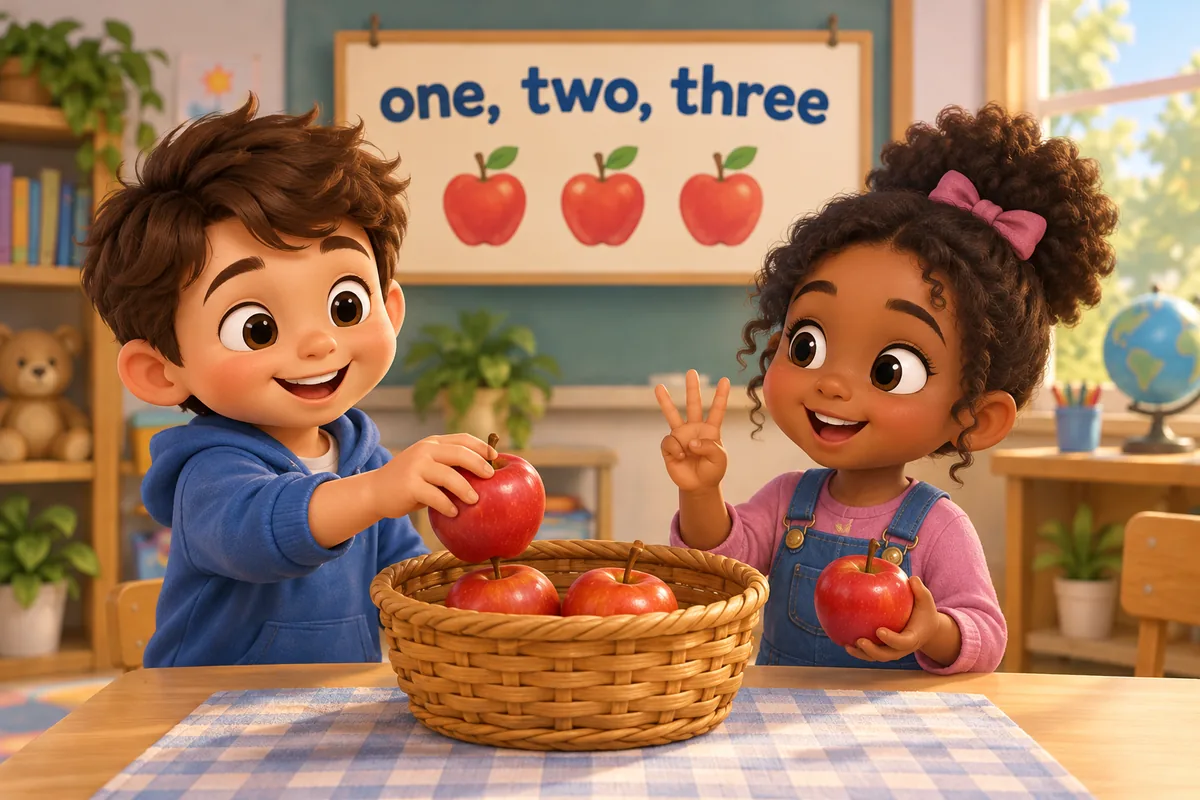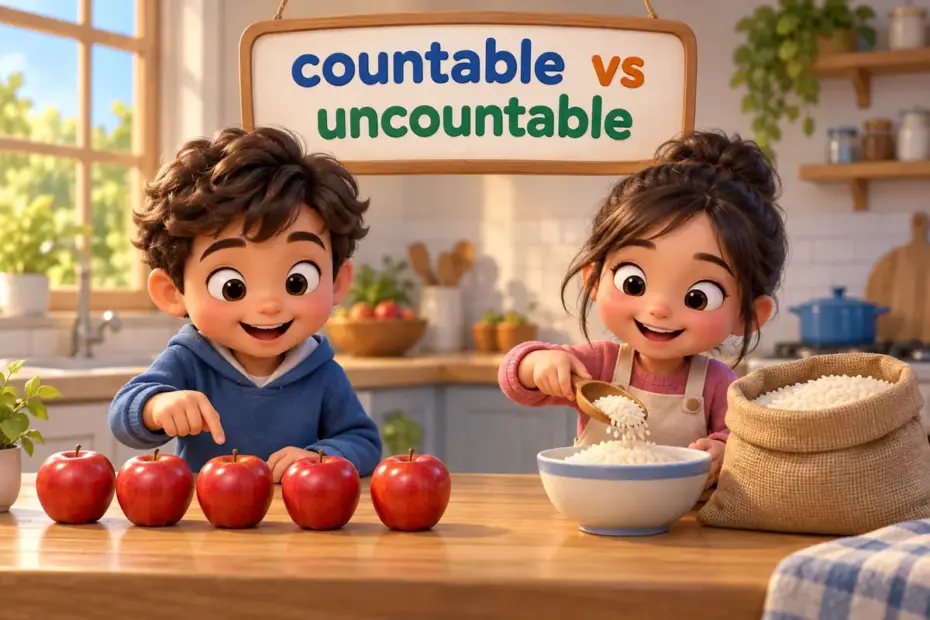
Countable vs uncountable nouns decide which quantifier you use, since a countable noun can be counted and a mass noun cannot. Countable nouns take many and a plural, as in two chairs, while uncountable nouns take much and no plural, as in some furniture. “Many ideas” counts; “much advice” measures.
Countable vs Uncountable Nouns at a glance
- A countable noun can be counted and made plural, as in one apple, two apples.
- An uncountable noun names a mass or idea and has no plural form.
- Countable nouns take many, few, and a number; uncountable nouns take much and little.
- Uncountable nouns are counted with a unit, as in a piece of advice.
- The commonest error is pluralizing an uncountable noun, as in advices.
What do countable and uncountable nouns mean?
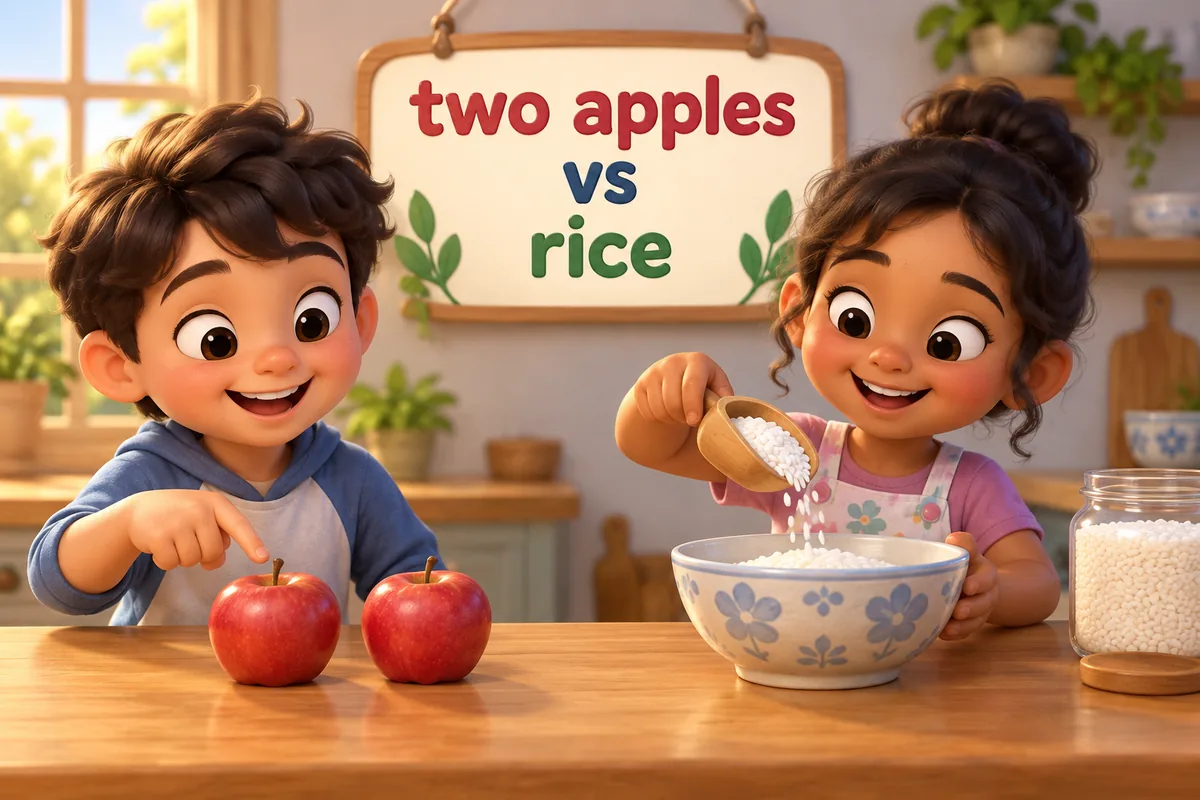
A countable noun names something that can be counted as separate items, such as chair or idea. An uncountable noun names a mass, material, or abstract idea that is not counted in units, such as furniture, water, or advice. The Cambridge entry for countable and the Cambridge entry for uncountable mark the split, and one line shows it: two coins sits in a countable frame, while some money does not.
| Sense | Type | Plain meaning | Example |
|---|---|---|---|
| Counted as separate items | countable | Takes a number and a plural | one apple, two apples |
| Named as a mass | uncountable | No plural, takes a unit | some water, a glass of water |
| Uses many and few | countable | Counts items one by one | many books, few seats |
| Uses much and little | uncountable | Measures an amount | much sugar, little time |
| Works both ways | either | A sense shift changes the type | a chicken, some chicken |
What is the difference between countable and uncountable nouns?
The difference is whether a noun names separate items or an unbroken amount, and that decides the grammar around it. Countable nouns take plurals and counting words, while uncountable nouns take measuring words, so a pair such as ad vs add shows the same idea that a small form change rewrites the sentence.
| Test | Countable | Uncountable |
|---|---|---|
| Plural form | apples, ideas | no plural |
| Article | a or an, the | the, or some |
| Quantifier | many, few, a number of | much, little, an amount of |
| Verb agreement | singular or plural | singular only |
| Counting | directly, as two chairs | with a unit, as a piece of |
| Example set | chair, coin, idea | furniture, money, advice |
Choose a countable form when you can point to separate items, and an uncountable form when the noun names a mass or an idea.
How do you use countable and uncountable nouns in a sentence?
Both types follow fixed patterns, and the quantifier is the fastest test; to watch a countable noun behave, read countable in a sentence.
| Pattern | Example | What it signals |
|---|---|---|
| a or an + singular | She bought a lamp. | one countable item |
| number + plural | We need three chairs. | several countable items |
| many or few + plural | Few tickets remain. | a countable quantity |
| much or little + mass | We have little time. | an uncountable amount |
| some or any + either | Would you like some rice? | an unspecified amount |
| unit + of + mass | Add a cup of flour. | counting through a container |
Countable and uncountable nouns across contexts
Reading both types in different registers makes the choice automatic, and a further easy pair sits in abel vs able, where a single letter decides the word.
| Context | Example sentence | Why this works |
|---|---|---|
| Classroom | Each pupil has two pencils and some paper. | pencils are countable, paper is not |
| Workplace email | We received little feedback on the draft. | feedback is uncountable, so little fits |
| News report | Officials approved several new projects. | projects are countable, so several fits |
| Recipes | Add a spoonful of sugar to the batter. | sugar is uncountable, so a unit counts it |
| Everyday speech | There is not much milk left. | milk is uncountable, so much fits |
| Academic writing | The study collected data from many schools. | data acts as a mass, schools are countable |
| Customer service | Please allow two days for delivery. | days are countable, so a number fits |
| Shopping | We have plenty of time before the train. | time is uncountable, so plenty fits |
| Travel writing | A few travellers waited for much-needed buses. | travellers and buses are countable |
| Narration | She gave me some good advice. | advice is uncountable, so some fits |
Which should you use?
Match the quantifier to the noun type, since countable nouns take counting words and uncountable nouns take measuring words.
| Situation | Use | Example |
|---|---|---|
| Counting separate items | countable form | three envelopes |
| Naming a material or idea | uncountable form | some stationery |
| Asking about a number | how many | How many books do you have? |
| Asking about an amount | how much | How much water is left? |
Register rarely changes the rule, but academic writing is stricter, since data, research, and evidence all behave as uncountable nouns and take singular verbs in careful use.
Word forms and grammar of countable and uncountable nouns
| Type | Form | Example |
|---|---|---|
| Common uncountables | no plural | advice, furniture, information |
| Container words | unit + of | a piece of, a slice of, a cup of |
| Measurement words | unit + of | a litre of, a kilo of |
| Dual nouns as countable | specific item | a paper, a glass, a chicken |
| Dual nouns as uncountable | mass sense | some paper, some glass, some chicken |
| Plural-only nouns | always plural | trousers, scissors, glasses |
Common mistakes with countable and uncountable nouns
Mistake 1: a before an uncountable noun. Incorrect: We bought a furniture. Correct: We bought a piece of furniture. Rule: uncountable nouns need a unit before an article.
Mistake 2: many with a mass noun. Incorrect: She gave many information. Correct: She gave much information. Rule: uncountable nouns take much, not many.
Mistake 3: much with a countable noun. Incorrect: Much people came. Correct: Many people came. Rule: people is countable, so it takes many.
Mistake 4: pluralizing an uncountable noun. Incorrect: He offered good advices. Correct: He offered good advice. Rule: uncountable nouns have no plural form.
Mistake 5: fewer with a mass noun. Incorrect: There is fewer traffic today. Correct: There is less traffic today. Rule: uncountable nouns take less, countable nouns take fewer.
Practice using countable and uncountable nouns
- Fill in the blank: How ___ apples are left in the bowl?
- Choose the better word: We have (many / much) homework tonight.
- Correct the error: She gave me two advices.
- Build a sentence: count the noun rice using a unit of measure.
- Spot the type: is homework countable or uncountable?
- Fill in the blank: There are ___ chairs in the hall.
Answers
- many, because apples are countable.
- much, because homework is uncountable.
- She gave me two pieces of advice; uncountable advice takes a unit.
- We cooked a bowl of rice for dinner.
- uncountable, because it has no plural and takes much.
- several, because chairs are countable.

The bottom line
The countable vs uncountable choice decides the words around a noun: countable nouns take a number, a plural, and many, while uncountable nouns take a unit, no plural, and much. Ask whether you can point to separate items or only measure an amount, and the quantifier follows. Common mass nouns such as advice, furniture, and information are the ones to remember.
Frequently asked questions about countable and uncountable nouns
Is money countable or uncountable?
In everyday English money is uncountable, so we say much money and some money, not many moneys. It is counted through units such as coins, notes, or dollars, as in three coins. The currency words themselves, like dollar and euro, are countable, which is where the counting happens.
How do I count an uncountable noun?
Add a unit or container before of, such as a piece of advice, a slice of bread, or a cup of water. The unit carries the count, so two pieces of advice is correct while two advices is not. Choosing the right unit, piece, slice, or cup, depends on the noun.
Why are some nouns both countable and uncountable?
Many nouns shift type with their sense. As a material it is uncountable, as in some chicken or some glass, but as a single item it is countable, as in a chicken or a glass. The grammar follows the meaning, so the same word can take both patterns in different sentences.
Should I use less or fewer with these nouns?
Use fewer with countable nouns and less with uncountable nouns. Fewer chairs and less furniture are both correct, while less chairs and fewer furniture are not. The test is whether you can point to separate items, which is the same question that decides the noun type.