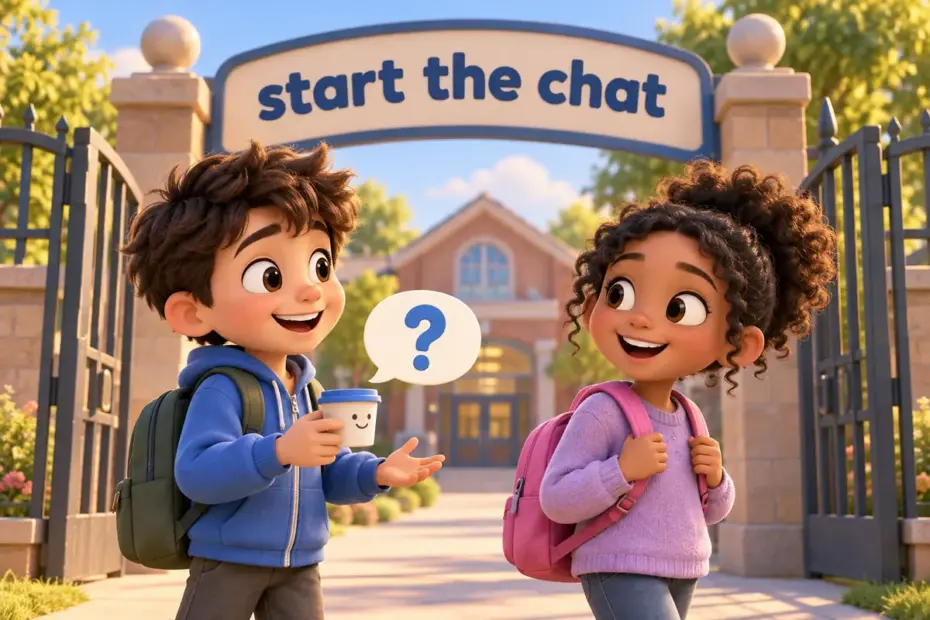
Conversation starters are questions or remarks that give two people an easy first thing to say, turning a silent moment into a real exchange. A good starter fits the setting, asks something open and leaves room for a follow-up, so the talk keeps moving after the opening line.
Conversation starters at a glance
- A conversation starter is a question or remark that opens a talk and invites a reply.
- Open questions beginning with what or how produce longer answers than yes-or-no questions.
- A starter that names the shared setting or event feels natural rather than scripted.
- Follow-up questions keep a dialogue moving once the first answer arrives.
- The commonest mistake is a personal question asked before any trust exists.
What are conversation starters?
Conversation starters are questions or remarks that give two people something specific to talk about. They work by lowering the effort of the first reply, because a well-chosen starter is easy to answer but not so closed that it ends in a single word. The table groups the main kinds.
| Kind | What it does | Example |
|---|---|---|
| Open question | Invites a full answer | What brought you to this event? |
| Observation | Shares something in the shared setting | The queue moved faster than I expected. |
| Follow-up question | Builds on the previous answer | How did you get into that work? |
| Shared-experience remark | Names common ground | Did you catch the opening talk? |
| Light hypothetical | Offers a playful choice | Tea or coffee if you had to pick one? |
The wording of a starter belongs in the same family as the words in any other sentence, and these adjectives for conversation show how much a single describing word changes the tone.
How do you use a conversation starter?
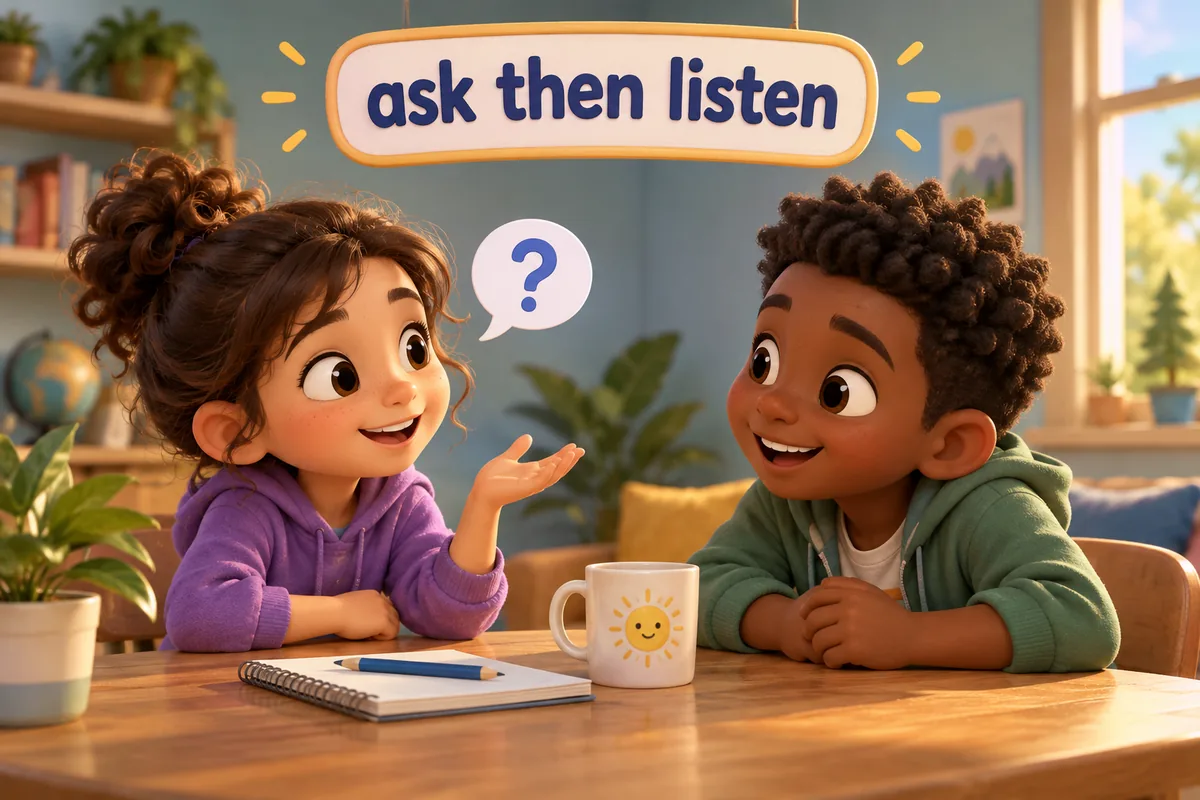
A starter only works when the delivery matches the setting, so the sequence matters as much as the chosen words.
| Stage | Move | Example |
|---|---|---|
| Approach | Offer a neutral opener | Is this seat taken? |
| Open | Ask a broad question | What do you think of the new hall? |
| Listen | Give a full beat before replying | Wait, then nod rather than interrupt |
| Follow | Build on their exact words | You mentioned you coach too. |
| Balance | Trade a small detail back | I only started last year. |
Learners who want a model can study how a full conversation sentence alternates between question and answer instead of stacking one question on another.
Conversation starter examples across contexts
The same idea changes shape from one setting to the next, because the shared context supplies the material a starter can safely use.
| Context | Starter | Why it works |
|---|---|---|
| Office kitchen | Busy morning for you? | Names a shared moment without prying. |
| Job interview | What does a strong first month look like here? | Signals interest in the role. |
| Classroom | Which part of the topic surprised you most? | Invites a thoughtful answer from a peer. |
| Phone call | Is now still a good time to talk? | Checks the listener is free. |
| Conference break | Which session brought you here? | Ties the question to the event. |
| Gym | Is this machine free after your set? | Practical and easy to answer. |
| Waiting room | Have you been here long? | Low-risk and invites a short reply. |
| Dinner party | How do you two know the host? | Opens history the guest can share. |
| Online meeting | Which time zone are you joining from? | Neutral and genuinely interesting. |
| First day | Who should I ask about the printer? | Turns a practical need into contact. |
| Neighbourhood walk | Have you tried the new bakery on the corner? | Names a shared local place. |
| Family gathering | How do you usually spend the holidays? | Invites a story without prying. |
A phone opening has its own rhythm, and these telephone conversation sentence models show how to greet, state a purpose and hand the turn back.
Open questions vs closed questions
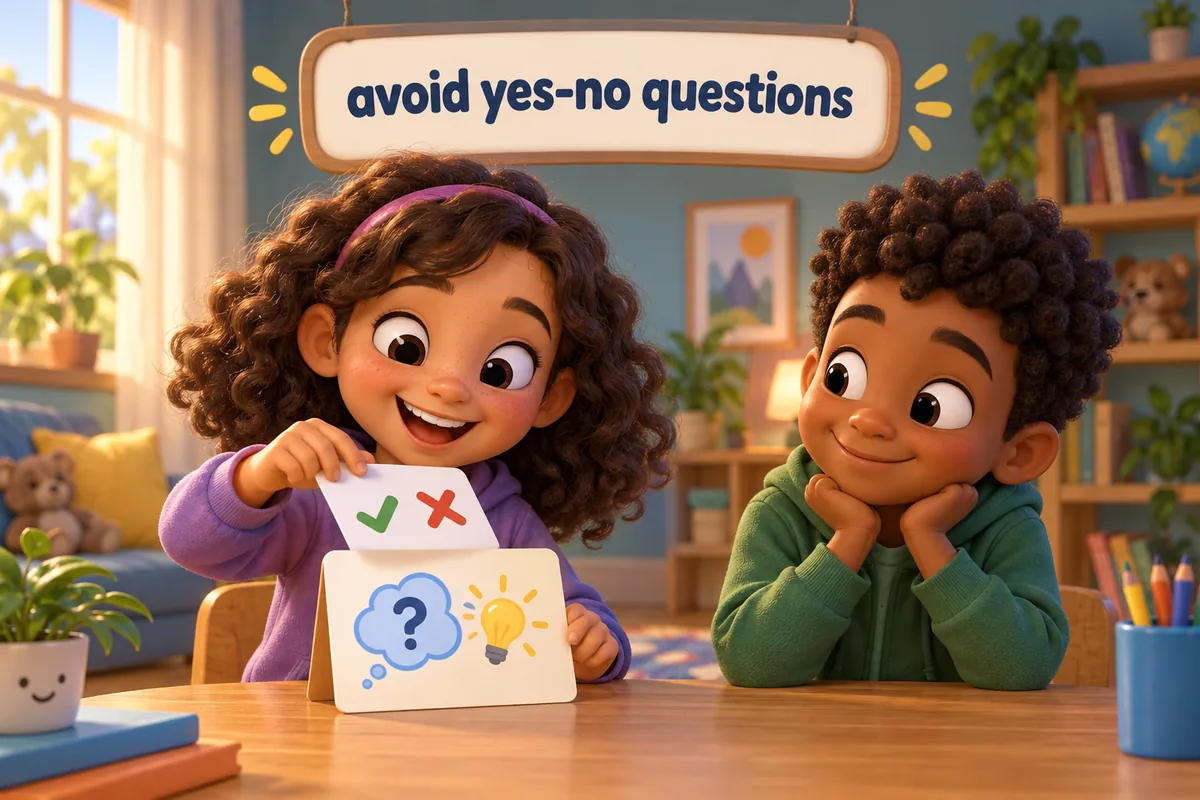
The single biggest choice in a starter is how wide to open the door, because a closed question can end a talk before it begins.
| Feature | Open question | Closed question |
|---|---|---|
| Typical opening word | What, how, why | Do, did, is, are |
| Answer length | A sentence or more | Usually one word |
| Best for | Starting and deepening a talk | Confirming a detail |
| Risk | Can feel broad if rushed | Stops the exchange |
| Example | How did you choose this course? | Do you like the course? |
A short run of closed questions has one good use: checking facts such as a name, a time or a preference before moving on. Once the facts are confirmed, returning to an open question keeps the exchange from turning into a form to be filled in.
Word forms and grammar of conversation starters
The expression is a compound noun, and the related vocabulary splits into a small, useful set.
| Form | Part of speech | Example |
|---|---|---|
| conversation starter | noun | One conversation starter eased the whole table. |
| conversation starters | plural noun | She keeps a few conversation starters ready. |
| icebreaker | noun | The host used an icebreaker at the door. |
| small talk | noun | Small talk fills the first minute. |
| follow-up question | noun phrase | A follow-up question kept her talking. |
| open-ended | adjective | Ask an open-ended question, not a yes-or-no one. |
Common mistakes with conversation starters
Most awkward openings come from five habits, and each has a repair.
So, do you like it here? Ask instead: What do you enjoy about living here? Rule: a closed question invites a one-word answer that stalls the talk.
How much do you earn? Ask instead: What kind of work do you do? Rule: money and personal matters need trust before they can be raised.
What is your name again, sorry I forgot. Say instead: I am sorry, remind me of your name. Rule: own the gap politely rather than blaming your memory twice.
Tell me everything about your family. Ask instead: Do you have family nearby? Rule: a broad demand can feel like an interview, so offer a smaller door.
Anyway, enough about that. Say instead: That sounds fascinating, how did it start? Rule: close a topic only after they signal they are finished.
Practice using conversation starters
Try all six tasks, then compare your wording with the reasoned answers.
- Turn this closed question into an open one: Do you like your new job?
- Write a starter for a stranger at a bus stop.
- Correct the error: What is your salary?
- Build a follow-up to the answer I grew up in Spain.
- Choose the better starter for a job interview: Nice weather, eh? / What drew you to this team?
- Spot the register: which starter fits a formal client dinner, and which fits a gym?
Answers
- What do you enjoy most about your new job? The open word what invites a fuller answer.
- Have you been waiting long for the bus? It names the shared situation and stays low-risk.
- What kind of work do you do? Money is too personal for a first question.
- What part of Spain did you grow up in? It picks up the exact detail they offered.
- What drew you to this team? It fits a professional setting, while Nice weather is too casual.
- The gym takes Have you used this machine? and the dinner takes May I ask how you know the host? The setting sets the formality.
The bottom line
Conversation starters work when they fit the setting, ask something open and leave an easy route to a follow-up. An observation about the shared moment often beats a rehearsed line, and a follow-up question keeps the exchange alive after the opening answer. The safest habit is to ask what a person thinks or how they came to be somewhere, because both invite a story rather than a single word.
Frequently asked questions about conversation starters
What are good conversation starters for a first meeting?
A good first-meeting starter names something the two people already share, such as the event, the queue or the reason they are in the same room. Questions beginning with what or how produce longer answers than a yes-or-no question, and an observation followed by a question feels warmer than a rehearsed line delivered on its own.
Can a question be too personal to start with?
Questions about money, health, relationships or a person’s appearance are too personal for a first exchange, because they ask for trust that has not been built yet. Neutral topics such as work, the setting or a shared interest are safe, and a personal question becomes acceptable only after the other person has raised it first.
How do you keep a conversation going after the first question?
Keep a talk going by listening for a concrete detail in the answer and asking about that detail next, rather than switching to a new topic. A short follow-up such as how did that start shows genuine attention, and trading a small fact about yourself keeps the exchange balanced instead of turning into an interview.
What is the difference between an open and a closed question?
An open question begins with what, how or why and invites a full answer, while a closed question begins with do, did, is or are and can be answered in one word. Open questions start and deepen a conversation, and closed questions confirm a detail, so most starters should stay open until the talk is underway.