The phrase conjunctions definition types and examples covers a simple idea: words such as and, but and because join other words and clauses together. Coordinating conjunctions link equals, subordinating conjunctions show relationships such as time or cause, and correlative pairs work in tandem to balance a sentence.
Conjunctions definition types and examples at a glance
- A conjunction joins words, phrases or clauses into one grammatical unit.
- Coordinating conjunctions such as and, but, or, nor, for, so and yet link equal units.
- Subordinating conjunctions such as because, although, when and if attach a dependent clause.
- Correlative conjunctions such as either … or and both … and work only in fixed pairs.
- The commonest error is a comma splice, where two full clauses are joined by a comma alone.
What is a conjunction?
A conjunction is a word that links other words, phrases or clauses without naming, describing or acting. Remove it and the logic of a sentence collapses, which is why writers notice a missing conjunction faster than a missing adjective. The table separates the three linking jobs a conjunction performs.
| Linking job | Plain meaning | Example |
|---|---|---|
| Joins words | Links two items of the same kind | bread and butter |
| Joins phrases | Connects two longer groups | in the morning or after lunch |
| Joins clauses | Attaches a clause to a main clause | I left because it was late. |
A conjunction that links highly specific items behaves the same way, as these conjunctions joining adjectives show when they hold two describing words side by side.
What are the main types of conjunctions?
English sorts conjunctions into three families, and each family answers a different question about how the joined parts relate to one another.
| Type | Members | Job | Example |
|---|---|---|---|
| Coordinating | and, but, or, nor, for, so, yet | Join equal grammatical units | tea or coffee |
| Subordinating | because, although, when, if, unless, since | Attach a dependent clause to a main clause | We stayed in because it rained. |
| Correlative | either … or, neither … nor, both … and, not only … but also | Balance two matched elements | Both the chef and the driver helped. |
The full inventory runs long enough that a reference list such as conjunctions that start with A to Z helps a writer pick the precise word.
How do you use conjunctions in a sentence?
Placement follows the family rather than the meaning, so the pattern a writer memorises depends on what is being joined. The table gives the four patterns learners need most often.
| Pattern | Example | What it signals |
|---|---|---|
| unit + coordinating conjunction + unit | bread and butter | Two equal items belong together |
| main clause + subordinating conjunction + clause | We left early because the traffic was heavy. | The second clause gives the reason |
| subordinating conjunction + clause + comma + main clause | Although it rained, we walked home. | The dependent clause leads and yields a contrast |
| either + A + or + B | Either call ahead or book online. | A choice between two balanced options |
| neither + A + nor + B | Neither the seats nor the table was ready. | Two negatives joined as a single idea |
One detail separates confident writers from hesitant ones: the subject of a neither … nor clause agrees with the nearer noun, so neither the seats nor the table was ready takes a singular verb.

Conjunction examples in sentences across contexts
A conjunction never carries meaning alone, so context decides which one fits. The table pairs ten everyday situations with a sentence and a short reason, and even the stretch of explaining what a phrase means relies on the same linking logic.
| Context | Sentence | Why this works |
|---|---|---|
| Everyday speech | I wanted to swim, but the pool was closed. | but contrasts two equal clauses. |
| Classroom writing | The plant grew tall because it received sunlight. | because supplies the cause. |
| Workplace email | Please review the draft and send any notes by Friday. | and adds a second action to the request. |
| News report | The road was closed, so drivers used the ring road. | so introduces the result. |
| Academic writing | Although the data were limited, the trend was clear. | although concedes a point before the claim. |
| Children’s story | The fox ran fast, yet the hare still won. | yet signals a surprising contrast. |
| Instructions | Stir the mixture until it thickens. | until sets the stopping point. |
| Customer service | Either refund the fee or replace the item. | either … or offers two alternatives. |
| Formal speech | Neither the budget nor the timetable was approved. | neither … nor joins two negatives. |
| Recipe | Add the flour and then the eggs. | and sequences the steps. |
| Persuasive writing | You may borrow the bike, provided you return it by dusk. | provided sets a firm condition. |
| Travel notice | Trains will run unless the storm worsens. | unless names the one blocking condition. |
Coordinating vs subordinating conjunctions
The two largest families are easy to confuse because both can sit between ideas. They differ in the grammatical weight of what they join and in the punctuation they demand.
| Feature | Coordinating | Subordinating |
|---|---|---|
| What it joins | Two equal units | A dependent clause to a main clause |
| Position | Between the units | At the start of the dependent clause |
| Comma rule | Comma before it when joining two clauses | Comma only when the dependent clause comes first |
| Common members | and, but, or, so | because, although, when, if |
| Effect on meaning | Balances or contrasts | Shows time, cause, condition or contrast |
The verdict is simple: choose a coordinating conjunction to set two ideas side by side, and a subordinating conjunction to make one idea depend on the other.
Word forms and grammar of conjunctions
Conjunctions sit in a small closed class, so the useful vocabulary is the set of labels around them rather than new inflections.
| Form | Part of speech | Example |
|---|---|---|
| conjunction | noun | A conjunction links two clauses. |
| conjunctions | plural noun | Some conjunctions travel in pairs. |
| coordinating conjunction | noun phrase | And is a coordinating conjunction. |
| subordinating conjunction | noun phrase | Because is a subordinating conjunction. |
| correlative conjunction | noun phrase | Either … or is a correlative conjunction. |
| conjunct | noun | However and therefore are conjuncts, not conjunctions. |
Common mistakes with conjunctions
Five errors account for most faulty conjunction use, and each has a rule that fixes it.
I like tea, I do not like coffee. Correct: I like tea, but I do not like coffee. Rule: two full clauses need a conjunction or a full stop, never a comma alone.
Although it was raining, but we went out. Correct: Although it was raining, we went out. Rule: use although or but, never both in the same sentence.
She is both smart and also kind. Correct: She is both smart and kind. Rule: correlative pairs take two parallel forms, not a stacked extra word.
Because I was tired. Correct: I went to bed early because I was tired. Rule: a clause opened by a subordinating conjunction must attach to a main clause.
Neither John or Mary came. Correct: Neither John nor Mary came. Rule: neither pairs with nor, just as either pairs with or.
Practice using conjunctions
Complete the six exercises, then check the reasoned answers below.
- Fill the blank: I stayed home ______ I was ill.
- Fill both blanks: I like ______ the red one ______ the blue one.
- Correct the error: Although she was late, but she apologised.
- Build a sentence about a school trip using because.
- Choose the better word: The shop was shut, so / but we went home.
- Fill both blanks: ______ the manager ______ the staff agreed.
Answers
- because. It introduces the cause of staying home.
- both … and. This correlative pair matches two positive alternatives.
- Although she was late, she apologised. Drop but, because although already marks the contrast.
- We took sandwiches because the trip lasted all day. Because attaches the reason.
- so. The second clause is a result of the shop being shut, not a contrast.
- Neither … nor. The pair joins two negative subjects before one verb.
The bottom line
Conjunctions definition types and examples comes down to three families and one habit. Coordinating conjunctions link equal units, subordinating conjunctions attach a dependent clause, and correlative conjunctions travel in pairs. Pick the family that matches the relationship you want, then check the punctuation, because a comma join between two full clauses is the error readers spot first.
Frequently asked questions about conjunctions
Is it wrong to begin a sentence with and or but?
Starting a sentence with and, but or so is common in modern writing and reads naturally in stories and emails. Formal examiners once discouraged it, so academic writers often keep the conjunction inside one sentence instead. The choice is a matter of register rather than a rule of grammar, and a short opening clause stays clear either way.
What is a comma splice?
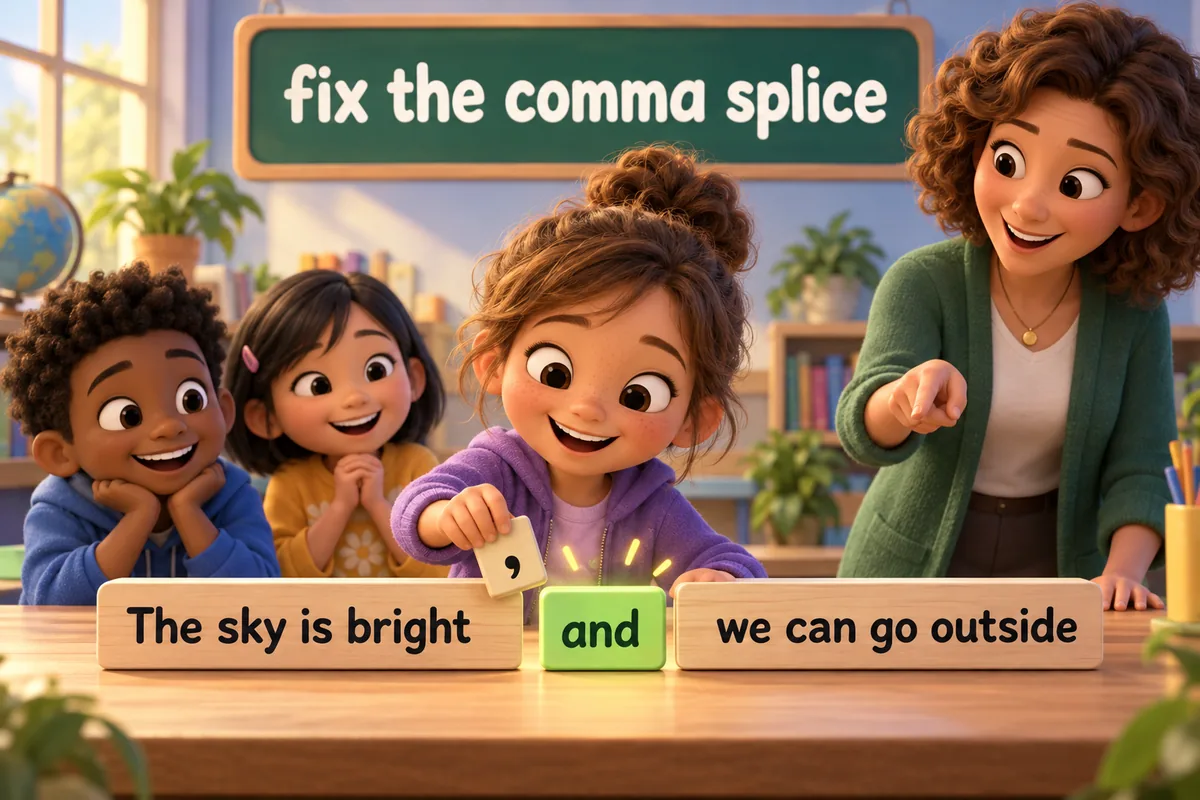
A comma splice joins two complete clauses with only a comma, as in she arrived early, we left late. The fix is to add a coordinating conjunction, replace the comma with a full stop, or turn one clause into a dependent clause. Naming the error helps writers catch it, because the sentence still sounds smooth when read aloud.
Do subordinating conjunctions always need a comma?
A subordinating conjunction takes a comma only when its dependent clause comes first, as in when the bell rang, we stood up. When the dependent clause follows the main clause, no comma separates them, as in we stood up when the bell rang. The comma marks the boundary between the two clauses in the leading position.
What is a correlative conjunction?
A correlative conjunction is a fixed pair that balances two matched elements, such as either … or, neither … nor and both … and. The two halves must join parallel items, so either tea or coffee sounds right while either tea or a coffee pot broke does not. The fixed pairing is the whole point of the form.