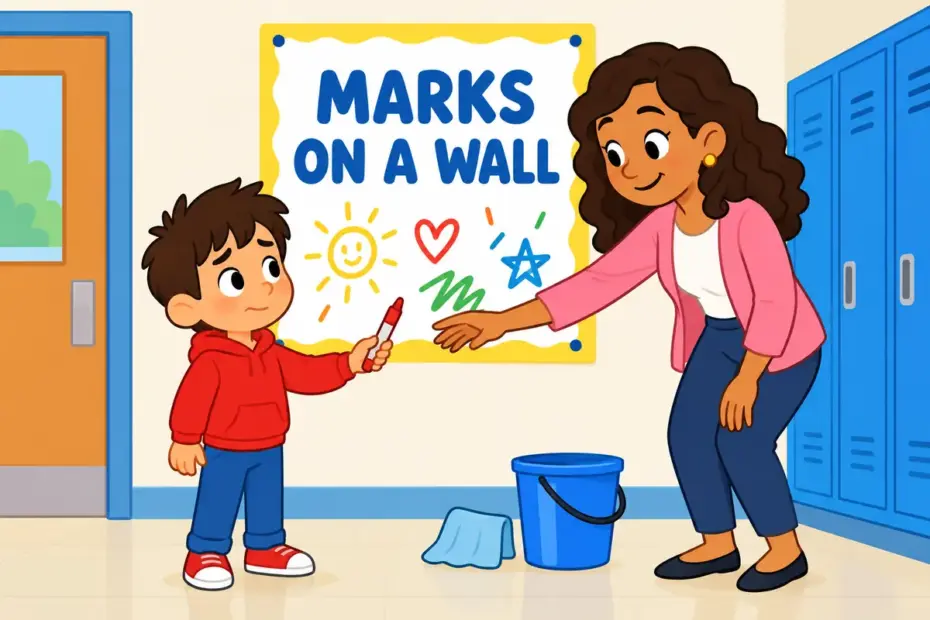
Deface means to spoil the surface or appearance of something by writing, drawing or marking on it. To use deface in a sentence, name the marked thing and the marks: “Someone defaced the library poster with a marker.” The verb is transitive, so a surface is always the thing that gets defaced.
Deface at a glance
- Deface is a transitive verb; its forms are deface, defaces, defaced, defacing and the noun defacement.
- It means to spoil a surface or appearance by marking it, not to destroy the object outright.
- The usual objects are walls, statues, monuments, posters, documents, books and coins.
- The commonest collocations are deface a statue, deface a wall and deface a banknote.
- The commonest error is confusing deface with defuse, which means to calm a tense situation.
What does deface mean?
Deface is a transitive verb meaning to spoil the surface or appearance of something by writing, drawing or otherwise marking it. The Cambridge entry for deface keeps the focus on the visible damage, and the word carries a second, quieter sense: anything that ruins the look of a thing defaces it, even when no pen is involved. The object is almost always something public or valued, which is why the verb so often appears in news reports about monuments and notice boards.
| Sense | Plain meaning | Example sentence |
|---|---|---|
| Mark a surface | Cover something with writing or drawings | A visitor defaced the museum wall with a pen. |
| Damage a monument | Spoil a public structure with marks | The statue was defaced on the weekend. |
| Mar an appearance | Ruin the look of something valued | Scratches defaced the polished table. |
| Alter a document | Change a paper by adding marks | Someone defaced the certificate before it was filed. |
One limitation is worth stating plainly. Deface is narrower than damage, because it is about the surface and how something looks rather than about breaking it. A smashed window is damaged, not defaced; a window covered in marker is defaced, even though the glass is intact. Where an object is wrecked beyond its surface, plain words such as damage or destroy are more accurate.
How do you use deface in a sentence?
The verb needs an object, and the object is the thing whose surface is spoilt. The person doing the marking can appear as the subject, in a passive by-phrase, or not at all. Five patterns cover nearly every real sentence.
| Pattern | Example | What it signals |
|---|---|---|
| deface + surface | They defaced the notice board. | The marked thing is the direct object. |
| be defaced (passive) | The monument was defaced overnight. | Keeps attention on the damage, not the culprit. |
| deface + object + with + tool | He defaced the poster with a marker. | Names the tool that made the marks. |
| defaced + noun | Workers replaced the defaced sign. | The participle works as an adjective. |
| deface + surface (figurative) | Rust defaced the bright railings. | Extends the verb to slow, non-human damage. |
A useful test is to ask whether the object still stands and still works. If it does and only its look has suffered, deface is the right verb; if it is broken or unusable, choose damage. Do not confuse deface with defuse, which means to calm a tense situation or to make a device safe.
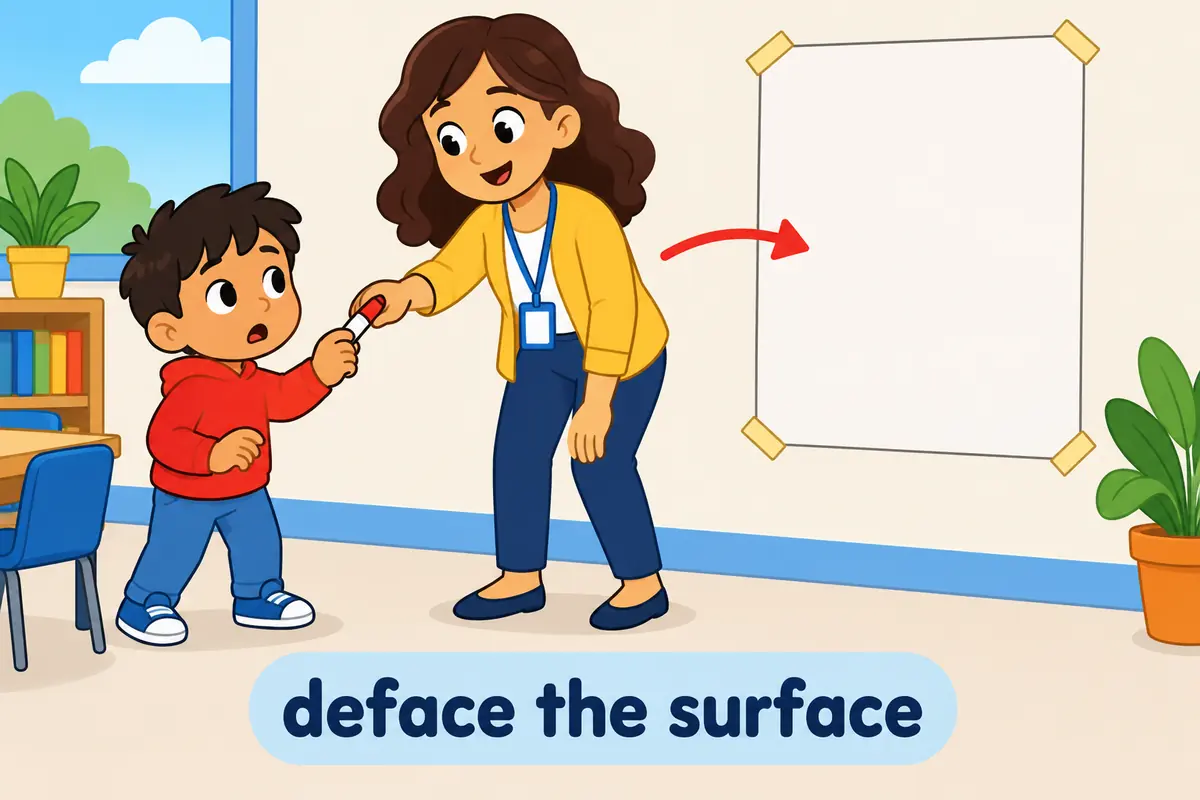
Deface in a sentence: examples across contexts
Deface keeps one meaning while the setting changes how serious the damage is. The twelve sentences below run from a school corridor to a national monument, and each names the surface that was marked.
| Context | Example sentence | Why this works |
|---|---|---|
| School | Someone defaced the class chart with a pencil. | A small surface shows the everyday, low-stakes sense. |
| Library | A reader had defaced three pages of the novel. | Points to a valued object and a countable surface. |
| News report | The war memorial was defaced before dawn. | The passive keeps the damaged monument in focus. |
| Heritage work | Restorers cleaned the defaced statue for a week. | The participle describes a task, not a person. |
| Local council | New cameras were fitted after posters were defaced. | Ties the verb to a practical response. |
| Banking | A shop refused the note because it had been defaced. | The perfect tense reports a past mark. |
| Archive | Nobody defaced the fragile map for a century. | The negative stresses careful preservation. |
| Sports club | Fans defaced the away team banner. | A public object plus a clear agent. |
| Art writing | Scratches had defaced the painted panel. | Extends the verb to accidental damage. |
| Transport | Commuters reported a defaced timetable. | The participle modifies the affected object. |
| Charity event | Runners were upset that the finish line was defaced. | Shows the emotional stakes of visible damage. |
| Conversation | Who defaced my notebook with stickers? | The direct object is a personal possession. |
The word always implies a before-and-after: the surface existed in a clean state and was then marked. That implied change is what separates deface from a plain description of a messy object, and it is why the passive appears so often in reports of overnight damage. The severity in a sentence comes from the object, not the verb: a defaced exercise book is a minor annoyance, while a defaced memorial is treated as an offence, even though the grammar is identical in both cases.
Deface vs vandalize and mar
Three verbs describe ruining something’s appearance or condition, and each draws the line differently. vandalize means to damage or destroy property on purpose; mar means to spoil the appearance of something, often slightly; deface means to mark a surface so that it looks ruined.
| Attribute | deface | vandalize | mar |
|---|---|---|---|
| Core job | Mark a surface so it looks spoilt | Damage or wreck property | Spoil the look of something |
| Intent | Usually deliberate, sometimes not | Always deliberate | Often accidental |
| Is the object broken | No, only marked | Often yes | No |
| Typical object | Wall, statue, document, coin | Building, bus, park | Finish, photo, record |
| Register | Neutral to formal | Neutral, legal | Literary to formal |
Verdict: choose deface when the harm is visible marking on a surface, vandalize when property is attacked and damaged, and mar when something lovely is spoilt, perhaps only a little. To describe putting a marked object back to rights, restore is the natural verb, and to keep a surface out of harm from the start is to preserve it.
Word forms and grammar of deface
Deface inflects regularly, and its participles and noun do most of the work in public writing. The table also lists the spelling look-alikes that trip up learners.
| Form | Part of speech | Example |
|---|---|---|
| deface | verb, base form | Do not deface the notice. |
| defaces | verb, third person | Graffiti defaces the underpass. |
| defaced | verb, past and past participle | Someone defaced the plaque. |
| defacing | verb, present participle | Defacing a banknote is a serious matter. |
| defacement | noun | The defacement was cleaned off by hand. |
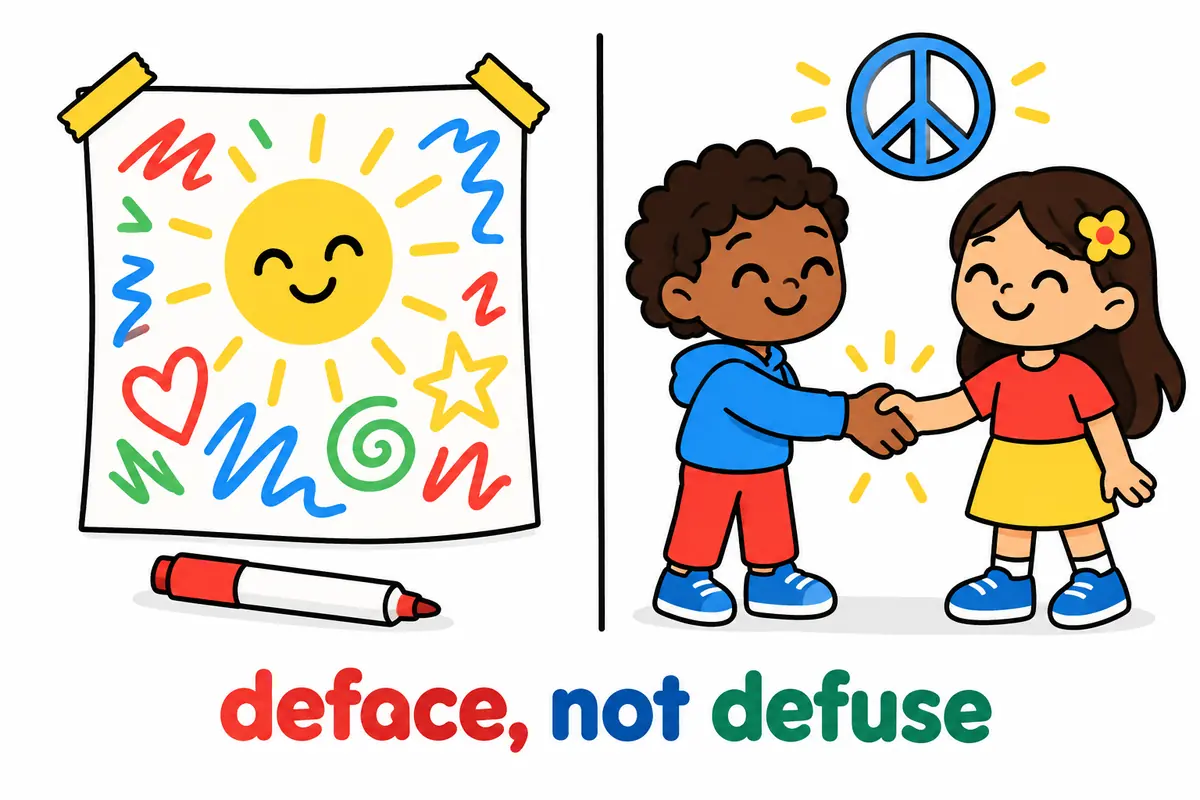
Watch the two commonest spelling traps. To define is to explain the meaning of a word, which has nothing to do with surfaces, and to defuse is to make a situation calm or a device safe. All three begin with de-, which is exactly why they are mixed up.
Common mistakes with deface
- Incorrect:
The window was defaced into small pieces.Correct: The window was smashed into small pieces. Rule: Deface is about marks on a surface, not about breaking an object apart. - Incorrect:
They defaced.Correct: They defaced the poster. Rule: Deface is transitive, so it always needs an object. - Incorrect:
He defaced on the wall.Correct: He defaced the wall. Rule: The surface is the direct object, so no preposition follows the verb. - Incorrect:
The teacher defused the poster with a pen.Correct: The teacher defaced the poster with a pen. Rule: Defuse means to calm or disarm; deface means to mark a surface. - Incorrect:
The deface was easy to clean.Correct: The defacement was easy to clean. Rule: The noun takes the ending -ment; the bare form is a verb.
Practice using deface
Work through the six items, then read the reasons that sit with the answers.
- Fill the gap: A visitor ______ the museum sign with a felt pen.
- Choose the better word: The parked cars were (defaced / smashed) beyond repair.
- Correct the error: Someone defaced on the new bench.
- Build a sentence: use be defaced in the passive about a war memorial in a news report.
- Spot the register: which belongs in a formal report — the plaque was defaced, or the plaque got totally messed up?
- Fix the word: The deface of the coin made it worthless.
Answers
- defaced — the sign is the surface marked, and the past tense is regular.
- smashed — cars wrecked beyond repair are damaged, not merely marked, so deface is too weak.
- Someone defaced the new bench — the surface is the direct object, with no preposition.
- Model answer: The war memorial was defaced overnight and cleaned before the ceremony.
- The plaque was defaced — a report avoids got totally messed up, which is conversational.
- The defacement of the coin made it worthless — the noun takes the ending -ment.
The bottom line
Use deface in a sentence when a surface or valued object is marked so that it looks spoilt, and keep the marked thing as the object. The two details that decide most sentences are that deface stops short of breaking something, and that its closest look-alike, defuse, means something entirely different. Where the damage is real destruction, choose vandalize; where a lovely thing is spoilt, choose mar.
Frequently asked questions about deface
Is deface the same as damage?
No. Deface is narrower, because it means marking a surface so that it looks spoilt while the object itself still stands. Damage is broader and includes breaking, cracking or wrecking. A scratched desk is defaced; a broken desk is damaged. Choose the word that matches what actually happened to the object.
What does it mean to deface a banknote?
To deface a banknote is to write on it, stamp it or draw over its printed design. The note is still real money, but the marks count as damage to its appearance, so a shop may refuse it. Many countries treat deliberate damage to currency as an offence, which is why the verb appears in legal writing.
Can you deface a person?
Not literally. Deface needs an object with a visible surface, such as a wall, a statue or a document, so you cannot deface a person. Writers sometimes extend the verb to reputation, as in the scandal defaced his name, but that is figurative and unusual. For reputations, damage or ruin is the safer choice.
What is the noun form of deface?
The noun is defacement, meaning the act of marking a surface or the marks themselves, as in the defacement was cleaned off by hand. It is uncountable when it names the act and countable when it names a specific patch of damage. The bare form deface is always the verb.