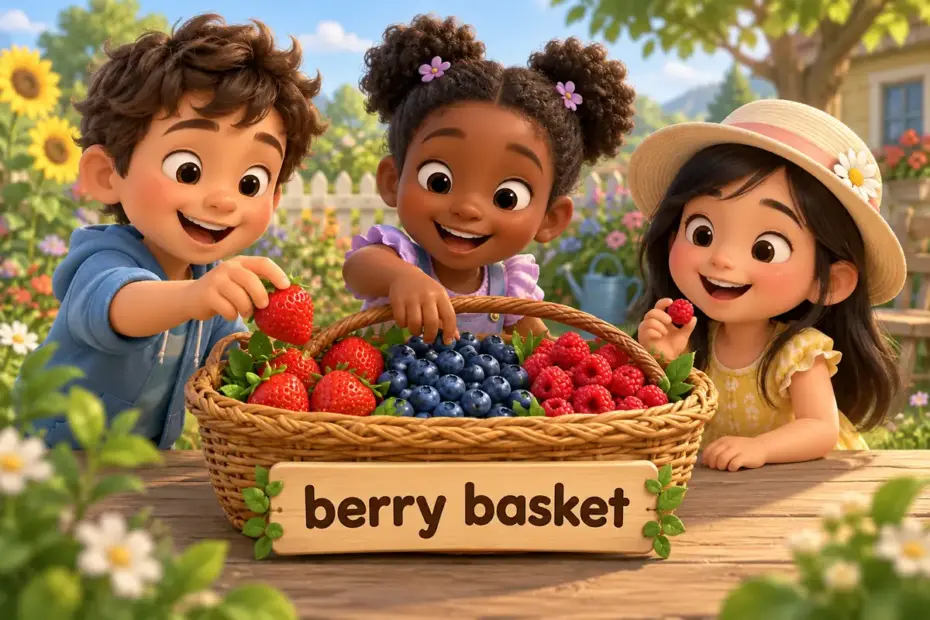
Different types of berries with pictures is a simple way to learn the small, soft fruits that fill baskets and pies. This guide lists strawberries, raspberries, blueberries and more, explains which are true berries, and shows the names in clear sentences.
Different Types of Berries With Pictures at a glance
- A berry is a small, soft, fleshy fruit, usually eaten whole.
- Common berries include strawberry, raspberry, blueberry, blackberry and cranberry.
- In cooking, many small fruits are called berries even when they are not true berries.
- Botanically, a true berry grows from a single ovary; the tomato and grape qualify.
- The commonest spelling error is currant for the fruit and current for now or a flow.
What are berries?
Berries are small, soft fruits that people eat whole, fresh or cooked. In everyday speech the word covers almost any small juicy fruit, while botany uses a stricter test: a true berry forms from a single ovary and has its seeds inside the flesh. A page of different sentence examples shows the word that heads this topic in use.
| Everyday berry | Botanical type | Note |
|---|---|---|
| Strawberry | Aggregate fruit | Its seeds sit on the outside. |
| Raspberry | Aggregate fruit | Made of many small drupelets. |
| Blackberry | Aggregate fruit | Also built from many tiny parts. |
| Blueberry | True berry | One fruit with seeds inside. |
| Cranberry | True berry | Firm, tart and used in sauces. |
| Gooseberry | True berry | Green, tart and often cooked. |
Shopping labels follow the everyday sense, which is why a market crate of strawberries is simply called berries. This guide keeps to the berries sold in ordinary shops, so rare wild species are left out.
Common different types of berries in one list
The table below pairs each name with a short description and a fact a learner can remember. Sweet, tart and juicy varieties all appear, and adjectives for strawberries show how far one berry can be described.
| Name | What it looks like | Key fact |
|---|---|---|
| Strawberry | Red, heart-shaped, with seeds outside | Grown in gardens worldwide. |
| Raspberry | Soft red or black, hollow centre | Picks cleanly off its core. |
| Blueberry | Small, round and dark blue | A true berry with seeds inside. |
| Blackberry | Dark, bumpy and clustered | Grows on thorny bushes. |
| Cranberry | Firm, round and deep red | Very tart; often cooked. |
| Gooseberry | Green and slightly translucent | Tart and used in pies. |
| Elderberry | Tiny, dark purple, in clusters | Usually cooked before eating. |
| Boysenberry | Large, dark and juicy | A cross between berry kinds. |
| Mulberry | Long, dark and sweet | Grows on a tree, not a bush. |
| Redcurrant | Small, bright red, in strings | Sharp and used in jellies. |
| Blackcurrant | Small, dark and glossy | Strong flavour for drinks. |
| Goji berry | Small, soft and red-orange | Sold mostly dried. |
| Cloudberry | Amber, soft and tart | Grows in cold northern bogs. |
| Tayberry | Large, dark and sweet | Grown on long thorny canes. |
How do you use berry names in a sentence?
Berry names are countable nouns, and the plural follows a spelling rule for words ending in y. The frames below cover the common uses.
| Pattern | Example | What it signals |
|---|---|---|
| a + name | I ate a strawberry. | One countable fruit |
| plural name | Blueberries are in season. | The whole kind |
| name + jam or pie | raspberry jam | The fruit names a product |
| a bowl of + plural | a bowl of berries | A portion |
| name as adjective | a strawberry field | The fruit describes a place |
Berry names in a sentence: examples across contexts
The names appear in recipes, shops and science lessons, and a page of differentiate sentence examples shows how to tell similar things apart.
| Context | Example sentence | Why this works |
|---|---|---|
| Classroom | Our teacher asked which fruit is a true berry. | The name follows a verb. |
| Recipe | Fold the raspberries in gently. | The plural names an ingredient. |
| Market | The stall sold fresh blueberries by the punnet. | The plural states a quantity. |
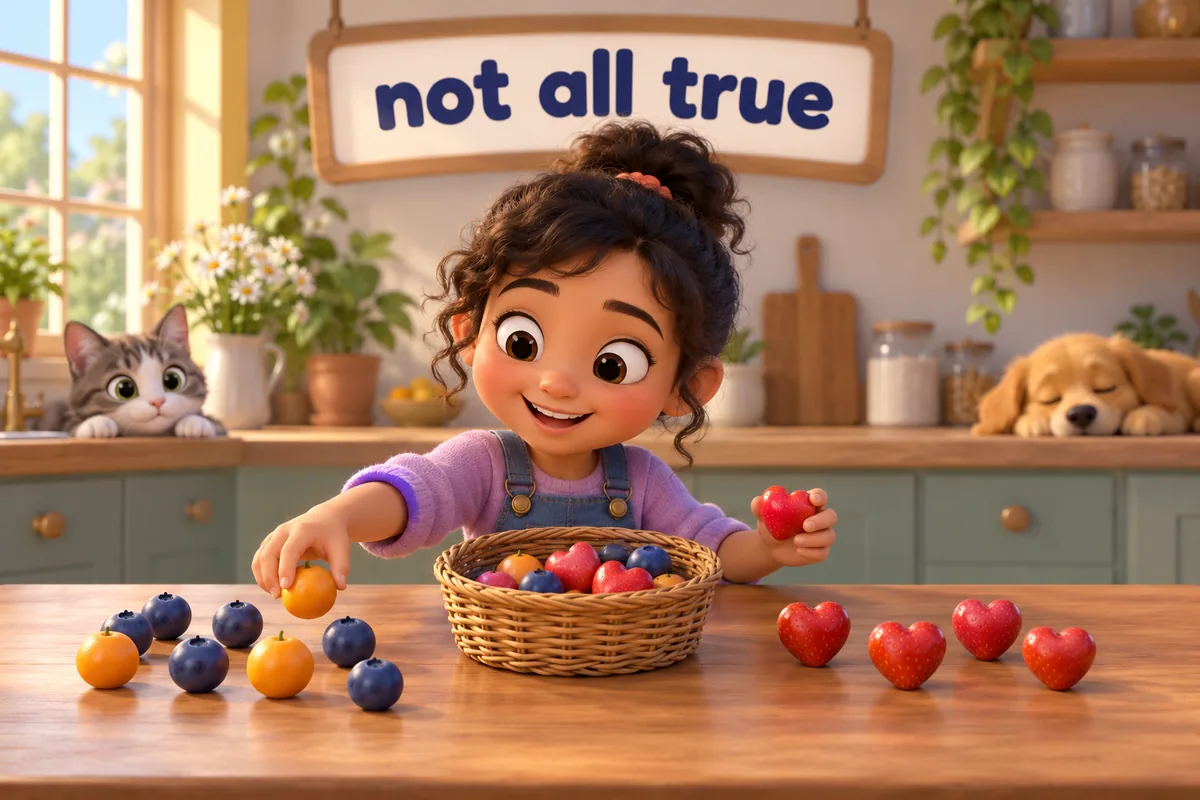
| Science lesson | A tomato is a berry, but a strawberry is not. | The names compare examples. |
| Conversation | These blackberries are sweeter than last year. | The plural is the subject. |
| Menu | Dessert is a cranberry tart. | The name modifies a noun. |
| Story | A single mulberry stained his fingers. | The name keeps a detail. |
| Health feature | Goji berries are usually sold dried. | The plural names the product. |
| Farm shop | The sign said pick your own raspberries. | The plural names a crop. |
| Breakfast menu | Yoghurt comes with a handful of mixed berries. | The plural names a mix. |
Which berry is which?
Match the name to the feature you can see, and the choice becomes clear.
| Feature | Name | Example |
|---|---|---|
| Seeds on the outside | Strawberry | The strawberry was ripe and red. |
| Hollow centre when picked | Raspberry | She filled the bowl with raspberries. |
| Dark blue and firm | Blueberry | A handful of blueberries topped the cake. |
| Grows on a tree | Mulberry | The mulberry tree shaded the path. |
| Red strings of small fruit | Redcurrant | Redcurrants lined the garden fence. |
Colour and shape are the fastest clues, since the seeds of a strawberry sit visibly on the outside while a raspberry leaves a hollow core behind.
Spelling and word forms of berry names
Most berry names end in y, so the plural changes y to ies. Two-word names such as goji berry pluralise the second word.
| Form | Part of speech | Example |
|---|---|---|
| berry | noun | This berry is very sweet. |
| berries | plural noun | The berries ripened early. |
| strawberry | noun | She picked a strawberry. |
| strawberries | plural noun | Strawberries grow in rows. |
| goji berry | noun | A goji berry dried in the sun. |
| goji berries | plural noun | Goji berries are sold dried. |
Common mistakes with berry names
Mistake 1: the plural keeps the y. Incorrect: two strawberrys. Correct: two strawberries. Rule: after a consonant, y becomes ies in the plural.
Mistake 2: a strawberry is called a true berry. Incorrect: A strawberry is a true berry. Correct: A strawberry is an aggregate fruit. Rule: a true berry grows from a single ovary; a strawberry does not.
Mistake 3: a countable name loses its plural. Incorrect: I picked three blueberry. Correct: I picked three blueberries. Rule: these names add -s or -ies after a number.
Mistake 4: a one-word berry name is split in two. Incorrect: a blue berry. Correct: a blueberry. Rule: blueberry is written as one word.
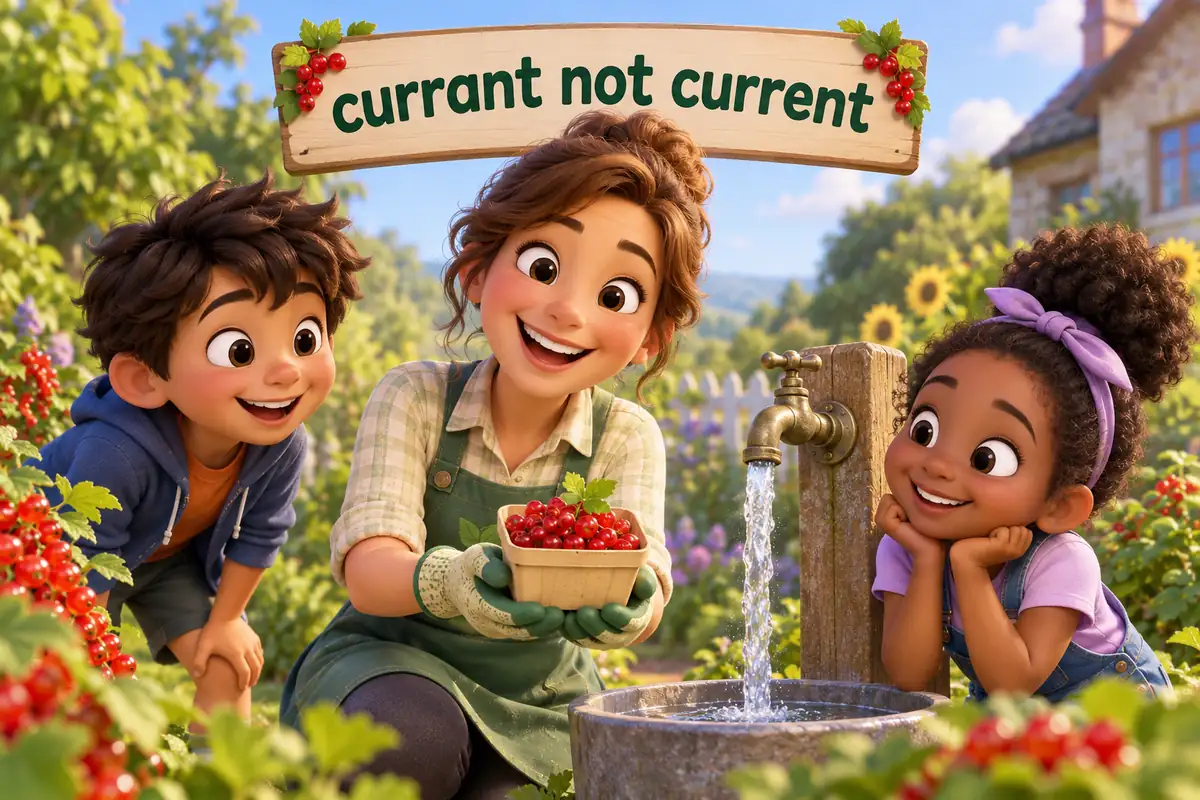
Mistake 5: currant is confused with current. Incorrect: red currents grow in the garden. Correct: redcurrants grow in the garden. Rule: currant names the fruit; current means now or a flow of water or electricity.
Practice using berry names
- Fill in the blank: She made jam from fresh ___.
- Choose the better word: A tomato is a true (berry / drupe).
- Correct the error: We bought two strawberrys and a box of blueberry.
- Build a sentence: use a bowl of with two berry names.
- Spot the register: which line suits a recipe, (a) Add berries, or (b) Fold in 150 g of raspberries?
- Fill in the blank: A ___ picks cleanly off its core.
Answers
- berries, because jam is made from many small fruits.
- berry, because a true berry grows from a single ovary.
- We bought two strawberries and a box of blueberries; both plurals change correctly.
- She filled a bowl of strawberries and raspberries for the table.
- (b), because a recipe uses precise measures.
- raspberry, because it leaves a hollow centre when picked.
The bottom line
Different types of berries with pictures range from the strawberry and raspberry to the blueberry, mulberry and goji berry. Keep the everyday meaning and the botanical test apart: a true berry grows from a single ovary, so the tomato qualifies while the strawberry does not. Watch the y-to-ies plural and the currant and current pair.
Frequently asked questions about berries
Is a strawberry a berry?
In everyday speech, yes, a strawberry is called a berry. In botany, no, because a true berry grows from a single ovary with the seeds inside the flesh. The strawberry is an aggregate fruit, built from many small parts, with its seeds on the outside. Both labels are correct in their own context.
Which fruits are true berries?
True berries grow from a single ovary and hold their seeds inside the flesh. On that test, the blueberry, cranberry, gooseberry and currant qualify, and so do the tomato, grape and banana. The strawberry, raspberry and blackberry do not, because they are aggregate fruits made of many small parts.
What is the difference between a currant and a raisin?
A currant is a small, tart berry that grows on a bush, such as the redcurrant and blackcurrant. A raisin is a dried grape, not a separate fruit. The two are unrelated, so a currant is fresh or cooked while a raisin is dried and sweet, which is why recipes keep the names apart.
Are berries good to eat every day?
Berries are a common part of a balanced diet, and many people enjoy them daily in cereal, yoghurt or snacks. They are small and easy to add to meals, fresh or frozen. As with any food, the useful habit is variety rather than relying on one type, so mix berries with other fruit.