
Gallivant means to travel about in search of pleasure, often in a light or irresponsible way. To use gallivant in a sentence, make the person the subject and add a place phrase: “They gallivanted across Europe for a summer.” The verb is intransitive, so it never takes an object.
Gallivant at a glance
- Gallivant is an intransitive verb meaning to travel about for pleasure.
- Its forms are gallivants, gallivanted and gallivanting.
- The verb often implies idle or irresponsible wandering rather than a serious journey.
- It is usually found in the frame go gallivanting, especially about or around.
- The register is informal to mildly literary, so formal reports rarely use it.
What does gallivant mean?
Gallivant is an intransitive verb meaning to roam about in search of pleasure or amusement, often with a hint of criticism. The Cambridge entry for gallivant records the carefree travel sense, and the tone is the part learners miss: the word implies the time could have been spent better. The neutral travel simply names the movement, with no judgement attached.
| Sense | Plain meaning | Example sentence |
|---|---|---|
| Carefree travel | Journey from place to place for fun | They gallivanted through Spain for a month. |
| Idle wandering | Go about instead of working or studying | He gallivanted around town all afternoon. |
| Light escapade | Travel off on a merry adventure | She gallivanted off with friends to the coast. |
One limitation is worth stating plainly. Gallivant is not a neutral word for travel, so it does not fit a business trip, a commute or any necessary journey. It is also not the adjective gallant, which means brave or courteous. The verb carries a smile, and sometimes a mild rebuke, that plain travel does not.
How do you use gallivant in a sentence?
The verb needs a person and a place but never an object, because it is intransitive. The five patterns below cover almost every real sentence.
| Pattern | Example | What it signals |
|---|---|---|
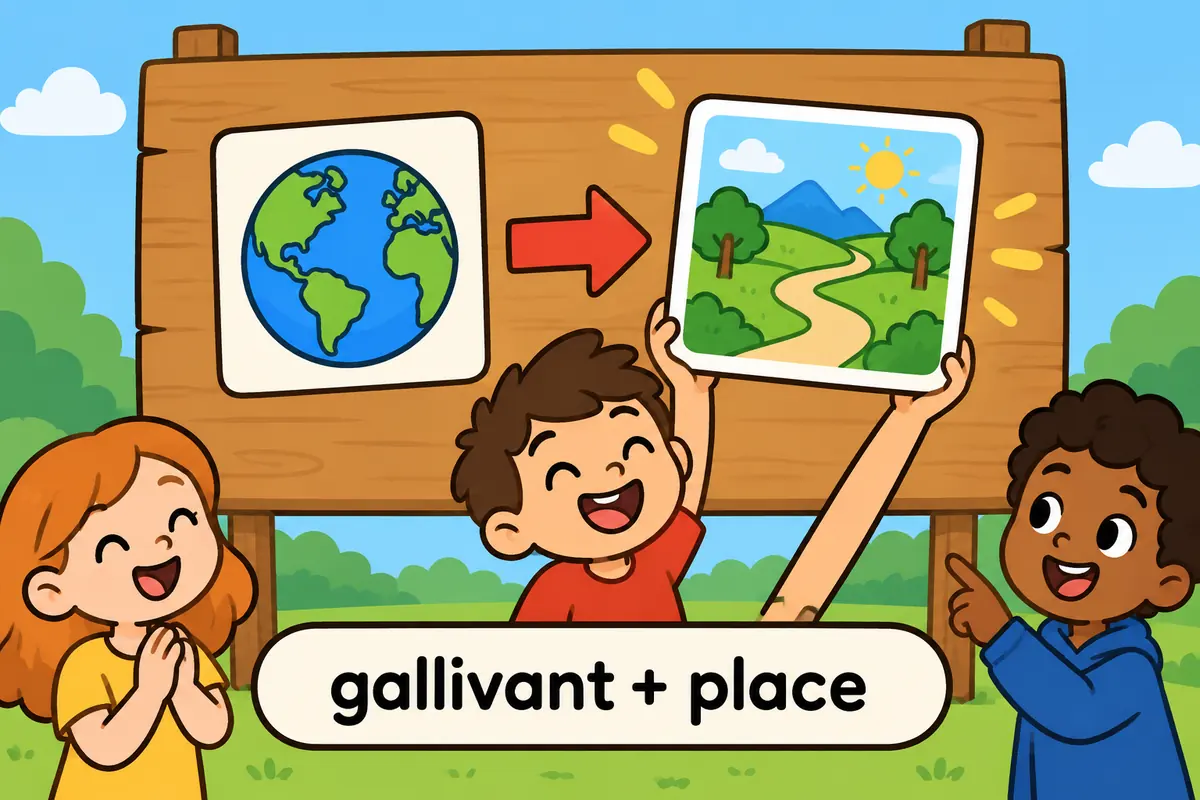
| gallivant + place phrase | They gallivanted across Italy. | The core use, needing only where, not what. |
| go gallivanting | He went gallivanting off to the city. | The commonest everyday frame. |
| gallivant around / about | She gallivanted around the market. | Aimless movement inside one place. |
| gallivant off (to) | They gallivanted off to the coast. | A sudden, carefree departure. |
| be gallivanting when … | He was gallivanting when the call came. | Contrasts pleasure with a duty missed. |
The intransitive rule is the one learners break. You can say they gallivanted across the city, but never they gallivanted the city, because gallivant describes how someone moves rather than what they visit.
Gallivant in a sentence: examples across contexts
The verb keeps its light, faintly critical tone wherever it appears. Each sentence below shows who is enjoying themselves and what they might be neglecting.
| Context | Example sentence | Why this works |
|---|---|---|
| Classroom | The class gallivanted around the museum instead of reading the labels. | Playful criticism of idle wandering. |
| Family | Stop gallivanting about and finish your homework. | The everyday rebuke, in the go-gallivanting frame. |
| Travel writing | We gallivanted through the islands for three weeks. | Carefree pleasure travel, the verb’s warmest use. |
| News report | Critics said the mayor had gallivanted abroad while the floods worsened. | Shows the word used as a jibe in political reporting. |
| Literature | The young heir gallivants from party to party. | A light, slightly disapproving portrait. |
| Work | He was gallivanting when the deadline passed. | Contrasts pleasure with a missed duty. |
| History essay | Young nobles gallivanted across the continent on their grand tour. | Captures leisured, educational travel. |
| Conversation | Where have you been gallivanting? | Friendly teasing, the commonest spoken use. |
| Diary | We gallivanted off without a plan. | A spontaneous, carefree departure. |
The news sentence is the sharpest, because gallivant turns a holiday into an accusation. The same trip described neutrally in a formal report would use travelled, and the criticism would disappear.
Gallivant vs gallant
Gallivant and its lookalike gallant share their opening letters and nothing else. A jaunt is a short pleasure trip when used as a noun, while to roam, meander or traipse all describe moving without hurry, and to cruise suggests relaxed, steady travel.
| Attribute | gallivant | gallant |
|---|---|---|
| Core meaning | Roam about for pleasure | Brave and courteous |
| Part of speech | Verb | Adjective, and rarely a noun |
| Typical subject | A holidaymaker or a shirker | A knight or a host |
| Syllables | Three: gal-li-vant | Two: gal-lant |
| Register | Informal and playful | Literary and formal |
Verdict: choose gallivant when someone wanders off for fun, and gallant when the topic is courage or courtesy rather than travel.
Word forms and grammar of gallivant
Gallivant is a regular verb with a common misspelling. The table below keeps the accepted forms and the lookalike adjective apart.
| Form | Part of speech | Example |
|---|---|---|
| gallivant | verb, base form | Do not gallivant across the city all day. |
| gallivants | verb, third person singular | She gallivants off whenever work begins. |
| gallivanted | verb, past and past participle | They gallivanted through France last June. |
| gallivanting | verb, present participle | He is always gallivanting somewhere. |
| gallivanting | noun, informal gerund | All that gallivanting wore him out. |
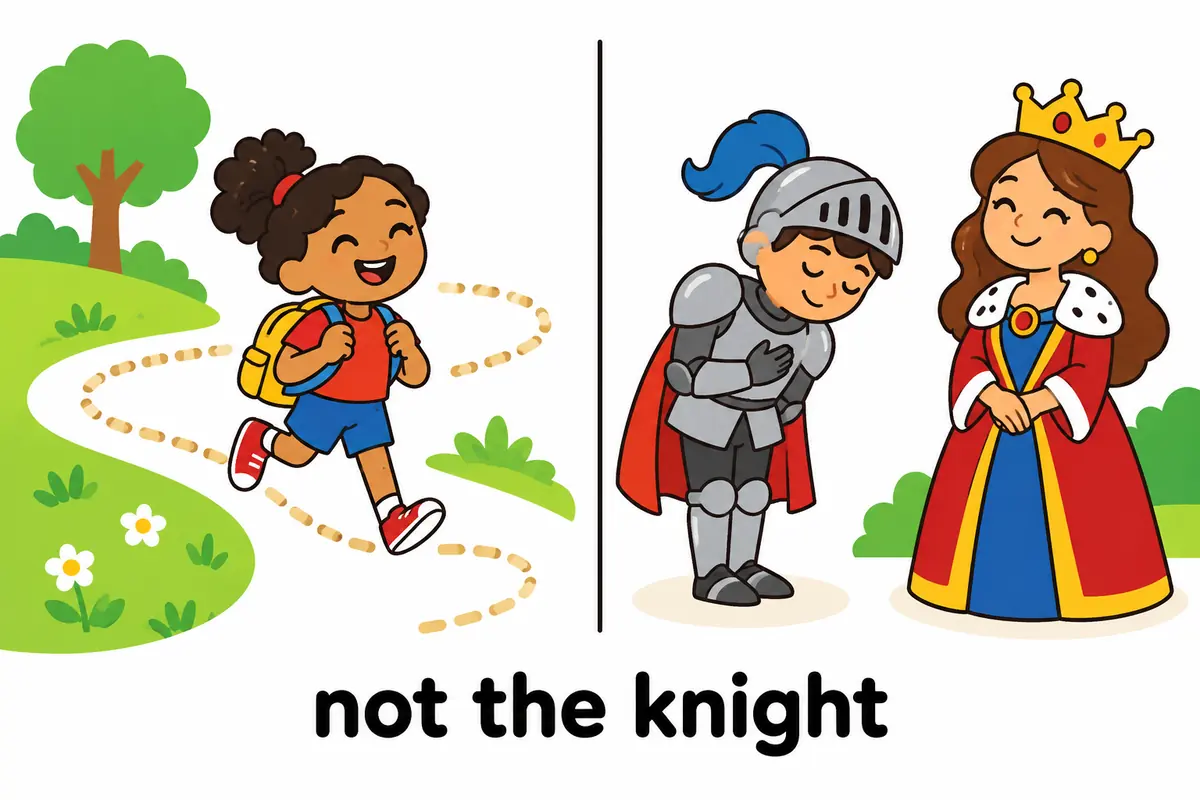
| gallant | adjective, different meaning | The gallant knight bowed to the queen. |
| gallavant | non-standard spelling | Write gallivant; gallavant is a common misspelling. |
The gerund gallivanting is the form that most often turns up in speech, as in a complaint about too much gallivanting and too little revision.
Common mistakes with gallivant
- Incorrect:
They gallivanted the castles of the north.Correct: They gallivanted around the castles of the north. Rule: Gallivant is intransitive, so it cannot take a direct object. - Incorrect:
He is a gallivant traveller.Correct: He is a restless traveller. Rule: Gallivant is a verb, not an adjective. - Incorrect:
She gallivants her duties.Correct: She shirks her duties. Rule: Gallivant cannot take an object; use a transitive verb instead. - Incorrect:
The gallivant knight bowed to the queen.Correct: The gallant knight bowed to the queen. Rule: Gallant means brave or courteous; gallivant means to roam for pleasure. - Incorrect:
We gallivanted to the meeting.Correct: We went to the meeting. Rule: Gallivant implies pleasure, so it does not fit a duty.
Practice using gallivant
Work through the six items, then read the reason given for each answer rather than only the key.
- Fill the gap: The students ______ around the old town instead of visiting the gallery.
- Choose the better word: The knight was (gallivant / gallant) as he offered his seat.
- Correct the error: They gallivanted the castles of the north.
- Build a sentence: use go gallivanting about a friend who skips lessons.
- Spot the register: which suits a formal report — the manager gallivanted abroad, or the manager travelled abroad during the crisis?
- Rewrite with around: She roamed the market. Use gallivant instead.
Answers
- gallivanted — carefree wandering around a place is the verb’s core use.
- gallant — the adjective means brave and courteous, which fits a knight.
- They gallivanted around the castles of the north — gallivant is intransitive and needs around.
- Model answer: He went gallivanting about the town while the rest of us revised.
- The manager travelled abroad — a formal report avoids the word’s playful tone.
- She gallivanted around the market — around fits the intransitive pattern.
The bottom line
Use gallivant in a sentence when someone roams about for pleasure, and let the place phrase rather than an object carry the movement. Two nuances decide most uses: the verb is intransitive, and it sounds light or mildly critical, so it suits holidays and teasing but not serious travel. Where the tone should stay neutral, travel, wander or roam are the safer choices.
Frequently asked questions about gallivant
Is gallivanting always negative?
Not always, but it usually carries a mild rebuke. The verb suggests that the person is enjoying themselves instead of doing something useful, so a parent who asks where you have been gallivanting is teasing more than scolding. Used about travel writing or holidays, it can be warm and light-hearted rather than critical.
What is the difference between gallivant and gallant?
Gallivant is a verb meaning to roam about for pleasure, and it is rarely used about anyone serious. Gallant is an adjective meaning brave and courteous, as in a gallant knight. They sound almost the same because both begin with gall, so the two-syllable adjective and the three-syllable verb are easily mixed in writing.
Does gallivant describe a short trip or a long one?
It describes neither length in particular, only the spirit of the journey. A single afternoon in the market can be gallivanting, and so can three months in another country. What matters is that the travel is done for pleasure or amusement rather than duty, which is why a quick errand never counts.
Is gallivant a common word?
Gallivant is familiar but not frequent. It belongs to conversational and slightly literary English, so it turns up in diaries, travel writing and teasing remarks rather than in formal reports. Writers who want a neutral verb usually choose travel, wander or roam, and reach for gallivant only when the carefree tone matters.
Gallivant in a sentence means to go from place to place for pleasure, usually with a carefree or lightly teasing tone. The verb is commonly followed by a phrase such as around town or from café to café, so a sentence should make the destination or activity clear.
At a glance
- Gallivant is an intransitive verb: the subject gallivants; it does not normally take a direct object.
- The word often suggests enjoyable, casual movement from place to place.
- Cambridge labels the verb humorous, so it sounds more playful than neutral travel.
- Common forms are gallivant, gallivants, gallivanted, and gallivanting.
- Use a destination or context phrase when the reader needs to know where someone went.
How do you use gallivant in a sentence?
Use gallivant as the main verb for a person or group enjoying a casual outing. A short destination phrase makes the action specific: “After exams, the cousins gallivanted around the waterfront and stopped for ice cream.”
| Pattern | Example | What it conveys |
|---|---|---|
| gallivant + around | They gallivanted around the old harbor all afternoon. | A relaxed outing across a place. |
| gallivant + from X to Y | We gallivanted from the market to the gardens before dinner. | Several stops made for enjoyment. |
| be + gallivanting | My brother is gallivanting with friends this weekend. | An ongoing or planned leisure trip. |
| gallivant + about | The children gallivanted about the museum courtyard. | Light, somewhat playful movement. |
The Cambridge Dictionary marks the verb as humorous and commonly pairs it with an adverb or preposition. That tone makes it a natural fit for a travel anecdote, a comic line of dialogue, or a friendly complaint; it may sound too casual for a formal itinerary or report.

What tone does gallivant have?
Gallivant usually presents an outing as carefree, sociable, or a little mischievous. “The researchers traveled between field sites” sounds neutral; “the friends gallivanted around the seaside town” adds a light, amused voice.
The word can also imply that a person is enjoying themself when someone thinks they should be elsewhere. Because of that teasing shade, avoid it when you need to report travel neutrally or describe a serious duty without judgment.
How is gallivant different from wander or travel?
Travel is the broad, neutral choice for going from one place to another. Wander emphasizes movement without a fixed route, while gallivant adds pleasure and a playful sense of roaming.
- Choose travel for a factual account: “The team traveled to three regional offices.”
- Choose wander when the route is loose or uncertain: “We wandered through the gallery.”
- Choose gallivant when the outing is carefree or amusing: “They gallivanted around the festival until dusk.”

Which form of gallivant should you write?
Match the verb form to the sentence’s time and subject: use gallivant after I, you, we, or they in the present; gallivants after a singular third-person subject; gallivanted for the past; and gallivanting after a form of be.
- Present: “On Saturdays, Lena gallivants around the flea market.”
- Past: “The family gallivanted through Lisbon during their free afternoon.”
- Progressive: “We are gallivanting along the coast this week.”
- Infinitive: “They hope to gallivant through the festival before closing.”
A useful editing check is to replace gallivant with travel. If the sentence needs a playful, carefree tone, keep it; if it simply reports a route, the plainer verb may be clearer.
Frequently asked questions about gallivant
Is gallivant formal or informal?
Gallivant is informal and often humorous. It suits conversation, light narrative, and playful commentary, but a neutral report usually calls for travel, visit, or move around.
Does gallivant need an object?
Usually not. Gallivant is commonly used intransitively, with a location phrase such as around the city or through the market rather than a direct object.
What is the past tense of gallivant?
The standard past form is gallivanted: “They gallivanted around town after lunch.” Its present participle is gallivanting.
Can gallivant sound critical?
Yes. It can playfully suggest that someone is out enjoying themself when they might be expected to do something else. Context and speaker relationship determine whether the word sounds affectionate or disapproving.
Have you ever heard of the word “gallivant”? This dynamic verb describes the act of traveling, wandering, or roaming around in a carefree manner.
To gallivant is to explore with a sense of adventure and leisure, whisking oneself from place to place without a clear purpose or itinerary.
7 Examples Of Gallivant Used In a Sentence For Kids
- Gallivant means to go around and have fun.
- I love to gallivant in the park with my friends.
- Let’s gallivant around the playground and play games.
- The birds gallivant in the sky and sing sweet songs.
- We can gallivant on our bicycles and explore new places.
- I like to gallivant with my pet dog in the garden.
- The butterflies gallivant from flower to flower in the garden.
14 Sentences with Gallivant Examples
- Gallivant around campus during the lunch break.
- We decided to gallivant around the city after our exams.
- It’s always fun to gallivant in different neighborhoods and explore new places.
- During the weekend, I like to gallivant with my friends and discover new cafes.
- After classes, we love to gallivant in the nearby market for shopping.
- Gallivanting to nearby towns during the holidays is a great way to relax.
- Exploring historical sites and monuments by gallivanting around the city is always interesting.
- Gallivanting to music festivals and events is a common pastime for college students.
- Gallivanting to hill stations during summer vacation is a popular choice among college students.
- Gallivanting on road trips with friends is a memorable experience for many college students.
- Gallivanting to art galleries and exhibitions is a great way to appreciate creativity.
- Gallivant with your classmates for a fun day out.
- For a break from studies, gallivant in the nearby park for some fresh air.
- Gallivanting to bookstores and libraries to find new reads is a favorite activity for many college students.
How To Use Gallivant in Sentences?
To use the word Gallivant in a sentence, follow these steps:
-
Understand the meaning: Gallivant means to go around in search of pleasure or entertainment, typically in a restless or aimless manner.
-
Select a situation: Think about a scenario where someone is traveling or exploring for enjoyment rather than a specific purpose.
-
Construct your sentence: Combine Gallivant with a subject and verb to create a grammatically correct sentence. For example, “She decided to gallivant through the streets of Paris, soaking in the sights and sounds.”
-
Check the sentence: Make sure the sentence makes sense and effectively conveys the idea of wandering or traveling for pleasure.
-
Experiment with variations: Try using Gallivant in different tenses or with various subjects to become more comfortable with the word. For instance, “He will gallivant across the countryside during his vacation.”
-
Practice using context clues: If you encounter the word Gallivant in a book or conversation, pay attention to the surrounding context to better understand its usage.
Remember, using Gallivant in a sentence can add flair and vividness to your language. Practice incorporating this word into your everyday vocabulary to enhance your communication skills.
Conclusion
In conclusion, gallivant means to wander or travel around in pursuit of pleasure or excitement. The word can be used to describe someone who is carefree and unrestrained in their movements, often exploring new places or engaging in spontaneous adventures. For example, “After finishing her exams, Sarah decided to gallivant around Europe, visiting different countries and immersing herself in new cultures.”
Using the word gallivant adds a sense of whimsy and light-heartedness to the idea of traveling or exploring, capturing the essence of carefree and enjoyable journeys. It evokes images of leisurely strolls through unfamiliar streets, spontaneous detours, and a spirit of free-spirited exploration.