A list of all skin color names draws on three kinds of word: depth words such as fair and deep, undertone words such as warm and cool, and shade names from food, wood and minerals, including ivory, honey, chestnut and ebony. Each word describes a surface tone, never a person, and one example sets the pattern: a warm caramel tone.
List of all skin color names at a glance
- The words fall into three kinds: depth, undertone, and shade names drawn from nature.
- Depth words run from fair through medium to deep and describe overall lightness.
- Undertone words such as warm, cool, neutral and rosy describe the cast beneath the surface.
- Shade names come from food, wood and minerals, as in honey, walnut and bronze.
- The commonest error is using a single shade name for a whole range of tones.
What are skin color names?
Skin color names are the adjectives and shade words used to describe the tone of skin, mostly in art, cosmetics, fashion and fiction. The word skin itself is uncountable, as in exposed skin, while the derived adjectives behave like ordinary describing words; more of them appear in adjectives for skin. A description works best when it names the depth first and the undertone second, so an accurate phrase is a medium tone with a golden undertone rather than a vague single word.
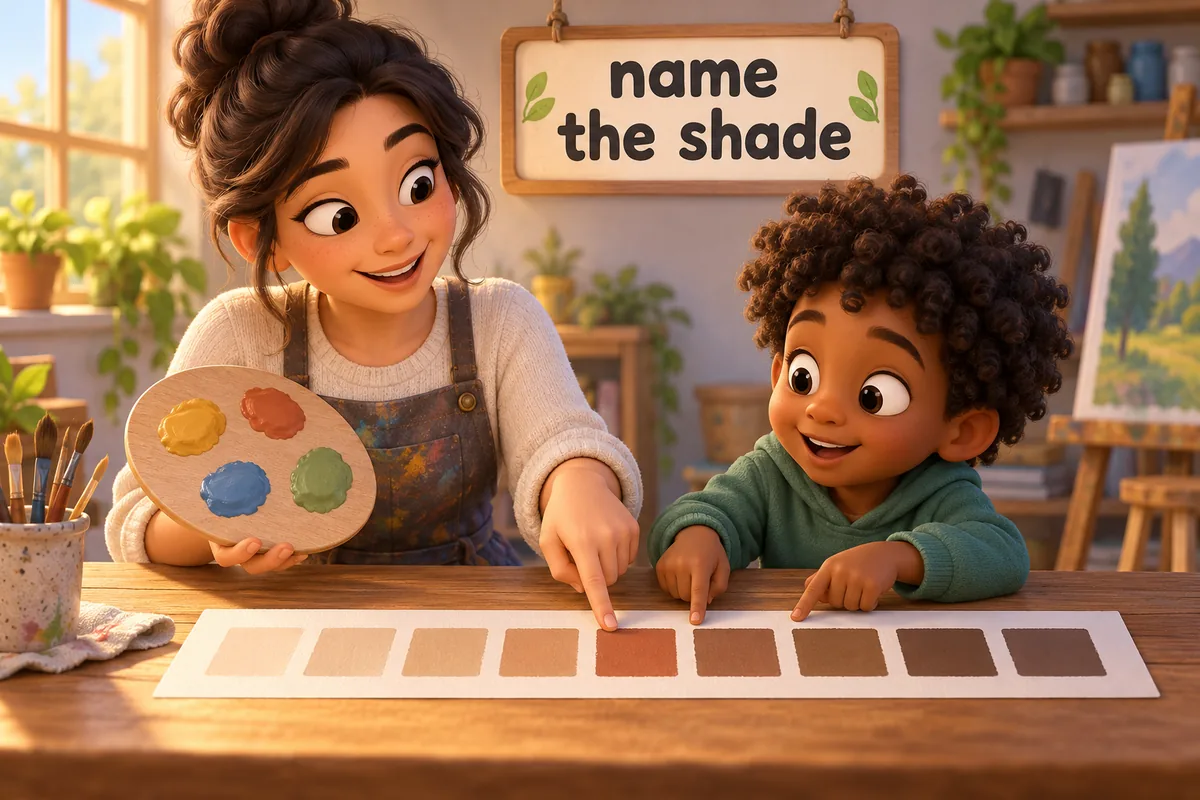
| Depth group | What it describes | Common names |
|---|---|---|
| Fair and light | a pale surface with little visible warmth | ivory, porcelain, cream, alabaster |
| Light to medium | the middle range with a warm or golden cast | sand, beige, honey, almond, olive |
| Tan and bronze | a deep golden or sun-touched surface | caramel, toffee, amber, bronze, copper |
| Deep and rich | a dark surface with strong warmth | chestnut, mahogany, walnut, mocha, cocoa |
| Very deep | the darkest range with a rich, even cast | espresso, ebony |
How are skin color names built?
Shade words are borrowed from everyday objects, and knowing the source makes an unfamiliar name easy to place. The pattern holds across art, makeup and writing, and the same descriptive habit appears among color adjectives.
| Pattern | Example | What it signals |
|---|---|---|
| food shade | caramel, honey | a warm, sweet-toned brown |
| wood shade | walnut, mahogany | a rich brown with depth |
| mineral shade | ivory, bronze, amber | a pale or metallic warm tone |
| nature shade | olive, sienna | an earthy or green-gold cast |
| depth word | fair, medium, deep | the overall lightness of the tone |
| undertone word | warm, cool, neutral, rosy | the cast beneath the surface |

List of all skin color names in sentences across contexts
The words appear wherever a surface tone needs describing, from a portrait class to a makeup counter, and the register decides how precise the phrase becomes. The verb sense of tinting or shifting a surface appears in change color in a sentence.
| Context | Example sentence | Why this works |
|---|---|---|
| Art class | Mix ivory with a little umber for the cheeks. | shade names guide a palette |
| Portrait writing | Her honey-toned skin caught the afternoon light. | a shade word plus depth |
| Makeup guide | Choose a foundation for a medium tone with a golden undertone. | depth first, undertone second |
| Novel | His walnut-brown shoulders showed the sun of a long summer. | a warm wood shade |
| Fashion styling | Bronze tones suit a warm dress code. | a shade applied to a group of looks |
| Photography | Neutral lighting keeps deeper tones accurate. | a depth word in a technical note |
| Museum label | The artist painted pale porcelain hands beside dark ebony ones. | a deliberate contrast in one line |
| Costume design | Warm caramel fabrics flattered the whole cast. | a food shade used broadly |
| Form or survey | Please select the depth that best matches your skin tone. | neutral, respectful wording |
| Everyday speech | My sister has a lighter olive tone than I do. | a calm, factual comparison |
Which word should you use?
Match the word to the detail you are describing, because depth and undertone are different facts about a surface. Warm and cool words describe a cast, while food and wood words describe a specific shade; a fuller set sits with the next set of adjectives for skin.
| Situation | Use | Example |
|---|---|---|
| Describe overall lightness | a depth word | The portrait shows a deep tone. |
| Describe the cast beneath | an undertone word | She has a cool undertone. |
| Describe an exact shade | a nature shade name | The glaze is a soft almond. |
| Describe a range fairly | a plural phrase | The range runs from fair to deep. |
Choose a depth word when a comparison is needed, and a shade name when a specific picture is the goal. For other hues, the pattern is the same, as shown in adjectives for the color blue, where one base color also splits into many named shades.
Word forms and grammar of skin color words
These words behave like ordinary adjectives and nouns, but a few are uncountable or fixed, and that shapes the sentence.
| Form | Part of speech | Example |
|---|---|---|
| skin | uncountable noun | Fair skin burns easily in strong sun. |
| complexion | count noun | She has a clear complexion. |
| tone | count noun | A deeper tone absorbs more light. |
| shade | count noun | The artist mixed three shades. |
| undertone | count noun | Warm undertones suit gold jewellery. |
| fair | adjective | He has fair skin and dark hair. |
| fairer | comparative adjective | One arm is fairer than the other. |
Skin takes a singular verb because it is uncountable, so write the skin is dry, never the skins are dry. When you compare two people or two tones, use the comparative form fairer or deeper, and reserve fairest and deepest for a set of three or more.
Common mistakes with skin color names
Mistake 1: depth and undertone swapped. Incorrect: She has a warm tone and a deep undertone. Correct: She has a medium tone and a warm undertone. Rule: depth gives the lightness, undertone gives the cast beneath it.
Mistake 2: a shade word used as a label for a person. Incorrect: She is a caramel. Correct: She has a warm caramel tone. Rule: shade words describe a surface, so keep them as adjectives, not names for people.
Mistake 3: one shade name stretched over a whole range. Incorrect: Every deeper tone can be called ebony. Correct: Deeper tones range from chestnut through walnut to ebony. Rule: a shade name marks one narrow band, not a whole group.
Mistake 4: a value judgement hidden in the word. Incorrect: She has a normal skin color. Correct: She has a medium skin tone. Rule: normal and regular imply that other tones are not standard, so use a neutral depth word instead.
Mistake 5: an outdated label kept out of habit. Incorrect: Colored skin was common in old forms. Correct: Deeper skin tones appear in the old records. Rule: the older label carries a painful history, so name the tone directly.
Practice using skin color names
- Fill in the blank: Choose a foundation for a medium tone with a warm ___.
- Choose the better word: The portrait shows a (porcelain / deep) tone on a face in shadow.
- Correct the error: She has a deep undertone and a warm tone.
- Build a sentence: use honey to describe skin in late sunlight.
- Spot the register: which line suits a makeup guide, (a) Her skin is kinda goldish, or (b) Suitable for a medium tone with a golden undertone?
- Fill in the blank: The artist mixed ivory with a little ___ for the cheeks.
Answers
- undertone, because the phrase names the cast beneath the depth.
- deep, because the face is in shadow and the tone is dark, not pale.
- She has a medium tone and a warm undertone; depth comes before the cast.
- Her honey-toned skin caught the last light of the day.
- (b), because a makeup guide uses precise, standard wording.
- umber, because umber is a warm brown that deepens a pale shade.
The bottom line
A list of all skin color names works best when it separates depth from undertone and treats shade words as descriptions of a surface. Depth words such as fair and deep set the lightness, undertone words such as warm and cool set the cast, and names like honey, walnut and ebony pin down one narrow shade. Keep the words as adjectives, and they stay accurate and respectful.
Frequently asked questions about skin color names
What is the difference between skin tone and undertone?
Skin tone is the overall lightness or darkness of the surface, described with depth words such as fair, medium or deep. Undertone is the subtle cast beneath it, described with words such as warm, cool, neutral or rosy. You name both together for an accurate description.
Are food words such as caramel offensive?
Food and nature names are standard vocabulary in art, cosmetics and fiction, and they are neutral when they describe a tone rather than a person. Keep the word as an adjective, as in a caramel tone, and avoid turning it into a label for someone, which sounds reductive.
How many skin color names are there?
There is no fixed number, because new shade names appear each season in cosmetics and art supplies. The stable core is small: five or six depth words, four undertone words, and a changing set of nature names such as ivory, honey, chestnut and ebony that describe one narrow band each.
How do I describe skin color in writing?
Name the depth first, then the undertone, then a shade word if a precise picture is needed. A phrase such as a medium tone with a golden cast, or honey-toned skin in low light, reads naturally. Keep the focus on appearance and avoid words that rank one tone above another.