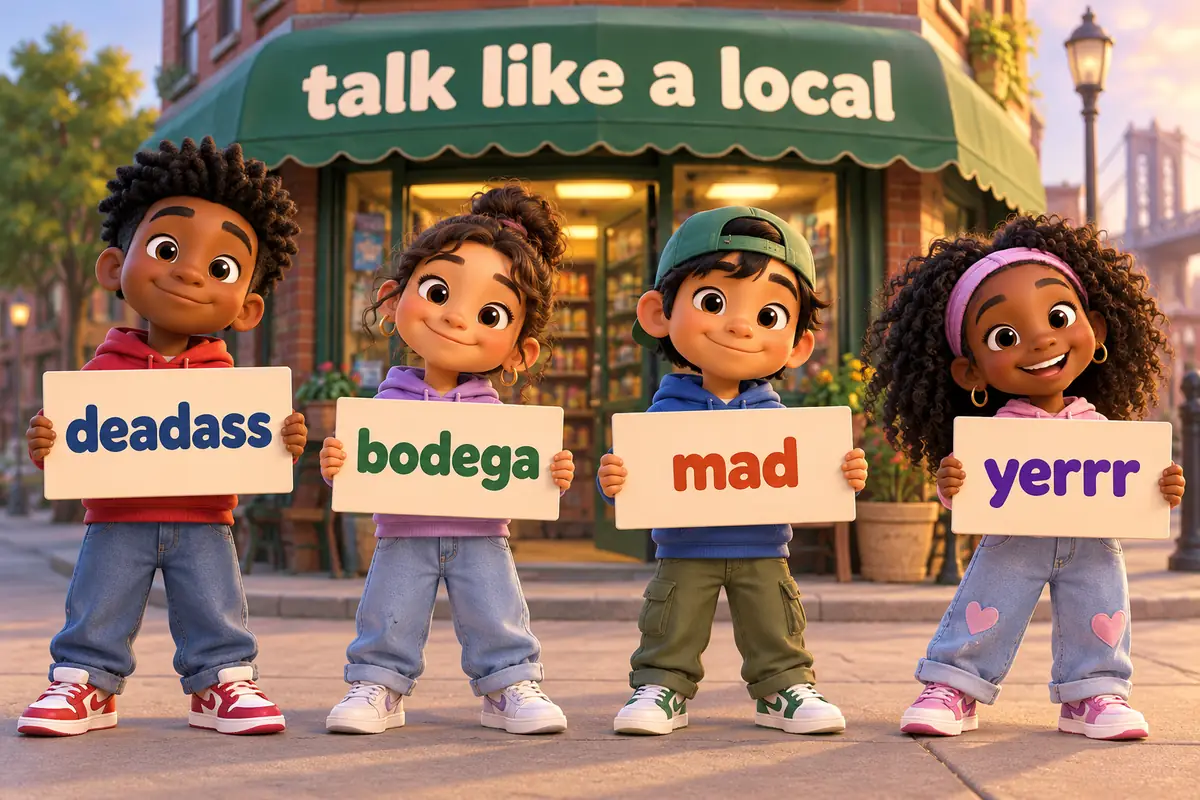
Normal vs advanced english words and sentences is a choice about register, not about right and wrong. Normal words such as big and start keep a sentence clear and direct, while advanced words such as substantial and commence add formality and precision. Pick the plain word for everyday speech and the advanced one for formal writing.
Normal vs Advanced English Words at a glance
- Normal words are the everyday forms most speakers use without thinking.
- Advanced words are the formal or specialised alternatives found in academic and professional writing.
- The two usually share a meaning and differ mainly in register.
- A long sentence is not automatically advanced, and a short one is not automatically plain.
- The commonest error is stacking advanced words until the meaning disappears.
What do normal and advanced mean?
Normal is an adjective meaning usual, ordinary or at the standard level, and advanced is an adjective meaning further along, more developed or more difficult. The Cambridge entry for normal and the Cambridge entry for advanced confirm the two senses, and one line shows the split: a normal word such as help is understood by everyone, while an advanced word such as facilitate suits a report.
| Sense | Word | Plain meaning | Example |
|---|---|---|---|
| Usual or typical | normal | Ordinary, not special | It was a normal working day. |
| At the standard level | normal | Not higher or lower than usual | The normal class meets at nine. |
| Further developed | advanced | More developed or more difficult | She joined the advanced group. |
| At a high level | advanced | Sophisticated or specialised | The course covers advanced methods. |
| Ahead of its time | advanced | Progressive for its period | The design was advanced for its year. |
The two words rarely clash in meaning, because normal and advanced both describe a level. The difference appears in the wording they pull into a sentence: normal brings plain nouns and short verbs, while advanced invites longer nouns and formal verbs.
What is the difference between normal and advanced English?
The difference is register, which is the level of formality a text expects. Normal English favours short, common words that any reader knows, while advanced English favours longer, rarer words that signal education or expertise. A near-miss pair such as addition vs edition shows how one word decides a meaning, and register decides the rest.
| Test | Normal word | Advanced word |
|---|---|---|
| Core meaning | usual, everyday | more developed or specialised |
| Register | neutral, spoken and written | formal, academic, professional |
| Effect on a sentence | clarity and speed | weight and precision |
| Risk | sounding too plain in a formal text | sounding inflated or vague |
| Typical pairing | a normal day, normal speed | an advanced course, an advanced method |
| Common error | plain wording in a formal report | advanced wording with no gain in meaning |
Choose the normal word when you want to be understood at once, and choose the advanced word when a formal text rewards precision more than speed.
How do you use normal and advanced words together?
Both levels follow patterns, and the plain-to-formal pairings below show the same idea at two registers. To watch the first word behave, read normal in a sentence.
| Normal word | Advanced word | Advanced example | When to choose it |
|---|---|---|---|
| get | obtain | Applicants obtain a form online. | formal writing |
| help | facilitate | The ramp facilitates access. | technical reports |
| start | commence | The hearing will commence at nine. | legal and ceremonial texts |
| need | require | The form requires a signature. | rules and instructions |
| show | demonstrate | The data demonstrate a clear trend. | academic writing |
| use | utilise | The lab utilises recycled water. | technical text, and often overused |
| big | substantial | There was a substantial rise in costs. | formal reports |
| end | conclude | We conclude the study with a caveat. | academic writing |
| about | approximately | The trip takes approximately an hour. | precise formal writing |
| buy | purchase | Customers may purchase tickets online. | commercial, formal |
Normal and advanced English in a sentence: examples across contexts
Reading the two registers in different settings makes the choice automatic, and it shows at the same time that register alone never fixes a meaning, as the one-letter trap of abel vs able makes clear.
| Context | Example sentence | Why this works |
|---|---|---|
| Classroom | The advanced class reads longer novels. | advanced names a higher level |
| Everyday speech | Traffic is back to normal after the roadworks. | a return to the usual state |
| Workplace email | Please use the normal booking process. | plain wording stays clear |
| Academic writing | The study demonstrates a substantial effect. | a formal register |
| News report | Services returned to normal by midday. | the usual state restored |
| Medical writing | The scan showed no advanced disease. | a technical sense of advanced |
| Professional report | The team requires additional resources. | formal precision |
| Conversation | That is normal for this time of year. | what is expected |
| Technical manual | Commence the test at the marked point. | a formal instruction |
| Business letter | We will purchase the parts locally. | formal commercial wording |
| Storytelling | It seemed like a normal morning until the phone rang. | plain narrative speed |
| Debate | The motion claims advanced economies act alike. | a term of classification |
Which should you use?
Match the register to the reader: an audience that needs speed takes the normal word, and a formal text that rewards precision takes the advanced one.
| Situation | Use | Example |
|---|---|---|
| Speaking or messaging a friend | normal word | Let us start now. |
| Writing a formal report | advanced word | The hearing will commence at nine. |
| Needing instant understanding | normal word | Please use the side door. |
| Needing exact technical wording | advanced word | The sample requires cold storage. |
Register is the deciding test. Normal English suits conversation, emails to colleagues and instructions for the public, where speed matters most. Advanced English suits reports, essays, contracts and technical writing, where a precise noun earns its length. When one sentence mixes the two, it sounds uneven, so a writer should hold a single register from start to finish.
Word forms and grammar of normal and advanced
| Form | Part of speech | Example |
|---|---|---|
| normal | adjective | It was a normal shift. |
| normally | adverb | The shop normally opens at eight. |
| normality | noun | Life returned to normality. |
| normalize | verb | The two sides agreed to normalize trade. |
| advance | verb | Prices advance without warning. |
| advance | noun | There was an advance in medicine. |
| advanced | adjective | She joined an advanced level class. |
| advancement | noun | Her advancement was quick. |
Common mistakes with normal and advanced English
Mistake 1: the advanced word adds nothing. Incorrect: We will utilise the small room for storage. Correct: We will use the small room for storage. Rule: prefer the plain word when the longer one adds no precision.
Mistake 2: the plain word is too loose for a formal text. Incorrect, in a report: Output fell a lot last quarter. Correct: Output fell substantially last quarter. Rule: a formal text rewards a precise word over a vague one.
Mistake 3: two registers in one sentence. Incorrect: The committee will kick off its deliberations. Correct: The committee will begin its deliberations. Rule: hold one register so the sentence does not sound uneven.
Mistake 4: an advanced word with the wrong sense. Incorrect: She facilitated the students with their homework. Correct: She helped the students with their homework. Rule: facilitate means to make a process easier, so it suits a system, not a person given a task.
Mistake 5: stacking advanced words. Incorrect: We commenced to utilise the substantial apparatus. Correct: We began using the large machine. Rule: several long words in a row hide the meaning that one plain word keeps clear.
Practice using normal and advanced English
- Fill in the blank with a normal word: We will ___ the side door.
- Choose the better word for a report: Costs rose (a lot / substantially).
- Correct the error: The meeting will kick off its deliberations at ten.
- Build a sentence: use the advanced word commence about a ceremony.
- Spot the register: which line suits a contract, (a) We’ll sort it out soon, or (b) The parties will resolve the matter promptly?
- Fill in the blank with an advanced word: The form ___ a signature.
Answers
- use, because it is the plain everyday verb.
- substantially, because a report rewards a precise word.
- The meeting will begin its deliberations at ten; keep one formal register.
- The ceremony will commence at noon.
- (b), because the formal wording suits a contract.
- requires, because it is the formal word for needs.
The bottom line
The normal vs advanced english words and sentences choice is about register, not about intelligence or effort. Normal words keep a message fast and clear, and advanced words add formality and precision in formal texts. Choose the level your reader expects, keep it consistent within a sentence, and never let a longer word stand in for a clearer one.
Frequently asked questions about normal and advanced English
Are advanced words always better than normal words?
No. An advanced word earns its place only when it adds precision or fits a formal register. When it adds neither, it makes a sentence heavier and slower without helping the reader. Clear writing often prefers the plain word even in professional settings.
Does a long sentence count as advanced English?
Not by itself. Sentence length is separate from vocabulary, and a long sentence can be plain while a short one uses advanced words. Advanced English is about word choice and register, so a simple sentence such as the hearing will commence at nine is advanced, while a long chatty sentence is not.
How do I raise the register of a sentence?
Swap the plainest verbs and adjectives for their formal partners, as in start for commence or big for substantial. Then check that each swap adds accuracy rather than length. One or two precise changes lift a sentence; a whole paragraph of long words reads as padding.
Can I mix normal and advanced English in one text?
You can, but the mixture should be deliberate. A formal report may open with a plain summary for the reader, then move into precise terms. Within a single sentence, though, mixing levels sounds uneven, so keep one register from the first word to the last.