What Does “One-Liner” Mean?
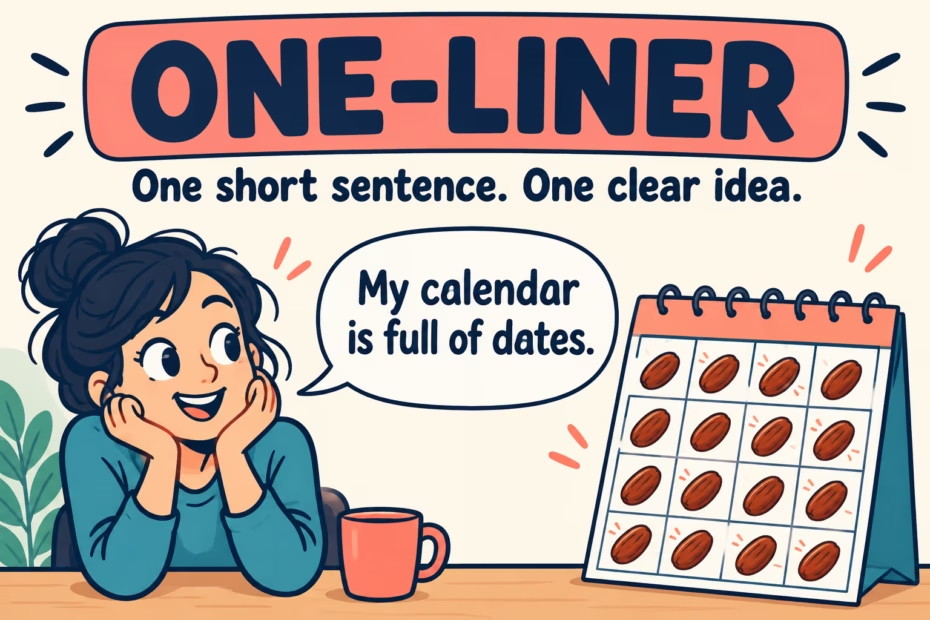
A one-liner is a brief remark expressed in one sentence. Dictionaries most often use the term for a joke or a clever, funny response, though people also use it more broadly for a memorable, concise statement. For example, “Her one-liner made the whole room laugh” uses the common humorous sense. The hyphenated form is standard as a noun: one-liner; its plural is one-liners.
A sentence can be short without being a one-liner. The term usually suggests that the line is deliberately memorable—often because it has a punchline, sharp observation, or compact point. Audience and context help signal whether it is meant to be funny, persuasive, or simply quotable.
How a One-Liner Works
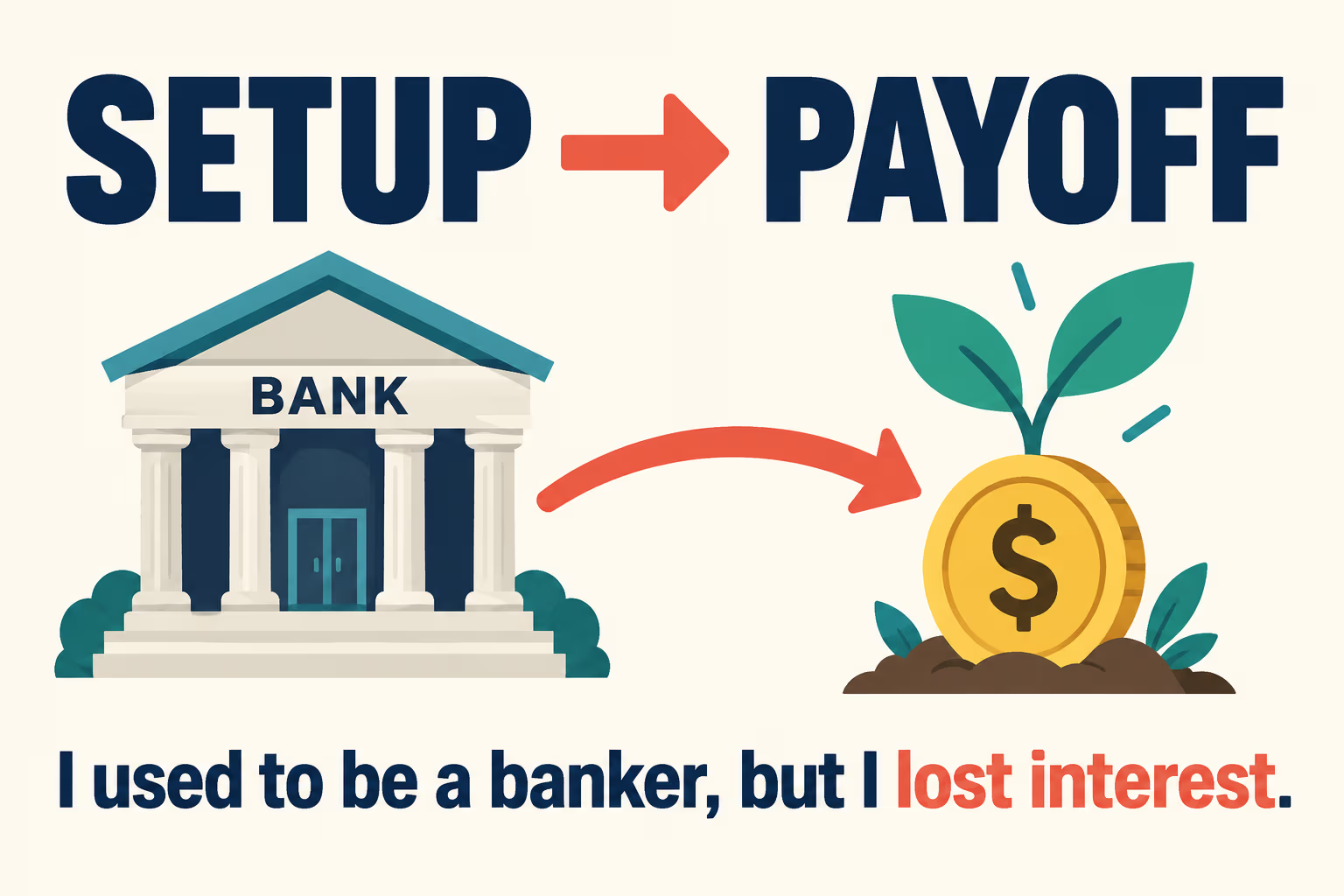
Many comic one-liners use a small setup followed by a surprise or change in meaning. The setup gives listeners a familiar expectation; the ending redirects that expectation. In “I used to be a banker, but I lost interest,” the word interest first suggests money earned or paid, then means curiosity or enthusiasm. The sentence is funny because one word supports both readings.
Not every one-liner needs a pun. A quick observation, an unexpected comparison, or a direct response can also make a line stick. The shared quality is economy: a reader can grasp the idea quickly, and the wording gives them a reason to remember it.
One-Liner Examples by Purpose
Funny one-liners
- “I used to be a banker, but I lost interest.” The final word shifts from finance to enthusiasm.
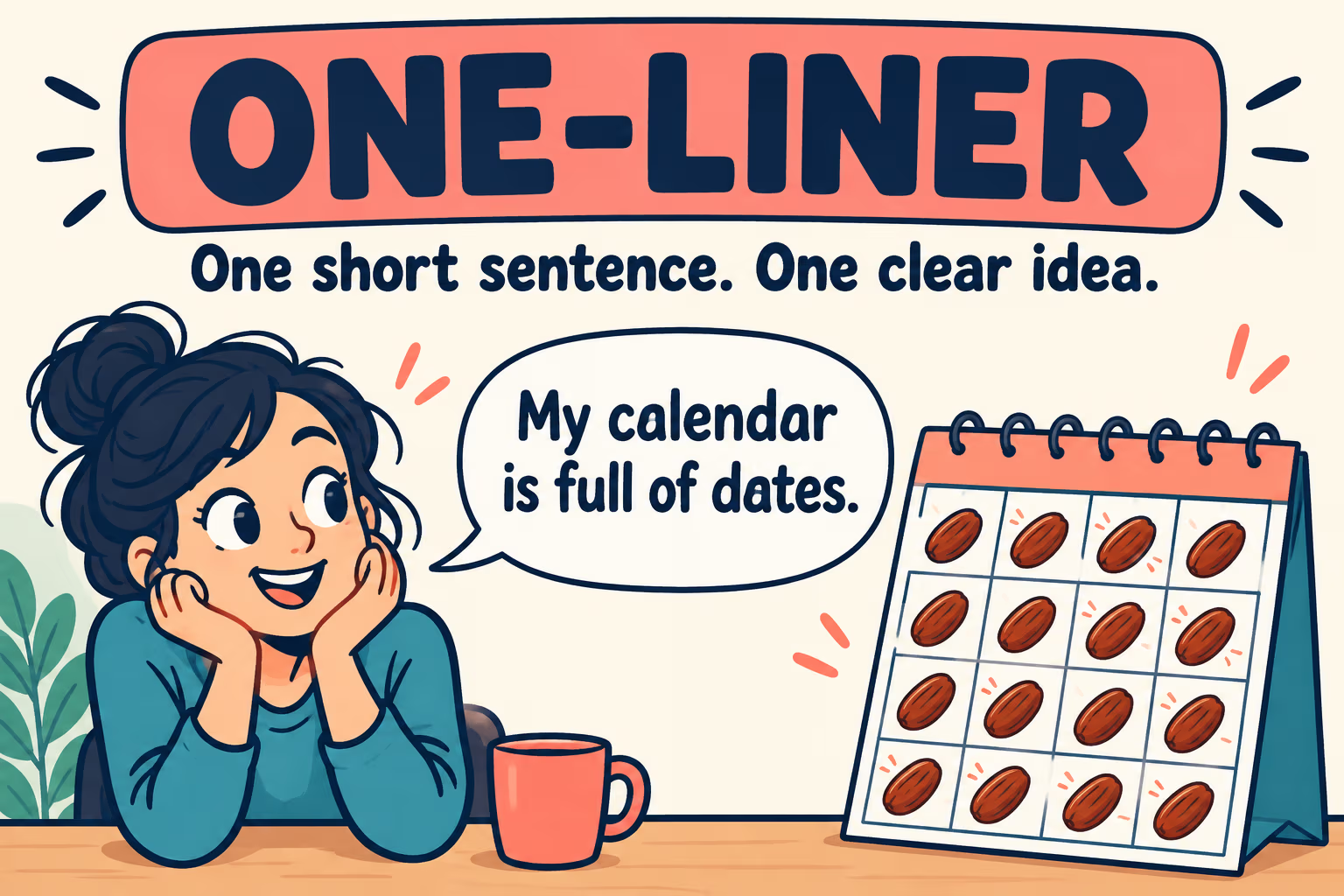
- “My calendar is full of dates, but none of them call.” Dates means both calendar days and social outings.
- “I told my suitcase there would be no vacation this year; now it has emotional baggage.” The familiar phrase gets a literal travel-related twist.
Memorable statements
- “Small steps still move you forward.” A compact encouragement built around a simple comparison.
- “A clear question is half the work.” A short observation that emphasizes preparation.
- “Good notes save your future self a search.” A practical point expressed as a direct reminder.
Quick replies
- “I can make Tuesday work.” A concise answer that gives a clear next step.
- “That plan has legs.” A short, informal way to say the idea seems promising.
- “Let’s solve the small problem before it grows.” A direct suggestion with a clear priority.
These examples show that a one-liner can be comic or serious. In careful writing, describe a line as a one-liner when its brevity and memorable effect matter; use short sentence when you only mean that it has few words.
How to Write a Strong One-Liner
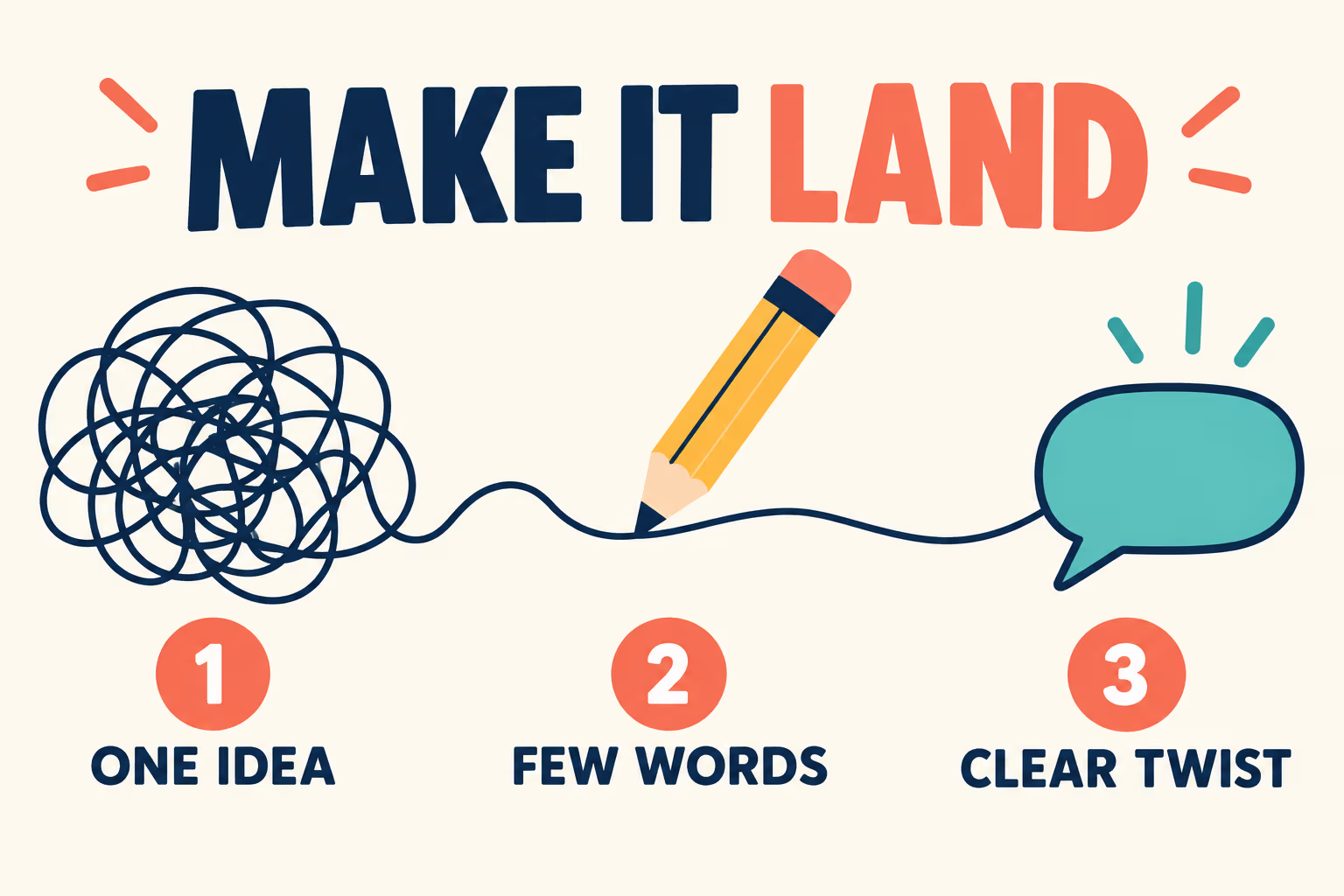
Start with one point. A one-liner has little room for background, so choose the message, image, or surprise you want the reader to keep. Then cut any phrase that does not help the meaning or the effect.
- Choose one idea. Decide what the line should communicate or make the audience notice.
- Use familiar wording. Plain words make the point easier to follow on the first read.
- Give the sentence a clear shape. A joke may build toward a punchline; an informative line may state the main point first.
- Read it aloud. If you have to explain the wording, revise it. Rhythm and timing matter especially for humor.
- Check the audience and setting. A joke that works among friends may not suit a formal email, classroom, or public statement.
Using “One-Liner” in a Sentence
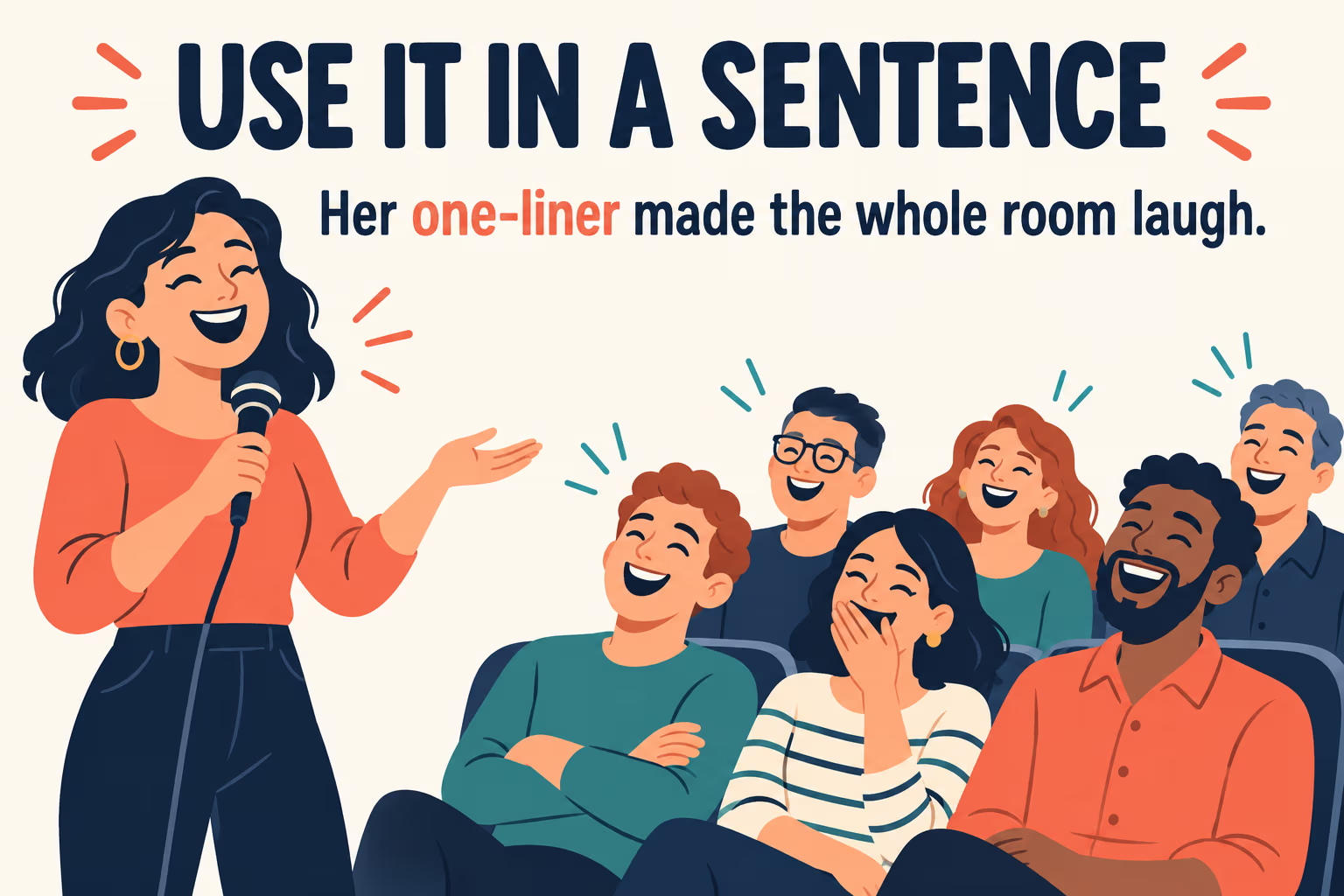
One-liner is a countable noun. It commonly follows an article or possessive, and its plural takes -s: a one-liner, the one-liner, her one-liner, several one-liners. The phrase one-liner in a sentence can refer either to an example sentence containing the term or to a sentence that itself works as a one-liner.
- As the subject: “A one-liner opened the comedian’s set.”
- As the object: “He added a one-liner to the presentation.”
- With a possessive: “Her one-liner earned a surprised laugh.”
- In the plural: “The interview was full of sharp one-liners.”
- With a reporting verb: “The host delivered one last one-liner before the break.”
One-Liner, Slogan, Motto, or Short Sentence?
| Term | Typical purpose | Example |
|---|---|---|
| One-liner | A compact, memorable remark; often humorous | “I used to be a banker, but I lost interest.” |
| Slogan or tagline | Promote or identify a product, service, or campaign | “Fresh ideas, every day.” |
| Motto | Express a principle or belief that guides a person or group | “Learn by doing.” |
| Short sentence | Describe length only; it need not be especially memorable | “The door is open.” |
The categories can overlap: a slogan or motto may be written as one concise line. The labels describe different things. Slogan points to a promotional job, motto to a guiding belief, and one-liner to the compact, memorable form or effect.
Frequently Asked Questions
Is “one-liner” hyphenated?
Yes. Standard dictionaries list the noun as one-liner, with a hyphen. The plural is one-liners.
Does a one-liner have to be a joke?
Humorous remarks are the term’s most common dictionary sense. In broader informal use, a one-liner can be any brief, memorable statement, but a plain short sentence is not automatically a one-liner.
How many words should a one-liner have?
There is no fixed word limit. The name suggests a compact line, but clarity and effect matter more than hitting a particular count. Remove words that do not contribute to the meaning, rhythm, or punchline.
What is the difference between a one-liner and a punchline?
A one-liner is a complete brief remark or joke. A punchline is the part of a joke or story that delivers its surprise or humorous payoff; it may be the ending of a longer setup rather than a standalone one-sentence remark.
Can “one-liner” describe a serious statement?
Yes, especially in casual usage. A concise, quotable observation can be called a one-liner even when it is not a joke. If precision matters, use brief statement or short remark when humor or memorability is not intended.
What is an example of “one-liner” in a sentence?
“Her one-liner made the whole room laugh.” Here, one-liner is a noun referring to one short, funny remark.
Usage note: The Cambridge Dictionary gives the common comic sense of one-liner; the Oxford Advanced Learner’s Dictionary is also useful for checking the noun’s form and learner usage.
Do you struggle to condense your thoughts into a single concise sentence? Crafting a one-liner is the art of distilling your message into a compelling and memorable statement. It’s a powerful tool to grab attention and convey your idea succinctly.
A one-liner is a brief and impactful sentence that encapsulates the essence of your message or idea. Whether you’re pitching a project, introducing yourself, or trying to make a witty statement, mastering the art of the one-liner can help you effectively communicate and leave a lasting impression.
7 Examples Of One Liner Used In a Sentence For Kids
- Great things come in small packages.
- Reach for the stars and you might just touch the moon.
- Sharing is caring, spread the love.
- The early bird catches the worm.
- Believe in yourself, you are capable of amazing things.
- Kind words can change someone’s day.
- Always remember to say please and thank you.
14 Sentences with One Liner Examples
- One liner: “Just take it one day at a time.”
- One liner: “Stay focused on your goals and never give up.”
- One liner: “Don’t compare your chapter one to someone else’s chapter twenty.”
- One liner: “Success is not a one-size-fits-all.”
- One liner: “You are in charge of your own happiness.”
- One liner: “Embrace the journey, not just the destination.”
- One liner: “It’s okay to ask for help when you need it.”
- One liner: “Quality over quantity applies to friends as well.”
- One liner: “Be kind to yourself, you are doing your best.”
- One liner: “Don’t be afraid to step out of your comfort zone.”
- One liner: “It’s okay to take a break when you need it.”
- One liner: “Stay positive, work hard, make it happen.”
- One liner: “Grades don’t define your worth, your character does.”
- One liner: “Life is tough, but so are you.”
How To Use One Liner in Sentences?
One Liner is a concise and impactful sentence that conveys a message or idea in a straightforward manner. Here are some tips for beginners to effectively use One Liner in a sentence:
-
Clarity: Ensure that your One Liner is clear and easy to understand. Avoid using jargon or complex language that may confuse your audience.
-
Brevity: Keep your One Liner short and to the point. Aim to convey your message in as few words as possible while maintaining its impact.
-
Relevance: Make sure your One Liner is relevant to the topic or idea you are trying to communicate. It should capture the essence of your message in a succinct way.
-
Emphasis: Use One Liner to highlight key points or ideas. It can be a powerful tool for emphasizing important information and making it stand out.
-
Practice: Experiment with different ways of crafting One Liners to see what works best for you. Practice writing them on various topics to improve your skills.
By following these simple guidelines, you can effectively incorporate One Liner into your writing or speaking to convey your message in a clear, concise, and impactful manner.
Conclusion
In conclusion, the examples of sentences with one-liners have demonstrated how succinct and impactful these short statements can be in conveying a message or eliciting a response. Whether used for humor, persuasion, or clarity, one-liners stand out for their brevity and memorability. From catchy advertising slogans to witty jokes, the power of a well-crafted one-liner lies in its ability to grab attention and leave a lasting impression on the reader or listener.
In a world inundated with information and constant stimuli, the simplicity and directness of sentences with one-liners offer a refreshing break from verbosity. These concise expressions cut through the noise, delivering a punchy statement that gets straight to the point. By harnessing the art of crafting impactful one-liners, communicators can effectively engage their audience and make a lasting impact with just a few words.