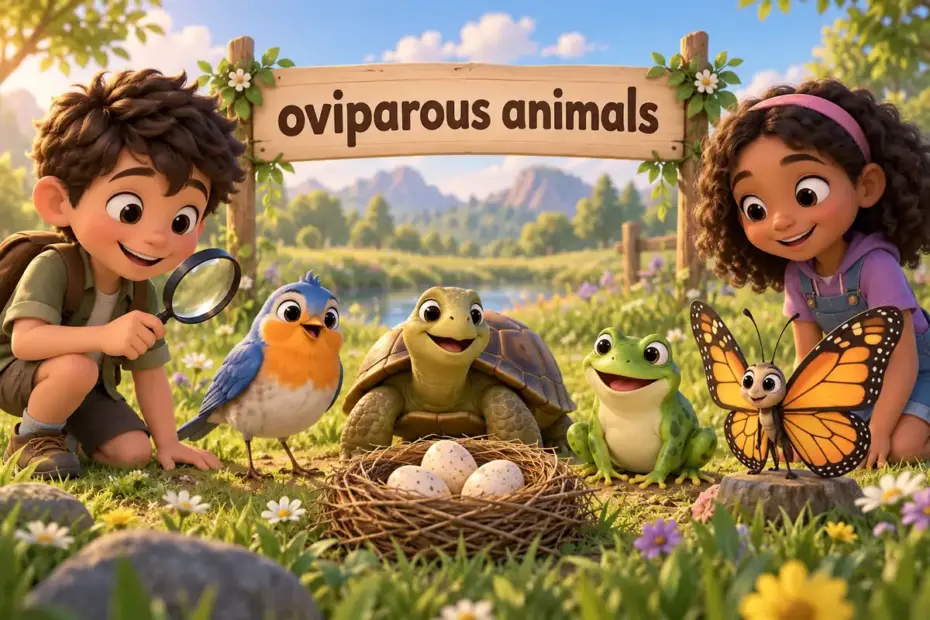
An oviparous animals name with pictures list gathers the creatures that lay eggs, from birds and reptiles to fish and even two special mammals. An oviparous animal hatches its young from an egg outside the body, which sets it apart from the animals that give birth to live young.
Oviparous animals at a glance
- Oviparous animals lay eggs that hatch outside the mother body.
- Birds, reptiles, amphibians, most fish, and insects are all oviparous.
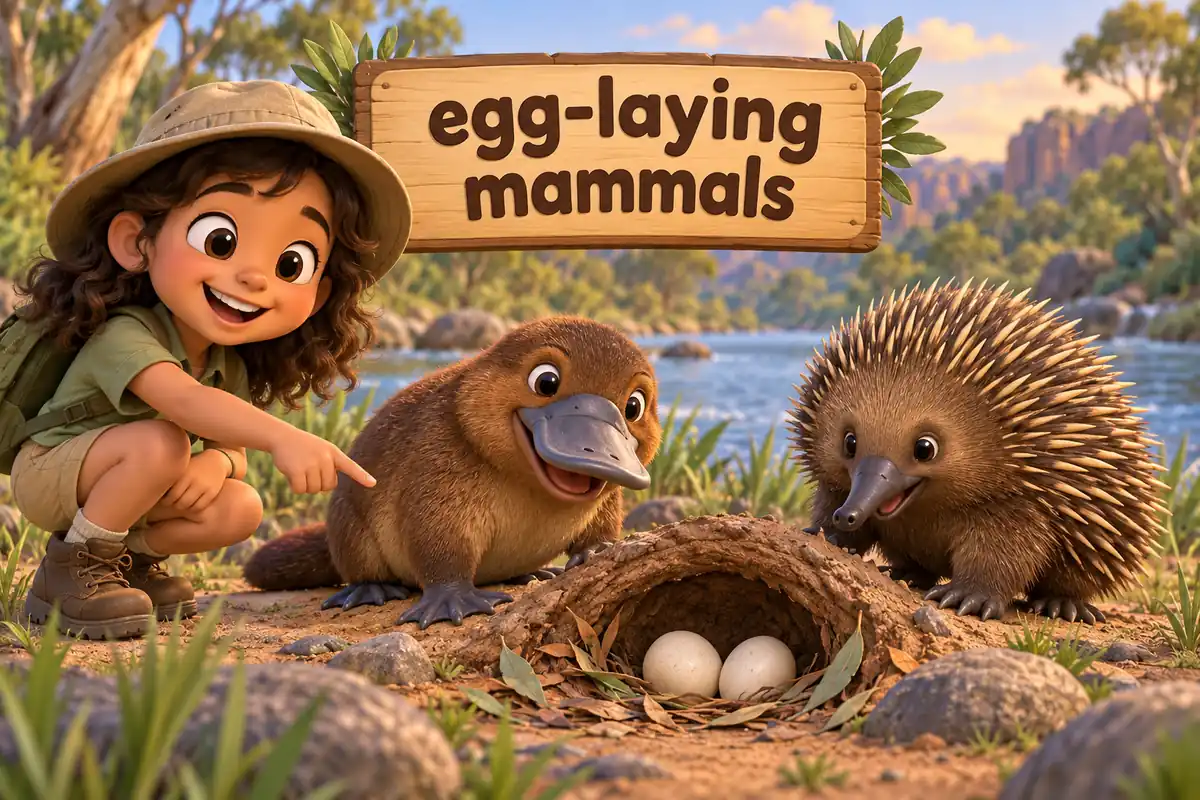
- The platypus and the echidna are the only egg-laying mammals.
- The opposite of oviparous is viviparous, which means giving birth to live young.
- The commonest error is saying every mammal gives birth to live young.
What are oviparous animals?
Oviparous animals are the animals that reproduce by laying eggs, so the young develop inside an egg and hatch after it leaves the body. The egg holds its own food and water, which lets the embryo grow without a live connection to the mother. The pattern appears across birds, reptiles, amphibians, most fish, insects, and two unusual mammals.
| Animal | Group | Where it lays eggs | Example sentence |
|---|---|---|---|
| Chicken | bird | in a nest | The chicken lays an egg each morning. |
| Duck | bird | near water | The duck lays eggs in a reed bed. |
| Ostrich | bird | in a scrape on the ground | The ostrich lays the largest egg of any bird. |
| Penguin | bird | on bare rock or ice | The penguin keeps its egg on its feet. |
| Crocodile | reptile | in a nest mound | The crocodile lays eggs in warm sand. |
| Turtle | reptile | in a hole on the beach | The turtle buries her eggs in the sand. |
| Frog | amphibian | in water | The frog lays eggs in a jelly mass. |
| Salmon | fish | in a gravel nest | The salmon lays eggs in a river bed. |
| Butterfly | insect | on a leaf | The butterfly lays eggs on a leaf. |
| Ant | insect | in the nest | The queen ant lays many eggs. |
| Platypus | mammal | in a riverbank burrow | The platypus lays eggs in a burrow. |
| Echidna | mammal | in a pouch or burrow | The echidna lays a single egg. |
| Snake | reptile | under cover | The snake lays leathery eggs. |
| Lizard | reptile | in a burrow | The lizard lays eggs in warm soil. |
| Goldfish | fish | among water plants | The goldfish scatters eggs on the plants. |
The place where the egg is laid matters as much as the egg itself. Birds build nests, turtles dig holes in the sand, and frogs return to water, because each egg needs the right warmth and moisture to develop. A few species guard the nest, while many simply lay the eggs and leave them to hatch alone.
How do you use oviparous in a sentence?
The word is an adjective, so it sits before the noun it describes, as in an oviparous animal. The related noun oviparity names the whole habit. Learners who want describing words for the topic can browse adjectives for animals.
| Pattern | Example | What it signals |
|---|---|---|
| oviparous + noun | an oviparous reptile | adjective before a noun |
| noun + is oviparous | The turtle is oviparous. | states the habit |
| oviparous + animals + that + verb | oviparous animals that nest on land | adds a condition |
| the opposite of oviparous | The opposite of oviparous is viviparous. | defines by contrast |
| oviparity + noun | Oviparity is common among fish. | uses the noun form |
| whether + animal + is oviparous | Ask whether the shark is oviparous. | poses a question |
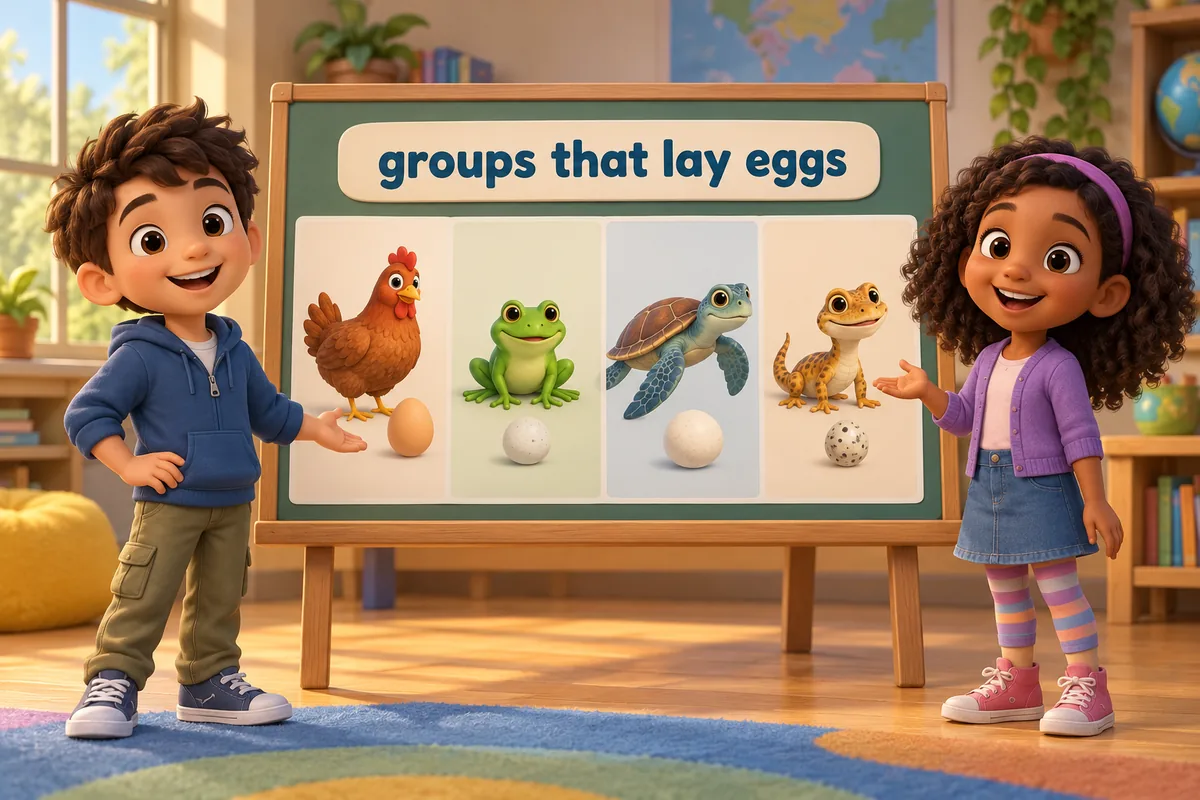
Oviparous animals in context: examples across contexts
The same word appears in a classroom, a nature guide, and a farm note, and the sentence around it changes with the setting. A related set of describing words sits in adjectives for animals 2.
| Context | Example sentence | Why this works |
|---|---|---|
| Classroom | The teacher asked us to list five oviparous animals with pictures. | a school task about animals |
| Nature guide | Most reptiles are oviparous and bury their eggs. | a plain factual statement |
| Farm note | The hens are oviparous, so they lay all year. | a practical comment |
| Zoo label | The platypus is one of the few oviparous mammals. | a short caption |
| Exam question | Name two oviparous animals that live in water. | a clear instruction |
| Children’s book | The frog is oviparous and lays eggs in the pond. | simple explanatory wording |
| Science report | The study compared oviparous and viviparous fish. | a technical observation |
| Documentary | This oviparous lizard guards its buried eggs. | a vivid description |
| Gardening note | Butterflies are oviparous and lay eggs on leaves. | a short garden tip |
| Quiz card | Is the echidna oviparous or viviparous? | a question for practice |
| Field note | We found oviparous frogs spawning in the ditch. | a field observation |
| Library display | The board lists oviparous animals name with pictures. | a display caption |
Oviparous, viviparous, and ovoviviparous: how they differ
Grouping the three patterns by where the young develop makes the whole idea easy to read, because the egg and the birth are the two moving parts. A longer list of animals sits in animals that start with A to Z.
| Feature | Oviparous | Viviparous | Ovoviviparous |
|---|---|---|---|
| Where the young develop | in an egg outside the body | inside the mother | in an egg inside the mother |
| How they arrive | the egg is laid, then hatches | live birth | the egg hatches inside, then live birth |
| Examples | birds, frogs, most fish | humans, dogs, whales | some sharks, some snakes |
| Egg shell | hard or leathery | none | soft |
| Parent care | varies widely | often feeds the young | varies widely |
Word forms and grammar of oviparous
The base word is an adjective, and its noun form is oviparity. The contrasting words viviparous and ovoviviparous follow the same pattern, which makes the three easy to keep together.
| Form | Part of speech | Example |
|---|---|---|
| oviparous | adjective | The frog is oviparous. |
| oviparity | noun | Oviparity is common among fish. |
| viviparous | adjective | Most mammals are viviparous. |
| ovoviviparous | adjective | Some sharks are ovoviviparous. |
| egg | noun | The egg hatched after a week. |
| eggs | noun, plural | The turtle buried her eggs. |
| hatch | verb | The chicks hatch in spring. |
| hatching | verb, -ing | Hatching takes about a day. |
| spawn | noun or verb | Fish spawn in the shallows. |
| lay | verb | Hens lay an egg a day. |
Common mistakes with oviparous animals
Mistake 1: oviparous for viviparous. Incorrect: Dogs are oviparous. Correct: Dogs are viviparous. Rule: oviparous means egg-laying, and viviparous means live birth.
Mistake 2: every mammal gives live birth. Incorrect: All mammals give birth to live young. Correct: The platypus and the echidna lay eggs. Rule: two mammals are oviparous.
Mistake 3: birds called viviparous. Incorrect: Birds are viviparous. Correct: Birds are oviparous. Rule: a bird hatches from a laid egg.
Mistake 4: eggs only from birds. Incorrect: Only birds lay eggs. Correct: Reptiles, fish, insects, and amphibians lay eggs too. Rule: egg-laying is widespread.
Mistake 5: the egg called the animal. Incorrect: The egg is an oviparous animal. Correct: The animal that lays the egg is oviparous. Rule: the adjective describes the animal, not the egg.
Practice using oviparous animals
- Fill in the blank: An animal that lays eggs is called ___.
- Choose the better word: A dog is (oviparous / viviparous).
- Correct the error: All mammals give birth to live young.
- Build a sentence: use oviparous to describe a turtle.
- Spot the register: which line suits a science report, (a) Eggy things are cool, or (b) The study compared oviparous and viviparous fish?
- Fill in the blank: The platypus is an ___ mammal because it lays eggs.
Answers
- oviparous, because oviparous means egg-laying.
- viviparous, because a dog gives birth to live young.
- The platypus and the echidna are mammals that lay eggs.
- The turtle is oviparous and buries her eggs in the sand.
- (b), because a science report needs precise wording.
- oviparous, because the platypus lays eggs.
The bottom line
Oviparous animals lay eggs that hatch outside the mother body, and the group stretches across birds, reptiles, amphibians, most fish, insects, and two unusual mammals. The word sits opposite viviparous, which means live birth, and ovoviviparous covers the middle case. Learn the three together and the pattern becomes easy to sort.
Frequently asked questions about oviparous animals
What does oviparous mean?
Oviparous means producing young by laying eggs that hatch outside the mother body. The embryo grows inside the egg, using the food stored there, and the young animal emerges after the egg is laid. Birds, reptiles, amphibians, most fish, and insects are all oviparous.
Which mammals lay eggs?
Only two groups of mammals lay eggs: the platypus and the echidnas, which together are called monotremes. They live in Australia and New Guinea. All other mammals, from dogs to whales to humans, give birth to live young and are called viviparous instead.
What is the difference between oviparous and viviparous?
An oviparous animal lays eggs that hatch outside the body, while a viviparous animal gives birth to live young that developed inside the mother. A third pattern, ovoviviparous, keeps the egg inside the mother until it hatches. The three words sort animals by where the young develop.
Do all birds lay eggs?
Yes, every bird is oviparous and lays eggs, and no bird gives birth to live young. Birds incubate their eggs with body heat until the chicks hatch, and the eggs have hard shells rather than the leathery shells of most reptiles. The size of the egg varies with the size of the bird.