Preceding in a Sentence: Meaning & Examples
Preceding means coming before something else in time, order, or position. In a sentence, it commonly describes a noun, as in “the preceding chapter.” The word helps readers connect one event, instruction, or section to what came earlier, especially when sequence matters.
Key facts at a glance
- Preceding means coming before in time, order, or position.
- It often appears before a noun: the preceding page, day, or event.
- Proceeding means continuing or moving forward; it is a different word.
- A clear reference tells readers exactly what came before.
What does preceding mean?
Cambridge Dictionary defines preceding as existing or happening before someone or something. It is commonly used as an adjective before a noun: “the preceding paragraph,” “the preceding year,” or “the preceding speaker.” The word signals a relationship to a later point, so context should make that reference easy to identify.
How to use preceding in a sentence
Use preceding when you want to point back to something earlier in a sequence. It suits formal, academic, and instructional writing, especially when the reader needs to connect a current point to an earlier one. If there is any chance of confusion, name the exact chapter, date, step, or event instead of relying on a vague reference.
- The preceding paragraph defines the term used in this section.
- We reviewed the preceding week’s notes before the quiz.
- Each number is one greater than the preceding number.
- The storm weakened during the hours preceding sunrise.

Preceding vs. proceeding
Preceding refers to what comes before. Proceeding is related to the verb proceed and means continuing or moving forward; it can also be a noun for formal events or legal actions. For example, “the preceding section explains the rule” points backward, while “the meeting is proceeding as planned” describes ongoing progress.
Choose a clear reference
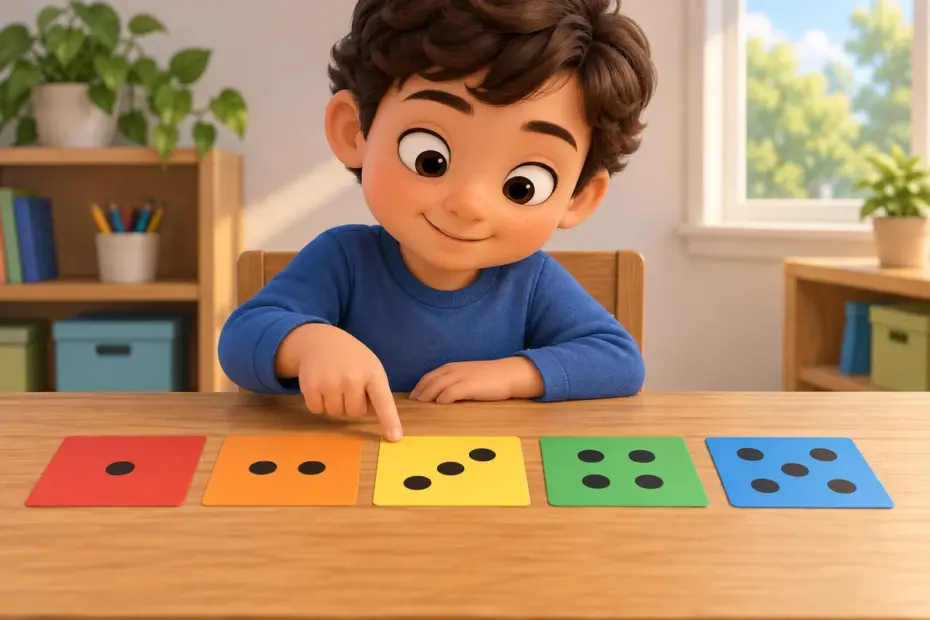
Use preceding only when the earlier item is obvious. In a long document, “the preceding discussion” may refer to several paragraphs. A more precise phrase—such as “the preceding example” or “the paragraph above”—helps readers follow the order without guessing. For young learners, pair the word with a simple sequence of pictures, days, or numbers.

Frequently asked questions
What does preceding mean?
Preceding means coming before something else in time, order, or position. It usually points to an earlier item in a sequence, such as a chapter, event, or number. The surrounding sentence should make clear what follows and what came before, so readers can understand the relationship without searching.
How do you use preceding in a sentence?
Place preceding before a noun when you mean that the noun came earlier: “Please reread the preceding paragraph.” It can describe events, pages, steps, years, or people in a sequence. If the reference could be unclear, name the exact earlier item instead of leaving readers to infer it.
What is the difference between preceding and proceeding?
Preceding means earlier or coming before; proceeding means continuing or moving forward. “The preceding chapter introduces the topic” points backward, while “the lesson is proceeding smoothly” describes progress. Remember the different middle vowel: preceding has an “e” before the d, while proceeding has “ee.”
Is preceding formal or informal?
Preceding is correct in both formal and ordinary writing, but it sounds more formal than words such as earlier or previous. Writers often use it in instructions, reports, and academic prose to connect one section to another. In a casual message, “the page before this one” may feel more natural.
Original article content
Have you ever found yourself in need of a clear example sentence with the term “preceding”? In simple terms, the word “preceding” refers to something that comes before or goes ahead of something else.
Whether it’s in a legal document, a research paper, or a simple explanation, a well-crafted example sentence with the word “preceding” can help clarify the order of events or ideas. Let’s explore how this word can be effectively used to enhance your writing and communication skills.
7 Examples Of Preceding Used In a Sentence For Kids
- The preceding number is 4 in the counting sequence.
- Look at the preceding picture before drawing your own.
- The preceding sound in “cat” is the letter “c”.
- Let’s remember the preceding day’s lesson before starting the new one.
- Color the preceding shape red and the next one blue.
- Find the preceding letter in the alphabet before “h”.
- Remember to finish the preceding task before starting a new one.
14 Sentences with Preceding Examples
- Make sure to review the notes from the preceding lecture before the next class.
- The preceding chapter will provide a foundation for understanding the upcoming topics.
- It is important to complete the assigned readings in the preceding week to be prepared for the seminar session.
- The research paper should include a thorough literature review of the preceding studies on the topic.
- The preceding experiment yielded inconclusive results, prompting the need for further investigation.
- Understanding the preceding lab experiment will be crucial for the upcoming practical assessment.
- The tutorials are designed to reinforce the concepts covered in the preceding lectures.
- The student’s questions during the preceding class sparked an engaging discussion among peers.
- Reflecting on the preceding group project can provide valuable insights for future collaborative assignments.
- The quiz will assess your understanding of the preceding module, so make sure to study well.
- The professor emphasized the importance of building upon the preceding research to contribute novel insights to the field.
- Referencing the preceding textbooks can offer additional clarification on complex subject matter.
- The tutorial session will focus on reviewing the key points from the preceding week’s lecture.
- Group discussions can help clarify any confusion from the preceding class sessions.
How To Use Preceding in Sentences?
Preceding is used in a sentence to refer to something that comes before another event or action. It is important to understand how to correctly use this word in order to convey the correct sequence of events.
One way to use preceding in a sentence is to indicate the event that occurred before another event. For example, “The storm clouds gathered, preceding the heavy downpour.” In this sentence, “preceding” is used to show that the storm clouds appeared before the heavy downpour.
Another way to use preceding is to refer to an action that happened before another action. For instance, “She tripped over a rock, preceding her fall down the hill.” Here, “preceding” is used to show that tripping over the rock happened before falling down the hill.
It is important to note that preceding can also be used to refer to something mentioned earlier in a text or conversation. For example, “In the preceding paragraph, we discussed the importance of time management.” In this case, “preceding” is used to point back to the paragraph that was mentioned earlier.
By understanding how to correctly use preceding in a sentence, you can clearly convey the chronological order of events or actions. Practicing with different examples will help you become more comfortable with using this word effectively in your writing.
Conclusion
In writing, sentences with preceding references are essential for maintaining coherence and establishing clear connections between thoughts. By using phrases like “the preceding paragraph” or “as mentioned earlier,” writers can guide readers through the flow of information and reinforce key points made previously. These references serve as signposts that help readers navigate complex texts and understand the relationships between ideas presented in different parts of a document.
Overall, utilizing sentences with preceding references enhances the readability and comprehension of written material. By effectively linking ideas from one part of a text to another, writers can create a cohesive narrative that guides readers through a logical progression of information. With proper use of preceding references, writers can ensure that their work is well-structured, organized, and easy for readers to follow.


