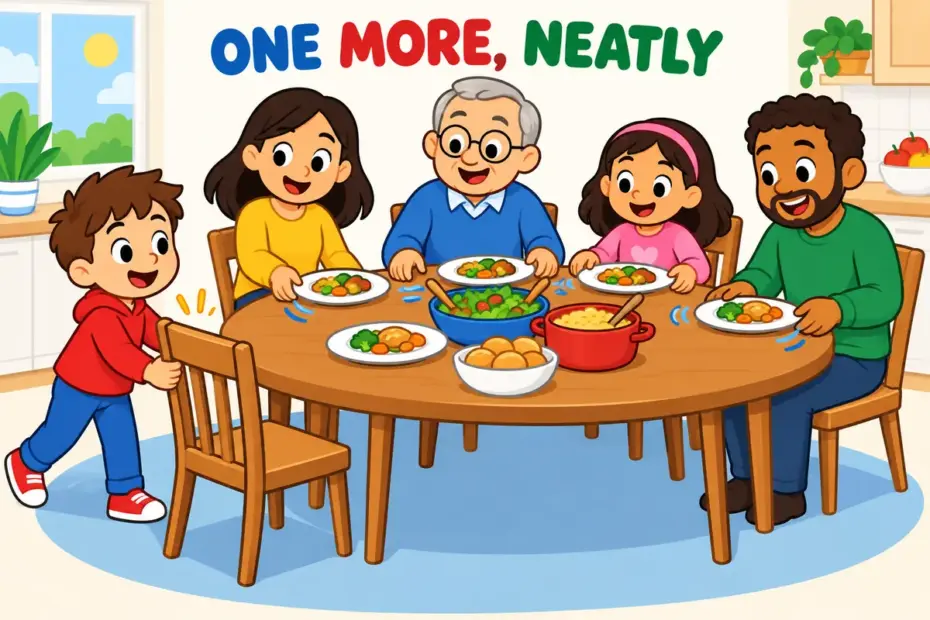
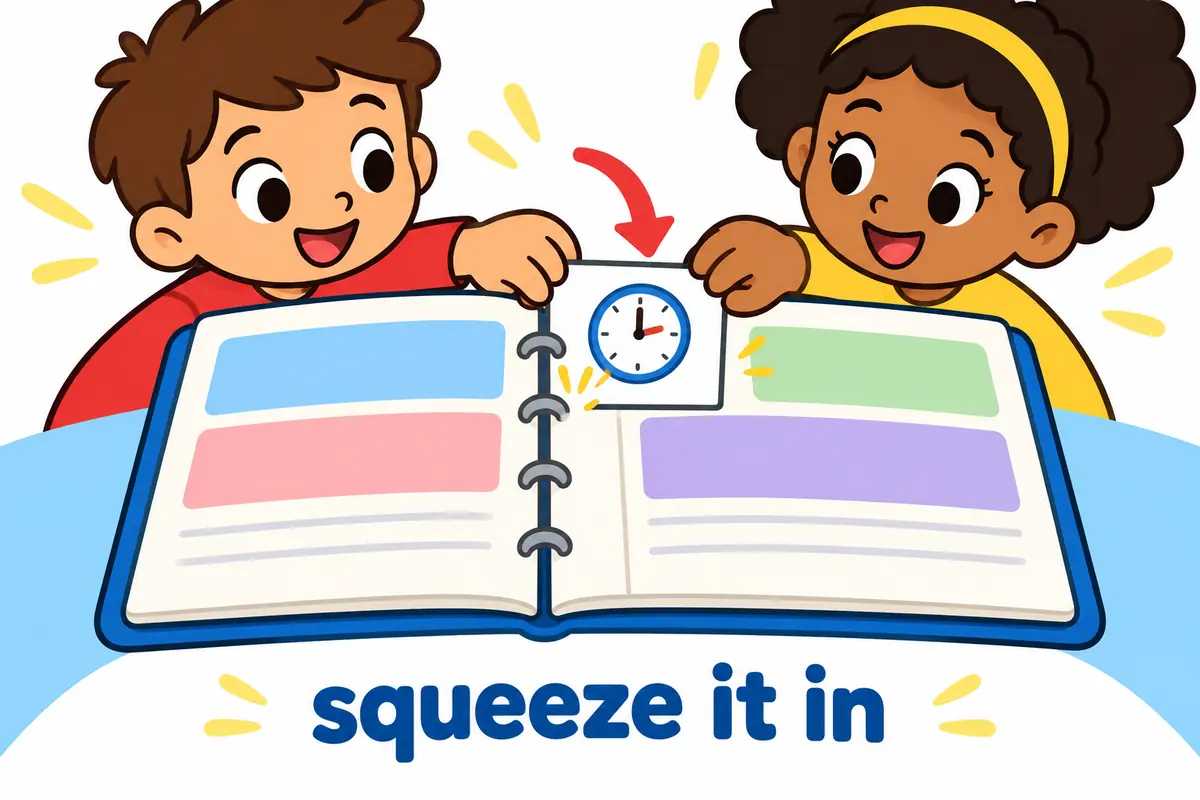
Squeeze in means to find room for something or someone, whether in a tight space or a busy schedule. To use squeeze in in a sentence, give the verb an object when you mean fitting a thing or an appointment: squeeze in a workout, squeeze in a meeting. Used alone, it also means to fit inside a crowded place.
Squeeze in at a glance
- Squeeze in is a phrasal verb; its forms are squeeze in, squeezes in, squeezed in and squeezing in.
- It means to find time or space for something, or, used alone, to fit into a place.
- With an object it is separable: squeeze a workout in or squeeze it in.
- A pronoun object must go in the middle, so squeeze it in is correct.
- The verb is informal to neutral, at home in schedules, homes and crowded rooms.
What does squeeze in mean?
Squeeze in is a phrasal verb meaning to make room for something small, or to fit into a crowded place. The Cambridge entry for squeeze in records both the time sense and the space sense, and the difference is the object: an appointment or item is squeezed in, while people squeeze in on their own. When things are forced together untidily, jam the lid on is the rougher verb.
| Sense | Plain meaning | Example sentence |
|---|---|---|
| Find time for | Fit a short task into a full schedule | The doctor can squeeze in one more patient. |
| Fit into a space | Make room for a small extra thing | We squeezed in another chair at the table. |
| Fit inside, no object | Manage to get into a crowded place | Six of us squeezed in at the back. |
One limitation is worth stating plainly. Squeeze in suggests something small and brief, so it sounds odd with a long event: you squeeze in a call, not a holiday. It also never means to push other people out of the way, because the verb is about making room, not taking it.
How do you use squeeze in in a sentence?
With an object the verb is separable: the object may follow in, or sit between squeeze and in. A pronoun must go in the middle, and without any object the verb stays together to mean fitting inside a place.
| Pattern | Example | What it signals |
|---|---|---|
| squeeze in + object | I can squeeze in a quick call. | The standard order for fitting an appointment into a day. |
| squeeze + object + in | She squeezed a run in before work. | Separable order, natural with a short object. |
| squeeze + pronoun + in | Let me squeeze it in after lunch. | A pronoun must sit between the two parts. |
| squeeze in, no object | Six of us squeezed in. | Intransitive, about fitting into a crowded place. |
| squeeze in + at/in + place | We squeezed in at the back row. | Names where the fit happened. |
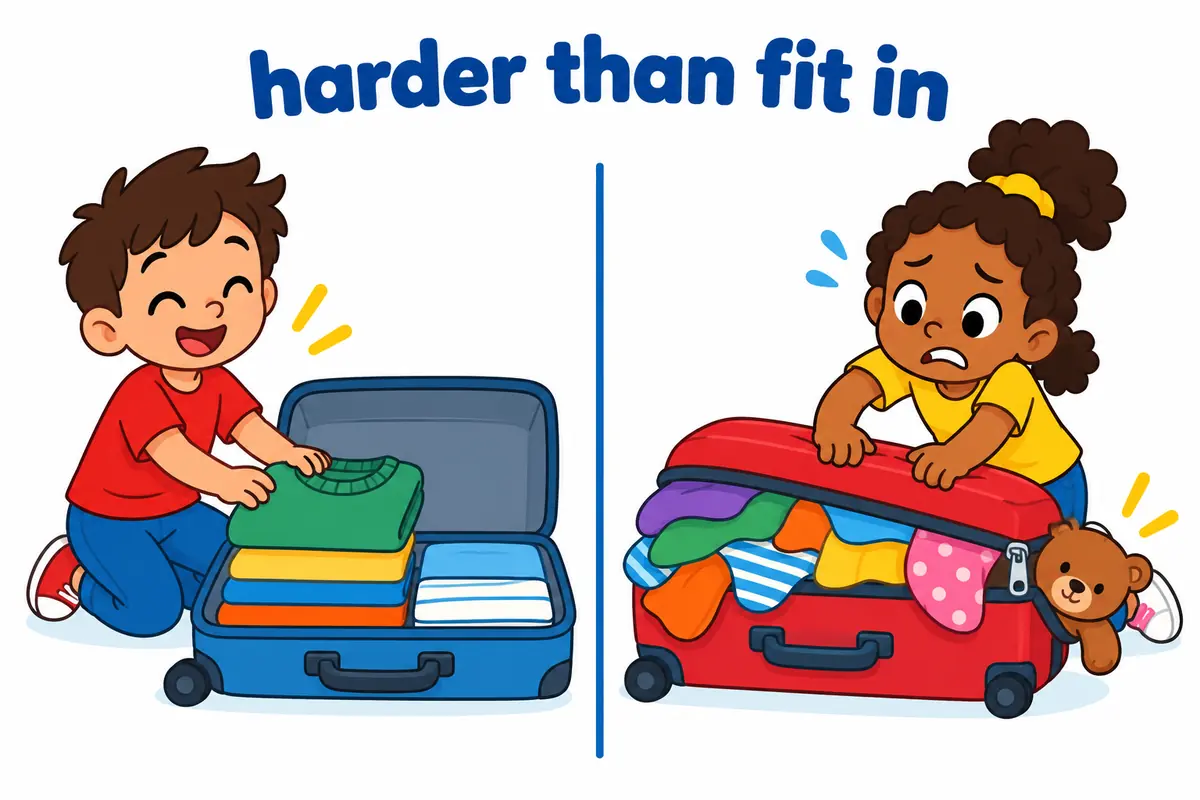
To pack a case for a trip fills a container completely, while squeeze in adds just one more small item to a space that is already full.
Squeeze in in a sentence: examples across contexts
The verb moves between offices and crowded rooms without changing shape, and each example below shows which sense is at work.
| Context | Example sentence | Why this works |
|---|---|---|
| Classroom | The teacher squeezed in a quiz before the bell. | A short task fitted into a fixed timetable. |
| Workplace email | Could you squeeze in a short review on Friday? | A polite request that accepts a tight diary. |
| Home | We squeezed in one more chair at the table. | The space sense, made concrete by the furniture. |
| Medical | The clinic can squeeze you in at four. | A pronoun in the middle, offering a small gap. |
| News report | The band squeezed in a second encore. | A short extra item added at the end. |
| Sport | She squeezed in a training session before dawn. | The time sense, with the schedule implied. |
| Travel | We squeezed in a day in the old town. | One small stop fitted around a larger trip. |
| Transport | Four more passengers squeezed in at the last stop. | The intransitive sense, with a place phrase. |
| Conversation | Can you squeeze in a coffee later? | The relaxed time sense that dominates speech. |
The transport row is the clearest test of grammar, because there is no object at all. To wedge a door open is a close physical cousin, though wedge needs an object and squeeze in often does not.
Squeeze in vs fit in and cram in
Squeeze in, fit in and cram in all describe making something go where space is short, and each suggests a different amount of strain. fit in a meeting sounds calm, while cram for an exam sounds rushed.
| Attribute | squeeze in | fit in | cram in |
|---|---|---|---|
| Core picture | Making room in a tight spot | Matching a space or a group | Forcing too much into too little |
| Effort needed | A little | Usually none | A great deal, and it shows |
| Typical object | An appointment or a small item | A plan, a person or a schedule | Revision, luggage or too many tasks |
| Impression | Neat and brief | Comfortable | Strained and untidy |
| Register | Informal to neutral | Neutral | Informal |
Verdict: use squeeze in for one extra small thing fitted neatly into a full space or day, fit in when something settles comfortably, and cram in when too much is forced in and the strain is the point.
Word forms and grammar of squeeze in
The verb inflects on squeeze, never on the particle, and its noun squeeze survives in the fixed phrase a tight squeeze. The table also shows the order learners most often get wrong.
| Form | Part of speech | Example |
|---|---|---|
| squeeze in | phrasal verb, base form | Try to squeeze in a break. |
| squeezes in | phrasal verb, third person singular | He squeezes in a run most mornings. |
| squeezed in | phrasal verb, past and past participle | We squeezed in a film after dinner. |
| squeezing in | phrasal verb, present participle | She is squeezing in one last email. |
| squeeze | noun | Seven of us in a small car was a tight squeeze. |
| squeeze in it | not standard | Write squeeze it in, with the pronoun in the middle. |
The noun squeeze keeps the same idea of pressure without a particle. To inject a remark into a conversation is a formal way to describe the same small, timely insertion.
Common mistakes with squeeze in
- Incorrect:
I squeezed in it before lunch.Correct: I squeezed it in before lunch. Rule: A pronoun object must sit between squeeze and in. - Incorrect:
Can you squeeze in me at four?Correct: Can you squeeze me in at four? Rule: The pronoun belongs in the middle, not after the particle. - Incorrect:
We squeezed in into the crowded room.Correct: We squeezed into the crowded room. Rule: Use either squeeze in or squeeze into, never both. - Incorrect:
She squeezed in a time for tea.Correct: She squeezed in some time for tea. Rule: Time is uncountable here, so use some time or a moment. - Incorrect:
I will squeeze in to finish the report.Correct: I will squeeze in time to finish the report. Rule: The verb needs a noun object when a task follows.
Practice using squeeze in
Work through the six items, then check the reasoning as well as the answer.
- Fill the gap: The dentist can ______ you ______ before the weekend.
- Choose the better word: We (squeezed in / crammed in) one extra chair, neatly.
- Correct the error: She squeezed in it between two classes.
- Build a sentence: use squeeze in + object about finding time for a short walk.
- Spot the register: which belongs in a polite email — Could you squeeze in a brief call, or Fit me in, yeah?
- Rewrite without an object: We added one more guest at the table. Use squeeze in intransitively.
Answers
- squeeze … in — the pronoun you goes between squeeze and in.
- squeezed in — the word neatly rules out the strain that crammed in implies.
- She squeezed it in between two classes — a pronoun must go in the middle.
- Model answer: I can squeeze in a short walk before dinner.
- Could you squeeze in a brief call — it is polite and keeps the object after the particle.
- One more guest squeezed in at the table — with no object the verb stays together.
The bottom line
Use squeeze in in a sentence to fit one small thing into a tight space or a full day, and remember that an object makes the verb separable. Two nuances decide most sentences: a pronoun must go in the middle, and with no object the verb simply means fitting inside a crowded place. To crowd around a table describes the people once they are packed in.
Frequently asked questions about squeeze in
Is squeeze in separable?
Yes, when it has an object. You can squeeze a workout in or squeeze it in, and both sound natural. A pronoun must go in the middle, so squeeze it in is correct while squeeze in it is not. Without an object the verb stays together, as in we all squeezed in.
What does squeeze in mean for a schedule?
For a schedule, squeeze in means to find a small gap for one more task or appointment despite being busy. A dentist might squeeze you in between two patients, and a worker might squeeze in a quick call. The extra item is always short and fitted around existing plans.
What is the difference between squeeze in and fit in?
Squeeze in suggests a little effort to make room, while fit in often means something matches a space or a group without strain. You squeeze a call into a full morning, but a new colleague fits in with the team. The two overlap, though fit in sounds calmer and less crowded.
Can squeeze in be used without an object?
Yes. Without an object, squeeze in means to fit inside a crowded place, as in six of us squeezed in at the back. This intransitive use is common with cars, lifts and benches. Adding an object changes the focus to time or to a single item fitted into a space.
Have you ever struggled to find time for something important in your busy schedule? That’s where the phrase “squeeze in” comes into play. The term means to make room or find a way to fit something into a tight or full schedule, even though it may seem difficult or nearly impossible.
When you need to squeeze in a workout between meetings, or squeeze in some extra study time before an exam, you are trying to find a way to make it happen amidst other commitments. This phrase highlights the importance of prioritizing tasks and finding creative solutions to manage and make time for all the things that matter to you.
7 Examples Of Squeeze In Used In a Sentence For Kids
- Squeeze in your toys neatly in the box.
- Let’s squeeze in one more friend on the swing.
- Can you squeeze in next to me on the bench?
- We can squeeze in some extra snacks for the picnic.
- Remember to squeeze in your crayons inside the case.
- I will try to squeeze in some extra playtime before bed.
- It’s important to squeeze in some time for a quick nap.
14 Sentences with Squeeze In Examples
- Squeeze in a quick study session before your next class.
- Don’t forget to squeeze in a power nap between lectures.
- Make sure to squeeze in time for a workout at the campus gym.
- It’s important to squeeze in a healthy meal amidst your busy schedule.
- Squeeze in a few minutes to call your family back home.
- Try to squeeze in a visit to the library to borrow some books.
- Sometimes you have to squeeze in a group project meeting between other commitments.
- Squeeze in a coffee break with friends to de-stress.
- Find a way to squeeze in time for self-care activities like yoga or meditation.
- Even if it’s just for a few minutes, squeeze in some time for a hobby you enjoy.
- Squeeze in a visit to the career center for resume help.
- Don’t forget to squeeze in time to catch up on laundry and chores.
- Try to squeeze in a movie night with roommates to unwind.
- Consider ways to squeeze in networking opportunities at college events.
How To Use Squeeze In in Sentences?
To use Squeeze In in a sentence, first identify the key point or information you want to include. Then, incorporate the relevant information smoothly into your sentence using the phrase “Squeeze In” as follows:
- When you want to add an extra detail to your sentence without it awkwardly standing out, you can squeeze in the additional information at the beginning, middle, or end of your sentence.
- It’s important to make sure that the information you squeeze in is relevant and adds value to your sentence, rather than distracting or overwhelming the reader.
- In formal writing, it is crucial to squeeze in any necessary clarifications or references to sources within your sentence structure, maintaining clarity and coherence.
- Avoid squeezing in too many details or ideas into one sentence, as it can make your writing confusing or difficult to follow.
- Remember to use punctuation, such as commas or dashes, to help smoothly squeeze in the extra information without disrupting the flow of your sentence.
By following these guidelines, you can effectively use the phrase “Squeeze In” in a sentence to enhance your writing and convey your message clearly and concisely.
Conclusion
In conclusion, the diverse examples of sentences using the keyword “squeeze in” illustrate the concept of making the most of limited time or space. Whether it’s fitting in a quick workout between meetings, squeezing in a short phone call during a busy day, or trying to cram in one more item in a tightly packed schedule, these phrases highlight the importance of efficiency and resourcefulness in managing our daily tasks.
By incorporating the idea of “squeezing in” activities or responsibilities, we are reminded of the need to prioritize our time and make room for important tasks amidst the hustle and bustle of our daily lives. Through these examples, we are encouraged to find creative solutions to maximize our productivity and achieve a better balance between work, leisure, and personal obligations.


