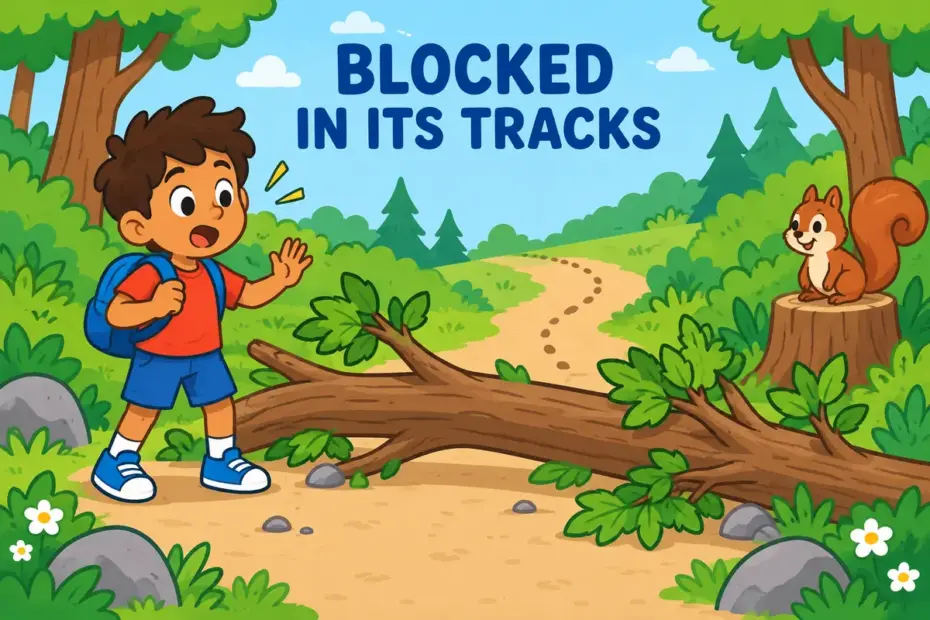
Stymie means to block someone or something from making progress. To use stymie in a sentence, name the obstacle and the plan it stops: “Heavy rain stymied the rescue effort.” The verb is transitive and is very common in the passive, as in stymied by red tape.
Stymie at a glance
- Stymie is a transitive verb; its forms are stymies, stymied and stymieing.
- It means to block progress or defeat a plan, not merely to delay it.
- The obstacle is often the subject, as in the weather stymied the search.
- The passive be stymied by is more common than the active form in news writing.
- The commonest error is leaving out the object or using stymie for a brief delay.
What does stymie mean?
Stymie is a transitive verb meaning to block a person, plan or effort so that it cannot proceed. The Cambridge entry for stymie gives the sense of preventing something from happening, and the block is firm rather than temporary. A shortened version, to foil a plan, often works when the obstacle is a person rather than a condition.
| Sense | Plain meaning | Example sentence |
|---|---|---|
| Block progress | Stop an effort from moving forward | Flooding stymied the repairs. |
| Defeat a plan | Make an attempt fail | The ruling stymied the merger. |
| Leave someone stuck | Stop a person from acting | The password screen stymied every user. |
Stymie does not mean delay. A train that is late is delayed, but a line blocked by a fallen tree is stymied, because the journey cannot continue until the obstacle is removed. Using stymie for a short wait overstates the problem, just as using delay for a total block understates it.
How do you use stymie in a sentence?
Stymie needs a direct object, and the five patterns below show how the obstacle and the blocked plan usually line up. The passive frame is the one to master first, because it dominates news and report writing.
| Pattern | Example | What it signals |
|---|---|---|
| obstacle + stymie + plan | Fog stymied the search. | The obstacle is the subject. |
| be stymied by + obstacle | The launch was stymied by delays. | Passive, names the obstacle after by. |
| stymie + a person | The rules stymied new applicants. | The blocked party is the object. |
| have stymied + plan | Poor records have stymied research. | Present perfect for an ongoing block. |
| stymie + attempts to do | Costs stymied attempts to rebuild. | Names the goal that cannot be reached. |
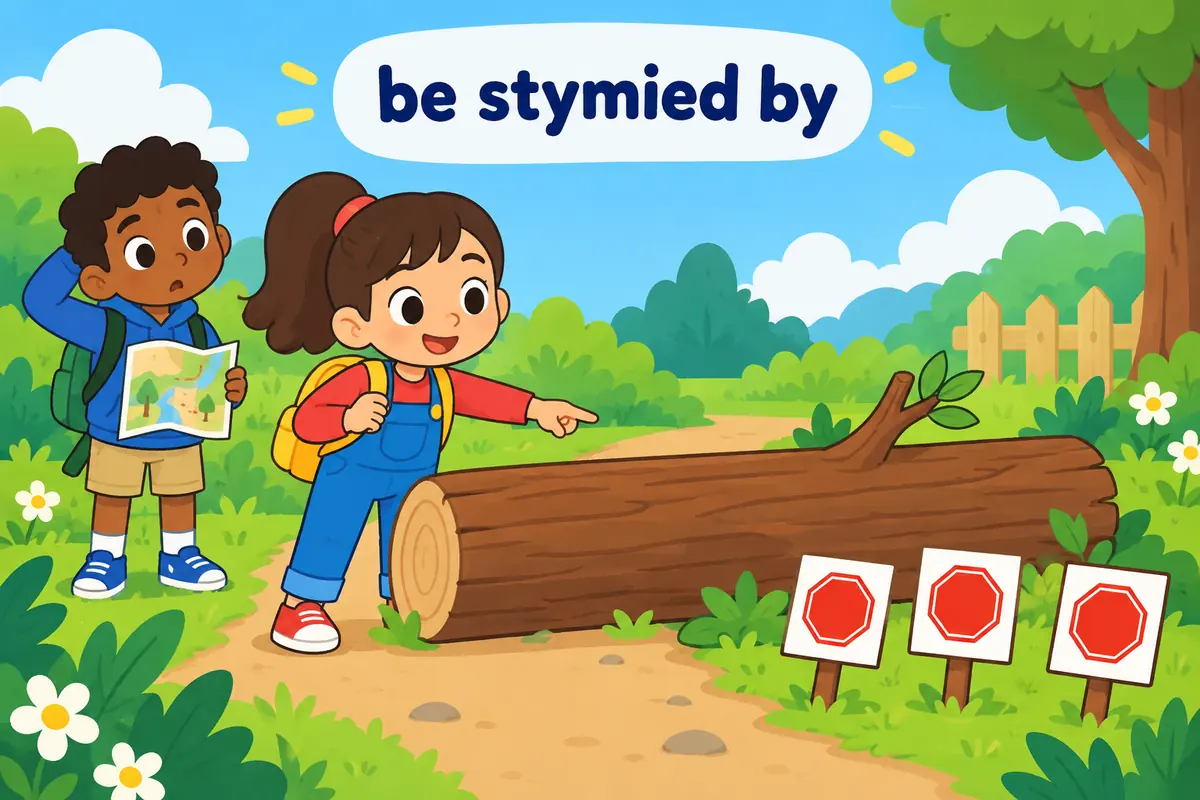
Stymie in a sentence: examples across contexts
The nine sentences below keep the same verb while moving from a classroom to politics, and each one names the obstacle and the blocked effort. Where the obstacle only slows a plan, hamper the effort is the gentler verb.
| Context | Example sentence | Why this works |
|---|---|---|
| Classroom | A missing page stymied the group’s whole project. | A concrete obstacle stops progress. |
| Workplace email | The approval process stymied our launch date. | Names the blocker and the plan. |
| News report | Heavy snow stymied the rescue effort overnight. | Weather as subject, common in reporting. |
| Legal writing | The challenge was stymied by a procedural rule. | Passive with by names the obstacle. |
| Sports report | A stubborn defence stymied every attack. | The opponent is the blocking force. |
| Academic prose | Poor records have stymied research on the period. | Present perfect in a formal register. |
| Conversation | I was stymied by the last question. | Everyday passive use. |
| Politics | The bill was stymied in committee for months. | Passive with a place rather than an agent. |
| Diary | Rain stymied my plan to paint the fence. | First-person active use. |
Stymie vs hinder and thwart
Stymie is often swapped for two verbs of different strength. To hinder progress is to slow it down, while to thwart a plan is to defeat it outright through opposition. Stymie sits close to thwart but applies just as easily to conditions as to opponents.
| Attribute | stymie | hinder | thwart |
|---|---|---|---|
| Core meaning | Block progress completely | Slow progress, not stop it | Defeat a plan or attempt |
| Strength | A firm stop | A partial obstacle | A decisive defeat |
| Typical object | A plan, effort or project | Growth, movement or progress | A plot, attempt or ambition |
| Typical agent | Rules, weather, shortages | Conditions and circumstances | A person actively opposing |
| Register | Informal to journalistic | Neutral to formal | Formal and literary |
Verdict: choose stymie when an obstacle blocks an effort, hinder when it only slows matters, and thwart when an opponent deliberately defeats a plan.
Word forms and grammar of stymie
Stymie follows the usual rules for a verb ending in ie, and its participle has two accepted spellings. To impede a process is a close formal equivalent, though it suggests friction rather than a full stop. A checklist can prevent a mistake, which is the outcome stymie describes when an obstacle has already taken hold.
| Form | Part of speech | Example |
|---|---|---|
| stymie | verb, base form | New rules could stymie entrants. |
| stymies | verb, third person | Bad weather stymies the harvest. |
| stymied | verb, past and participle | The bill was stymied in committee. |
| stymieing | verb, present participle | The dispute is stymieing progress. |
| stymying | verb, present participle | The dispute is stymying progress. |
Common mistakes with stymie
- Incorrect:
The heavy rain stymied.Correct: The heavy rain stymied the search. Rule: Stymie is transitive, so it always needs an object. - Incorrect:
The traffic stymied us for ten minutes.Correct: The traffic delayed us for ten minutes. Rule: Stymie means blocked, not briefly held up. - Incorrect:
She was stymied of the rules.Correct: She was stymied by the rules. Rule: The passive takes by, not of. - Incorrect:
New rules will stymie that competitors enter.Correct: New rules will stymie competitors. Rule: The verb takes a noun; use prevent before a from-clause.
Practice using stymie
Work through the six items, then check the reasoning rather than only the answer.
- Fill the gap: A broken bridge ______ the delivery.
- Choose the better word: A slow start (stymied / hindered) the team, though it still won.
- Correct the error: The heavy rain stymied.
- Build a sentence: use be stymied by about a plan blocked by paperwork.
- Spot the register: which belongs in a news report — The search was stymied by fog, or The fog totally messed up the search.
- Rewrite actively: The project was stymied by a lack of funds. Make the shortage the subject.
Answers
- stymied — the bridge is the obstacle and the delivery is the blocked object.
- hindered — the team still won, so progress was slowed rather than stopped.
- The heavy rain stymied the search — the verb needs an object.
- Model answer: The rebuild was stymied by a mountain of paperwork.
- The search was stymied by fog — a report keeps the passive and avoids totally.
- The shortage of funds stymied the project — the obstacle becomes the subject.
The bottom line
Use stymie in a sentence when an obstacle blocks progress or defeats a plan, and give the verb a clear object. Two details decide most sentences: the passive be stymied by is the everyday reporting frame, and the block is a stop rather than a delay. Where progress is only slowed, hinders the more accurate verb.
Frequently asked questions about stymie
Is stymie a formal word?
Stymie sits between informal and journalistic. It appears often in news and sports writing, where obstacles are described in a lively way, but it is rare in very formal reports, which tend to use blocked, prevented or frustrated. In conversation it sounds perfectly natural.
What does stymied mean?
Stymied is the past tense and past participle of stymie, meaning blocked or defeated in a plan. The phrase was stymied by is very common and names the obstacle after by, as in the launch was stymied by a supplier shortage. It describes a stop, not a brief delay.
What is the difference between stymie and hinder?
Stymie means to block progress completely or defeat a plan, while hinder means to slow progress without stopping it. A shortage that stymies a project brings it to a halt; one that hinders it makes the work harder but still possible. The difference is one of degree.
How do you spell the ing form of stymie?
Both stymieing and stymying appear in print. Stymieing keeps the e of the base verb, following the pattern of words such as ageing, while stymying drops it before the ing ending. Choose one spelling and stay consistent within a document.
Have you ever struggled to find the right word to convey a feeling or idea? Lexicographers are like linguistic detectives who aim to capture the ever-evolving nature of language. The term “stymie” perfectly exemplifies the complexity and versatility of words in the English language.
“Stymie,” a verb with Scottish origins, means to hinder or block progress. Its dynamic nature allows it to be utilized in various contexts, whether describing a physical obstruction or a figurative setback. Join me in exploring the intricate world of words as we delve into the fascinating usage and nuances of “stymie.”
7 Examples Of Stymie Used In a Sentence For Kids
- The big rock stymied the little ant’s progress.
- The maze stymied the mouse’s attempt to find cheese.
- The locked door stymied the children from entering the room.
- The high wall stymied the cat trying to catch a butterfly.
- The heavy rain stymied our plans for a picnic.
- The broken swing stymied the children from playing in the park.
- The missing puzzle piece stymied the completion of the picture.
14 Sentences with Stymie Examples
- Stymie
- With limited resources, the group project was stymied as they struggled to meet the deadline.
- The sudden power outage managed to stymie the students in the middle of their online exam.
- Failure to secure a seat in the desired course stymied his plans to pursue a career in that field.
- The complex language used in the textbook has stymied the understanding of many students.
- The strict rules and regulations of the college tend to stymie the creativity of the students.
- The lack of proper guidance from professors often stymies the students in their research projects.
- The constant stream of assignments and exams can stymie students’ ability to focus on their extracurricular activities.
- His fear of public speaking stymied his participation in classroom discussions.
- The unexpected change in the exam syllabus stymied the students’ preparation efforts.
- The limited availability of study materials can stymie students in achieving good grades.
- The campus wifi issues have been known to stymie the completion of online assignments.
- The overwhelming workload during exam season can stymie students’ mental well-being.
- Being unable to secure an internship opportunity stymied her chances of gaining practical experience in her field of study.
- The high tuition fees stymied the dreams of some students to pursue higher education.
How To Use Stymie in Sentences?
To use the word “Stymie” in a sentence, begin by identifying a situation where progress is being blocked or hindered. For example, “The technical issues stymied the team’s efforts to meet the project deadline.”
When incorporating “Stymie” into a sentence, ensure that it is used in the correct form based on the tense needed for the sentence. For past tense, use “Stymied” as in “The unexpected road closure stymied our travel plans.” To express a current obstacle, use “Stymie” as in “The lack of funding continues to stymie the progress of the research project.”
Remember to place the word “Stymie” in a position that flows naturally within the sentence. You can position it at the beginning, middle, or end of the sentence depending on the emphasis you want to convey. For example, “Despite their efforts, the team was stymied by bureaucratic red tape.”
It is important to ensure that the context in which “Stymie” is used accurately reflects its meaning of obstructing, hindering, or preventing progress. This will help to effectively communicate the setback or challenge being faced.
Finally, practice using “Stymie” in various sentences to become more comfortable with incorporating it into your writing or conversations.
Conclusion
In conclusion, the examples of sentences with the keyword “stymie” illustrate how this term is used to convey the idea of obstructing, hindering, or thwarting progress. Whether it be a project stymied by budget constraints, a plan stymied by unforeseen obstacles, or a player stymied by a challenging opponent, the word captures the essence of being blocked or impeded in one’s efforts. By incorporating “stymie” into various contexts, these sentences effectively demonstrate its versatility in describing frustrating setbacks and obstacles that can derail goals or plans.
Overall, the term “stymie” encapsulates a common experience of facing challenges and difficulties that impede forward movement. Through these examples, the nuanced meaning of “stymie” emerges as a powerful descriptor for the obstacles individuals encounter in their endeavors, ultimately emphasizing the importance of resilience and problem-solving in overcoming such impediments.


