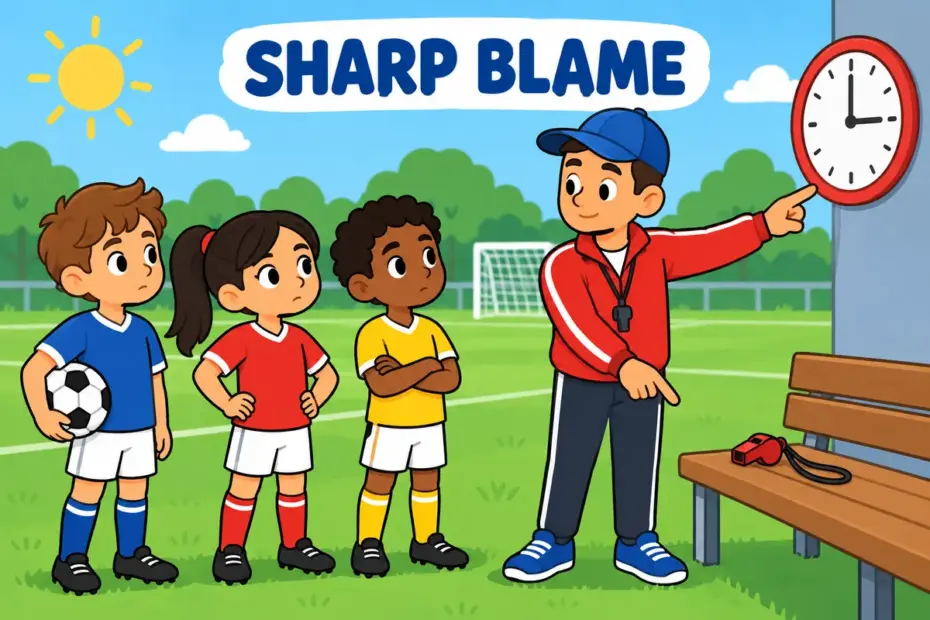
Upbraid means to scold or reproach someone for a fault, and it is a transitive verb used in formal writing. To use upbraid in a sentence, name the person and then the fault: “The coach upbraided the squad for arriving late.” Unlike abjure, upbraid does take a preposition, usually for.
Upbraid at a glance
- Upbraid is a transitive verb; its forms are upbraid, upbraids, upbraided and upbraiding.
- It means to scold or reproach someone for a fault.
- It almost always takes the preposition for before the fault.
- Upbraid belongs to formal and literary writing rather than everyday speech.
- The commonest error is treating it as intransitive or leaving out for.
What does upbraid mean?
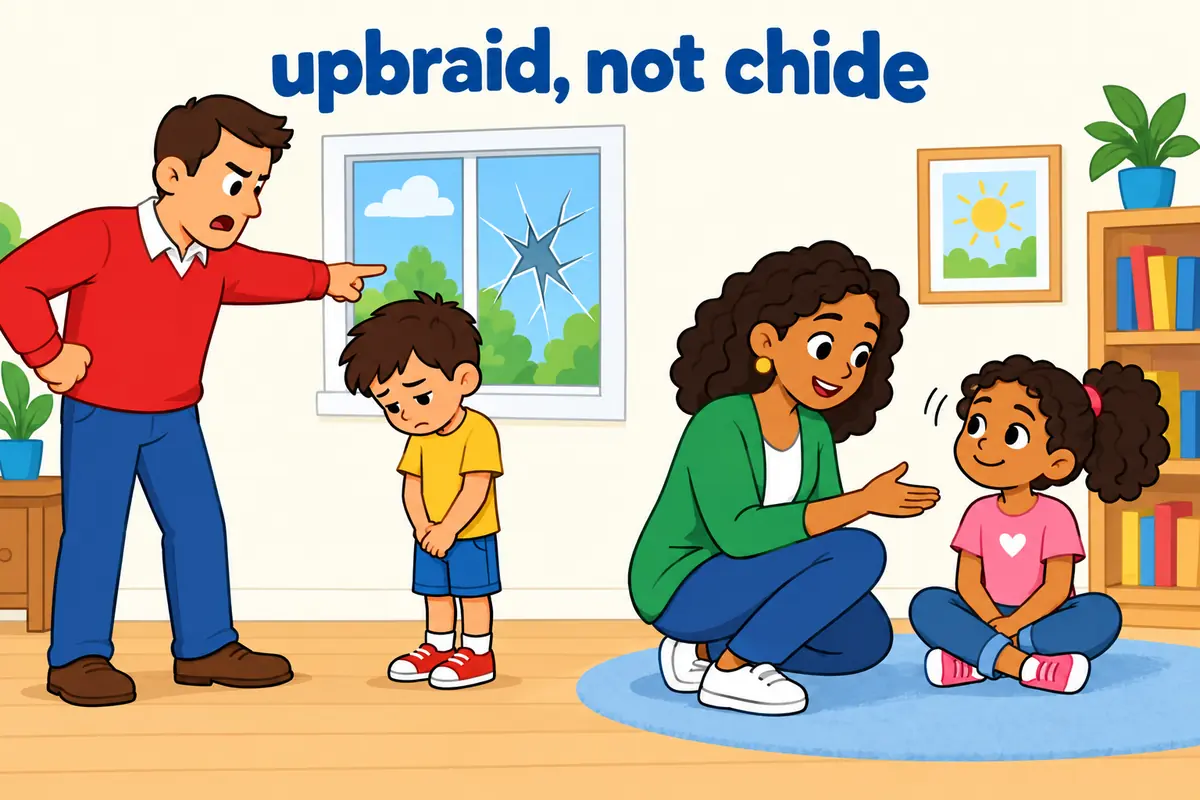
Upbraid is a transitive verb meaning to scold or reproach someone for a fault. The Cambridge entry for upbraid marks it formal, and the core idea is blame spoken aloud to the person responsible. The word differs from a quiet correction in tone, because an upbraiding is pointed and often severe and it usually names the fault directly. Where the scolding is gentle, chide is the softer verb.
| Sense | Plain meaning | Example sentence |
|---|---|---|
| Reproach someone for a fault | Blame a person directly for what they did | The coach upbraided the squad for arriving late. |
| Rebuke in public | Criticise before others in a formal setting | The chair upbraided the member for leaking the report. |
| Express bitter reproach | Accuse with strong feeling | She upbraided him for breaking his promise. |
One limitation is worth stating plainly. Upbraid is not a neutral word for giving feedback. It carries the sting of blame and a note of superiority in the speaker, so a manager who upbraids a junior may sound harsh. For ordinary correction, tell off, point out or advise are safer choices.
How do you use upbraid in a sentence?
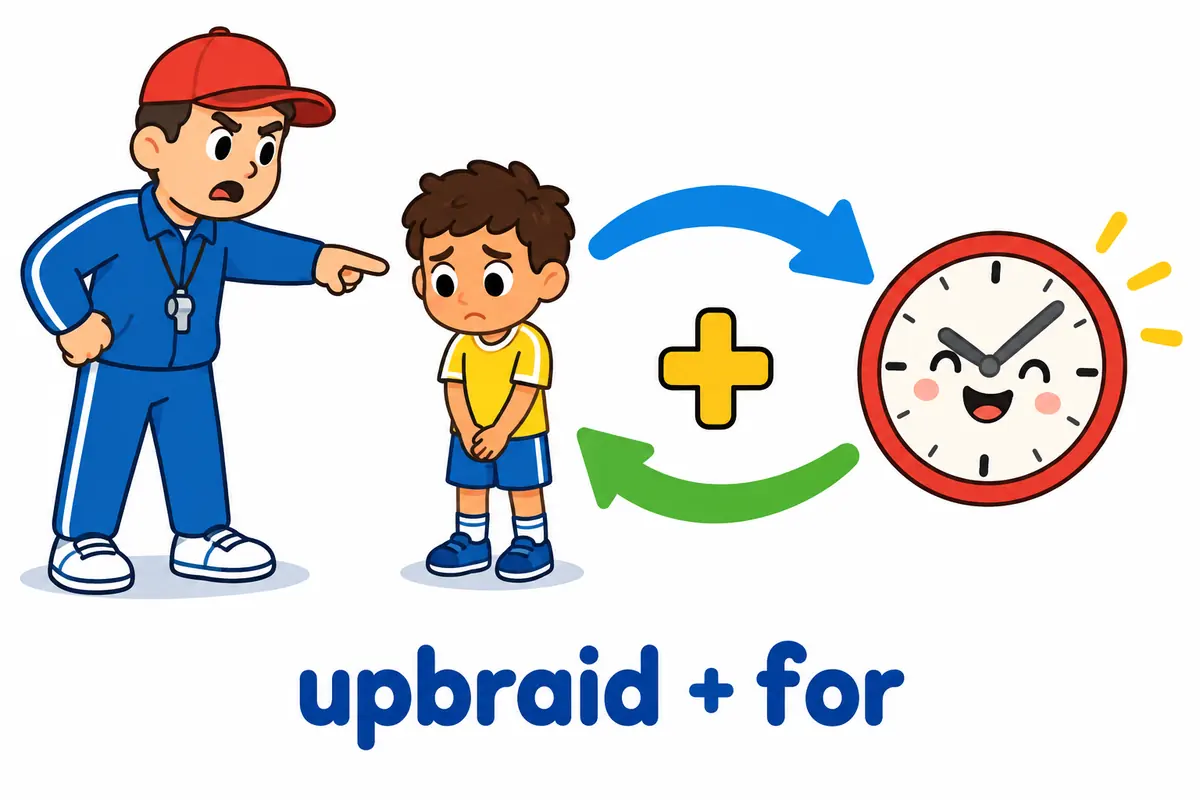
Upbraid takes a direct object, the person, and usually for before the fault. The five frames below cover almost every real sentence.
| Pattern | Example | What it signals |
|---|---|---|
| upbraid + person + for + noun | The coach upbraided the squad for their lateness. | Names the person and the fault in one frame. |
| upbraid + person + for + -ing | She upbraided him for arriving without notice. | The -ing form names the act being blamed. |
| upbraid + person + with + noun | He upbraided her with her earlier mistakes. | With points to evidence held against the person. |
| be upbraided (passive) | The clerk was upbraided for the missing file. | The passive hides the scolder and keeps the fault. |
| upbraiding + noun | Her upbraiding tone silenced the room. | The participle works as an adjective before a noun. |
Upbraid in a sentence: examples across contexts
Upbraid keeps its severity while its setting changes. The seven sentences below move from a classroom to a history essay, and each one names the person blamed and the fault.
| Context | Example sentence | Why this works |
|---|---|---|
| Classroom | The teacher upbraided the class for leaving the lab unlocked. | A formal school reproach names the fault. |
| Workplace email | The director upbraided the team for missing the deadline. | Workplace blame, kept to a written record. |
| News report | The minister was upbraided for the delayed response. | The passive keeps the focus on the fault. |
| Legal writing | The judge upbraided the lawyer for the late filing. | A courtroom rebuke from a person in authority. |
| Literary prose | The old sailor upbraided the boy for his silence. | A literary register gives the verb its full weight. |
| History essay | Critics upbraided the general for the failed campaign. | Public blame in an analytical frame. |
| Conversation, rare | He upbraided me for forgetting his name. | The verb sounds stiff and deliberate in speech. |
The fault is named every time, which is the clearest sign that upbraid is a verb of specific blame rather than general bad mood.
Upbraid vs scold and rebuke
Upbraid sits between scold and rebuke in severity and register. Scold is the everyday word, rebuke is a formal and often public criticism, and upbraid is the literary word that adds a personal sting.
| Attribute | upbraid | scold | rebuke |
|---|---|---|---|
| Severity | Sharp and personal | Mild to moderate | Formal and firm |
| Register | Formal and literary | Everyday | Formal and official |
| Typical subject | A person with authority | A parent or teacher | A body or senior figure |
| Typical object | A person, for a fault | A child or subordinate | A person or action |
| Common frame | upbraid someone for something | scold someone for something | rebuke someone for something |
Verdict: choose scold for everyday speech, rebuke when the criticism is official, and upbraid when the blame is personal, pointed and literary in tone.
Word forms and grammar of upbraid
Upbraid inflects regularly, and its participle does the work of a noun.
| Form | Part of speech | Example |
|---|---|---|
| upbraid | verb, base form | The chair will upbraid any member who leaks. |
| upbraids | verb, third person singular | She upbraids the staff for every small delay. |
| upbraided | verb, past and past participle | He upbraided the driver for the missed turn. |
| upbraiding | verb, present participle | The upbraiding voice carried down the corridor. |
| upbraiding | noun | The long upbraiding ended in an apology. |
Upbraid has no common separate noun; the participle upbraiding does the noun work, as in a long upbraiding. The related reproach is milder and can be a noun, which makes it the safer choice when you want less heat.
Common mistakes with upbraid
- Incorrect:
The teacher upbraided at the class.Correct: The teacher upbraided the class. Rule: Upbraid is transitive and takes the person as a direct object. - Incorrect:
She upbraided him.(meaning for a fault) Correct: She upbraided him for the delay. Rule: Name the fault with for; without it the sentence is incomplete. - Incorrect:
He upbraided to his son.Correct: He upbraided his son. Rule: No preposition sits between the verb and the person. - Incorrect:
They upbraidment the team.Correct: They upbraided the team. Rule: Upbraidment is not a word; the verb form is upbraided. - Incorrect:
The manager upbraided a feedback.Correct: The manager upbraided the intern for the error. Rule: The object is a person, never the fault itself.
Practice using upbraid
Work through the six items, then check the reasoning rather than only the answer.
- Fill the gap: The captain ______ the players for their careless passes.
- Choose the better word: For a gentle reminder, the parent (chided / upbraided) the child.
- Correct the error: The judge upbraided at the lawyer for the late filing.
- Build a sentence: use upbraid someone for something about a missed deadline.
- Spot the register: which belongs in a formal report — the committee upbraided the officer for the delay, or the committee told him off?
- Rewrite in the passive: The chair upbraided the member. Change it to the passive.
Answers
- upbraided — the captain blamed the players for a named fault.
- chided — a gentle reminder calls for the softer verb; upbraid would sound severe.
- The judge upbraided the lawyer for the late filing — no preposition before the person.
- Model answer: The supervisor upbraided the crew for missing the safety briefing.
- The committee upbraided the officer for the delay — a report keeps a formal tone.
- The member was upbraided by the chair — the passive keeps the blame on the fault.
The bottom line
Use upbraid in a sentence when someone in authority blames a person for a specific fault, and keep the frame person plus for plus fault. Two rules decide most sentences: the verb is transitive, and it belongs to formal or literary writing. For everyday blame, scold or the official reprimand is the more natural choice.
Frequently asked questions about upbraid
Is upbraid a formal word?
Yes. Upbraid belongs to formal and literary writing, where the blame is pointed and the tone is elevated. A novelist may write that a father upbraided his son, but in speech most people would say he told him off. Choose it when the register is deliberately serious.
What preposition follows upbraid?
Upbraid usually takes for before the fault: upbraid someone for a mistake. It can also take with when the speaker holds evidence against the person, as in upbraid someone with an earlier failure. It never takes at or to, because the person is already the direct object.
Can upbraid be a noun?
Upbraid itself is only a verb. Its participle, upbraiding, works as a noun, as in a long upbraiding, and also as an adjective before a noun, as in an upbraiding tone. The invented form upbraidment is not standard English and should be avoided.
How is upbraid different from scold?
Upbraid is sharper and more formal than scold. Scold is the everyday word for a mild telling-off, often by a parent or teacher. Upbraid suggests a person in authority delivering pointed blame, and it usually appears in writing rather than in ordinary conversation.
Have you ever felt scolded or reproached for something you did wrong? That’s essentially the essence of the word “upbraid.” When someone upbraids you, they are expressing disapproval or criticism for your actions or behavior.
This term is often used in situations where someone is being reprimanded or chastised for a mistake or wrongdoing. It conveys a sense of reproach or rebuke from the person delivering the upbraiding.
7 Examples Of Upbraid Used In a Sentence For Kids
- Don’t upbraid your friends for small mistakes.
- It’s not nice to upbraid someone when they’re trying their best.
- Remember to always be kind and not upbraid others.
- We should help each other instead of upbraiding each other.
- It’s important to use gentle words instead of upbraiding.
- Let’s find ways to solve problems together without upbraiding.
- It’s better to encourage each other than to upbraid each other.
14 Sentences with Upbraid Examples
- Upbraid your roommate for forgetting to pay their share of the electricity bill.
- Don’t upbraid your classmates for not understanding a concept, offer to help them instead.
- It’s not fair to upbraid your group members for not doing their part of the project without discussing it first.
- Your parents might upbraid you for not keeping in touch with them regularly while at college.
- Instead of upbraiding the cafeteria staff for the bland food, suggest some improvements.
- Don’t upbraid yourself for not scoring well in a test, learn from your mistakes and improve.
- You should upbraid your friend if they keep borrowing your things without asking.
- It’s important to upbraid yourself if you’ve been procrastinating instead of studying.
- Your professor might upbraid you for not submitting your assignment on time.
- You shouldn’t upbraid your classmate for asking “stupid” questions, it’s better to encourage them to participate.
- It’s not advisable to upbraid your friend for missing a class without informing you, discuss it calmly.
- Do not upbraid your friend for not understanding a subject, help them grasp the concepts.
- Your parents might upbraid you for spending too much time on social media instead of studying.
- It’s important to upbraid yourself for not attending lectures regularly and falling behind in your studies.
How To Use Upbraid in Sentences?
To use Upbraid in a sentence, you must first understand its meaning. Upbraid means to scold or criticize someone severely. When incorporating this word into a sentence, it is important to ensure that the context fits the definition. For example, “She was quick to upbraid her colleague for not meeting the deadline.”
When constructing a sentence with Upbraid, remember to use it in situations where someone is being reprimanded or chided for their actions or behavior. It is typically used in a formal or serious manner to convey a strong sense of disapproval or disappointment.
It is advisable to avoid using Upbraid in casual conversations or light-hearted contexts as it carries a weight of severity and harshness. To practice using Upbraid in a sentence, try incorporating it into a scenario where someone is being scolded for a mistake or wrongdoing.
In summary, to use Upbraid effectively in a sentence, ensure that the context calls for severe criticism or rebuke. By understanding the meaning of the word and applying it appropriately, you can effectively convey a sense of disapproval or admonishment in your communication.
Conclusion
In conclusion, the act of upbraiding involves scolding, criticizing, or reprimanding someone. This can be seen in sentences like “She upbraided her children for not completing their chores” or “He was upbraided by his boss for his lack of professionalism.” Upbraiding is a form of expressing disapproval or disappointment towards someone’s actions or behavior. It serves as a way to hold individuals accountable for their mistakes and to correct their behavior.
Through various examples, we see how the use of upbraiding in sentences highlights the reproachful nature of the act. By upbraiding others, individuals aim to enforce discipline, encourage growth, and convey disapproval effectively. The word “upbraid” carries a strong tone of criticism and disapproval, making it a powerful tool in communication when addressing unacceptable behavior or actions.


